 Lucas Meyer
Pack a Caribbean cruise in winter as two separate trips: embarkation day, when your checked luggage may not reach your cabin until the evening, and the week that follows, when one dressy outfit, mineral sunscreen and a light layer for cold dining rooms matter more than a second suitcase of options. Everything you need before dinner on day one belongs in the bag you carry on yourself: documents, medication, swimwear, sunscreen, a phone charger and a change of clothes. Everything else can wait for the porter.
Winter adds one wrinkle that summer cruisers miss. You may board in a coat in Galveston, Tampa or Cape Liberty and be in the Caribbean within two days, so the bag has to hold the cold start and the warm week without doubling in size. The system below is built for a seven night sailing and scales down cleanly for three and four night Bahamas runs, which Royal Caribbean lists at three to four nights roundtrip from Florida, with Western and Eastern Caribbean cruises typically running four to eight nights.
Quick Facts
- Carry on, never checked: Passport or other boarding documents, all medication, swimwear, sunscreen, charger and one full change of clothes.
- Why: Checked bags handed to a porter at the terminal can reach your cabin as late as early evening on embarkation day.
- Dressy nights: Most mainstream lines schedule one or two per week. Royal Caribbean calls them Dress Your Best nights, Carnival calls its version Elegant Night, and Norwegian runs no formal night at all.
- Sunscreen rule: Pack mineral sunscreen with zinc oxide or titanium dioxide as the active ingredient. Hawaii and the US Virgin Islands ban the sale of sunscreens containing oxybenzone and octinoxate, and many Caribbean snorkel operators and marine parks require reef safe formulas.
- Leave behind: Surge protected power strips, clothing irons and steamers, and candles. Cruise lines list these as prohibited for fire safety.
- The cold layer: One light sweater or wrap. Dining rooms, theatres and casinos are air conditioned hard, even in January.
What goes in the embarkation day bag?
Your embarkation bag is an insurance policy against a slow luggage delivery, and it should be packed as if the checked suitcase did not exist until bedtime. Start with the documents you board with and the medication you cannot skip, in original packaging where possible, because neither can be replaced at sea at any reasonable cost. Add swimwear and a cover up, since the pool deck and the buffet are open while cabins are still being turned over, and add the sunscreen, because the first afternoon on deck is exactly when new cruisers burn.
Finish the bag with the evening rescue kit: a change of clothes that works for the main dining room if your suitcase is late, basic toiletries in line with the liquids rules for your flight to the port, and every charger and cable your group needs until night. If you are flying in, this bag doubles as your airline carry on, so pack it once to satisfy both jobs. For the current state of scanner rules at the airport end, see our guide to the carry on liquids rule, checked continent by continent.
What does formal night actually require now?
Less than the name suggests. On the big mainstream lines, formal night has softened into a dressy night: a cocktail dress or smart separates for women, and slacks with a collared shirt for men, with a jacket welcome but a tie optional on most lines. What the dining rooms still enforce, on formal and ordinary nights alike, is the floor rather than the ceiling: no swimwear, tank tops, shorts or flip flops at dinner in the main dining room. Cunard’s gala evenings remain the strict exception, where a dark suit or tuxedo is the real standard.
The packing maths follows from that. One dressy outfit, worn with different accessories, covers every dressy night on a seven night sailing for most travellers. If dressing up holds no appeal, the buffet and casual venues run without a dress code on the same nights, and no line requires attendance at formal night. Pack the outfit because you want the photograph and the dining room, not because the ship demands it.
Which sunscreen passes the reef rules at the ports?
Read the active ingredients, not the marketing. A reef safe claim on the front of the bottle means little; the back label is the test. Look for zinc oxide or titanium dioxide, ideally non nano, and leave formulas built on oxybenzone and octinoxate at home. Hawaii prohibits the sale of sunscreens containing those two chemicals, the US Virgin Islands has a similar ban, and snorkel boats and marine parks across the Mexican Caribbean and beyond routinely require mineral sunscreen before you enter the water.
Buy it before the cruise. Ship shops and port pharmacies charge a premium for the compliant bottles, and the selection narrows to whatever is on the shelf. Two bottles for a week is a realistic allowance for a couple reapplying after swims, and a reef safe lip balm and an after sun gel earn their small space in the bag.
How should the winter wardrobe itself be built?
Build around three or four daytime outfits that rotate, two or three swimsuits so one is always dry, and evening pieces that mix: two pairs of trousers or skirts that each work with several tops will cover a week of dinners. Add walking shoes that are already broken in, because port days in places like Old San Juan or Cozumel easily run to ten or twenty minutes of walking from pier to town before the sightseeing starts, plus water shoes if your excursions involve rocky entries or reef beaches.
For the cold start, the layering logic in our Korean winter packing guide translates directly. For the cold ship, one packable insulated layer handles the homeport morning and doubles as your flight layer, and the light sweater handles the dining room. Magnetic hooks are a veteran trick worth copying: cabin walls are steel, and hooks create hanging space for hats, lanyards and wet swimwear that the cabin designer never provided. A small dry bag protects phones and documents on boat excursions, and a few zip bags contain wet swimwear on the last morning, when everything goes back into the case damp.
What gets confiscated, and what should stay home?
Surge protected power strips and extension cords top the confiscation list across the major lines, because ship electrical systems treat surge protection as a fire risk. Royal Caribbean has also moved to ban multi plug outlets, so check your own line’s prohibited list in the week before you sail rather than relying on an old forum post. Clothing irons and steamers are banned in cabins on the same fire logic; a wrinkle release spray and a bathroom hung during a hot shower do the job instead. Candles and incense are out entirely. Drones are banned outright by some lines and restricted to port use by others, so the default answer is to leave the drone home unless your line’s written policy says otherwise.
Frequently asked questions
How many outfits do I need for a seven night Caribbean cruise?
Three to four daytime outfits worn on rotation, two or three swimsuits, two or three smart casual evening outfits and one dressy outfit cover a week comfortably, with laundry or pressing services on board as the backstop.
Can I wear shorts to dinner on a cruise?
In the buffet and casual venues, yes. In the main dining room at dinner, the mainstream lines ask for slacks, skirts or dresses and collared shirts, and turn away swimwear, tank tops and flip flops.
Is reef safe sunscreen really required in the Caribbean?
At some ports and on many snorkel excursions, yes. Hawaii and the US Virgin Islands ban the sale of oxybenzone and octinoxate formulas, and marine parks and tour operators elsewhere increasingly require mineral sunscreen, so packing zinc oxide or titanium dioxide covers every case.
What should never go in my checked cruise luggage?
Medication, travel documents, valuables, swimwear for the first afternoon, and anything you need before the evening of embarkation day, because checked bags can arrive at your cabin hours after you do.
Do I need a passport for a Caribbean cruise?
It depends on the itinerary. Royal Caribbean notes that most US citizens sailing roundtrip from a US port can board with a state certified birth certificate and government issued photo ID, but a passport is the safer document if an emergency ever requires flying home from a foreign port. Check the line’s document requirements for your specific sailing.
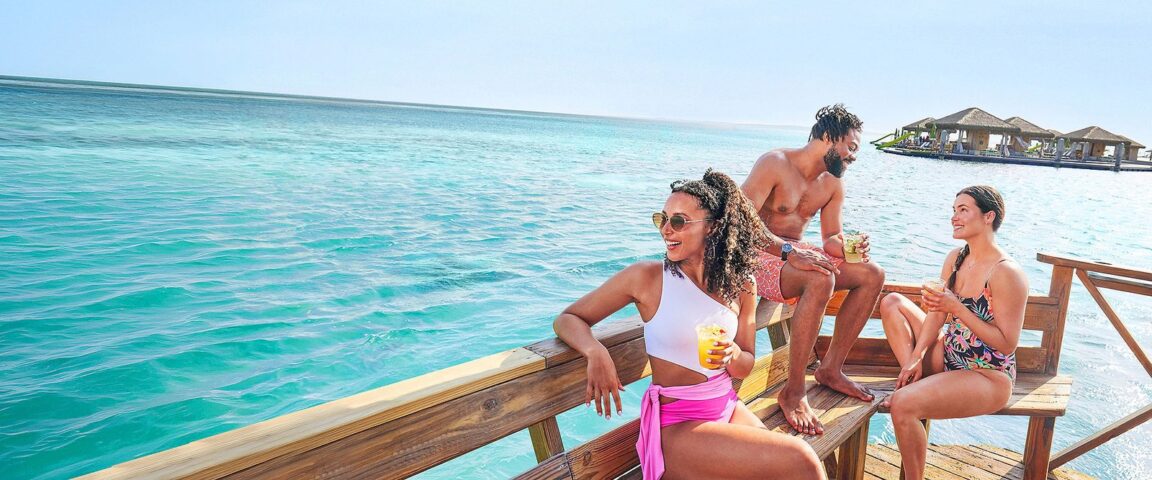
Image: Guests in swimwear at the overwater cabanas of Perfect Day at CocoCay, Royal Caribbean’s private destination in the Bahamas. Photo by Royal Caribbean, via royalcaribbean.com, the cruise line’s official website. Used with credit.