 Hana Kim
Eating alone in Seoul is not a workaround, it is a system, and the traveller dining solo here is better served than in almost any other world city. The system has a name, honbap, meaning eating alone, and it has infrastructure to match: restaurants built around one person counters, barbecue rooms where every seat has its own small grill and ordering tablet, kiosk ordering that removes the awkward conversation entirely, and cafe floors where a woman alone with a laptop is the most ordinary sight in the room. The only real skill required is knowing which formats welcome one diner by design, and which traditional rooms still expect a pair.
Quick Facts
- The word to know: Honbap, eating alone, a mainstream and unremarkable practice in Seoul
- The phrase to use: Han myeong, one person, said while holding up one finger at the door
- Built for one: Solo barbecue specialists such as Hongojib, with individual grills, partitioned seats and tablet ordering at branches including Myeongdong and Hongdae
- The exception: Traditional group barbecue rooms, where meat is commonly sold with a two serving minimum on the first order
- Ordering: Kiosks and table tablets are standard in casual restaurants; order and pay before eating at counter formats
- Tipping: Not expected in restaurants in South Korea
- Best solo formats: Stews and soups served as individual pots and bowls, noodle counters, gimbap and bowl restaurants, food courts, and multi floor cafes
Why is Seoul built for the solo diner?
Honbap grew out of ordinary Korean life rather than tourism. As single person households became a large share of the country’s homes, restaurants adapted the way they always adapt: by building formats that make money from the customers who actually walk in. The result is a city where eating alone carries no signal at all. Nobody is seated by the kitchen door as a favour. In the formats designed for one, the solo diner is the entire concept, and groups are the ones squeezing in.
For women travelling alone, this matters more than any single restaurant recommendation. A dining culture that treats a woman eating alone as unremarkable removes the low level friction that shapes solo trips elsewhere: the hovering host, the rushed table, the room that goes quiet. In Seoul the baseline assumption is that you are there to eat, and the machinery of the meal, the kiosk, the tablet, the partitioned seat, is arranged to let you do it in peace. Pair this guide with our Seoul solo for women base guide, which covers where to stay and how the late subway logic works, and with our explainer on Seoul’s Climate Card for tourists for getting between meals.
How does one person barbecue actually work?
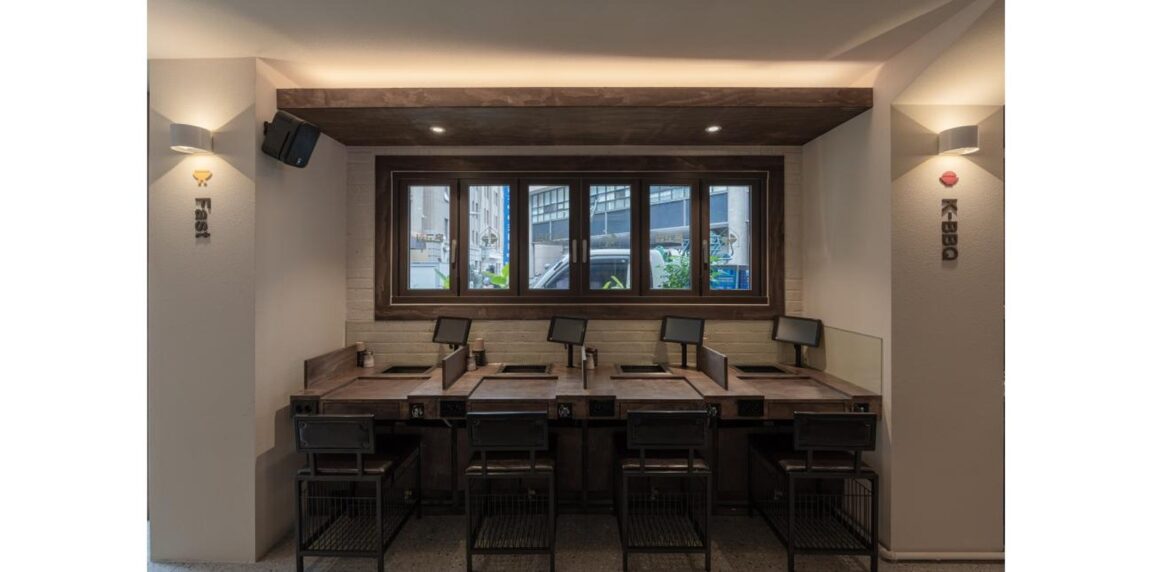
Barbecue is the format travellers assume is closed to them, because Korean barbecue grew up as a group ritual around a shared grill. The solo specialists invert it. At Hongojib, the best known of the one person barbecue restaurants, each seat is its own station: a personal grill set into a partitioned counter, an ordering tablet at the seat, and meat sold in portions sized for one, including small cuts that let a single diner mix pork and beef without committing to a group sized order. You grill at your own pace, nobody reaches across your fire, and the meal ends when you say it does.
The room itself tells the story. Rows of single seats face the kitchen or the window, dividers give each diner a pocket of privacy, and the whole design assumes that the customer wants dinner, not company. Branches in areas such as Myeongdong and Hongdae put the format within walking distance of the hotels most first time visitors use. If barbecue is the meal you came to Seoul for, this is the version built for you, and it requires no negotiation at the door.
What is the two serving rule at traditional grills?
The traditional barbecue house works differently, and it is worth understanding rather than resenting. Meat there is priced per serving, and many rooms set a minimum first order of two servings, because the economics of lighting a grill, staffing the table and turning the seat were built around pairs and groups. A solo diner may be seated happily and simply asked to order two servings, which for a hungry traveller is a price question, not a rejection. Some rooms decline one diner at peak hour, and shared dishes such as hot pots follow the same two serving logic.
The practical approach is to ask two short questions before sitting down: whether one person can eat there, and whether one serving can be ordered. In Korean, han myeong covers the first; pointing at the menu and asking about il inbun, one serving, covers the second. If the answer is two servings, decide with your eyes open: the food will be excellent, and the leftovers problem is real but survivable. If you want a single portion by design, go to the solo specialists instead and save the traditional room for a night when you have company.
Which formats never require negotiation?
Most of Seoul’s everyday cooking is served in individual portions by default. Stew restaurants bring a bubbling personal pot with rice and side dishes arranged for one. Soup restaurants, serving seolleongtang, gomtang and similar long simmered bowls, are built around the solo luncher. Noodle counters, kalguksu and naengmyeon especially, seat one person at a counter facing the kitchen as a matter of course. Gimbap shops, bowl restaurants covering rice with grilled meat or vegetables, and the food courts in stations and department stores all price and serve by the individual tray.
Ordering in these places is increasingly machine mediated, which suits the visitor perfectly. Kiosks near the door take the order and the payment, often with an English language option, and a number or buzzer manages the rest. At sit down restaurants the convention is to pay at the counter on the way out. Tipping is not expected anywhere in this system, which keeps the solo meal as simple at the till as it was at the table.
Where do the cafe floors fit in?
Seoul’s cafes complete the solo system. The city’s large multi floor cafes are designed as places to occupy: power outlets at the seats, fast wifi, long opening hours and an understood social contract that a customer with a coffee and a laptop can stay for hours. For the solo traveller they function as a third place between hotel and restaurant, good for the afternoon reset, the trip planning session and the dessert course that Korean cafe culture treats as a meal of its own. A woman alone working in a Seoul cafe is not a curiosity to be managed; she is the median customer, and the room will leave her entirely alone, which is the highest compliment the system pays.
Frequently Asked Questions
Is it rude to eat alone in Seoul?
No. Eating alone, honbap, is a normal part of city life, supported by restaurant formats designed specifically for one diner. You will see solo diners at every level of the market, from noodle counters to barbecue rooms built for one.
Can one person eat Korean barbecue in Seoul?
Yes. Solo barbecue specialists such as Hongojib give each diner a personal grill, a partitioned seat and tablet ordering, with meat portions sized for one. At traditional group grills, expect a two serving minimum on the first order rather than a refusal.
What should I say at the door?
Say han myeong, one person, and hold up one finger. To check the barbecue rule, ask whether one serving, il inbun, can be ordered. Staff in tourist districts are used to both questions.
Do I need cash for solo restaurants?
Cards are widely accepted and kiosk ordering is common. Carry a payment card that works internationally and a small amount of cash for the smallest counters and market stalls.
Is tipping expected in Seoul restaurants?
No. Tipping is not expected in restaurants in South Korea, whether you dine alone or in a group.
Image credit: A one person barbecue counter at Hongojib in Seoul, each seat with its own grill, divider and ordering tablet. Photo: Hongojib, via hongojib.com, the restaurant’s official website, used with credit.