 Hana Kim
For a week of riding in Seoul, the Climate Card short term pass beats a pay as you go T-money card sooner than most visitors expect, and the maths is not close. The passes, sold to tourists and short stay visitors, cost 5,000 won for one day, 8,000 for two days, 10,000 for three, 15,000 for five and 20,000 for seven, on top of 3,000 won for the physical card itself. Against a standard subway fare of 1,550 won a ride, the seven day pass pays for itself at roughly two rides a day, and the three day pass at just over two rides a day. The catches are real and they changed recently: since 1 October 2026 the card’s world has shrunk to Seoul itself, the 30 day resident card has been discontinued, and a pass starts burning on the day you charge it, not the day you first ride. This guide does the pass maths properly, then states the exclusions and the refund reality plainly, so the card you buy matches the trip you are actually taking.
Quick Facts
The passes: Climate Card short term passes of 1, 2, 3, 5 and 7 days, open to foreign visitors
Prices: 5,000 won for 1 day; 8,000 for 2 days; 10,000 for 3 days; 15,000 for 5 days; 20,000 for 7 days, plus 3,000 won for the physical card
Coverage: Seoul’s subway lines and Seoul licensed city and village buses. Since 1 October 2026 the card is limited to use within Seoul, with the airport drop off exception for rides ending at Incheon Airport terminals
Not covered: The Sinbundang Line, stations outside Seoul’s boundary, and airport and express buses
The clock: Validity begins on the date the pass is charged, not on first use. A one day pass charged on Monday ends with Monday’s last train and bus
Where to buy: The physical card from vending machines in Line 1 to 8 stations and convenience stores near stations, then charge the pass at a station machine
Changed: The 30 day Climate Card was discontinued on 1 October 2026. Short term passes continue
Facts checked: 24 November 2026, against Seoul Metropolitan Government and Seoul tourism guidance
What is the break even point against T-money?
Run the comparison honestly. A T-money rider pays per ride, at 1,550 won for a standard subway journey, and transfers inside the system are handled by the fare rules rather than by a pass. A Climate Card rider pays once and stops thinking. The one day pass at 5,000 won needs about four rides in the day to win, which suits a heavy sightseeing day and nothing else. The two day pass at 8,000 won needs about three rides a day. The three day pass at 10,000 won needs a little over two rides a day, and the five and seven day passes, at 15,000 and 20,000 won, need about two rides a day, which any visitor based in the city will clear simply by going out in the morning and coming home at night, before a single extra hop to a market or a palace is counted.
The honest exception is the traveller who walks. Seoul’s central sights cluster, and a visitor who stays in one neighbourhood and rides twice in three days should keep the T-money card and its refundable balance logic instead. The pass rewards movement across the whole city: a Hongdae morning, a Gangnam afternoon and a night market evening is three rides before dinner. Our guide to packing for Seoul’s subway heat and palace wind explains the other half of riding comfortably in this system, the layers that come off in the heated cars.
What changed on 1 October 2026?
Two things, and both matter to visitors reading older guides. First, the 30 day Climate Card, the resident product that filled a decade of blog posts, was discontinued; only the short term passes remain on sale, which simplifies the tourist choice to the five durations above. Second, coverage contracted to Seoul. Stations and stops in the surrounding cities of Gyeonggi province, including places like Gimpo, Goyang, Gwacheon and Seongnam, fall outside the card, and a rider who travels out to them needs another way to pay for that leg. The exception that survives is the airport one: short term passes cover the airport railroad ride that ends at Incheon Airport’s terminals, which makes the card useful on departure day, provided the journey starts inside the covered network.
The Sinbundang Line exclusion also survives every change and still catches people, because the line looks like any other on the map. Treat it as outside the pass. Within Seoul, the card covers the subway network and the city’s buses, including late night and village buses, which is where its value quietly doubles for travellers staying out past the easy hours.
How do buying, charging and refunds really work?
Buy the physical card first, for 3,000 won, from a station vending machine on Lines 1 to 8 or a convenience store near a station entrance. Then charge the chosen pass at a station machine, and understand the single most important rule in this whole guide: the pass is valid from the charging date. There is no choosing a future start date. Charge it on the morning you start riding, not the night before, or you will burn a day in your sleep. Foreign bank cards can be used to buy and recharge at the newer machines, but cash in won remains the method that never fails, and keeping the card after the trip costs nothing; it is reusable on the next visit.
Refunds are where expectations go to die, so plan as if there are none. A charged pass has started, used days are gone, and the tidy refund desk of traveller imagination, where an unused week is handed back at the airport, is not how the system is built. Short term pass refund handling runs through T-money channels under set conditions rather than over a station counter on demand, and a visitor leaving Korea should treat any unspent pass value as spent. That is not a reason to avoid the card. It is a reason to buy the duration you are sure of; a three day pass bought twice beats a seven day pass bought hopefully, if your plans are loose. Travellers settling into the city for longer should compare bases with our guide to the Lotte Tower hotel that anchors the east side before locking an itinerary to one station.
Frequently Asked Questions
Which Climate Card pass should a one week visitor buy?
The 7 day pass at 20,000 won, plus the 3,000 won card, if you will ride at least twice a day inside Seoul. It breaks even at roughly two standard 1,550 won rides a day and removes every fare decision for the week.
Does the Climate Card work to Incheon Airport?
The short term pass covers the airport railroad journey ending at Incheon Airport’s terminals, under the airport drop off exception that survived the October 2026 changes. It does not cover airport and express buses, and journeys starting outside Seoul are outside the card.
When does a Climate Card pass start?
On the date it is charged. There is no advance start date selection. Charge it on your first riding morning, because a pass charged the night before loses that night from its validity.
Can tourists still buy the 30 day Climate Card?
No. The 30 day card was discontinued on 1 October 2026. Visitors buy the short term passes of 1, 2, 3, 5 or 7 days, which continue on sale to everyone, including foreign visitors.
Can I get a refund on an unused Climate Card pass?
Do not plan on one. Once charged, a pass has started, and refund handling is limited and runs through T-money channels under set conditions, not as an on demand airport desk refund. Buy the shortest duration you are certain to use.
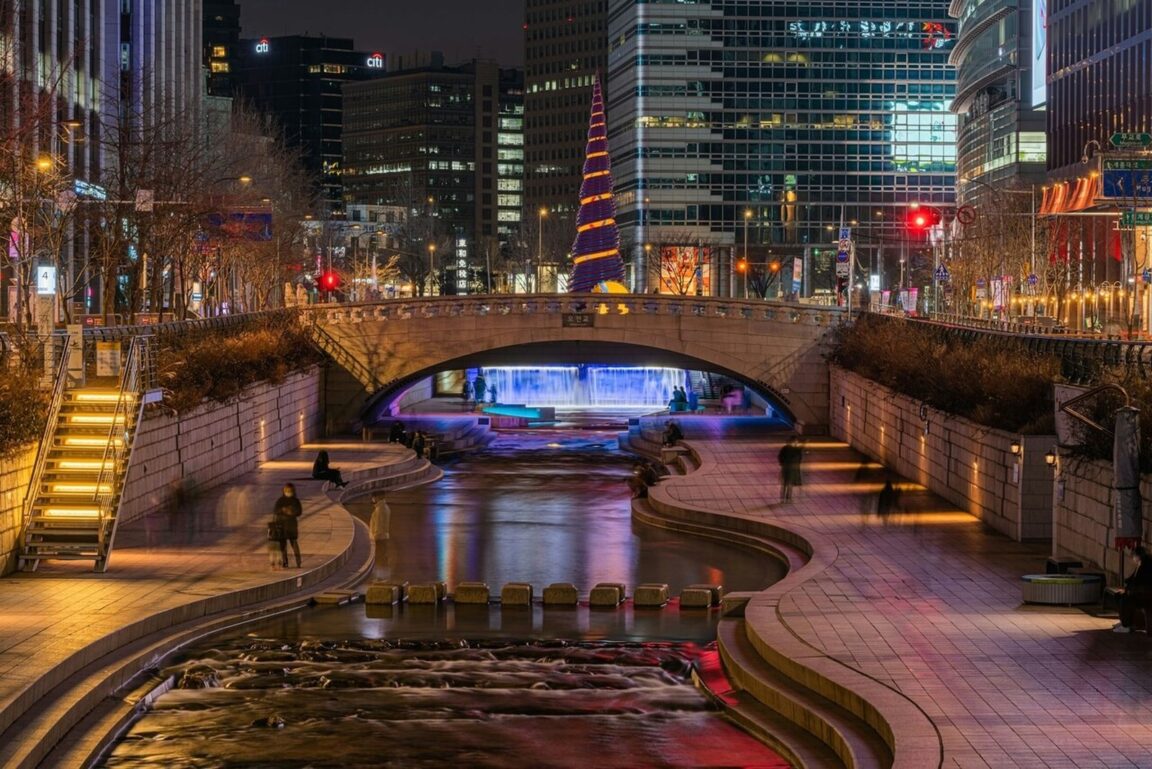
Photo: The Cheonggyecheon Stream in central Seoul at night, beneath the downtown towers, the city the Climate Card is built to move around. Image: Ethan Brooke, via Unsplash.