 Kwame Mensah
Nigeria’s visa now arrives in your inbox, and the whole trip depends on reading that email correctly. Since 1 May 2025 the Nigeria Immigration Service has run short visit visas through its e-Visa system under the Nigeria Visa Policy 2025: you apply entirely online at evisa.immigration.gov.ng, the decision is made centrally in Nigeria, and approval comes back by email as an e-Visa Approval Letter carrying a QR code and a reference number, with a processing standard of about 48 hours. Visa on arrival, the old approval in principle system that ended with a sticker at a Lagos airport desk, was discontinued the same day. There is no consulate visit and no physical visa before you fly. What there is, is a sequence, and travellers who follow it in filing order, application, payment confirmation, approval letter, landing card, arrive in Lagos with a small, exact bundle of paper that immigration officers actually ask to see. This guide states that sequence in order and names the documents in the bundle.
Quick Facts
The system: Nigeria e-Visa, run by the Nigeria Immigration Service, live since 1 May 2025 under the Nigeria Visa Policy 2025
Official portal: evisa.immigration.gov.ng. Apply nowhere else; lookalike sites charge markups for the same form
Processing standard: Approval or feedback within about 48 hours, delivered by email
The approval: An e-Visa Approval Letter with a QR code and reference number. Print it and carry it to the port of entry, where officers verify it and endorse the passport
Validity: The e-Visa is a single entry permission, valid for 90 days from the date of issue, and it is not extendable
Also mandatory: The automated landing card before arrival and exit card before departure, completed online at lecard.immigration.gov.ng
Gone: Visa on arrival, discontinued 1 May 2025. Approvals under the old system expired on 30 May 2025
Facts checked: 24 November 2026, against Nigeria Immigration Service guidance
What is the filing order, step by step?
Step one is the account and the category. Register on the official portal and choose the short visit category that matches the trip; the e-Visa channel covers the Service’s designated short visit types, from tourism to business visits. Step two is the form and the uploads: personal details, travel purpose and dates, passport information, a passport photograph, the passport bio data page, and the supporting documents for your category, which for most visitors means a hotel reservation or host invitation, evidence of funds, and a return or onward ticket. Step three is payment, made online by card at the end of the application; the file is not processed until the fee is paid, and the fee itself depends on nationality and category and is shown in the portal before you commit. Keep the payment confirmation. It is part of the arrival bundle, not an inbox detail.
Step four is the wait, and it is short by visa standards. The Service’s stated standard is a decision within about 48 hours, returned by email. What arrives is the approval letter, with its QR code and reference number, which the Immigration Service itself instructs you to print and present at the port of entry. Step five, easy to forget because it is a different website, is the landing card: since the same May 2025 reform, the automated landing and exit card at lecard.immigration.gov.ng is mandatory, completed online before arrival, with the matching exit card before departure. Our earlier explainer on Nigeria’s e-visa launch and the end of visa on arrival covers the policy change itself in full.
What does Lagos immigration actually ask to see?
At Murtala Muhammed International Airport, the officer’s world is the bundle: passport, printed approval letter, and the supporting story that matches the application. The QR code and reference number let the officer pull up the approval, after which the passport is endorsed or stamped for entry. Be ready to show the payment confirmation, the return ticket and the accommodation or host details from the application, because those are the documents the old approval in principle regime trained travellers to carry, and officers still ask for them. Keep the bundle in hand luggage, keep the phone copies as backup rather than the main event, and make sure names, passport numbers and dates agree across every page. Discrepancies that were a conversation under the old desk system are a delay under a centralised digital one.
Two limits deserve plain statement. The e-Visa does not authorise employment; work, long study and residence sit in separate permit channels outside the short visit system. And the approval is a permission to travel and present yourself, not a guarantee printed in advance: entry is granted at the port, by the officer, on the documents in front of them. Travellers who clear the gate and head into the city for the food first should read our guide to Lagos suya, jollof and the Lekki eating circuit before they land hungry.
How is this different from the old approval in principle?
The vocabulary is the trap. Under visa on arrival, a traveller, often through a sponsor in Nigeria, obtained a Visa Approval Letter, sometimes called approval in principle, flew with it, and was issued the actual visa at the airport desk on payment and presentation. The letter was a promise of a visa, not the visa. Under the e-Visa, the online approval is the visa decision itself, made before travel by the Online Visa Approval Centre, and the airport step is verification and endorsement rather than issuance. That is why there is nothing to apply for at the embassy door and nothing to buy at the Lagos desk: both ends of the old journey have been replaced by the portal and the inbox. Travellers reading older advice, including any guide that still describes paying for a sticker on arrival, are reading about a system that closed in May 2025.
Frequently Asked Questions
Where do I apply for a Nigeria e-Visa?
Only at evisa.immigration.gov.ng, the Nigeria Immigration Service portal. Create an account, choose the short visit category, complete the form, upload the documents and pay online. No consulate visit is part of the process.
How long does approval take?
The Service’s standard is approval or feedback within about 48 hours, delivered by email. Apply earlier than that anyway; a document query restarts the clock, and the flight will not wait.
What do I print for the airport?
The e-Visa Approval Letter, with its QR code and reference number, plus your payment confirmation. Carry your passport, return ticket and accommodation or host details as well, and complete the online landing card before arrival.
Can I still get a visa on arrival in Lagos?
No. Visa on arrival was discontinued on 1 May 2025, and approvals issued under it stopped being valid on 30 May 2025. Entry permission must be approved online before you fly.
Can a Nigeria e-Visa be extended?
No. It is a single entry permission, valid for 90 days from the date of issue, and it is not extendable. A longer or different stay belongs in the separate permit channels.
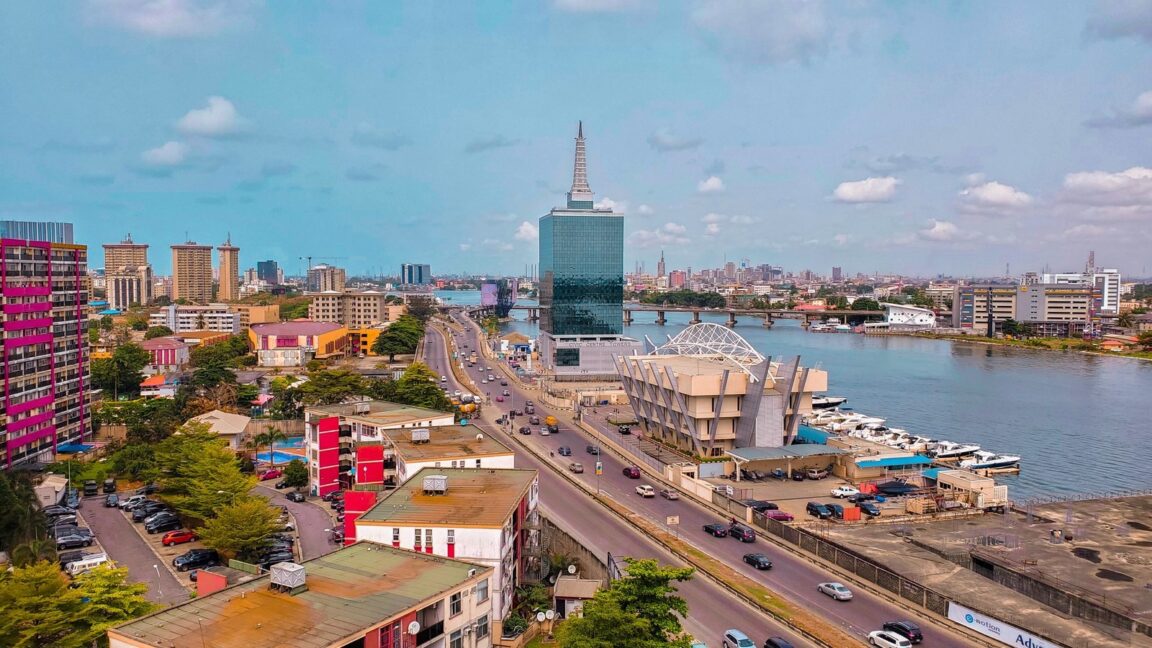
Photo: Ozumba Mbadiwe Avenue and the Civic Centre Towers on Victoria Island, above the Lagos Lagoon marina, Lagos, Nigeria. Image: Nupo Deyon Daniel, via Unsplash.