 James Wolfe
A legal short term rental in New York City is now easy to recognise, because the illegal kind has mostly vanished from the platforms. Two years and more into enforcement of Local Law 18, the Short-Term Rental Registration Law, a lawful listing for a stay under 30 days has a specific shape: the host is registered with the Mayor’s Office of Special Enforcement, the registration number shows on the listing, the host lives in the unit and will be physically present for the whole stay, and there are no more than two paying guests, who have open access to the whole home. Anything else, the entire apartment to yourself while the host is away, the lock on the bedroom door, the fourth guest on an air mattress, is not a loophole. It is the pre-2023 market, and in New York it is against the law regardless of how many five star reviews it carries. This guide sets out the rules as the city itself states them, so a traveller can read a listing the way an inspector would.
Quick Facts
The law: Local Law 18 of 2022, the Short-Term Rental Registration Law, administered by the Mayor’s Office of Special Enforcement, known as OSE
Enforcement began: 5 September 2023. Registration did not create the underlying rules; renting a whole home for under 30 days was already restricted, and the law added registration and platform verification on top
The host rule: The host must be the permanent occupant of the unit and must stay in the same unit for the entire guest stay
The guest cap: No more than two paying guests at a time
The household rule: Guests must have access to all parts of the dwelling. Locking internal doors to carve out a separate guest suite is prohibited
Never registrable: Rent regulated and rent controlled apartments, NYCHA homes, single room occupancy units, and any unit in a building on the Prohibited Buildings List kept by OSE
Registration cost: 145 dollars, lasting up to four years, on the city’s published fee
Facts checked: 24 November 2026, against NYC311, OSE and nyc.gov guidance
What does a legal listing actually look like?
Start with the number. A registered host receives a unique short term rental registration number from OSE, and booking services are required to verify a listing’s registration status through the city’s system before processing a transaction. An unverified transaction exposes the platform to a penalty of the lower of 1,500 dollars or three times the revenue earned, which is why the major platforms now strip out unregistered New York inventory rather than argue about it. For the traveller, the practical test is the stay itself. The listing should read as a room, or rooms, in someone’s lived in home, because that is what it legally is. Photographs of a clearly occupied home, a host who talks about being there, and a hard two guest limit are the markers of the real thing.
The stays that vanished are just as instructive. The whole floor apartment in a walk up, empty for your group of six, was the backbone of the old market and is now unlawful in two directions at once: the host is absent, and the party exceeds two guests. The spare unit a landlord rotated through the platforms is gone, because only a natural person who permanently lives in the unit can register it. And the buildings themselves opted out at scale: owners could place their buildings on the Prohibited Buildings List, after which OSE must deny registrations there, whatever an individual tenant or owner wants.
Which homes can never be registered?
Some categories are closed absolutely. Rent controlled and rent stabilised apartments cannot be registered, which removes a large share of the city’s older housing stock from the market at a stroke. NYCHA public housing is excluded. Single room occupancy units are excluded. Class B properties, the lawful hotel type buildings, sit outside this registration system because they operate under their own rules, which is why a listing that is genuinely a licensed hotel or hostel product is a different question from an apartment listing. The common thread is the law’s purpose: Local Law 18 was built to return homes used as illegal hotels to the housing market, and its exclusions protect exactly the affordable stock the city was losing.
Travellers priced out of the surviving registered rooms have mostly moved to the city’s hotels, which is why understanding the total price rules matters; our guide to New York hotel fees and what a quoted rate must include explains the other side of the same market. Those who still prefer a residential street should choose a neighbourhood first and a property second, using our guide to what to pack for New York in December only after the stay itself is lawful and booked.
What should a guest check before paying?
Four checks, in order. First, the registration: look for the OSE registration number on the listing, and be wary of any host who wants to move the booking off the platform, because the platform’s verification is part of your protection. Second, the host’s presence: if the listing promises the place entirely to yourself for under 30 days, it is describing an unlawful stay, however polished it looks. Third, the party size: two paying guests maximum, and a host who cheerfully accepts five is telling you the registration, if any, is not being honoured. Fourth, the doors: guests are entitled to access the whole dwelling, and a padlocked internal door creating a sealed guest wing breaches the common household rule.
If a stay goes wrong, the city’s own data helps: OSE publishes registration and listings data with the addresses of currently registered short term rentals, so a traveller can confirm a host’s status independently. And remember the boundary that solves many dilemmas. Stays of 30 consecutive days or more sit outside the short term rules entirely, which is why the lawful long stay market, furnished monthly rentals in ordinary apartment buildings, has grown as the nightly market shrank. For a month or longer, New York is a normal rental negotiation. For a long weekend, it is a registered room in a home with its owner in it, or a hotel. There is no third category anymore.
Frequently Asked Questions
Can I rent a whole apartment in New York for a week?
No. Renting out an entire apartment or home for fewer than 30 days is not permitted, even by the owner, and even if the owner lives in the building. Short stays are lawful only as a registered stay in the host’s own home, with the host present.
How many guests can a legal New York short term rental take?
Two paying guests at a time, maximum. Larger parties belong in hotels or in a stay of 30 days or more.
How do I know if a listing is registered?
A registered host has a unique OSE registration number, platforms must verify registration before processing the booking, and OSE publishes the addresses of currently registered rentals. Book on the platform, where the verification happens, rather than privately.
Why did so many New York listings disappear in 2023?
Enforcement of Local Law 18 began on 5 September 2023. Unregistered listings could no longer be transacted by booking platforms, and the rules themselves, host present, two guests, no whole home rentals, excluded most of the old inventory by design.
Are stays of 30 days or more treated differently?
Yes. The short term rental rules govern stays under 30 consecutive days. A stay of 30 days or more is ordinary occupancy and sits outside the registration system, which is why monthly furnished rentals remain widely available.
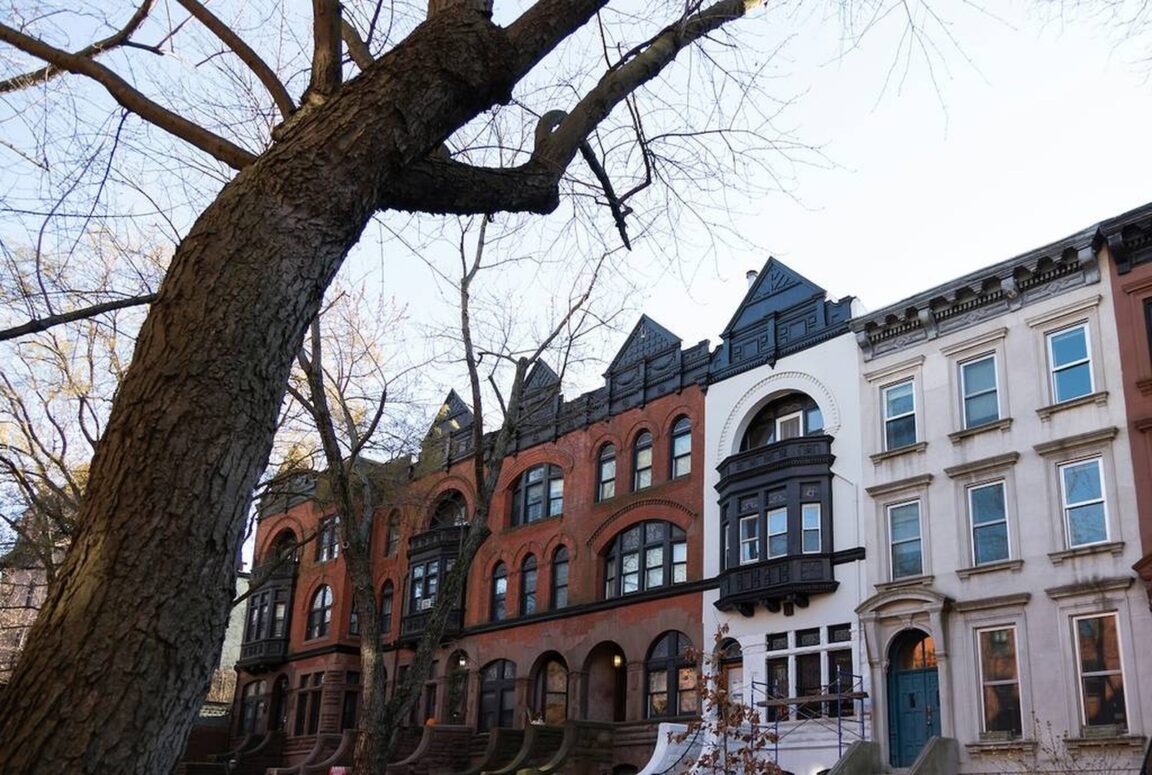
Photo: Park Slope brownstones in Brooklyn, New York, the kind of residential street where registered home stays, with the host in residence, are the lawful short stay. Image: Sam Balye, via Unsplash.