 Maya Chen
Ceviche in Lima is lunch, full stop: the fish is bought at dawn, the cevicherías open late morning, the market counters are at their best before one o’clock, and by mid-afternoon the serious houses are closing. The order is equally fixed. A leche de tigre to start, a classic ceviche of the day’s white fish with camote and choclo, and, if the table is still curious, a mixed or Nikkei variation after, never before. Dinner is for chifa. Travellers who reverse that clock eat yesterday’s idea of the dish in an empty room.
Quick Facts
The hour: Ceviche is a lunch dish. Market cevicherías peak before 1pm, and many dedicated cevicherías close by mid or late afternoon.
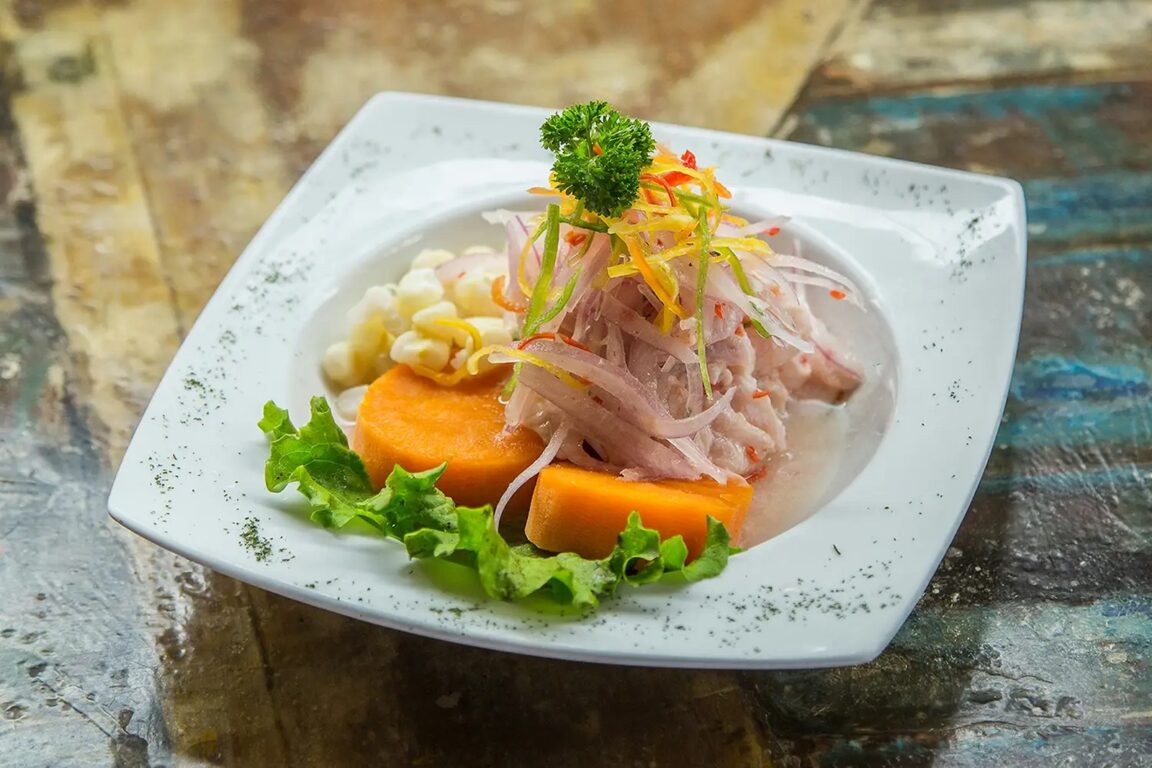
The dish: Fresh white fish cured briefly in lime juice with salt, ají limo chilli and red onion, served with camote (sweet potato) and choclo (large-kernel corn).
The leche de tigre: The citrus marinade itself, served in a small glass as an appetiser or pick-me-up, sometimes with a few pieces of fish or seafood.
The UNESCO note: The practices and meanings associated with Peruvian ceviche were inscribed by UNESCO on its Intangible Cultural Heritage list in 2023.
The fish rule: The day’s catch decides the ceviche. Lenguado (sole) is the prestige fish, corvina and other firm white fish are the daily standard.
The evening answer: Chifa, Peru’s Chinese-Peruvian kitchen, is the dinner that follows a proper ceviche lunch.
Why is ceviche never dinner?
Because the dish is built on the morning’s fish market. Lima’s ceviche tradition runs on fish landed overnight and sold at dawn, and the whole culture of the cevichería, from market stalls to the famous lunch-only houses of Miraflores and Surquillo, is timed to that freshness. Lime juice does not cook fish the way heat does. It firms and flavours it, and the margin between bright and tired is a matter of hours. Peruvians built the meal at midday because that is when the dish is true, and the custom hardened into a rule with real logic under it.
There is also a rhythm argument. Ceviche is sharp, cold, spicy and acidic, a midday dish for a coastal city, followed by the afternoon and, in the evening, by the warm, soy-dark comfort of chifa. Eating ceviche at 9pm in Lima is possible in hotel restaurants and tourist houses, and nobody will stop you. It is simply not how the city does it, and the fish will rarely be the morning’s best. For the city’s wider table, see what to eat in Lima, and for the Japanese-Peruvian branch of the story, the Lima Nikkei guide.
What is the leche de tigre order?
Leche de tigre, tiger’s milk, is the marinade: lime juice, fish juices, ají, onion, coriander and seasoning, the liquid left in the bowl when ceviche is made. Served in a small glass, sometimes with a piece of fish, a prawn or a little fried corn, it is the correct first order at a cevichería. It wakes the palate, it tests the house, because a kitchen’s leche de tigre tells you its seasoning hand in one sip, and it is traditionally credited with restorative powers after a heavy night, a claim Lima makes with a straight face and long experience.
Order one per person, drink half, and keep the rest for the ceviche itself. Some houses offer it spiked or in variations, by fish, by rocoto, by seafood. Keep the first one classic. The variations are a second visit’s business, or a long lunch’s third act.
How do the market cevicherías work before one?
Inside and around Lima’s markets, Surquillo most famously for visitors staying in Miraflores and Barranco, ceviche counters run on speed and turnover. You sit on a stool, the menu is short, the fish is whatever the stalls outside are selling that morning, and a ceviche arrives in minutes with its camote, choclo and cancha, the toasted corn that gives the plate its crunch. Prices are a fraction of the famous restaurants, the leche de tigre is assertive, and the whole transaction, order to empty plate, can take twenty minutes.
Go before one, because turnover is the quality system: the best counters sell out of the best fish, and the crowd thins into the afternoon. Take small bills, watch the counter work for a minute before ordering, and order the ceviche clásico first even if the menu tempts you with a dozen variations. The classic is the benchmark every Limeño at the counter is judging, and it is the one the kitchen cannot afford to get wrong.
One more market rule deserves stating plainly, because visitors break it daily: do not negotiate the ceviche. Market counters price for the neighbourhood, the portions are generous, and the queue behind you is made of regulars the stallholder has fed for years. Pay what is asked, eat what is served, and save your bargaining energy for the taxi rank. The counter’s reward for good behaviour is real, too. A visitor who returns a clean plate, thanks the cook and comes back a second day is often waved to a stool faster and served the cut the regulars get.
What follows a proper seafood noon?
The afternoon belongs to the rest of Lima’s table, and the evening to chifa. Chinese immigration to Peru began in the nineteenth century, and the kitchen it built, Cantonese technique on Peruvian ingredients, is the city’s second great tradition: lomo saltado, beef stir-fried with onion, tomato, soy and fries, chaufa rice, sopa wantán, and the tallarines. A day that starts with ceviche at noon and ends in a chifa in Barrio Chino or a neighbourhood house is a day structured the way Lima itself structures eating, coast at midday, wok at night.
Between the two, leave room for the small things: a pisco sour before dinner, anticuchos from a grill cart in the early evening, and, on another day entirely, the tiradito, ceviche’s Nikkei cousin, sliced like sashimi and dressed at the moment of serving. Lima rewards the traveller who treats its meals as a timetable rather than a list.
Frequently Asked Questions
Why do Lima cevicherías close in the afternoon?
Because ceviche is a lunch dish built on the morning’s catch. Dedicated cevicherías open late morning, serve the midday peak, and close by mid or late afternoon when the day’s fish is gone. That closing time is a quality signal, not an inconvenience.
What fish is used for ceviche in Lima?
Firm white fish, decided by the day’s catch. Lenguado, sole, is the prestige choice, with corvina and similar white fish as the daily standard. Shellfish and mixed seafood versions exist, but the classic is white fish.
What is leche de tigre?
The citrus marinade of ceviche itself: lime juice, fish juices, ají chilli, onion and coriander, served in a small glass as an appetiser. Order one first, because it tests the kitchen’s seasoning in a single sip.
What are camote, choclo and cancha?
The classic accompaniments. Camote is sweet potato, choclo is large-kernel Peruvian corn on the cob, and cancha is toasted corn served alongside for crunch. They are not garnish. They balance the acid and heat.
Is ceviche safe to eat at a market counter?
At a busy market counter with high turnover, it is the way Lima eats it daily. Choose counters with a queue, order the classic, and go before 1pm when the fish and the turnover are at their best.
Image: A Peruvian ceviche of raw fish, red onion and ají with sweet potato and corn. Photo: Pirata Studio Film, via Unsplash (hosted copy via Inca Expert), Unsplash License, used with credit.