 Priya Nair
Eat Pondicherry as two cities sharing one table. On one side of the canal stands White Town, the French quarter of mustard and white facades, where Creole family kitchens serve a Franco Tamil cooking found nowhere else in India and bakeries open the day with croissants and filter coffee. On the other side spreads the Tamil town, where the mess lunch, rice, sambar, poriyal and curd served fast and communally, is the real midday institution. Add a morning drive out to Auroville for a farm lunch under the trees, and the town becomes a three act meal. This guide, checked against Puducherry’s official tourism information and Auroville’s own site on 24 November 2026, keeps the cuisines distinct, because mixing them up is the one mistake every first timer makes.
Quick Facts
Where: Puducherry (Pondicherry), on the Bay of Bengal coast of Tamil Nadu
The two tables: Creole Franco Tamil kitchens in White Town; Tamil mess lunches in the Tamil quarter
Morning ritual: Bakery breakfast in the White Town grid, then the Rock Beach promenade
Day trip plate: Auroville, about 10 km north, for farm lunches and the Matrimandir viewpoint
Street order: White Town runs on a neat grid of rues between the canal and the sea
Facts checked: 24 November 2026, on tourism.puducherry.gov.in sources and auroville.org
What exactly is Creole cooking in Pondicherry?
It is the home cooking of Pondicherry’s Creole families, the community formed across the French centuries, and it is neither French restaurant food nor Tamil food with a French accent. A Creole kitchen works in both grammars at once: coconut milk and tamarind meet wine and mustard; fish is marinated with local spice and finished with a French hand; vindaloo style heat sits beside ratatouille logic on the same thali sized table. The dishes to hunt are the family ones, prawn and fish curries built on coconut and fenugreek, mutton in dark, slow gravies, and the vegetable sides that borrow French technique for Tamil produce. These kitchens are often small, sometimes in heritage houses in the White Town grid, and the cooking is at its best at lunch, when the family pot is fresh.
The honest way to find them is to ask locally and book the small rooms ahead, because the Creole table is a domestic tradition that tourism is still learning to visit politely. What it is not is the generic continental menu of the promenade cafes. If the menu could be served in any beach town in the world, it is not the Creole kitchen you came for. The Sri Aurobindo Ashram end of White Town, around the Manakula Vinayagar temple and the old lighthouse streets, is the grid to walk slowly, reading menus and doorways, before committing to a table.
How does the Tamil mess lunch work?
Fast, communally and on banana leaf logic. The Tamil mess, the small, no frills lunch room of the Tamil quarter, serves the meals format: rice at the centre, sambar and rasam poured over, a poriyal of the day’s vegetable, kootu, appalam, curd, and pickle, with servers circling to refill until you signal stop. It is the best value lunch in Pondicherry and, for many travellers, the best lunch of any kind, because the cooking is timed to the hour and nothing waits under a lamp. Go at the local hour, between noon and one, eat with the room rather than ahead of it, and understand the etiquette: the leaf is folded toward you at the end to signal satisfaction, water is sipped rather than gulped with the meal by traditionalists, and payment is quick and unceremonious.
The mess also teaches the geography of the town. White Town’s grid, with its rue names and its canal boundary, was the French city; the Tamil town across the canal was always the larger, working city, and its food culture is the deeper one. A traveller who eats only in White Town has visited the postcard. Cross the canal for the mess lunch, the dosa and idli breakfast rooms, and the evening tiffin stalls, and the town doubles in size. Readers who enjoy eating a city dish by dish will find the same pleasure in our guide to Penang’s hawker centres ranked by dish.
Where do the bakeries fit the morning?
At the start, on the Rock Beach side of the grid. Pondicherry’s bakery culture is the French inheritance at its most everyday: small bakeries and cafes in White Town turning out croissants, pains au chocolat, baguettes and quiches alongside South Indian filter coffee, which the town has made entirely its own. The order that works is bakery first, while the ovens’ morning batch is out, then the promenade along Rock Beach before the heat builds, with the Gandhi statue and the old pier as the walk’s markers. Bakeries here are also the practical traveller’s friend: bread and pastry for a train or bus day, and cakes that travel to Auroville and back without complaint.
One caution on expectations. The White Town bakery is a Pondicherry institution, not a Paris branch office; the charm is precisely the hybrid, a croissant eaten with filter coffee in a courtyard under a frangipani tree, bougainvillea over the wall, the Bay of Bengal two streets east. Judge it as its own tradition, the town’s third cuisine, the Franco Tamil breakfast, and it never disappoints.
Is the Auroville farm lunch worth the drive?
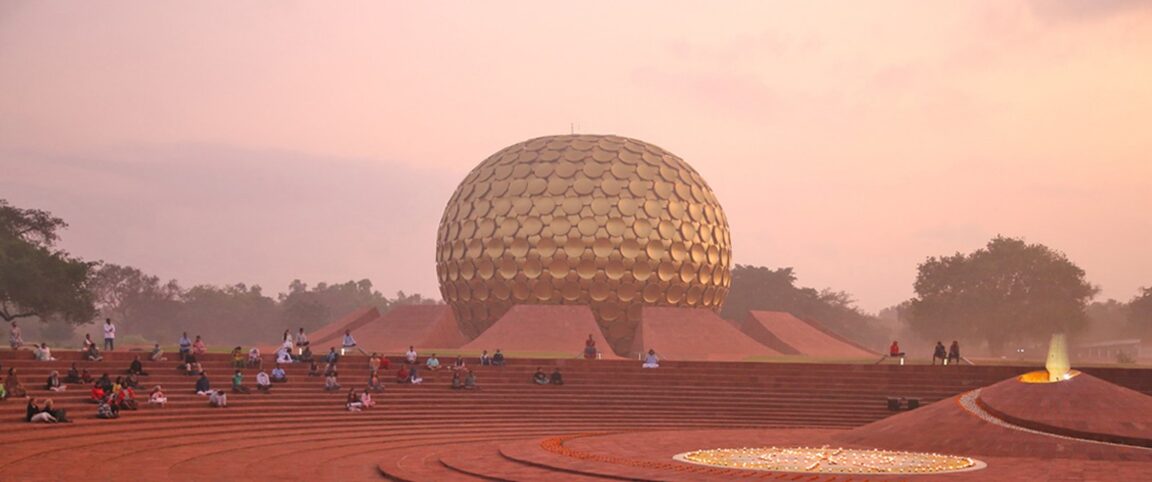
Yes, as the day’s third act and its change of key. Auroville, the international township founded in 1968 about ten kilometres north of the town, grows a meaningful share of its own food on farms and community kitchens, and its cafes and farm restaurants serve lunches built on that produce: salads, wood fired breads, cheeses made in the township, and thalis that lean on the farm’s greens and grains. The food is simple by design and tastes of its short supply chain. Pair lunch with the Matrimandir viewpoint, the golden sphere at the township’s centre, seen from the public viewing point, and the visit becomes Pondicherry’s necessary counterweight: the town’s history is colonial and devotional, Auroville’s experiment is agricultural and utopian, and the two explain each other.
Logistics are plain. Auroville rewards an early start, a booked lunch where the kitchen asks for it, and cash or card flexibility at the small counters. The drive passes the coast road and the township’s red earth lanes, and the return to Pondicherry by late afternoon sets up the promenade at its best hour, when Rock Beach fills with the town taking its evening air and the bakeries sell the day’s last batch. For another city where a historic quarter’s kitchens carry the story, see our Bo-Kaap cooking walks in Cape Town.
Frequently Asked Questions
What is the difference between Creole and Tamil food in Pondicherry?
Creole is the Franco Tamil home cooking of White Town’s Creole families, blending coconut, tamarind and local spice with French technique. Tamil food is the region’s own cuisine, centred on the meals format of rice, sambar, rasam, poriyal and curd served in the mess lunch rooms of the Tamil quarter.
What is a Tamil mess lunch?
A fast, communal set lunch: rice with sambar and rasam poured over, the day’s poriyal and kootu, appalam, curd and pickle, with servers refilling until you signal you are done. Go between noon and one, when the cooking is freshest.
Where should you have breakfast in Pondicherry?
In a White Town bakery, with a croissant or pain au chocolat and South Indian filter coffee, early enough to walk the Rock Beach promenade before the heat builds.
How far is Auroville from Pondicherry and is lunch there worth it?
About ten kilometres north. Yes: its farm cafes and community kitchens serve lunches built on township grown produce, and the Matrimandir viewpoint pairs naturally with the meal.
Which part of town should you base yourself in for food?
White Town for the Creole kitchens and bakeries on your doorstep, with the discipline to cross the canal daily for the Tamil quarter’s mess rooms, dosa breakfasts and tiffin stalls, where the deeper food culture lives.
Photo: The Matrimandir at Auroville at dusk, its golden sphere above the amphitheatre, the township whose farm lunches close the article’s eating day. Photo: Auroville, via auroville.org, Auroville’s official website, used with credit.