 Camille Baptiste
A po’boy is decided before the filling ever touches the bread. The sandwich stands or falls on New Orleans French bread, a loaf with a thin, shattering crust and a feather light interior, baked above all by the G.H. Leidenheimer Baking Company, which has supplied the city’s po’boy shops since long before the sandwich had a name. Order roast beef debris if you want the gravy soaked classic, fried shrimp if you want the crisp and cool contrast, and in either case order it dressed, with lettuce, tomato, pickles and mayonnaise. Get the bread and the dressing right and the famous shops, Parkway, Domilise’s and Liuzza’s by the Track, are variations on a theme. Get them wrong and no filling saves it.
Quick Facts
- The bread: New Orleans French bread, thin crisp crust, airy centre, uniform from end to end; the standard loaf is about 32 inches long before it is cut for sandwiches
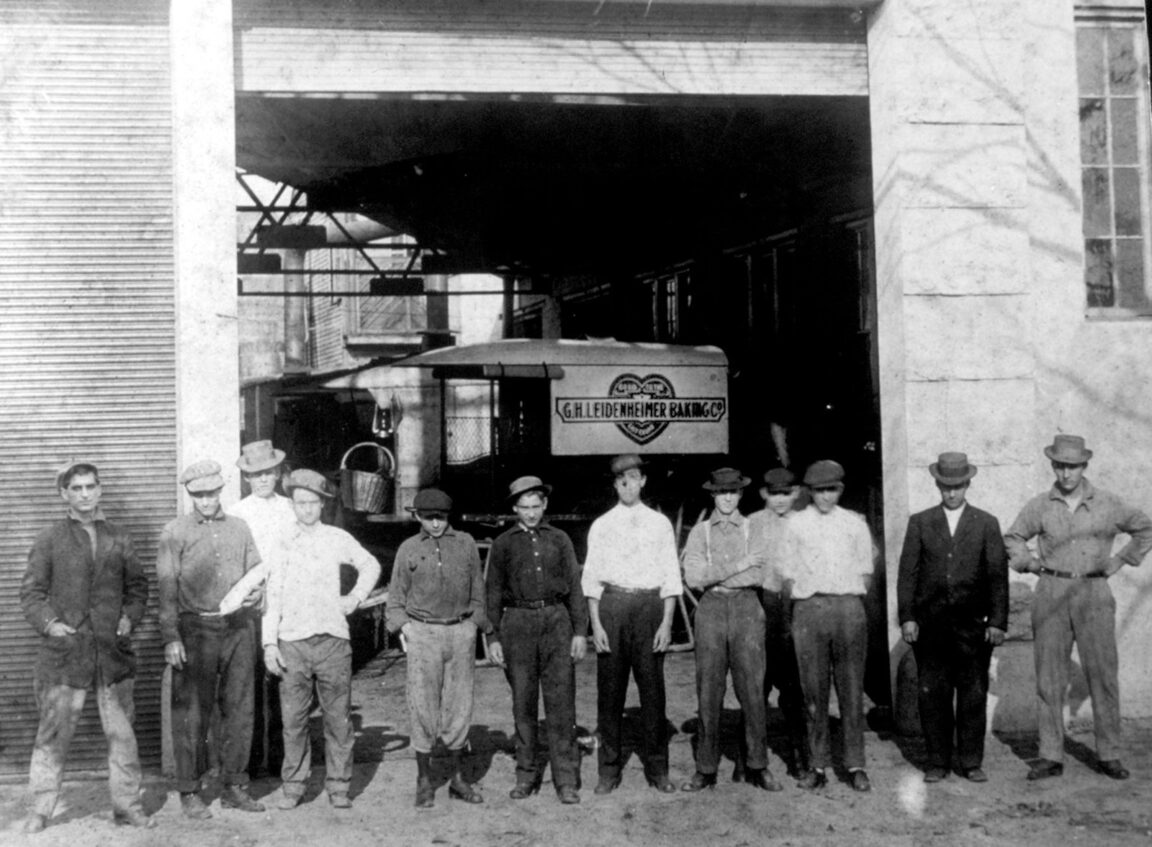
- The bakery: G.H. Leidenheimer Baking Company, founded 1896 by George Leidenheimer, baking on Simon Bolivar Avenue since 1904
- The name: From the 1929 streetcar strike, when the Martin brothers fed striking workers free sandwiches and called the men poor boys
- Dressed: Lettuce, tomato, pickles and mayonnaise; say “dressed” and you get all four
- Debris: The roast beef version where the meat is joined by the bits and drippings from the pan, soaked into the bread with gravy
- The benchmark shops: Parkway Bakery and Tavern in Mid-City, Domilise’s in Uptown, Liuzza’s by the Track near the Fair Grounds
- Order size: A whole po’boy is a commitment; a half is a sensible lunch for most appetites
Why is the bread an argument at all?
Because New Orleans French bread is not a baguette and not a hoagie roll, and the difference is structural. A baguette is tapered, dense crumbed and built to tear; a hoagie roll is soft and doughy. The po’boy loaf is rectangular and uniform from end to end, with a crust that crackles and flakes when bitten and an interior so light it can absorb hot gravy without collapsing into paste. That combination, crisp shell, hollow hearted crumb, is what lets a sandwich hold fried shrimp, cold dressing and gravy in the same bite. Leidenheimer’s version is the reference standard: flour, yeast, water, a little salt and sugar, with soybean oil where lard once went, baked into loaves the bakery has refined since George Leidenheimer, an immigrant from Deidesheim, Germany, founded the company in 1896 and moved it to Simon Bolivar Avenue in 1904. Most of the city’s serious po’boy shops buy from Leidenheimer by name, and a shop’s bread supplier is treated as a credential. As the Domilise family puts the local consensus, if you do not have the right bread, it is just not a po’boy.
Where does the name come from?
The best documented account begins on July 1, 1929, when New Orleans streetcar workers went on strike. Bennie and Clovis Martin, brothers who had themselves worked as streetcar conductors before opening a coffee stand and restaurant near the French Market, announced they would feed the strikers for free. The sandwiches they served were large, cheap and built on the long local loaf, and the men they fed were the “poor boys” of the union hall. The name travelled from the men to the sandwich. The Louisiana State Museum treats the Martins’ own correspondence as the primary source for the story, which is why it survives scrutiny better than most food origin tales: whatever earlier roots the term may have, no rival account is as well documented. The debris style, roast beef with its pan fallen bits and gravy, became standard by the middle of the century and is now the version most associated with the old line shops.
Debris or fried shrimp: how do you choose?
They are two different sandwiches wearing the same bread. The roast beef debris po’boy is a hot, wet, savoury construction: sliced roast beef reheated in its gravy until the edges fray into debris, ladled over the loaf so the crumb drinks the juices, then dressed. It eats like a stew in a roll and it is the connoisseur’s order, the one locals use to judge a kitchen’s gravy. The fried shrimp po’boy is a study in contrast: shrimp fried crisp and seasoned, piled high, cooled by lettuce, tomato and mayonnaise, the crust of the bread echoing the crust of the fry. Fried oyster is the richer cousin, softer and brinier. First visit protocol is simple. If you can eat two po’boys in a day, order debris at one shop and shrimp at another. If you can eat one, order debris, because gravy is where a shop shows its hand. Either way, say “dressed” unless you have a reason not to, and expect the sandwich to be bigger than the photograph in your head: the half size exists for a reason. Readers eating their way across the Gulf South and beyond can compare notes with our Ensenada fish tacos guide and our Port of Spain doubles guide, two more sandwiches whose bread decides everything.
Which shops dress them properly?
Parkway Bakery and Tavern, on Hagan Avenue in Mid-City, is the city’s reference point for the roast beef debris po’boy and has been serving since 1911, with a celebrated second life after it reopened in 2003 and again after Hurricane Katrina; its dining room is a civic institution as much as a restaurant. Domilise’s Po-Boy and Bar, on Annunciation Street in Uptown, is the family run counter where the fried shrimp po’boy is fried to order and the room has changed as little as possible for as long as possible; regulars will tell you the shrimp here settles the fried argument. Liuzza’s by the Track, near the Fair Grounds, carries the roast beef flag for its neighbourhood and adds a famous barbecue shrimp variant stuffed into a hollowed loaf. Mahony’s, on Magazine Street, is the newer generation’s entry, known for softshell crab in season. None of these shops needs a reservation culture or a tasting menu; they need you to order at the counter, take a number or a tray, and eat the sandwich while the crust is still crackling.
How do you judge a po’boy like a local?
Four tests, in order. The crust should shatter and shed flakes on the paper; a silent, soft bite means the wrong bread or an old loaf. The crumb should compress, not tear, so the sandwich folds around the filling instead of splitting. The gravy on a debris should taste of beef and pepper, not flour, and it should soak the bottom crumb without dissolving it before the last bite. The dressing should be cold and generous, because the contrast is the design. A shop that passes all four is doing the whole thing right, and in New Orleans that verdict is never granted lightly, which is precisely why the arguments are worth travelling for.
Frequently Asked Questions
What does “dressed” mean on a po’boy?
Dressed means the full standard set: shredded lettuce, tomato, pickles and mayonnaise. Order a po’boy dressed unless you want it plain, and say so clearly, because shops assume different defaults.
What is debris?
Debris is the roast beef style in which the meat is served with the small bits that fall from the roast and the pan gravy they cook in. It is juicier and messier than plain sliced roast beef, and it is the version most locals order.
Why is Leidenheimer bread such a big deal?
Because the loaf is the sandwich’s structure: a thin, crisp crust and an almost weightless interior that absorbs gravy without falling apart. Leidenheimer, founded in 1896, is the bakery most of the benchmark shops specify by name.
How big is a po’boy?
Big. The bakery loaf runs about 32 inches and is cut to size; a whole sandwich at the famous shops is a two handed, two napkin meal. Order a half if you are grazing more than one shop.
Where should a first timer go?
Parkway for the debris benchmark, Domilise’s for fried shrimp, and Liuzza’s by the Track if the Fair Grounds side of town suits your day. All three dress a sandwich properly.
Bakery history, loaf specification and shop details checked against Leidenheimer Baking Company’s own site and New Orleans food history sources on November 24, 2026.
Photo: Leidenheimer Baking Company, via leidenheimer.com, the bakery’s official website, used with credit. Bakery staff with a G.H. Leidenheimer Baking Co. delivery wagon in the company’s early years.