 Thandiwe Nkosi
The best way into Bo-Kaap is through its kitchens. This small neighbourhood on the slopes of Signal Hill, just above Cape Town’s city centre, is the historic home of the Cape Malay community, and its cooking, a fusion of Southeast Asian, Indian, East African and Dutch influences built over more than three centuries, is one of the great cuisines of Africa. A cooking walk here has a natural order: start at the spice shop on Wale Street to learn the blends, eat the savoury dishes in the family restaurants, take a hands on class in a home kitchen if you can book one, and finish with a koesister, ideally on a Sunday morning. This guide explains each dish on its own terms, including the koesister versus koeksister distinction that trips up almost every visitor.
Quick Facts
Neighbourhood: Bo-Kaap, on the slopes of Signal Hill above central Cape Town
Cuisine: Cape Malay, halaal, built on spice blends, slow bredies and hand folded pastry
Spice shop: Atlas Trading on Wale Street, a family business trading since 1946
Key sweet: The Cape Malay koesister, spiced, syrup dipped and rolled in coconut, a Sunday morning tradition
Anchor restaurants: Biesmiellah and Bo-Kaap Kombuis, both long standing family restaurants
Context stop: The Bo-Kaap Museum on Wale Street, housed in one of the neighbourhood’s oldest buildings, dating to the 1760s
What makes Cape Malay cooking different from everything around it?
Cape Malay food was created at the Cape by enslaved and exiled people brought from Southeast Asia and the Indian Ocean world, cooking with local ingredients and Dutch techniques. The result is a cuisine that uses the spice grammar of Asia, turmeric, cardamom, cinnamon, aniseed, cumin and masala blends, with a gentler hand than most visitors expect. A Cape Malay curry is fragrant and layered rather than punishingly hot, built to be eaten with rice, flaky roti or a soft samoosa folded by hand.
Two dishes explain the range. Bobotie is spiced minced meat baked under an egg custard topping, sweet and savoury at once, and often described as South Africa’s national dish. A bredie is the opposite technique: meat and vegetables slow cooked together until the sauce and the ingredients become one thing, with tomato bredie the classic of the family. Understanding that bredie means patience, not a sauce poured over meat, is the difference between reading a Bo-Kaap menu and actually understanding it. For the wider city table around this neighbourhood, see our guide to what to eat in Cape Town, from braai to Cape Malay curries.
Why should every cooking walk start at Atlas Trading on Wale Street?
Atlas Trading Company, on Wale Street, has supplied this neighbourhood’s kitchens since 1946, and it is the single most useful stop on a food walk. The shop sells ready mixed curry and masala blends alongside whole spices, dried fruit and the ingredients for dishes such as koesisters and boeber, the sweet spiced milk drink. Staff are known for explaining how a blend is used, which turns a souvenir purchase into a cooking lesson.
Go to Atlas before you eat, not after. Once you have smelled the difference between a curry blend and a masala, and heard what each is for, the menus in the restaurants up and down Wale Street stop being lists and start being arguments you can follow. Buy small quantities of the blends you tasted in dishes later that day, and ask specifically about the ingredients for koesisters if you plan to attempt them at home. The shop sits in the middle of the neighbourhood’s most walked street, so it also works as the natural meeting point and orientation stop for the whole walk.
What is the difference between a koesister and a koeksister?
This is the rule to learn before ordering anything sweet. The Cape Malay koesister is a soft, oval, spiced doughnut, flavoured with cinnamon, cardamom and aniseed, fried, dipped in syrup and rolled in desiccated coconut. The Afrikaner koeksister is a different pastry entirely: a plaited, crisp dough twist soaked in cold syrup, with no coconut and a crunch the koesister never attempts. The names differ by one letter and the pastries share almost nothing else.
In Bo-Kaap, koesisters are a Sunday morning tradition, sold from homes and corner shops, and they sell out. Against the Grain on Wale Street is noted for having them every day, and Rose Corner Cafe is the neighbourhood stop locals name for a warm batch, but the honest advice is to go before midday whatever day you try. Order them by their full name, koesister, and let the seller explain their version. Getting the word right is a small courtesy that signals you know whose neighbourhood you are eating in.
Where should you eat, and in what order?
Build the eating around two anchor restaurants. Biesmiellah, on Upper Wale Street, is the neighbourhood’s long standing, no frills family restaurant, the place for a classic Cape Malay curry eaten without ceremony. Bo-Kaap Kombuis, at 7 August Street on the restaurant’s own contact page, is the established sit down alternative, known for tasting platters that let a first timer work through bobotie and curries in one sitting, with a view over the city. Neither needs dressing up. Both reward booking ahead at weekends.
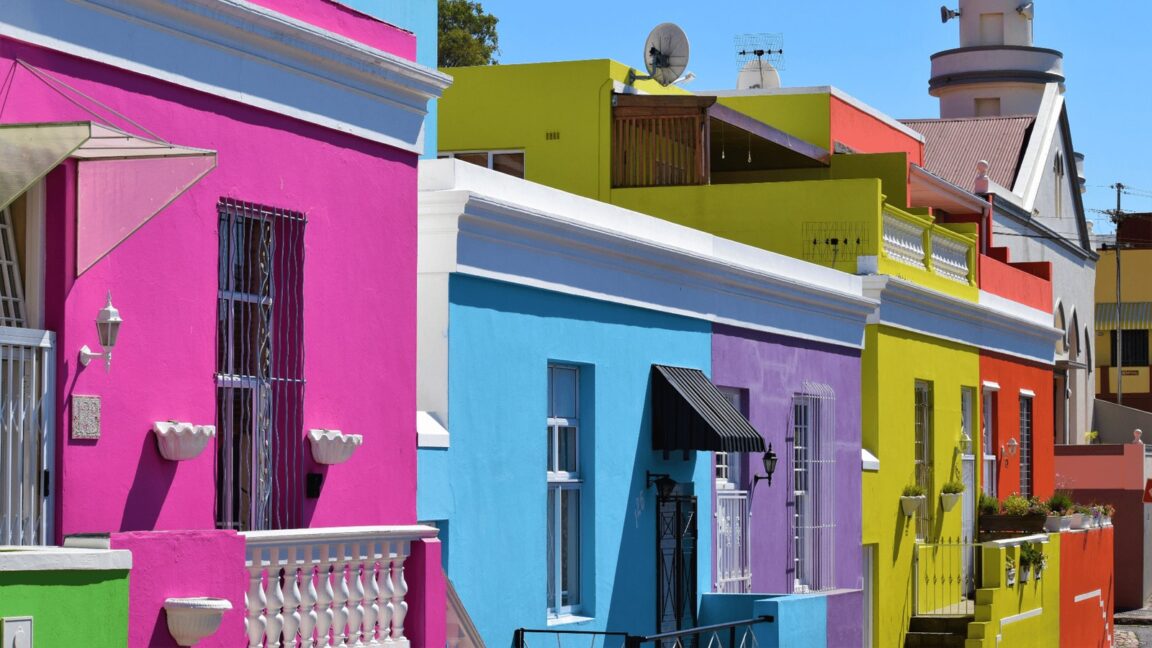
Between the anchors, graze deliberately. A samoosa from a corner shop teaches the hand folded pastry better than any description. Daltjies, the spinach and onion fritters, are the snack to order when they appear. Boeber, sweet vermicelli milk with cardamom, is the drink that belongs to Ramadan evenings and celebrations. And keep the walk itself respectful: Bo-Kaap is a living residential neighbourhood of families, mosques and corner shops, not a film set, a point worth holding while photographing the famous painted houses. Our two days in Cape Town itinerary shows where a Bo-Kaap morning fits into a first visit.
How do the home kitchen cooking classes work?
The deepest version of a Bo-Kaap food walk ends in someone’s kitchen. Several residents open their homes for small cooking classes and cooking walks, where guests help fold samoosas, roll rotis and blend a curry from its component spices before sitting down together to eat the meal they made. Food walking tours of the neighbourhood follow a similar logic at street level, moving between spice shops, bakeries and home kitchens with tastings along the way.
Book these in advance, keep groups small, and treat the class as the main event of the day rather than an add on. The value is not only technique. It is hearing, from the cook, which dishes belong to weddings, which to Ramadan, which to Sundays, and how the recipes travelled. Many Cape families still cook from Faldela Williams’ classic Cape Malay cookbook, and a class is often where a visitor first hears her name. Leave with the spice blends from Atlas, the names of the dishes written down, and one recipe you have actually cooked once under supervision. That is a souvenir no market stall can sell you.
How do you sequence a Bo-Kaap cooking walk in one morning?
Start early at the top of the neighbourhood and work downhill with your appetite. Begin with the Bo-Kaap Museum on Wale Street for the history that makes the food legible: whose houses these were, how the community formed, and why the kitchen became the archive. Fifteen unhurried minutes there will change how every recipe name sounds for the rest of the morning.
Move next to Atlas Trading while your palate is fresh, buy the blends you intend to taste later, and ask the staff which dish each blend belongs to. Then eat in ascending order of weight: a samoosa and daltjies from a corner shop as a standing snack, a sit down curry or bobotie at one of the family restaurants as the main event, and a koesister as the final stop, remembering that the sweet course is the one most likely to sell out. If a home kitchen class is booked, place it last and let it replace the restaurant course rather than follow it, because you will cook and then eat a full meal at the end of the class. End the walk by leaving the famous painted streets the way residents would want them left: photographs taken from the street, doorsteps unblocked, and money spent in the neighbourhood itself rather than only looked at. That sequence, museum, spice, snack, meal, sweet, class, is the difference between a cooking walk and a photo walk with lunch attached.
Frequently Asked Questions
Is Bo-Kaap food halaal?
Bo-Kaap is a historically Muslim neighbourhood and its Cape Malay restaurants and eateries are halaal, which is part of the cuisine’s identity. Individual visitors with specific requirements should still confirm with the restaurant when booking.
When is the best time to find koesisters?
Sunday morning is the traditional time, when koesisters are sold from homes and corner shops across the neighbourhood. On other days, try the Wale Street cafes early, and always go before midday because batches sell out.
What should a first timer order in Bo-Kaap?
A Cape Malay curry or a tasting platter that includes bobotie, a samoosa while it is hot, daltjies if they are on, and a koesister to finish. That sequence covers the cuisine’s spice, pastry and sweet registers in one walk.
Can you take a cooking class in Bo-Kaap?
Yes. Residents run small classes from family kitchens, teaching samoosa folding, roti rolling and curry blending, ending with the shared meal. Book ahead, as groups are deliberately small.
What spices should you buy at Atlas Trading?
Start with the shop’s own curry and masala blends, the working heart of Cape Malay cooking, plus whole cardamom, cinnamon and aniseed if you plan to make koesisters. Ask the staff to match the blend to the dish you ate that day.
Photo: The painted houses of Bo-Kaap, Cape Town, with a mosque minaret above the rooftops. Image: Ken Treloar, via Unsplash.