 Elena Vasquez
Seville tapas works like this: one plate and one drink per bar, standing at the counter, then move. The bar-hop is the meal. Espinacas con garbanzos, the spiced spinach and chickpeas, is the lunch order that anchors the system, salmorejo is never confused with gazpacho by anyone who has eaten both, and the neighbourhoods divide by speciality: the old town for the classics, Triana for fried fish and river air, the Alameda for the late, younger round. Sit down and order five plates in one place and you have eaten dinner. You have not done tapas.
Quick Facts
The unit: One tapa and one drink per bar, two bars minimum, four or five on a full round.
The sizes: Tapa (small plate), media ración (half portion), ración (full portion for the table).
The lunch anchor: Espinacas con garbanzos, spinach and chickpeas with cumin, paprika, garlic and a splash of vinegar.
The cold rule: Salmorejo is thick, made with bread and topped with jamón and egg. Gazpacho is thinner and drunk from a glass. They are different dishes.
The counter rule: Standing at the barra is normal, faster and often where the day’s specials are chalked. A terrace seat costs time and sometimes a supplement.
The clock: Lunch runs from about 1pm, kitchens peak at 2pm, and the evening round starts after 8.30pm. Bars rest between services.
How does the one plate, one drink system actually work?
Walk in, find counter space, order one drink and the plate the bar is known for, eat standing, pay, and leave. That is the whole technology, and every part of it matters. One plate because the next bar has a different speciality and a stomach is finite. One drink because the round is long. Standing because the counter is where orders move fastest, where the waiter chalks your tab on the wood or the tile in the oldest houses, and where a solo traveller is never conspicuous. Moving because Seville’s bars are close together and the walk between them is part of the appetite.
The sizes give you control. A tapa is a tasting portion. A media ración suits two people sharing one speciality. A ración is a commitment, justified only for the plate you came across the city for. Couples who order tapas size at three bars will eat more variety than a group that orders raciones at one, and variety is the entire point. For the same grazing logic in another Spanish register, see what to eat in San Sebastian, and for Seville in festival mode, the Feria de Abril guide shows the city with its other appetite switched on.
Why are the espinacas a lunch order?
Espinacas con garbanzos is Seville’s great meatless plate: spinach and chickpeas stewed with fried bread, garlic, cumin, paprika and vinegar, a dish with roots in the city’s layered Jewish, Muslim and Christian kitchen history and a fixture of Lent and Holy Week cooking. It is served at lunch because that is when the day’s pot is fresh, when the bars cook their guisos, their stews, and when Sevillanos eat their main meal. By the evening round the espinacas may still be listed, but the lunch pot is the version to judge a bar by.
Order it with bread, because the oil at the bottom of the dish is seasoned like a sauce and leaving it is a small crime. Pair it at the same bar with a caña or a glass of fino, and notice what the dish does to the round: it is the plate that makes a tapas lunch a meal rather than a snack crawl, the ballast between fried things.
What is the salmorejo rule?
Salmorejo comes from Córdoba and Seville has adopted it completely: tomatoes, bread, olive oil and garlic blended thick enough to hold a spoon upright, served in a bowl topped with chopped jamón ibérico and hard-boiled egg. The rule is texture. If it pours, it is not salmorejo. Gazpacho, its famous cousin, is a thinner soup of tomato, pepper, cucumber and sherry vinegar, served cold in a glass or bowl to drink as much as to eat. Both are summer survival food in a city where summer is a serious season, and both are at their best from late spring into early autumn.
Order salmorejo as a tapa to share at the first bar of a lunch round, before anything fried. Its acidity and oil set up everything after. And never ask a Sevillano barman to explain the difference at length unless you have time: you will get the full lecture, with feeling, and your next bar will have closed its kitchen.
Which neighbourhoods should you sequence, and for what?
Start in the old town, the Casco Antiguo around the cathedral and the Alfalfa and Santa Cruz streets, where the oldest bars keep the classic repertoire: espinacas, salmorejo, carrillada (slow pork cheek), croquetas and the chalked tab. El Rinconcillo, founded in 1670 and cited as Spain’s oldest tapas bar, is the history stop on Calle Gerona, and its spinach and chickpeas are the order. Work west as the round goes on.
Cross the river to Triana for the fried register: pescaíto frito, mixed fried fish, boquerones, tortillitas de camarones, the lacy shrimp fritters from the Cádiz side of the tradition, eaten hot with a cold drink and the river in front of you. Finish, if the night is young, around the Alameda de Hércules, the long square north of the centre where the crowd is younger, the bars are newer, and the round can stretch. The distances are the system’s kindness: most hops are five to ten minutes on foot, short enough that a plate never goes cold in your plans and long enough to be ready for the next one.
Frequently Asked Questions
How many tapas bars should I visit in one round?
Three to five. Two bars is a snack, three is a lunch, and five with discipline is a full evening. Order one plate and one drink per bar and the arithmetic works itself out.
What is the difference between a tapa, a media ración and a ración?
A tapa is a small tasting plate, a media ración is a half portion, and a ración is a full portion meant for the table. Order tapas size while hopping and step up to a media only for a bar’s famous speciality.
Is it rude to sit down at a tapas bar?
No, but it changes the deal. Table and terrace service is slower, sometimes carries a supplement, and suits a settled ración rather than a hop. The counter is the local default for a round.
When do Seville tapas bars serve lunch and dinner?
Lunch kitchens run roughly from 1pm to 4pm with the peak at 2pm, and evening service starts around 8.30pm. Many bars close between services, so a 5pm tapas plan usually fails.
What should a vegetarian order in Seville?
Espinacas con garbanzos, salmorejo without the jamón topping, patatas bravas, tortilla and grilled vegetables cover a full round. Say sin jamón clearly for the salmorejo, because the ham is the standard garnish.
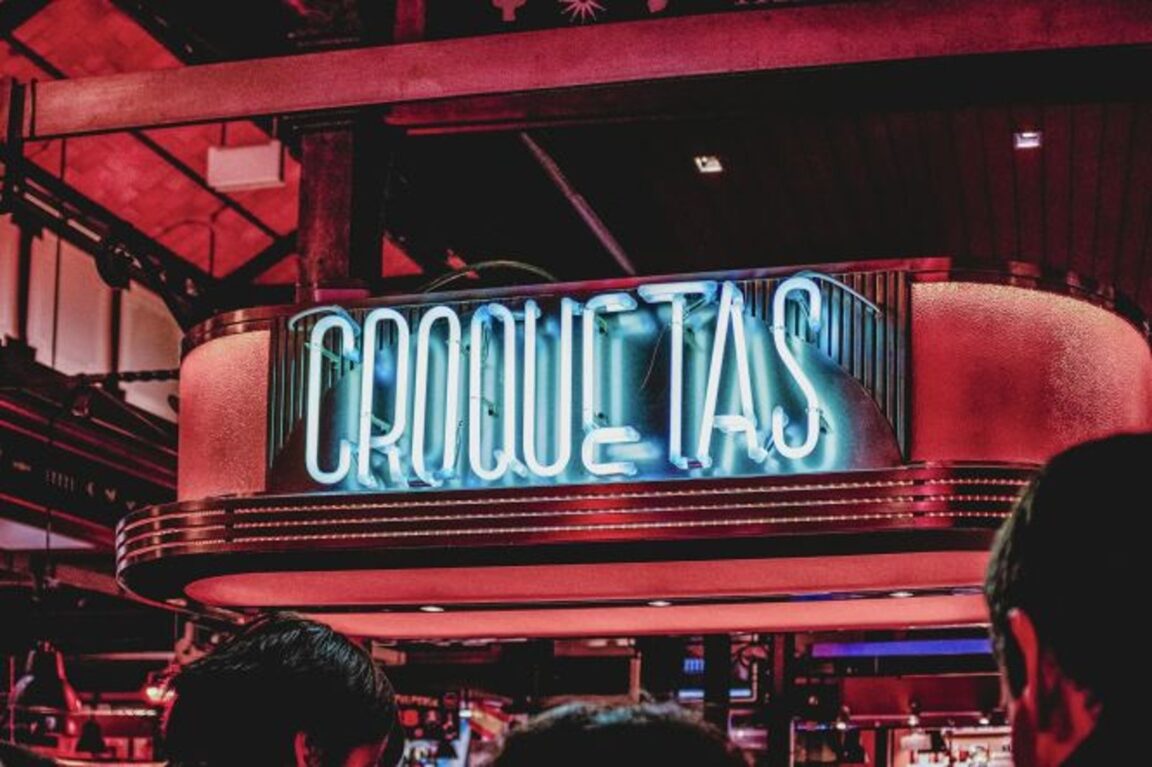
Image: A croquetas stall sign in a Spanish market hall, croquetas being a fixture of the tapas counter. Photo: Andrés Alagón, via Unsplash (hosted copy via Restaurant Guru), Unsplash License, used with credit.