 Rafael Santos
A Buenos Aires parrilla order has a fixed grammar: provoleta first, then the offal and sausages, then the cuts in a ladder from the grill’s quickest to its slowest, with Malbec by the glass throughout and salad doing more work than visitors expect. Order in that sequence and the kitchen can pace your meal the way the fire demands. Order everything at once, or start with the premium steak, and you will eat a good meal in the wrong order, which in a parrilla is a lesser meal.
Quick Facts
The opening: Provoleta, a thick disc of provolone grilled until crisp at the edges and molten inside, often with oregano and tomato.
The offal course: Chinchulines (small intestine, crisped), riñones (kidneys), mollejas (sweetbreads, the premium bite) and morcilla (blood sausage), with chorizo alongside.
The cut ladder: Asado de tira (short ribs) and vacío (flank) from the slow fire, then entraña (skirt), then bife de chorizo (sirloin strip) and ojo de bife (ribeye) as the headline steaks.
Doneness words: Jugoso for juicy and rare-leaning, a punto for medium, bien cocido for well done. Local default runs more cooked than many visitors expect, so say jugoso early and clearly.
The wine rule: Malbec by the glass for the grill courses, because the order changes and a bottle decision made at provoleta time rarely survives the sweetbreads.
The sides: Ensalada mixta, papas fritas a la provenzal (garlic parsley fries), and grilled vegetables to cut the fat.
Why does the provoleta come first?
Because the grill needs time and so do you. A parrilla is a wood or charcoal grill, and the serious cuts cook slowly over embers. The provoleta is the kitchen’s answer to that wait: a disc of provolone set directly on the grill until it forms a crust, served bubbling with oregano, sometimes with roasted peppers or a slice of tomato. Eat it with bread, eat it fast while it is molten, and understand its second job. It is a test. A parrilla that cannot land a provoleta, crisp outside and pulling in strings, is telling you something about its fire management before you commit to the expensive cuts.
Pair the opening with an empanada if the house is known for them, and keep the first glass light. The meal ahead is long, and the offal course, which many visitors skip and regulars consider the point, arrives next. For the wider city context, the itinerary in 3 days in Buenos Aires shows where a parrilla night sits in a first visit, and the city’s full table is mapped in the Lima food guide’s South American counterpart coverage of how the region eats.
How should you read the offal course?
Honestly, and in ascending order. Chorizo is the familiar start, a pork and beef sausage grilled whole and often served as a choripán in bread with chimichurri. Morcilla, the blood sausage, is soft, rich and spiced, and divides tables more than any other item. Chinchulines are the texture test: small intestine washed, braided or curled, and grilled until genuinely crisp, when they are nutty and excellent, or served chewy, when they are not. Riñones, kidneys, come grilled with a squeeze of lemon and suit drinkers more than first-timers.
Then there are mollejas. Sweetbreads, crisped on the grill and finished with lemon, are for many porteños the single finest thing a parrilla produces, priced accordingly and ordered without negotiation. If you eat one offal item, make it mollejas. The honest rule for the whole course is to order small, share everything, and let the table vote before reordering. Nothing on this course is a dare. It is the traditional front half of the asado, the grill cook’s warm-up act, and it carries flavours no steak can imitate.
What is the cut ladder, rung by rung?
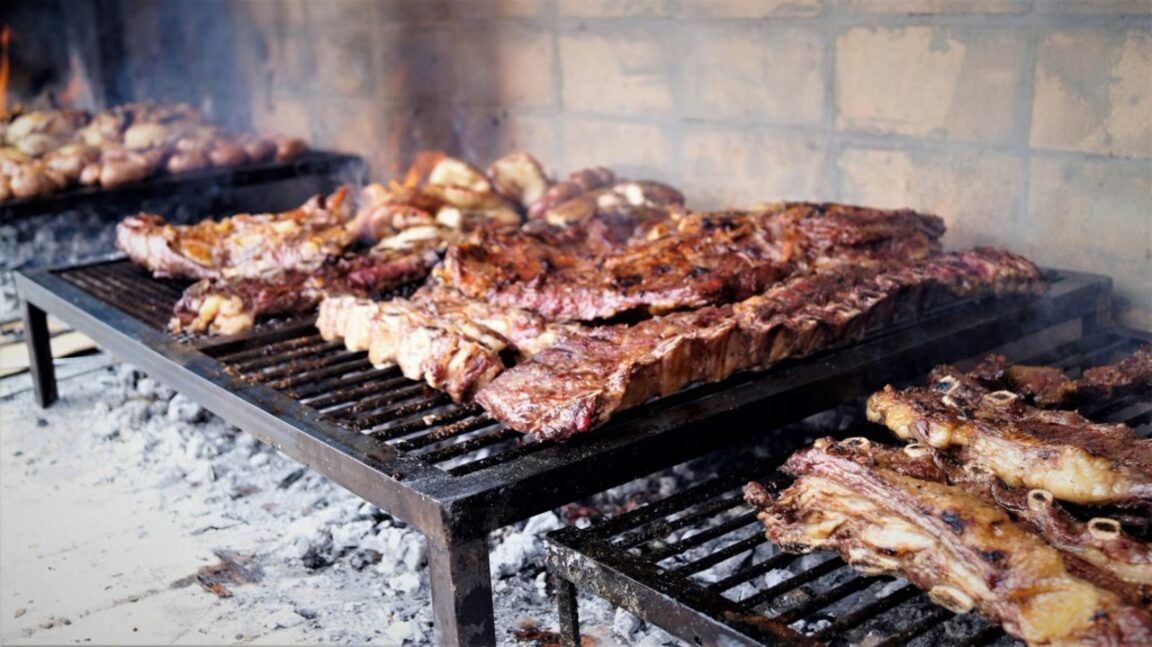
Asado de tira is the foundation: short ribs cut across the bone into a long strip, cooked slowly bone-side first, salty, beefy and fatty in the best way. Vacío, the flank, is the other slow classic, a whole piece with a crisped fat cap and a deep, almost gamey flavour, sliced across the grain at the table. These two are the parrilla’s identity, and a first visit should be built on at least one of them.
Entraña, skirt steak, cooks fast and eats rich, with a loose grain that drinks chimichurri. Bife de chorizo, despite the name, has nothing to do with sausage: it is the sirloin strip, the city’s default premium steak, ordered thick. Ojo de bife, ribeye, is the marbled heavyweight. Lomo, tenderloin, is the leanest and, to grill cooks, the least interesting, however tender it is. The ladder logic is fat and patience: slow fatty cuts first while the fire is young, fast steaks when it is at full heat, and the leanest meat last if it is ordered at all.
How do you handle doneness and the Malbec rule?
Argentine grills cook further than the North American steakhouse default, and the vocabulary matters. Jugoso means juicy and is the word for a steak with a red, warm centre. A punto is medium. Cocido and bien cocido move into well done, which is how much local beef is happily eaten, cooked slowly enough to stay tender. State your word when you order, not when the plate lands, and order one notch rarer than your instinct if the cut is thick, because it will rest and carry on the hot platter.
The Malbec by the glass rule exists because the meal changes gear three times. A glass with the provoleta and offal, a second, bigger Malbec with the slow cuts, and freedom to switch, to a Cabernet Franc, a blend, or a second label, for the headline steak. Houses pour generously by the glass, Mendoza Malbec is priced kindly at home, and the by the glass order keeps the wine matched to the fire instead of the other way round. Finish, if the table has anything left, with flan con dulce de leche or a vigilante of cheese and sweet potato paste, and coffee. Then walk. Buenos Aires at midnight, after a parrilla, is the city at its best.
Frequently Asked Questions
What should a first-timer order at a Buenos Aires parrilla?
Provoleta to start, mollejas and chorizo from the grill course, then asado de tira or vacío as the main event, with ensalada mixta and provenzal fries. Add a bife de chorizo, ordered jugoso, if the table is hungry. That sequence is the classic first parrilla.
What is the difference between bife de chorizo and chorizo?
Chorizo is a sausage. Bife de chorizo is a steak, the sirloin strip, named for its shape rather than its contents. Confusing them is the most common ordering mistake visitors make.
How do I order a steak rare or medium in Argentina?
Use jugoso for juicy and rare-leaning, a punto for medium, and bien cocido for well done. Say it when ordering, because the local default cooks further than many visitors expect.
What is provoleta?
A thick disc of provolone cheese grilled directly on the parrilla until crisp at the edges and molten inside, usually with oregano. It is the standard opening order and a quick test of the grill’s fire management.
Is chimichurri served with everything?
It is served with the grill, and it belongs on sausages, entraña and the fattier cuts especially. Taste a cut plain first, then add chimichurri, and keep the spicy salsa criolla for the offal course.
Image: Short ribs, sausages and sweetbreads on a parrilla grill over embers in Argentina. Photo: DEBY RODRIGUEZ, via Unsplash (hosted copy via Amazing Food Videos), Unsplash License, used with credit.