 Wei Chen
The Ha Giang Loop rewards romance and punishes paperwork failures, in that order. To ride it legally as a foreigner you need your home motorbike licence plus an International Driving Permit issued under the 1968 Vienna Convention carrying category A for motorcycles, and Vietnam’s official tourism guidance is blunt that a home licence alone, or a permit covering only cars, does not authorise you to ride. If your documents do not meet that test, the easy rider option, sitting behind an experienced local rider, keeps every metre of the scenery and removes the legal and much of the physical risk. Decide which rider you are before you reach Ha Giang, not at the first police checkpoint.
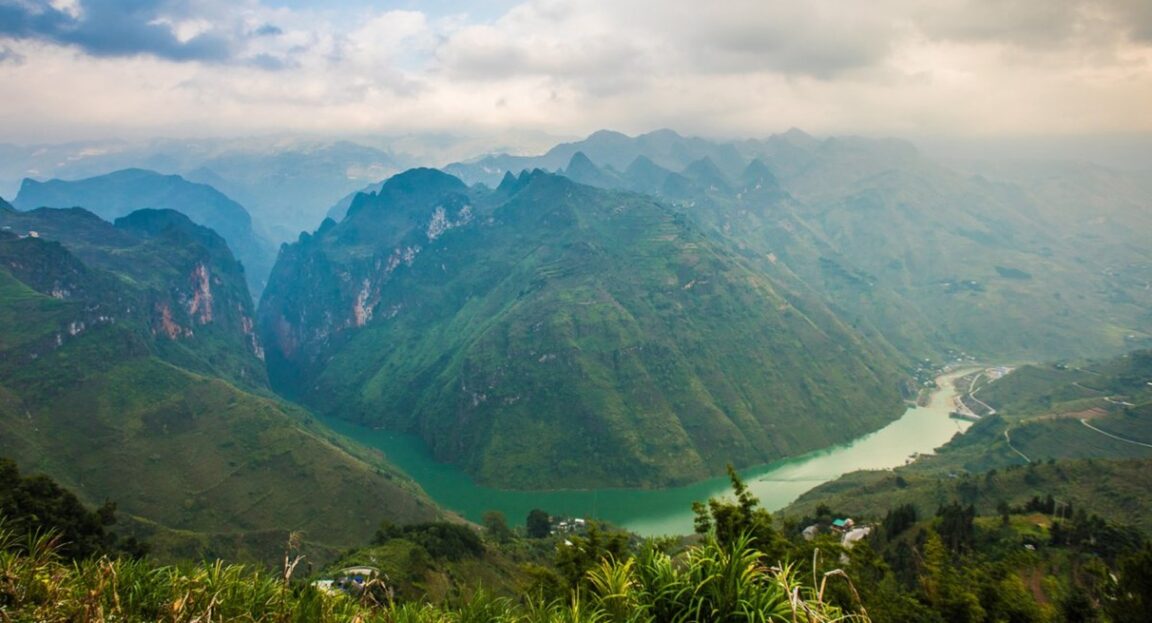
The loop itself runs about 350 kilometres through Vietnam’s far northern province, through the four districts of Quan Ba, Yen Minh, Dong Van and Meo Vac, across the Dong Van Karst Plateau. Vietnam Tourism, the national authority, calls the Ma Pi Leng Pass, where the road snakes above the Nho Que River, the jewel in Ha Giang’s crown, and names September to November as the best season, when terraced rice turns golden and buckwheat flowers bloom. It is six to seven hours by road from Hanoi to reach the start.
Quick Facts
- Legal test to self ride: Home licence with motorcycle entitlement, plus a 1968 Vienna Convention IDP with category A stamped. Carry both originals.
- Not valid: A home licence alone; an IDP with category B only; a 1949 Geneva Convention IDP on its own, which Vietnam does not automatically recognise.
- Checkpoint reality: Police checkpoints are common on the loop. Officers ask for licence, IDP and the bike’s papers or rental contract.
- Fine range: Vietnam Tourism’s guidance puts riding without a valid licence at VND 2,000,000 to 4,000,000 for the offence, with higher penalties for larger motorcycles reported under current regulations, and possible vehicle detention until the fine is paid.
- The route order: Ha Giang City, Quan Ba and Heaven’s Gate, Yen Minh, Dong Van, the Ma Pi Leng Pass, Meo Vac, then the return south, usually via Du Gia, over four days.
- Border paperwork: The loop enters restricted border districts. Arrange the local border area permit through your hotel or rental shop in Ha Giang City before you set out, and carry your passport throughout.
- Best months (Vietnam Tourism): September to November. Roads are wet and slippery in the May to August rains.
What licence do you actually need, and why do so many riders get it wrong?
The confusion is built into the documents. Many countries, including the United States, the United Kingdom and Australia, commonly issue IDPs under the older 1949 Geneva Convention. Vietnam recognises permits issued under the 1968 Vienna Convention. A rider can therefore hold a genuine, in date IDP, issued correctly at home, that a Vietnamese checkpoint does not accept, and the discovery usually happens at the roadside or, worse, in an insurer’s office after a crash, because riding without a locally valid licence can void travel insurance cover for any accident. Vietnam Tourism’s own guidance states the position plainly: Vietnam recognises foreign licences only when accompanied by a 1968 Convention IDP carrying the correct category, A or A1 for a scooter or motorbike, and the IDP works only alongside the original home licence, never instead of it.
ASEAN licence holders are the main exception, recognised under a regional agreement. Everyone else should run the check weeks before departure: does my issuing body offer a 1968 Convention permit, and will category A be stamped in it? If either answer is no, your legal options are an easy rider, a car with a driver, or converting a licence if you live in Vietnam. Renting the bike anyway is not a fourth option; it is simply riding unlicensed with extra steps, and rental shops asking to see a 1968 IDP and home licence before handing over a larger bike are applying the same law.
What happens at a Ha Giang police checkpoint?
Checkpoints appear at district entries, near larger towns such as Dong Van and Meo Vac, and at shifting points along the passes, more often on holidays and during safety campaigns. The stop itself is procedural. An officer will ask for your licence and IDP together, your passport, and the motorbike’s registration or your rental contract. With valid papers the stop is brief and you ride on. Without them, expect a fine within the ranges above, payment before you proceed, and the possibility that the bike is held until the fine is settled.
Carry the full set in a waterproof pouch you can produce without unpacking the bike: passport, home licence, IDP, rental contract and bike papers, plus your border area permit paperwork arranged in Ha Giang City. Photographs of documents on your phone are a backup, not a substitute; officers and insurers work from originals.
How does the easy rider option change the trip?
It improves most of it. An easy rider is a local rider, usually booked through a Ha Giang City operator or your accommodation, whose bike you ride pillion while they handle the passes, the weather and the checkpoints. You keep the Ma Pi Leng views, and can actually look at them, since the rider’s job on those cliff sections is total concentration on a road with serious drop offs and changeable surfaces. Groups also gain a guide effect: easy riders know the market days, the viewpoints at Heaven’s Gate and Tham Ma Pass, and the homestays in Dong Van and Du Gia.
The honest costs are control and intimacy with the ride. You do not choose every stop, you travel at the group’s pace, and if motorcycling itself, rather than the landscape, is your hobby, pillion is a compromise. But for a solo traveller without a 1968 IDP, it is not a lesser product; it is the legal version of the same four days. Solo travellers weighing styles of independent travel may enjoy our Madrid solo guide for a very different solo system, and our Lycian Way guide for another route where the guided versus independent decision shapes the trip.
What order do the four days run in?
Day one climbs north from Ha Giang City over Bac Sum Pass to Quan Ba’s Heaven’s Gate lookout and the twin mountains above Tam Son, then descends through pine forest to Yen Minh for the night. Day two crosses into the karst plateau proper, over the Tham Ma switchbacks to Dong Van, with the Vuong family palace at Sa Phin and, for those with the legs, the Lung Cu flag tower near the Chinese border as the day’s detour. Day three is the centrepiece: the Ma Pi Leng Pass along the Nho Que gorge to Meo Vac, a short distance on the map that deserves a full, slow day of stops. Day four turns south and home, most enjoyably through Du Gia’s rice terraces and waterfall, back to Ha Giang City and the sleeper bus to Hanoi.
Ride it in the September to November window if you can choose, start each day early to have the passes before the tour groups bunch up, and treat rain as a stop signal rather than a challenge: the national tourism authority warns that the roads turn slippery through the summer rains, and karst limestone is unforgiving when wet in any month.
Frequently asked questions
Can I ride the Ha Giang Loop on a US, UK or Australian licence?
Only if it is paired with an International Driving Permit that Vietnam recognises: a 1968 Vienna Convention IDP with motorcycle category A. Many US, UK and Australian permits are issued under the 1949 Geneva Convention, which Vietnam does not automatically accept, so check your issuing body before you travel.
What is the fine for riding in Vietnam without a valid licence?
Vietnam Tourism’s guidance puts the standard penalty at VND 2,000,000 to 4,000,000, with higher bands for larger motorcycles, and officers may detain the vehicle until the fine is paid. Riding unlicensed can also void your insurance.
What is an easy rider in Ha Giang?
A local, experienced rider you sit behind as a passenger. Easy riders are booked through operators and accommodation in Ha Giang City, know the route and checkpoints, and are the practical option if your licence is not valid in Vietnam.
How many days do I need for the Ha Giang Loop?
Four days is the comfortable standard: Quan Ba and Yen Minh, Dong Van, Ma Pi Leng and Meo Vac, then the return via Du Gia. Three days is possible but rushes the best sections.
Do I need any permit besides my licence for the Ha Giang Loop?
The loop passes through restricted border districts, and foreign visitors arrange a local border area permit, usually through their hotel or rental shop in Ha Giang City, before setting out. Carry your passport and the permit paperwork at all times.
Image: The Nho Que River gorge below the Ma Pi Leng Pass, Ha Giang, Vietnam. Photo via Vietnam Tourism, vietnam.travel, the country’s official tourism website. Used with credit.