 Jonas Lindqvist
Yes, six hours at Keflavik is enough for Reykjavik, but only just, and only if the layover is run like a timed operation rather than a wander. The working version looks like this: off the plane and onto an airport bus within 40 minutes of landing, 45 minutes to the BSI bus terminal in Reykjavik, a pre-booked geothermal soak at Sky Lagoon in nearby Kopavogur, a short walk around the old harbour, and a return bus chosen by one rule, that it delivers you back to Keflavik at least 90 minutes before your onward flight. Anything looser than that, a slow exit, an unbooked pool slot, a bus taken on hope, turns a good idea into a missed connection.
Quick Facts
- Airport: Keflavik International Airport (KEF), about 50 kilometres from central Reykjavik
- Transfer: Flybus to BSI Bus Terminal, about 45 minutes, departures timed to arriving flights
- Return rule: Flybus journeys from Reykjavik run to a fixed timetable; allow 45 minutes from BSI to the airport, or 1 hour 15 minutes if you are being collected from a hotel or city bus stop
- The pool: Sky Lagoon, an oceanside geothermal lagoon in Kopavogur, a short taxi ride from BSI, with timed entry booked online in advance
- The walk: Reykjavik old harbour, Harpa concert hall and the Sun Voyager sculpture, all within an easy stroll of each other
- The backstop: Plan to be back at Keflavik 90 minutes before departure for a long haul flight, and treat 60 minutes as the absolute floor for a short European hop
- Checked: Transfer times and timetable rules checked against flybus.is on 25 November 2026
Is six hours really enough, door to door?
Count it honestly and the six hours shrink fast. Allow 30 to 40 minutes from wheels down to the arrivals hall exit, longer if your inbound flight parks at a remote stand or the passport queue is slow. The Flybus ride itself is the predictable part: Flybus states about 45 minutes between Keflavik and the BSI terminal, and its airport departures are timed to arriving flights, with a guaranteed seat on the next departure if your flight is delayed. That guarantee is what makes the outbound leg safe to plan around. The return leg has no such cushion. Buses from Reykjavik to the airport run to a fixed timetable, so the whole city visit has to be built backwards from one specific departure, not forwards from when you happen to feel ready to leave.
What survives the arithmetic is roughly two and a half hours of actual city time. That is enough for one geothermal pool and one harbour walk, done in that order, and it is not enough for both lagoons, a museum, a sit down lunch and the harbour. Choose the pool first, because it is the bookable, time-boxed element, and let the harbour absorb whatever time is left over. If the harbour gets squeezed to twenty minutes, the trip still worked. If the pool gets squeezed, you paid for a soak you rushed through, which is the one outcome worth avoiding.
What does the minute by minute plan look like?
Work from a sample clock, then shift it to your own flight times. Say your inbound flight lands at 08:00 and the onward flight leaves at 14:00. By 08:40 you should be on a Flybus outside the terminal, hand luggage only, boarding pass for the onward flight already on your phone. By about 09:25 the bus reaches BSI. From BSI, take a taxi rather than a connecting shuttle to Sky Lagoon in Kopavogur; the shuttle change costs minutes you do not have, and the taxi ride is short. Book the pool entry for 09:45 or the nearest slot after it, and be in the water by 10:00.
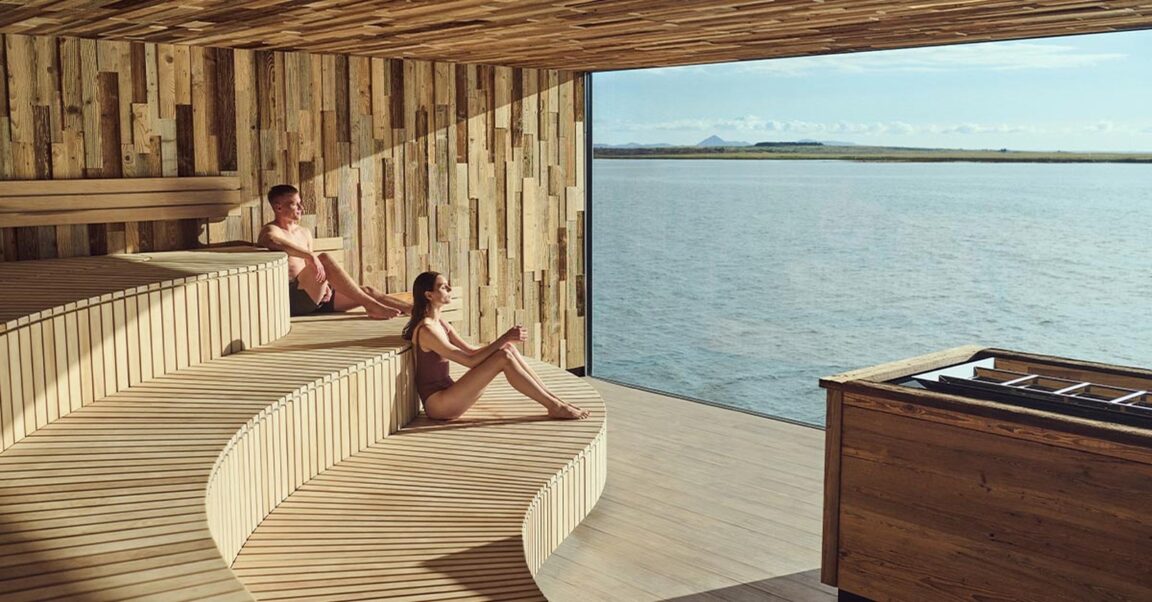
Sky Lagoon is built around a set sequence, its seven step ritual, which moves from the lagoon itself through a cold plunge, a sauna with a large window over the ocean, a mist, a scrub, a steam room and a final shower before you return to the water. The ritual format is a gift on a layover, because it gives the visit a natural shape and a natural end. Give it 90 minutes in total, including changing at both ends, and set a phone alarm for the moment you need to be out of the water, not the moment you need to leave the building. Out by 11:30, taxi by 11:45, and you are back in the city centre by about 12:00 with the harbour in front of you.
How should the old harbour hour be spent?
The old harbour is the right final hour because everything in it is free, outdoors and interruptible. Start at Harpa, the glass concert hall on the waterfront, whose faceted panels shift colour with the light and whose ground floor you can walk into without a ticket. From Harpa, follow the shore path east to the Sun Voyager, the steel sculpture that reads as the skeleton of a Viking ship pointed out to sea, with Mount Esja across the bay behind it. Then cut back through the harbour itself, past the whale watching boats and the old fishing sheds at Grandi, and finish with coffee or a hot dog at one of the harbour stands if the queue is short. The moment the queue is not short, skip it. Food is the flexible line item; the bus is not.
One discipline matters here: stay inside the triangle between BSI, the harbour and Harpa, and keep checking the time against your chosen bus, not against your flight. Your flight time is an abstraction. The bus departure from BSI is the real deadline, because missing it by two minutes can mean waiting for the next fixed departure and watching your buffer evaporate. Aim to be standing at BSI ten minutes before that bus leaves, with the ride back taking the same 45 minutes as the ride in.
Which return bus should you actually take?
Flybus publishes its Reykjavik to Keflavik timetable as three times per service: the pickup time at a hotel or bus stop, the change at BSI, and the arrival at the airport. Read the third column, not the first. Pick the service whose airport arrival is at least 90 minutes before your departure, then work backwards to be at BSI before its second column time. If you are tempted by the next bus after that one, check what its arrival leaves you: for most travellers, a bus arriving 45 minutes before a long haul departure is a gamble on security queues, gate distance and nothing going wrong anywhere. Keflavik is an efficient airport, but efficiency is not a plan. The earlier bus costs you twenty minutes of harbour. The later bus can cost you the flight.
Luggage fits this plan better than most layovers. Flybus tickets include hold baggage, and if your bags are checked through to your final destination, which is the usual case on a single ticket, you travel into the city with only a cabin bag. Carry the swim kit in that cabin bag: swimsuit, a small towel if your pool package does not include one, and a plastic bag for the wet suit on the way back. Sky Lagoon sells timed entry in packages, with the more private changing option costing more; on a layover the cheaper shared changing package is the rational buy, because the water and the ritual are identical.
What if the layover is shorter, longer or lands at night?
At five hours, cut the harbour entirely and keep only the pool, or cut the pool and keep only the harbour; trying to keep both is how five hour layovers go wrong. At seven or eight hours, the plan relaxes: add the walk up to Hallgrimskirkja, the tall church whose tower looks over the whole city, or swap Sky Lagoon for a longer soak and a proper lunch in the old harbour. Overnight arrivals change the calculation completely, because the pool and the city keep ordinary daytime hours while the Flybus keeps running in connection with flights; a 02:00 arrival with a 08:00 departure is a night to spend in the terminal or an airport hotel, not a city trip. Winter weather is the other honest caveat. The 45 minute transfer is a fair weather figure in the sense that Icelandic winter storms can slow any road; if the forecast shows a storm warning for your layover day, stay at the airport and keep the connection safe.
For a different style of long connection, compare how a transit tour model handles the same problem in our guide to Incheon Airport layover transit tours, and if this layover is the start of a longer Iceland trip rather than a connection, pack for it with our Iceland winter packing guide.
Frequently Asked Questions
Can I leave Keflavik Airport during a layover?
Yes, if your passport or visa status allows you to enter Iceland and your onward boarding pass is in hand. Iceland is in the Schengen area, so travellers who need a Schengen visa need it for this city trip exactly as they would for a holiday. Check your own status before you fly, not at the arrivals desk.
Where do I leave my bags during a Keflavik layover?
The simplest answer is that you do not: on a single ticket, checked bags normally travel through to the final destination. For cabin bags, travel light enough to carry yours, and use the pool changing room for the hour you are in the water.
Is Sky Lagoon or the Blue Lagoon better on a six hour layover?
Sky Lagoon, for one practical reason: it sits on the city side of the journey, minutes from BSI, so it combines with the harbour walk inside the same trip. The Blue Lagoon sits near the airport and works well as a single stop on a shorter layover, but pairing it with Reykjavik in six hours splits the trip in two directions.
How much buffer do I really need before the onward flight?
Plan to arrive back at Keflavik 90 minutes before departure, and choose your return bus by that arrival time. Flybus states 45 minutes from BSI to the airport and 1 hour 15 minutes if you are collected from a hotel or city stop, so build the pickup option into the plan only if you have taken the earlier bus.
What happens if my inbound flight is delayed?
Flybus guarantees a seat on the next airport departure when a flight is delayed, so the outbound leg adjusts itself. Your city plan does not: re-run the arithmetic from the new landing time, and if the delay eats more than an hour, drop the pool and keep the harbour, or stay at the airport.
Image: The sauna window at Sky Lagoon, Kopavogur, looking over the ocean. Photo by Sky Lagoon, from the venue official website (skylagoon.com), used with credit.