 LeVar Thomas
Five days in New York reward the traveller who leaves Manhattan on purpose: one full day eating through Queens, one morning riding Metro-North up the Hudson to Beacon, and evenings assigned to single neighbourhoods so the subway stops eating the trip. This second-look itinerary assumes the icons are either done or deliberately rationed, and it sequences each day around one geography, one anchor and one neighbourhood night.
Quick Facts
- Structure: Day 1 Manhattan orientation, Day 2 Brooklyn, Day 3 Queens food day, Day 4 Hudson Valley by Metro-North, Day 5 a Bronx or second-look day with an unplanned evening.
- Queens anchor: The 7 train corridor, from Jackson Heights to Flushing, is the city’s greatest food day out.
- Hudson anchor: Metro-North’s Hudson Line from Grand Central to Beacon takes about 1 hour 40 minutes; Dia Beacon is an 8 to 10 minute walk from the station, per MTA Away.
- Evening rule: Pick the neighbourhood first and the restaurant inside it. Never cross the city twice in one night.
- Transit: Tap-to-pay now works across subways and buses; Grand Central is the base station for the Hudson day.
- Base: Sleep near a station you will actually use, Midtown near Grand Central or downtown Brooklyn, rather than beside a sight you will visit once.
- Checked: 25 November 2026, against MTA Away guidance for Metro-North day trips.
How should Day 1 and Day 2 be sequenced?
Day 1 stays deliberately classic but compressed: Central Park’s southern half in the morning, one major museum rather than two, and a Midtown evening that ends early enough to protect the week. The second-look traveller’s discipline is subtraction. Choose the Met or MoMA, not both in a day, and let one observation deck, booked for late afternoon, stand in for the skyline checklist. Day 2 belongs to Brooklyn and moves in one direction: cross the Brooklyn Bridge on foot in the morning before it thickens, give DUMBO and Brooklyn Heights the middle of the day, and finish in Fort Greene or Williamsburg for dinner, staying on that side of the river for the evening. Travellers layering this plan over a first visit can mine our New York free things to do guide for the no-cost fillers that suit each day’s geography, and winter visitors should read what to pack for New York in December before trusting any walking plan.
Why does Queens deserve a whole day?
Because the 7 train is the best food itinerary in America hiding inside a commute. Start in Jackson Heights, where 74th Street and Roosevelt Avenue stack South Asian sweet shops, Tibetan momo counters, Colombian bakeries and Nepali restaurants into a few blocks. Graze rather than lunch: small portions at four or five places beat one large meal anywhere on this route. Ride on to Woodside for Filipino barbecue or Elmhurst for Thai, then finish in Flushing, where the food courts of New World Mall and the dumpling and noodle shops around Main Street deliver the day’s finale. Flushing Meadows Corona Park, a short walk from the last stop, holds the Unisphere from the 1964 World’s Fair and gives the day its green pause. Return on the 7 as the light changes, and keep the evening small: a neighbourhood dinner near the hotel, because Day 3 has eaten enough for two.
How does the Hudson day trip work?
Take Metro-North’s Hudson Line from Grand Central and sit on the left side heading north, because the train runs along the river’s eastern shore and the window is half the point. Beacon, about 1 hour 40 minutes out, is the balanced choice for a five-day trip: Dia Beacon, the vast contemporary art museum in a former factory, sits an 8 to 10 minute walk from the station and takes two to three hours done properly, and Main Street’s cafes and shops fill the rest of the day without a car. Cold Spring, one stop closer, is the smaller alternative, with a compact Main Street and river views for travellers who prefer antique shops to art. MTA Away, the railroad’s own leisure service, builds packages around both stops. The discipline is the return: pick the train before the last one, because Hudson Line evenings thin out, and let the ride back down the river at dusk close the day rather than a rushed second stop.
What belongs on Day 5, and how should evenings be planned?
Day 5 is the correction day, and its morning should be chosen from what the week revealed: Arthur Avenue in the Bronx for Italian markets and a proper lunch, a return to the museum skipped on Day 1, or the Staten Island Ferry and the harbour if the water never happened. Keep the afternoon loose for the neighbourhood that surprised you. Evenings across the whole trip follow one rule: the neighbourhood is the plan. A West Village night means dinner, a jazz room or a bar within walking distance of each other in the West Village. A Lower East Side night stays east. A Brooklyn night does not end with a crosstown ride to a Manhattan nightcap. New York’s geography punishes zigzags and rewards clusters, and five evenings planned as five small, complete worlds will be remembered longer than ten famous rooms reached by four trains.
How much should the five days cost, and what should be booked ahead?
The bookings that matter are few and specific: the observation deck for its sunset slot, Dia Beacon requires no advance ticket in ordinary weeks but the Metro-North trains at commuter hours fill, so travel mid-morning, and any restaurant that anchors an evening should be reserved once the neighbourhood is chosen. Broadway or major event tickets, if they are part of the trip, belong in the plan before arrival, because they fix an evening’s geography more firmly than any restaurant. Costs split predictably: the Queens day is the cheapest full day in the itinerary, because grazing portions at counters and food courts undercut any sit-down equivalent; the Hudson day costs a rail fare and a museum ticket; and Manhattan evenings carry the budget, which is another argument for the neighbourhood rule, since it removes the late-night taxi corrections that zigzag planning produces. A transit pass decision should follow the tap-to-pay maths of the actual plan rather than habit: this itinerary rides often but not endlessly, and most travellers land close to the fare cap either way.
What are the mistakes this itinerary is built to avoid?
Four, in order of damage. First, the Manhattan-only trip, which spends five days inside the one borough residents themselves leave constantly. Second, the double-cross evening, dinner in one corner of the city and drinks in another, which converts an hour of the night into subway time. Third, the day-trip pile-up, stacking the Hudson, a beach town and an outlet run into one visit until the city itself becomes the leftover. Fourth, the checklist museum day, two great museums back to back, which guarantees that the second is experienced through fatigue. This plan’s structure, one geography, one anchor, one neighbourhood night, is simply those four mistakes removed in advance.
How does this itinerary change by season?
In autumn it barely needs to change at all, because the Hudson day gains the valley’s foliage and Queens gains its festival season. In deep winter, swap the Hudson day to the clearest forecast morning, shorten the bridge walk, and let museums carry more of Days 1 and 5. In summer, start the Queens grazing early, treat the Hudson train’s air conditioning as part of the attraction, and move observation decks and park time toward the evening light.
Frequently Asked Questions
Is five days enough for New York?
It is enough for a coherent trip, not a complete one. Five days sequenced by geography, as here, covers Manhattan’s core, Brooklyn, a Queens food day and a Hudson excursion without transit waste. A first trip should ration icons; a return trip should follow this second-look structure.
How long is the train from New York to Beacon?
About 1 hour 40 minutes on Metro-North’s Hudson Line from Grand Central, per MTA Away. Dia Beacon is an 8 to 10 minute walk from Beacon station, and no car is needed for the day.
What is the best food day in Queens?
Ride the 7 train east and graze: Jackson Heights for South Asian, Tibetan and Latin American food, Woodside or Elmhurst for Filipino and Thai, and Flushing for dumplings, noodles and food courts. Small portions at several stops beat one big meal.
Where should a five-day visitor stay?
Near the stations the itinerary uses: Midtown within walking distance of Grand Central suits this plan best, with downtown Brooklyn the strong alternative. A base beside a once-visited sight costs transit time every day.
Can the Hudson day trip and Queens fit a shorter trip?
On a three-day trip, choose one. Queens is the better pick in bad weather or winter darkness; the Hudson day wins in clear weather, especially in autumn, when the river valley carries the colour.
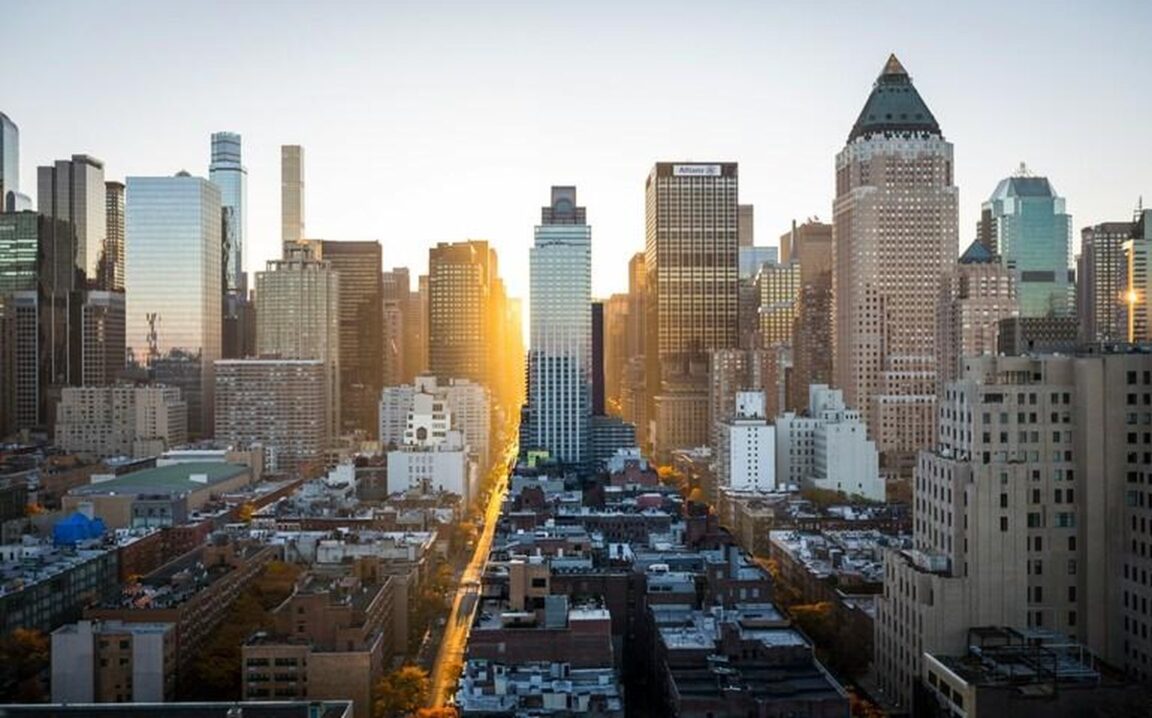
Image credit: Manhattan skyline at golden hour, New York City, photographed by Ben O’Bro, via Unsplash (Unsplash License).