 Jonas Lindqvist
St Gilgen is the Salzkammergut base for travellers who want the lakes without Hallstatt’s crowds: a Mozart family village on the Wolfgangsee’s western shore, linked by boat to St Wolfgang and Strobl, with the Schafberg cog railway a single lake crossing away. It does not try to out-charm Hallstatt’s postcard. It wins on breathing room, on evenings by the water, and on a boat network that turns the whole lake into the itinerary.
Quick Facts
- Setting: Village on the western shore of the Wolfgangsee in the Salzkammergut, framed by the Zwölferhorn and the Schafberg.
- Mozart link: Mozart’s mother Anna Maria was born in St Gilgen, and his sister Nannerl lived here after her marriage; the Mozart House tells the family side of the story.
- Schafberg Railway: Austria’s steepest cog railway climbs 1,190 metres over 5.85 km from St Wolfgang to the 1,783 metre Schafberg summit in about 35 minutes, operating seasonally, roughly late April to early November.
- Lake boats: The WolfgangseeSchifffahrt fleet links seven stops, including St Gilgen, St Wolfgang and Strobl, and has carried passengers on the lake for over 145 years.
- From Salzburg: The No. 150 PostBus runs from Salzburg main station toward St Gilgen and Strobl; the village is about 45 minutes by road from the city.
- Local peak: The Zwölferhorn cable car rises directly from St Gilgen for the village’s own panorama without crossing the lake.
- Checked: 25 November 2026, against Salzburg AG and Austria tourism sources. Railway and boat timetables are seasonal; confirm before travelling.
Why base in St Gilgen instead of Hallstatt?
Hallstatt is a marvel and a bottleneck in the same hour, a single-street village absorbing global attention. St Gilgen absorbs its visitors differently: a lakeside promenade, a working village centre, and room to walk in the evening without a queue. The comparison is not about which is more beautiful. It is about what a base must do across three days: feed you, float you across a lake, put you on a mountain, and let you sleep somewhere quiet. St Gilgen does all four with less friction. Travellers who still want the Hallstatt day can make it an excursion rather than a siege, and our guide to Hallstatt and its overtourism question judges that visit honestly, while the Dachstein Five Fingers guide covers the region’s big viewpoint day.
What is the Mozart connection, really?
St Gilgen’s Mozart claim is familial rather than biographical: Wolfgang Amadeus Mozart himself never visited, a fact the village states openly. His mother, Anna Maria Pertl, was born here in 1720, in the building now kept as the Mozart House, and his sister Maria Anna, known as Nannerl, moved to St Gilgen after marrying a local magistrate and lived here for many years. The small museum built around that story is more touching than a birthplace shrine, because it is about the family the composer came from and the sister whose own musical talent history nearly filed away. Allow an hour, and pair it with the parish church and the lakeside frescoes for the village’s compact cultural core.
How does the Schafberg day work from St Gilgen?
The SchafbergBahn leaves from St Wolfgang, on the lake’s southern shore, and the classic St Gilgen approach is the boat: cross the Wolfgangsee by WolfgangseeSchifffahrt steamer, step off at St Wolfgang, and walk to the valley station. The railway then climbs 5.85 km and 1,190 vertical metres in about 35 minutes, on gradients that make it Austria’s steepest cog line, to a summit at 1,783 metres with a panorama across a string of Salzkammergut lakes, with the Mondsee, Attersee and Wolfgangsee among them. Steam locomotives work selected departures in season; other trains are diesel, and the view does not care which hauls it. Two planning rules matter. The railway is seasonal, running roughly from late April to early November, so a winter St Gilgen trip trades the summit train for the Zwölferhorn cable car and lakeside walks. And in high season, reserve the railway in advance and take an early boat, because the St Wolfgang station queue is the one crowd this itinerary cannot avoid.
How do the lake boats shape a stay?
The WolfgangseeSchifffahrt is Austria’s largest inland lake fleet, with seven stops around the shore, and it turns geography into a timetable of pleasures. St Wolfgang offers the pilgrimage church, the famous White Horse Inn, and the railway. Strobl, at the eastern end, is the quiet local town with swimming meadows. The shore stops between them serve walkers who ride one way and stroll the lakeside path back. Boats have connected these villages since the nineteenth century, and using them as transport rather than as a cruise is the single best decision a St Gilgen stay can make: no parking, no lakeside road traffic, and arrivals that land in the middle of each village. In summer, build one full lake day around the crossings; in shoulder season, check the reduced timetable before promising yourself the Schafberg combination.
What does a perfect St Gilgen day look like?
Start with the village itself: coffee on the promenade, the Mozart House and the parish church in the quiet of the morning, then the Zwölferhorn cable car from the village edge for the panorama that orients the whole stay, with the Wolfgangsee below and the Dachstein on the southern horizon. Descend for lunch, then take an afternoon boat across to St Wolfgang for the pilgrimage church and its celebrated carved altarpiece, returning on a later sailing as the light drops across the water. Evenings in St Gilgen are the argument for the base in miniature: a lakeside dinner, a walk along the shore path, and none of the day-trip exodus that empties the famous villages into a strange, coachless hush. Add the Schafberg morning as the second day’s anchor and a Strobl swimming or walking day as the third, and the Wolfgangsee has been done properly, at village pace, without once fighting for a photograph.
Where should visitors stay and eat?
Stay on or near the lakefront in St Gilgen itself, where the promenade, the boat landing and the bus stops all sit within a few minutes of each other, and where an upper-floor room buys the dawn view across to the Schafberg. The village range runs from family-run lake hotels with private bathing jetties to simple guesthouses a street back, and booking ahead matters in July and August, when Austrian and German school holidays fill the shore. Eating follows the Salzkammergut pattern: lake fish, char and trout where it is offered, dumplings and roast meats in the traditional inns, and coffee with cake in the afternoon as a structural part of the day rather than a snack. Reserve dinner in high season, keep one evening for St Wolfgang across the water if the boat timetable allows the return, and let the village’s own kitchens carry the rest.
How many days does the Wolfgangsee deserve?
Three nights is the satisfying measure: one day for the village, the Mozart House and the Zwölferhorn; one for the boat and Schafberg combination; and one kept loose for Strobl, a shore walk, or a Salzburg excursion in poor weather, since the city is under an hour away by bus and its museums rescue a rainy day completely. A single overnight turns St Gilgen into a prettier Hallstatt substitute and misses the point, which is the lake used slowly and repeatedly, at different hours, in different light. Travellers with a week in the Salzkammergut can add the Dachstein and Hallstatt as excursions from this base and return each evening to the quietest shore of the three.
Frequently Asked Questions
How do I get to St Gilgen from Salzburg?
The No. 150 PostBus from Salzburg main station runs to St Gilgen in about 45 minutes to an hour, and continues toward Strobl. Driving via the B158 takes a similar time outside peak traffic.
Did Mozart live in St Gilgen?
No. His mother was born here and his sister Nannerl lived here after her marriage, but Mozart himself never visited. The Mozart House museum tells the family story honestly.
When does the Schafberg Railway run?
Seasonally, roughly late April to early November, with the most frequent service in July and August. It does not run in winter. Confirm dates and reserve in season via the operator, Salzburg AG.
Can St Gilgen and the Schafberg be done in one day?
Yes. Take an early boat from St Gilgen to St Wolfgang, ride the cog railway to the summit, allow one to two hours at the top, and return by boat in the afternoon. Start early in high season.
Is St Gilgen a good winter base?
It is a quiet one. The boats and railway reduce or stop, but the Zwölferhorn, lakeside walks, Salzburg’s Advent season under an hour away, and regional skiing carry a winter stay. Expect calm rather than a full resort programme.
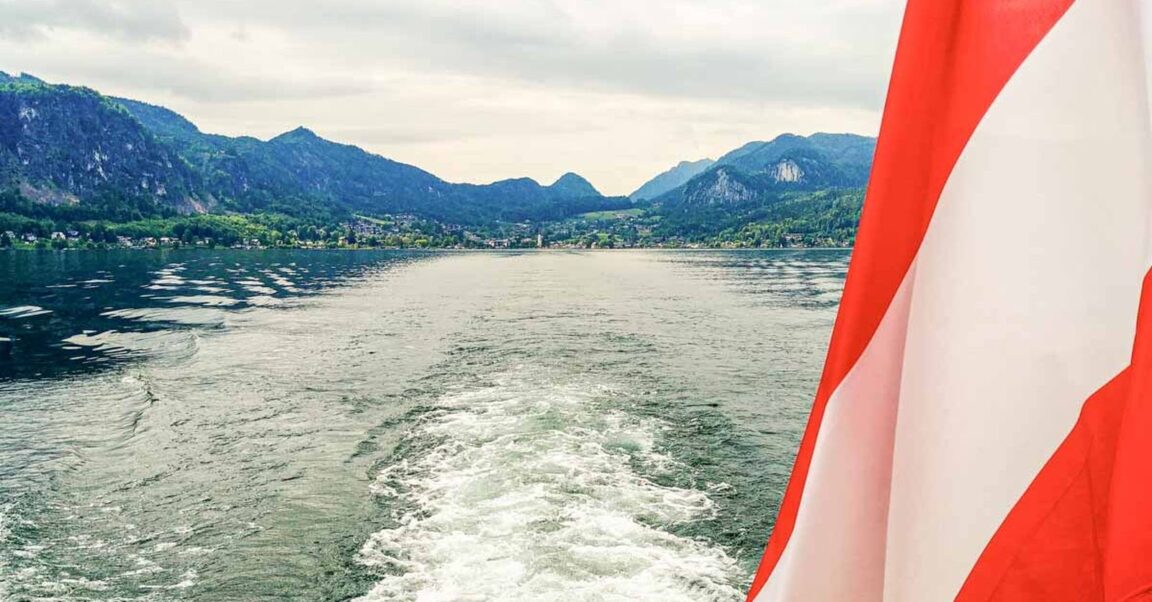
Image credit: The Wolfgangsee from a lake boat under the Austrian flag, photographed by Marian Kröll, via Unsplash (Unsplash License).