 Jonas Lindqvist
Akureyri in winter is the better aurora base for travellers who want a real town under the lights: Iceland’s northern capital pairs a ski hill ten minutes from the centre, geothermal pools that steam in sub-zero air, and long Arctic nights, with cafes and museums for the cloudy days Reykjavik itineraries pretend not to have. The honest costs are short daylight, around three to four hours near the solstice, and a journey north that should be flown, not driven, in deep winter.
Quick Facts
- Setting: Town of just over 20,000 people on Eyjafjörður fjord, about 100 km south of the Arctic Circle.
- Skiing: Hlíðarfjall, about 5 km and ten minutes from the centre, is Iceland’s most developed ski area, with lifts, marked pistes, rental and lessons; the season typically runs from late November into spring.
- Pools: The Akureyri thermal pool complex and the nearby Forest Lagoon geothermal spa anchor the daily hot-water ritual.
- Christmas House: Jólahúsið, about ten minutes south of the centre, is a year-round Christmas shop and garden, at its most atmospheric in December.
- Daylight: Around the winter solstice the town gets roughly three to four hours of daylight, which means long aurora windows and slow, lamplit mornings.
- Access: Domestic flights link Akureyri with Reykjavik’s city airport in about 45 minutes; the Ring Road drive is roughly 385 km and weather-dependent in winter.
- Checked: 25 November 2026, against Visit Akureyri and Hlíðarfjall information. Confirm lift and flight status daily in winter.
How does Akureyri compare with Reykjavik as an aurora base?
Reykjavik sells the northern lights as an excursion; Akureyri lives under them. The town sits far enough north that aurora season runs long, and its winter skies are frequently clearer than the capital’s coastal weather. Just as important is what surrounds a sighting: in Akureyri the lights can appear over the fjord at the end of an evening in town, and a failed night still ends in a good restaurant rather than a bus park. The capital wins on flight connections, nightlife and tour volume, and it remains the right base for a short first trip. But for a dedicated winter stay of three nights or more, Akureyri’s combination of dark skies, a ski hill, hot water and working-town warmth is the stronger proposition. Travellers touring further can pair this guide with the Mývatn Nature Baths guide, an easy day trip east, and the Iceland Ring Road driving guide for the honest case on winter roads.
What does a ski morning at Hlíðarfjall look like?
Hlíðarfjall rises about 5 km west of town and is the country’s flagship ski area: a chairlift and surface lifts serving marked pistes for every level, night skiing under floodlights on selected evenings, equipment rental and a mountain restaurant, all looking down the fjord. Its virtue for visitors is proportion. A traveller can breakfast in town, ski three hours in the blue midday light, and be back in a hot pot by mid-afternoon, which is exactly the rhythm a three-hour daylight window demands. Conditions are the caveat: this is a maritime Arctic ski area, wind can close lifts, and the official daily status check is a morning ritual, not a formality. Cross-country skiers get their own reward in Kjarnaskógur woods south of town, where groomed tracks wind through Iceland’s most visited planted forest, with a sledging hill beside them.
What fills the dark hours besides the lights?
The pool ritual first. Akureyri’s municipal thermal pool, with its hot pots, slides and steam, is where the town socialises in winter, and the Forest Lagoon, a geothermal spa set in the woods across the fjord a few minutes from the centre, offers the polished version: warm infinity-edge water, cold air, and darkness overhead in which the aurora sometimes performs uninvited. Culture fills the rest. The Akureyri Art Museum and the aviation museum at the airport cover indoor afternoons, Akureyrarkirkja, the landmark church above the centre, anchors the town walk, and the heart-shaped red traffic lights, installed during the financial crisis as a deliberate lift to local spirits, still stop traffic and moods alike. In December the Christmas House south of town, Jólahúsið, completes the season: a red storybook house and garden selling Icelandic decorations and treats year-round, and in winter the closest thing Iceland has to stepping inside a Christmas card.
Fly north or drive the Ring Road?
In winter, fly. The domestic hop from Reykjavik’s city airport takes about 45 minutes and lands minutes from the centre of Akureyri, while the roughly 385 km Ring Road drive crosses mountain passes where storms close the road outright, sometimes for a day or more. A summer itinerary can make the drive part of the pleasure, with the northbound stops earning their miles. A winter itinerary that must keep hotel and flight dates should not gamble them on the Öxnadalur pass. The working pattern is simple: fly up, rent a car locally for Mývatn and Goðafoss day trips if conditions allow, and keep one spare evening in the plan as weather insurance for the lights.
Which day trips earn their winter miles?
Two stand above the rest. Goðafoss, the wide, horseshoe waterfall about 45 minutes east on the Ring Road, is at its most dramatic in winter dress, with ice formations framing the falls and tour traffic at its thinnest; the car park is close to the road and the visit is short, which suits the daylight. Lake Mývatn, roughly an hour and a half away in settled conditions, layers pseudocraters, lava formations at Dimmuborgir, the Hverir geothermal field and the Mývatn Nature Baths into a full day, and it is the excursion to save for the clearest forecast rather than the first available morning. Both trips depend entirely on the Icelandic road and weather services: check road.is and the forecast before setting out, treat a closed or icy route as a decision already made, and never let a booked dinner argue with a mountain road. Akureyri’s winter generosity is that a cancelled excursion day still leaves skiing, pools and a warm town, which is more than most aurora bases can promise.
What should winter visitors pack and expect?
Expect a town that functions completely in winter rather than enduring it: pavements are cleared, the pool is busy, and daily life runs at full strength in the dark. Pack for standing still outdoors at night, which is colder work than skiing: insulated layers, a windproof shell, warm hat and gloves, and boots with real grip for icy streets, plus crampon-style ice grippers if aurora watching from outside town is planned. Book the Forest Lagoon and any special dinners ahead in the Christmas season, keep restaurant hours in mind on Sundays, and build the budget honestly, because Iceland’s prices do not soften in winter even when its daylight does.
How many nights does a winter stay need?
Three is the working minimum and four is better, because aurora watching is a probability game played across nights: three evenings give a fair chance of one clear, active display, and four absorb a storm day without the trip hinging on a single forecast. Structure each day the same way, with one outdoor anchor in the short daylight, the pool in the late afternoon, dinner in town, and the sky check after dark, either from the fjord shore at the edge of the streetlights or on a guided outing into the dark countryside around the town. That rhythm, repeated, is what separates an Akureyri winter stay from a Reykjavik aurora tour: the lights become part of the town’s evenings rather than a single purchased chance.
Frequently Asked Questions
When is aurora season in Akureyri?
Roughly late August to mid-April, when nights are fully dark. The deepest winter months give the longest viewing windows but the least daylight for everything else; many travellers favour February and March for the balance.
How many hours of daylight does Akureyri get in midwinter?
Around three to four hours near the winter solstice, with long twilight on either side. Plan one outdoor anchor per day, such as skiing or a waterfall trip, and let pools, museums and cafes fill the dark hours.
Is Hlíðarfjall suitable for beginners?
Yes. The area has gentle pistes, rental equipment and lessons, alongside steeper runs for experienced skiers. Check the official status each morning, because wind can limit lift operations.
Should visitors drive from Reykjavik to Akureyri in winter?
Generally no. The drive is roughly 385 km over passes that storms can close. The 45 minute domestic flight is the reliable winter route; rent a car in Akureyri for local day trips instead.
What is the Christmas House?
Jólahúsið, a year-round Christmas shop and garden about ten minutes south of the centre, selling Icelandic decorations, crafts and seasonal treats. It is at its best in December but opens in every season.
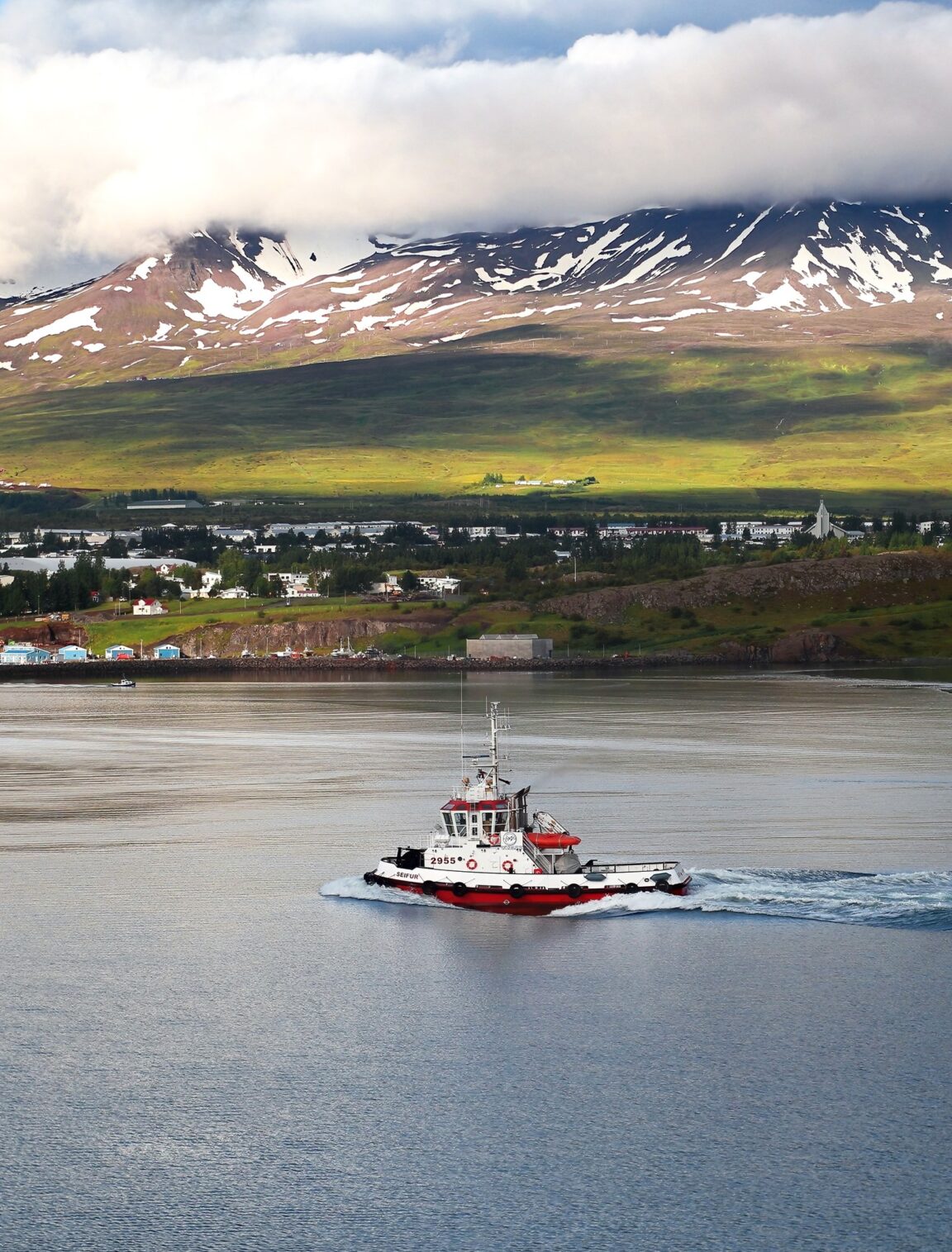
Image credit: Akureyri across Eyjafjörður fjord, photographed by Simon Hurry, via Unsplash (Unsplash License). Note: the photograph shows the town in summer light; the article covers its winter season.