 Thandiwe Nkosi
Timket, the Ethiopian Orthodox celebration of Epiphany, falls on Tuesday 19 January 2027, and its most famous setting is Gondar, where the tabots of the city’s churches process on the eve, Monday 18 January, to Fasilides’ Bath, spend the night there under guard and chant, and return in procession after the dawn blessing of the water on the morning of the 19th. That is the verified shape of the festival, confirmed by the church calendar and by UNESCO, which inscribed the Ethiopian Epiphany on its Representative List of the Intangible Cultural Heritage of Humanity in 2019. One fact must sit beside it from the start: Gondar is in Ethiopia’s Amhara Region, and current United Kingdom and United States government advisories warn against travel there. This guide explains the festival properly, sets out how the booking window works in a normal year, and states the current advice plainly, so that any visit is planned for when official advice allows it and not before.
Quick Facts
- What: Timket (also spelled Timkat or Timqet), the Ethiopian Orthodox Tewahedo Church’s feast of Epiphany, marking the baptism of Jesus in the River Jordan.
- When: Tuesday 19 January 2027, which is 11 Tir in the Ethiopian calendar. The eve processions, Ketera, are on Monday 18 January, and the feast of St Michael follows on Wednesday 20 January.
- Where: Gondar, in Ethiopia’s Amhara Region, centred on Fasilides’ Bath, with processions between the bath and the city’s parish churches.
- Heritage status: UNESCO inscribed the Ethiopian Epiphany as Intangible Cultural Heritage in 2019. Fasil Ghebbi, Gondar’s royal enclosure, is a UNESCO World Heritage Site, listed in 1979.
- The centrepiece: The tabot, the consecrated tablet each church holds as a replica of the Ark of the Covenant, carried on a priest’s head under rich cloth, out of the church just once a year in public procession.
- Travel advice, checked 25 November 2026: The UK Foreign Office advises against all travel to the Amhara Region, and the US State Department lists Amhara at its highest warning level. Read the safety section before booking anything.
What Timket Celebrates, and What a Tabot Is
Timket marks the baptism of Jesus in the Jordan, and its ritual logic follows that story exactly: the holy object goes down to the water, the water is blessed, and the people renew their own baptism in contact with it. The holy object is the tabot. Every Ethiopian Orthodox church keeps one on its altar, a consecrated tablet understood as a replica of the Ark of the Covenant and of the tablets of the Law, and it is the holiest thing the parish owns. For most of the year it never leaves the sanctuary, and lay people never see it uncovered. At Timket it is wrapped in brocade, carried out on the head of the senior priest beneath a ceremonial umbrella, and processed through the streets with drums, sistra, dancing and song to a body of water, where it spends the night in a tent while the faithful keep vigil around it with prayer and chanting.
On the morning of the feast the clergy celebrate the liturgy at the water’s edge, the bishop blesses the water with the cross, and the congregation is sprinkled; in Gondar, young men famously enter the pool itself. Then each tabot is carried home to its own church in a second procession that is, if anything, more joyful than the first, because the festival’s solemn work is done and what remains is celebration. On the following day, the feast of St Michael, the tabots of churches dedicated to St Michael make their own return, which stretches Gondar’s festival across three days rather than one.
Why Gondar, and Why Fasilides’ Bath
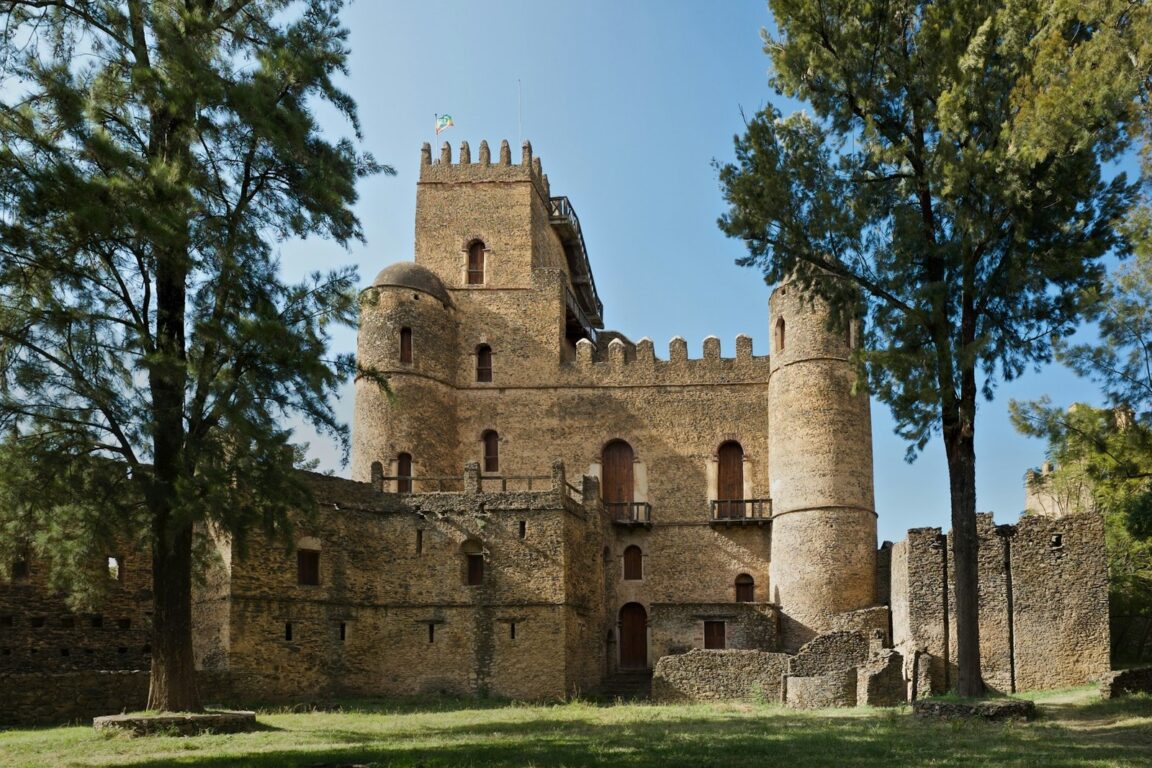
Timket is celebrated in every Ethiopian Orthodox town, but Gondar is its classic stage for one architectural reason. Gondar became the permanent capital of the Ethiopian empire when Emperor Fasilides founded it in 1636, ending centuries in which the court had moved from camp to camp. His builders raised the stone castles of Fasil Ghebbi, the walled royal enclosure that UNESCO listed as a World Heritage Site in 1979, and a short distance from the enclosure stands Fasilides’ Bath: a large rectangular royal pool, dry and quiet for most of the year, with a two storey stone pavilion rising on arches from its centre. Tradition credits the bath to Fasilides himself, though historians debate its exact building history.
For Timket the pool is filled, and the pavilion appears to float on the water. That single image, the castle in the pool at dawn, surrounded by white clad crowds on the walls and banks, is why Gondar’s Timket is photographed, filmed and remembered above all others. One widely cited count, drawn from the Library of Congress, holds that eight of the tabots of Gondar’s more than forty Orthodox churches are carried to the bath for the central ceremony, arriving by different routes through the city. The eve procession that brings them there, known as Ketera, fills the streets on the afternoon of 18 January, and the vigil around the pool runs through the night, so the festival is as much a night event as a morning one.
The Three Days, in Order
Monday 18 January 2027: Ketera, the eve
In the afternoon, each parish processes its tabot out of its church toward the water. In Gondar the routes converge on Fasilides’ Bath. Drummers and church singers lead, the priests carry the tabots under umbrellas, and crowds in white traditional dress line the streets. The tabots are installed in tents at the bath and the vigil begins, with chanting, prayer and coffee shared through the night. For a visitor, the eve is the half of the festival that casual accounts miss, and it is the more intimate half: the city walking its holiest objects through its own streets at walking pace.
Tuesday 19 January 2027: the blessing
The morning liturgy at the bath begins early, and the blessing of the water is the climax. The bishop dips the cross into the pool, the water is sprinkled over the congregation, and young men leap into the bath in a rush that is part devotion and part joy. Afterwards the tabots begin their processions home, church by church, through streets that are now in full festival mood, with dancing and singing groups escorting each one. Being in position before dawn matters in a normal year: the banks and walls of the bath fill early, and the blessing itself happens in the morning’s first hours.
Wednesday 20 January 2027: St Michael’s day
The feast of St Michael, one of the most beloved saints in Ethiopian devotion, closes the festival. The tabot of Gondar’s St Michael church returns to its home on this day, giving the city a third procession and a quieter, more local coda after the main crowds of the 19th have dispersed.
Booking the Castle City’s Fullest Weekend, in a Year When Travel Is Advised
In any year when official travel advice permits a visit, Timket is Gondar’s fullest weekend and its booking logic follows from that. The city’s hotel stock is small beside the festival’s draw, which includes Ethiopian domestic travellers and the diaspora as well as foreign visitors, so rooms for the nights of 17 to 20 January are typically committed months ahead, and the standard advice from Ethiopian tour operators is to hold accommodation as early as the previous autumn for a January Timket. A base in central Gondar, within walking distance of both Fasil Ghebbi and the road to Fasilides’ Bath, saves its value twice a day, on the eve when processions close streets to traffic and at dawn on the 19th when the whole city is moving toward the pool before first light. Booking direct with the hotel or through an Ethiopian operator with a written confirmation, on refundable terms where they exist, is the pattern that suits a festival whose dates are fixed by the church calendar but whose travel context can change.
The honest version of that advice, for January 2027 specifically, comes with the next section attached. Treat the booking window as knowledge for the year you can go, not as an instruction to commit money now against current government warnings.
The Current Travel Advice for Amhara, Stated Plainly
Gondar sits in Ethiopia’s Amhara Region. At the time of writing, the United Kingdom’s Foreign, Commonwealth and Development Office advises against all travel to the Amhara Region, citing armed conflict and unrest, and the United States Department of State lists Amhara at Do Not Travel level. Those advisories are the deciding documents for most foreign visitors, and they mean that a January 2027 trip to Gondar cannot responsibly be recommended in this guide, however extraordinary the festival is. Anyone considering travel regardless should read their own government’s current Ethiopia advice in full, understand that insurance commonly fails when advice is ignored, and take a professional security view. Timket is an annual feast on a fixed calendar; it will be celebrated at Fasilides’ Bath in 2028 and every year after, in a city whose churches have kept it through every circumstance. Planning for the edition that falls in a year when the advice allows travel is not missing the festival. It is how the festival will still be there, unchanged, when you arrive.
For travellers looking at January 2027 itself, Timket is also celebrated on a grand scale in Addis Ababa, which sits outside the Amhara advisory area, and in other Ethiopian cities; our earlier guide to Timkat in Gondar explains the Fasilides’ Bath ceremony in further depth for readers following the festival from home. Festival travellers building a wider calendar should also see our Rio Carnival guide and the Key West Pride guide, both January to June fixtures planned on the same book early logic.
Frequently Asked Questions
When is Timket in 2027?
Tuesday 19 January 2027, which is 11 Tir in the Ethiopian calendar. The Ketera eve processions are on Monday 18 January, and the feast of St Michael follows on Wednesday 20 January.
What is a tabot?
A consecrated tablet kept on the altar of every Ethiopian Orthodox church, understood as a replica of the Ark of the Covenant. At Timket it is wrapped in cloth and carried in procession on a priest’s head to water, the one public journey it makes each year.
Why is Gondar’s Timket famous?
Because of Fasilides’ Bath, the 17th century royal pool with a stone pavilion in its centre, filled once a year for the festival. The dawn blessing, with the pavilion standing in the blessed water, gives Gondar’s celebration a setting no other city has.
Is Timket recognised by UNESCO?
Yes. UNESCO inscribed the Ethiopian Epiphany on its Representative List of the Intangible Cultural Heritage of Humanity in 2019. Gondar’s Fasil Ghebbi royal enclosure is separately a World Heritage Site, listed in 1979.
Can I travel to Gondar for Timket in January 2027?
Current official advice warns against it. The UK Foreign Office advises against all travel to the Amhara Region and the US State Department lists Amhara at Do Not Travel level. Check your own government’s up to date Ethiopia advice before making any plan.
How early do Gondar hotels book out for Timket?
In years when travel is advised, Timket is the city’s busiest weekend and rooms for the festival nights are typically taken months ahead, often by the previous autumn, according to Ethiopian tour operators. Book on written, preferably refundable, terms.
Featured image: Fasilides’ Castle in the Fasil Ghebbi royal enclosure, Gondar. Photo: Unsplash, via the Gondar gallery of Dejene Ethiopia Tours.