 Kwame Mensah
Kumasi is understood at two addresses: a palace and a market. The Manhyia Palace Museum, open daily from 9:00 to 17:00 including public holidays, tells the Asante story through the 1925 palace built for Prempeh I on his return from exile and later home to Prempeh II, while the rebuilt Kejetia Market, the largest single market in West Africa, shows the same city trading at full volume a short drive away. Do the museum first, in the cool of the morning, and the market will make far more sense by afternoon.
Quick Facts
- Museum: Manhyia Palace Museum, Manhyia Palace grounds, Kumasi, Ashanti Region, Ghana
- Museum hours: Monday to Sunday 9:00 to 17:00, including statutory holidays
- Admission: Tiered fees for Ghanaian and non-Ghanaian visitors; check the museum’s official tour page for current rates
- Palace built: 1925, as the residence of Asantehene Prempeh I after his return from exile
- Museum opened: 12 August 1995, inaugurated during the Silver Jubilee of Opoku Ware II
- Market: Kejetia (Kumasi Central Market), more than 8,000 stores and stalls in the rebuilt hall
- Photography: Prohibited inside museum galleries except in designated areas
Why does the palace building itself tell the story?
The museum building was constructed in 1925 as the private residence of Nana Agyeman Prempeh I, who returned to Kumasi in 1924 after 28 years of British-imposed exile in Sierra Leone and the Seychelles. Asante tradition holds that the community declined to let their king accept the building as a colonial gift and raised the money to pay for it. That single fact explains the emotional register of the whole site. The palace is not a colonial relic that happens to hold Asante objects. It is a statement of loyalty bought and paid for by the Asante themselves, and the museum, created within the old residence of Prempeh I and Prempeh II, keeps that framing in every room. The museum’s own presentation of its history is set out on the Manhyia Palace Museum official website, which also publishes the visiting hours used in this guide.
Who was Prempeh II, and why does he anchor the visit?
Otumfuo Sir Osei Agyeman Prempeh II, the fourteenth Asantehene, reigned from 1931 to 1970 and lived in this palace through the decades in which the Asante kingdom negotiated its place inside an independent Ghana. The ground floor is kept close to its mid-century character, with the furniture, bookshelves and everyday objects of a working royal residence, including a black-and-white television from 1965 that does more to collapse the distance between visitor and king than any gold regalia could. Prempeh II’s story is one of institutional survival: the restoration of the Asante Confederacy in 1935, the careful defence of custom and stool authority, and a reign long enough to bridge the colonial and independence eras. Life-sized effigies in the museum place him in sequence with Prempeh I, Opoku Ware II, the reigning Otumfuo Osei Tutu II and queen mothers including Nana Yaa Asantewaa, the Ejisu queen mother whose name is inseparable from the 1900 war against the British. Travellers who enjoy single-site royal history told through objects will find a kindred approach in our guide to the National Museum of Anthropology in Mexico City, another collection where national identity is the real exhibit.
What will you see inside?
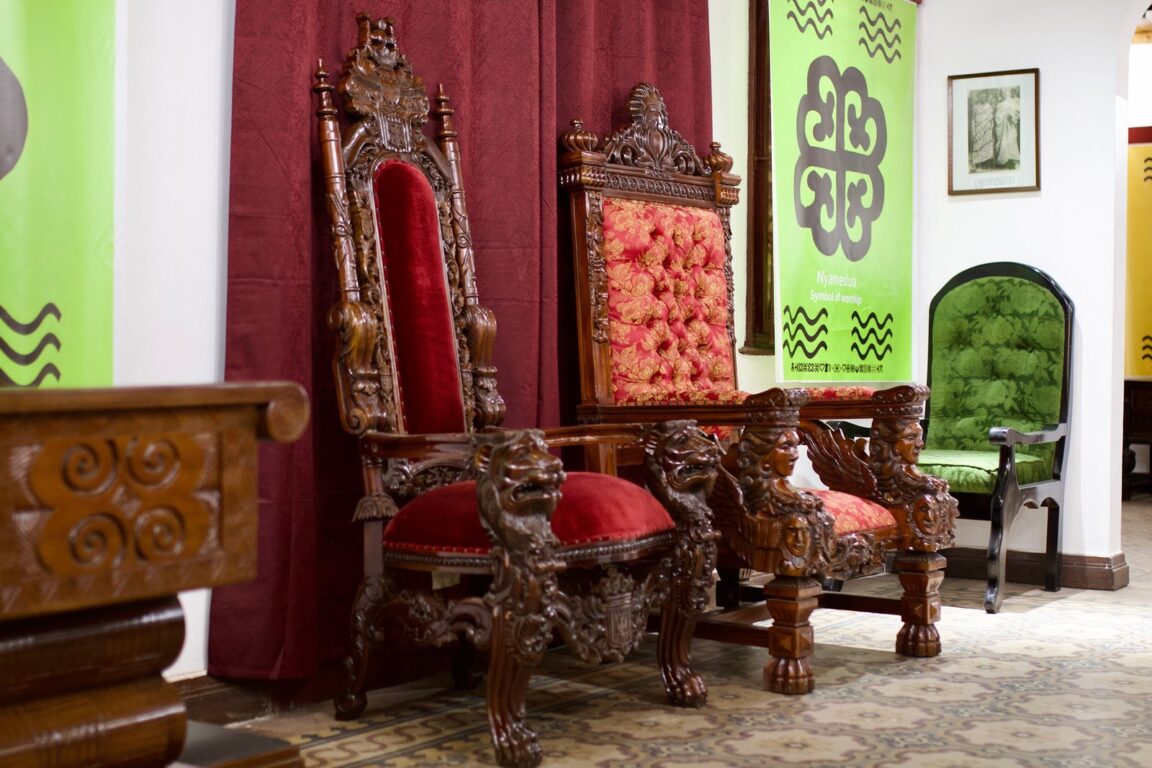
Expect regalia, gold weights and the small brass instruments once used to measure gold dust, palanquins, drums, photographs and royal furniture, arranged as a palace interior rather than a neutral gallery. A major refurbishment and reopening on 1 May 2024 added returned Asante treasures, objects that left Kumasi during the nineteenth-century wars with Britain and have come back on loan or by return, which gives the museum a live, still-unfolding quality. Visits are guided in practice, and the interpretation matters here more than at most museums, because the objects assume knowledge of stool symbolism, lineage and ceremony that most visitors do not bring with them. Dress decently, expect no photography inside the galleries, and do not plan on needing an appointment: the museum states that visitors do not need to book ahead, though its official tour-booking page lists the current admission categories for Ghanaian citizens and non-Ghanaian nationals, students and researchers.
How does Kejetia complete the day?
Kejetia, formally the Kumasi Central Market, is the commercial engine of the same city, a few minutes from Manhyia. The market was established in 1924 and its first redevelopment phase, completed in late 2018, rebuilt it as a modern hall with roughly 8,420 stores; the wider market counts more than 8,000 stores and stalls, around 20,000 vendors and tens of thousands of daily visitors. The Kumasi Metropolitan Assembly’s account of the second phase of the Kumasi Central Market redevelopment sets out the scale of what is still being built, including thousands more leasable spaces, restaurants and market facilities. Inside, the logic is sectional: cloth and kente in one zone, foodstuffs in another, gold jewellery, leather, electronics and household goods in others. Go with a clear head, a small amount of cash in hand, valuables secured and no fixed schedule. Kejetia rewards wandering and punishes rushing, and a first circuit with a local guide is money well spent. Food travellers can compare the experience with our Arthur Avenue food guide in the Bronx, a market street with the same density of specialist knowledge per square metre.
How should you sequence a Kumasi day?
Start at Manhyia at opening time, when the rooms are quiet and the light is kind, and give the museum a full two hours including the grounds. Late morning belongs to the Prempeh II Jubilee Museum and the cultural centre area nearby for kente, Adinkra printing and the story of the Golden Stool, told, necessarily, through a replica. Eat lunch before Kejetia, not inside your first market hour, then give the market the whole afternoon. Travellers building a wider Ghana and West Africa trip can pair Kumasi with Accra by road or air, and readers who like second cities with strong identities will enjoy our Cooperstown beyond the Hall of Fame guide and our Livingstone beyond Victoria Falls coverage, both about places that reward visitors who stay past the headline attraction.
Visitors who want a second planning account that quotes the museum’s own visitor information, including its dress guidance and parking notes, can cross-check with this Manhyia Palace Museum guide covering royal history, etiquette and planning before travelling.
Frequently asked questions
What are the Manhyia Palace Museum opening hours?
The museum is open Monday to Sunday, including statutory holidays, from 9:00 to 17:00, according to its official visitor information. No appointment is needed for ordinary visits.
How much is Manhyia Palace Museum admission?
Fees are tiered by category, with different rates for Ghanaian citizens and non-Ghanaian nationals and concessions for students. The museum’s official tour-booking page lists current rates, so check it on the day rather than relying on older listings.
Can I take photographs inside the museum?
No. Photography is prohibited inside the museum galleries except in selected designated areas, where professional photographers may take pictures for a fee.
How big is Kejetia Market?
Kejetia is described as the largest single market in West Africa, with more than 8,000 stores and stalls in and around the rebuilt hall, around 20,000 vendors and tens of thousands of visitors daily.
Image credit: Royal stools and chairs inside the Manhyia Palace Museum, Kumasi. Photo from the Manhyia Palace Museum official website (manhyiapalacemuseum.org).