 Aiko Tanaka
Nara in one day works if you protect two things: an early start at Todai-ji’s Great Buddha Hall, which in late November opens at 8:00 and closes at 17:00, and a disciplined relationship with the deer, who may only ever be fed the official deer crackers and never teased with them. From Kyoto or Osaka the trains take under an hour, Kintetsu-Nara Station is the closer arrival point to the park, and the classic loop of Great Buddha Hall, Nara Park and Kasuga Taisha fits comfortably between a morning departure and a sake-flavoured detour through Fushimi on the way home.
Quick Facts
- Great Buddha Hall hours: 8:00 to 17:00, November to March; 7:30 to 17:30, April to October
- Great Buddha Hall admission: 800 yen for adults; combined hall and museum ticket 1,200 yen
- Deer rule: Feed only deer crackers (shika senbei); never tease, chase or feed other food
- Best arrival station: Kintetsu-Nara, about 8 minutes on foot to Nara Park; JR Nara is further west
- Park entry: Nara Park is free and open all year
- Time needed: Five to six hours in Nara, plus the Fushimi stop on the return
Which train should you take, and from where?
From Kyoto, the Kintetsu line from Kyoto Station reaches Kintetsu-Nara in about 35 minutes on limited express services, and JR’s Miyakoji rapid takes roughly 45 minutes to JR Nara. From Osaka, Kintetsu from Osaka-Namba reaches Kintetsu-Nara in around 40 minutes. The station choice matters more than the small time differences: Kintetsu-Nara puts you a short walk from the park’s western edge, while JR Nara adds a bus ride or a longer walk. The Nara City Tourism Association’s visitor pages at the official Visit Nara site give the same advice, with the city loop bus as the bridge from JR Nara to the park and Todai-ji. Build the day backwards from the Great Buddha Hall’s 17:00 winter closing and the plan almost writes itself: arrive by 9:00, be inside the hall by 9:30, and keep the afternoon for the park, the shrine and the old town.
What makes Todai-ji’s Great Hall worth the early start?
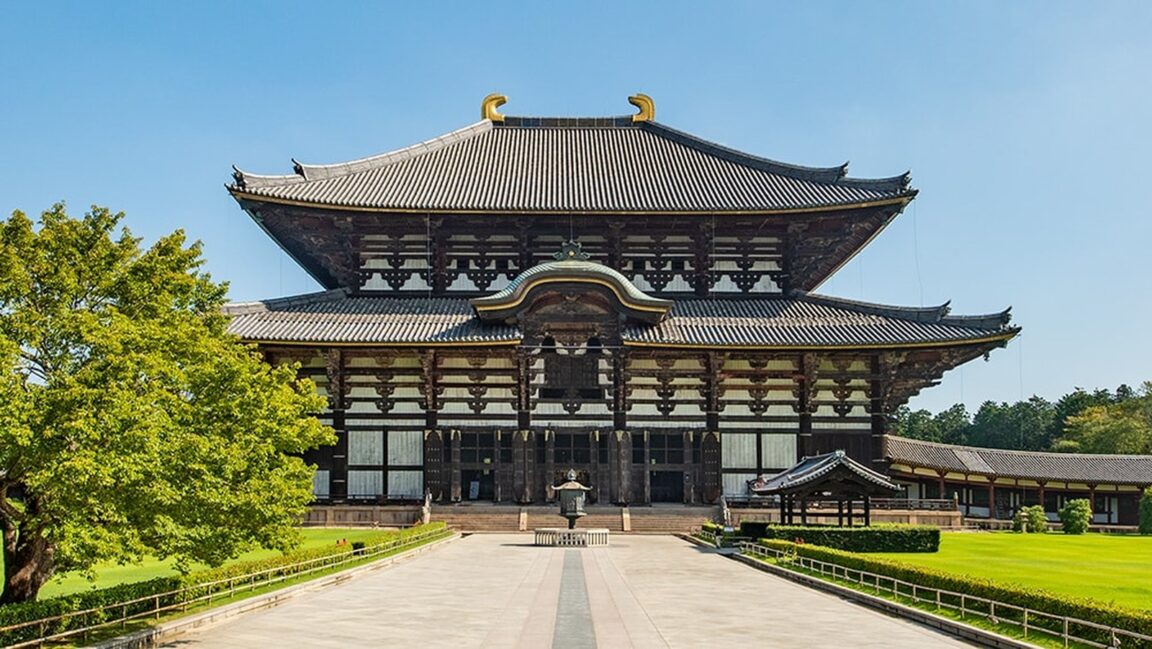
Scale, first of all. The Daibutsuden, the Great Buddha Hall, is among the largest wooden buildings in the world even in its current form, an early eighteenth-century rebuild at roughly two-thirds of the original’s width, and it houses a bronze Great Buddha about 15 metres tall, first cast in the eighth century under Emperor Shomu and dedicated in 752. You approach through the Nandaimon, the great south gate, whose two towering Nio guardian statues are masterpieces of Kamakura-period sculpture and cost nothing to admire. Inside, give the hall time: the Buddha’s scale only registers slowly, the attendant statues and the hall’s models reward a full circuit, and the famous pillar with a hole said to match the Buddha’s nostril will have a queue of children that is its own entertainment. Todai-ji’s official visitor information, published by Todai-ji temple on its official website, lists the seasonal hours and the admission structure used here, including the combined ticket with the Todai-ji Museum, which is the right upgrade for anyone interested in the temple’s sculpture and ritual objects. Travellers who plan temple days carefully will appreciate the same discipline in our Baalbek temples day trip guide from Beirut, another ancient site where opening hours quietly dictate the whole itinerary.
What is the correct deer etiquette?
The deer of Nara Park are wild animals, protected as a national natural monument, and the etiquette is a safety system rather than a photo opportunity. Feed them only deer crackers, sold at stalls around the park for a small fee, and hand a cracker over promptly: holding one up, hiding it or teasing a deer with it is how visitors get nipped, butted or mobbed. When the crackers are gone, show empty open hands, which the deer understand as the end of the transaction. Keep maps, bags, paper and food packaging out of reach, because deer will eat paper and plastic with real enthusiasm and real harm. Children should feed deer together with an adult, and everyone should take extra care in autumn, when stags in rut are less predictable, and in late spring, when does with fawns are protective. The deer famously bow, and bowing back is harmless fun, but the hierarchy of the encounter should stay clear: they are residents, you are a guest, and the park’s own guidance, summarised on Visit Nara’s deer and park pages, asks visitors to take all rubbish home because the park has no bins. Readers who like wildlife encounters with firm rules will find the same philosophy in our Wind Cave National Park planning coverage, where bison set the terms in a similar way.
What should fill the middle of the day?
Walk east and uphill from the Great Buddha Hall to Nigatsu-do, the hall on the hillside whose wooden terrace looks west over the city and the park, and which can be visited around the clock in its outer precinct. Then drift south through the park to Kasuga Taisha, the shrine approached through primeval forest along paths lined with stone lanterns, where deer have been regarded for centuries as messengers of the shrine’s deity. That theological detail explains the whole city: the deer are not a petting zoo that escaped, they are a sacred population that a modern city has organised itself around. Lunch belongs in Naramachi, the old merchant quarter south of the park, where machiya townhouses hold small restaurants, sake shops and craft stores, and the pace drops noticeably from the Todai-ji crowds. Budget-conscious planners can cross-check the day’s costs against the method in our Theodore Roosevelt National Park costs and budget guide: fix the big-ticket items, in this case trains and admission, and let food be the flexible line.
How does the Fushimi sake detour work on the way back?
Returning toward Kyoto, break the journey in Fushimi, the sake district built on soft spring water and lined with white-walled breweries along willow-shaded canals. It sits on the Keihan line corridor between Nara and Kyoto, so the detour costs a change of trains rather than a separate expedition. Late afternoon is the right window: brewery shops and tasting counters are open, the canal light is at its best, and an hour is enough for a tasting flight and a walk along the water before the final train into Kyoto. Keep the tasting modest if the day has been long, buy a bottle rather than a case, and remember that brewery opening days vary, with some houses closing midweek. Drivers and train romantics alike will enjoy pairing this rail day with our Petrified Forest scenic route drive, the road-based cousin of the same slow-travel idea.
What does the day cost, and what should you book?
Almost nothing in central Nara needs booking, which is the day’s quiet luxury. Todai-ji sells admission at the hall, with no online ticket system to wrestle, and the park and shrine approaches are free. The real costs are the return train fare from Kyoto or Osaka, the 800 yen hall admission or 1,200 yen combined ticket, deer crackers, lunch in Naramachi and whatever the Fushimi tasting counters persuade out of you. Travellers using a JR Pass should note that the pass covers the JR route to JR Nara but not the Kintetsu line, so the closer station may still be worth paying for separately on a tight day. Cash remains useful for crackers, small shrine purchases and older ticket desks, even in a country that has otherwise embraced the payment app.
One last sequencing note: if the Great Buddha Hall queue is already long on arrival, reverse the morning. Walk the park and Kasuga Taisha first, in their quietest hour, and enter the hall late morning when the tour groups have moved on to lunch. The deer, the lanterns and the forest all improve with emptiness, and the hall’s scale impresses at any hour of its day.
Frequently asked questions
Can you do Nara in one day from Kyoto or Osaka?
Yes. Trains take roughly 35 to 45 minutes each way. Arrive by 9:00, see the Great Buddha Hall first, then the park and Kasuga Taisha, and add Fushimi on the Kyoto return if energy allows.
What are Todai-ji’s Great Buddha Hall hours and price?
The hall opens 8:00 to 17:00 from November to March and 7:30 to 17:30 from April to October. Admission is 800 yen for adults, with a combined hall and museum ticket at 1,200 yen, per the temple’s official information.
What can you feed the Nara deer?
Only deer crackers, sold in the park. Never feed them other food, never tease them with a cracker, and show empty hands when you have finished.
Which station is best for Nara Park?
Kintetsu-Nara, about eight minutes on foot from the park. JR Nara is further away; use the city loop bus from there to the park and Todai-ji.
Is Nara Park free?
Yes, the park is free and open all year. Paid elements are Todai-ji’s halls and museum, the inner areas of Kasuga Taisha and your deer crackers.
Image credit: The Great Buddha Hall (Daibutsuden) at Todai-ji, Nara. Photo from the Todai-ji official website (todaiji.or.jp).