 Jonas Lindqvist
Yes, you really do sleep at minus five degrees Celsius, and yes, it works, provided you understand the system before you pay for it. Icehotel 365 in Jukkasjarvi, Sweden is the permanent, year round ice building beside the seasonal winter hotel: 2,100 square metres of hand carved suites held at a constant minus five, cooled in summer by solar power, with a warm building, warm cabins and a morning sauna forming the backup that makes the cold night a pleasure instead of an endurance test. Book one night in the ice, book the rest warm, and follow the sleeping routine the hotel issues at check in.
Quick Facts
- Location: Jukkasjarvi, Swedish Lapland, about 200 kilometres north of the Arctic Circle and 17 kilometres from Kiruna
- The building: Icehotel 365, a permanent ice hall of 2,100 square metres, open 365 days a year since 2016
- Temperature: A constant minus five degrees Celsius inside, maintained year round, with summer cooling powered by solar energy
- Cold rooms: 18 suites in Icehotel 365, split between Art Suites and Deluxe Suites, each hand carved by artists from around the world
- Warm backup: Heated Kaamos rooms and Arctic cabins in wooden buildings a short walk away, plus the warm Riverside Lobby with lockers, showers and saunas
- Facts checked: 26 November 2026, against icehotel.com
Two hotels, one site: the seasonal build and the permanent 365
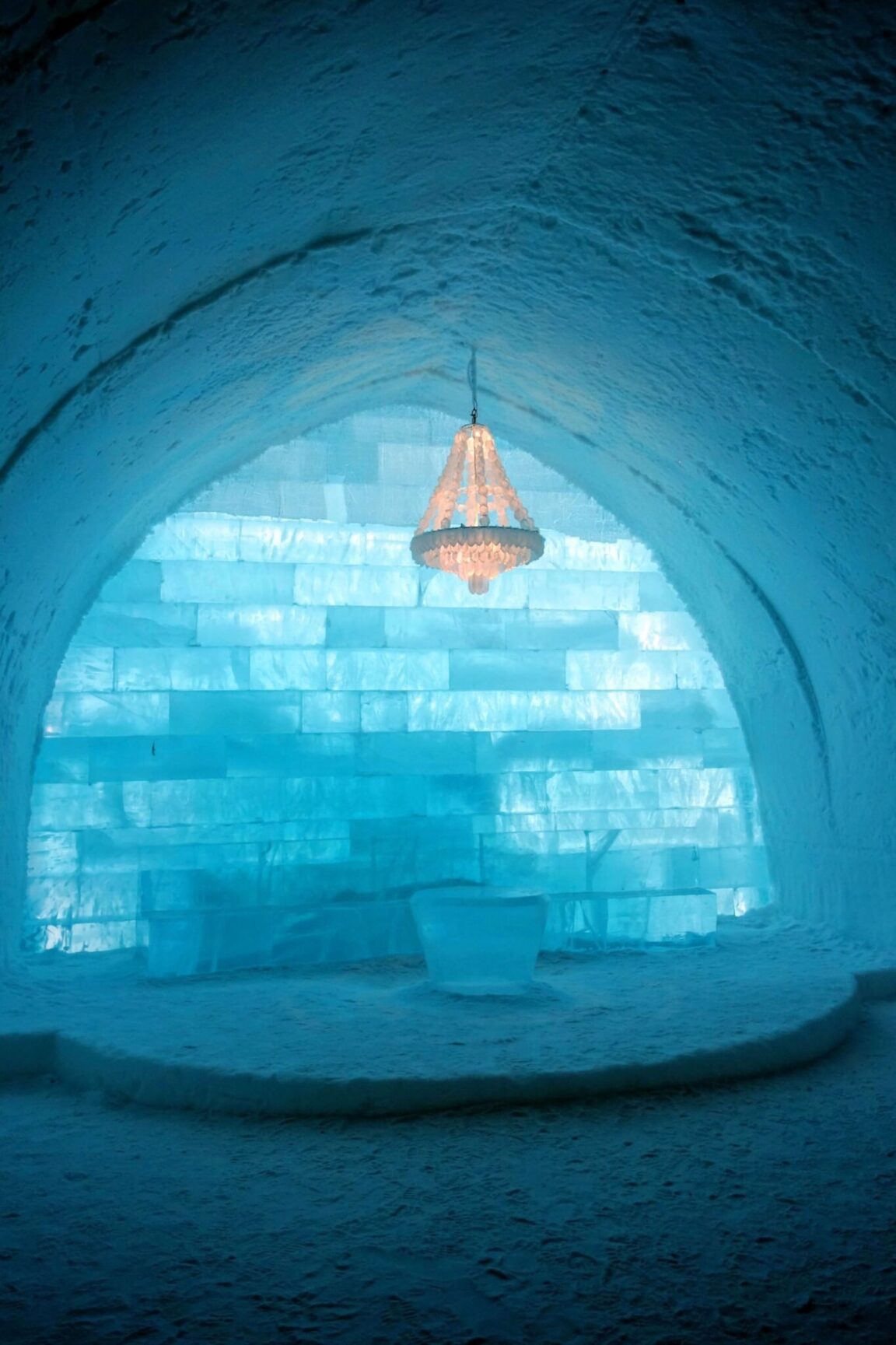
The first thing to untangle is that Jukkasjarvi hosts two different ice hotels. The classic winter hotel is rebuilt from Torne River ice every December and melts back into the river in spring, which is why its rooms can never be photographed in advance and never repeated. Standing beside it since 2016, Icehotel 365 on the hotel official site is a permanent structure: a specially designed hall that keeps its suites frozen through the midnight sun of summer as reliably as through the polar night. The hotel describes it as the world first year round ice hotel, and the practical consequence matters more than the record. You can sleep in ice in July, combine the cold night with summer river activities, and plan the trip without betting everything on a four month winter window.
Inside, the 365 hall holds an ice bar, an ice gallery and an experience room showing the history of the hotel, alongside the suites. By day the rooms operate as an art exhibition open to visitors. By evening they revert to bedrooms. That double life explains the rhythm of a stay: your suite is a gallery until the day guests leave, and a bedroom after.
The suites: art first, deluxe if you want the warm bathroom attached
Every suite in Icehotel 365 is a one off, designed and sculpted by artists selected from applicants around the world, so the room you book is a category rather than a fixed design. The Art Suites are the pure form: an ice bed frame, a mattress, reindeer hides and a thermal sleeping bag, with your luggage and bathroom in the warm building nearby. The Deluxe Suites add the feature that changes the night materially, a private heated relaxation area attached to the suite, with its own bathroom. Within the deluxe range the hotel tiers the facilities, from a private shower and toilet up to versions adding a sauna, and the largest adding a bathtub as well. If the walk to a warm bathroom at 3 a.m. is the detail that would spoil the story for you, the deluxe tier is not an upsell, it is the correct room.
Readers comparing Scandinavian design stays will find the contrast instructive. The warm, timber lined calm of Ett Hem in Stockholm, Sweden design hotel original is the opposite pole of Swedish hospitality, and many travellers pair a Stockholm night there with the Arctic leg. At the ultra luxury end, The Woodward in Geneva and its lakefront suites shows what a conventional grand hotel does with the same budget, which helps calibrate what Icehotel is and is not selling: not thread counts, but a night inside a sculpture.
The sleeping system, step by step
The hotel runs the cold night as a drilled routine, and the routine is the product. You check in at the warm Riverside Lobby, store your luggage in a locker, and keep only what the night requires. The hotel issues a thermal sleeping bag rated for the conditions, and the standard advice, repeated by the hotel and worth obeying exactly, is to sleep in a single layer of thermal underwear, ideally wool, with a hat and warm socks, and nothing more. Extra layers inside the bag work against you by trapping moisture. The bed itself is a frame of ice topped with a real mattress and reindeer hides, so you are insulated from below as well as wrapped from above. Phones and cameras belong in the warm building or inside the bag with you, because batteries drain fast at minus five and there are no power sockets in the cold rooms.
In the morning the system reverses just as deliberately: a wake up with hot lingonberry juice, then the warm building, a sauna and a shower, then breakfast. Guests consistently describe the sauna as part of the pleasure rather than a rescue, and structuring the night this way is why one ice night is the standard recommendation. The hotel itself suggests exactly that pattern for multi night stays, one night cold and the remaining nights warm, a recommendation set out in the official Icehotel press information and repeated across its room pages.
The warm cabin backup is a feature, not a failure
It is worth stating plainly, because first timers sometimes treat it as defeat: the warm accommodation is half the design. The Kaamos rooms and the Arctic cabins sit in low wooden buildings a short walk from the ice hall, with proper beds, heated bathrooms and space for luggage, charging and ordinary sleep. Booking the pattern the hotel intends, ice first or last, warm in between, gives you the photograph and the story without spending three consecutive nights managing cold, condensation and broken sleep. Travellers who have done the multi lodge version of this idea, sleeping across contrasting properties on one itinerary as on Amankora five lodge circuit in Bhutan, will recognise the logic: contrast is the luxury, and the warm cabin is what makes the ice suite feel chosen rather than endured.
Practicalities reward the same realism. Jukkasjarvi is reached via Kiruna, and the paperwork side of a Swedish Lapland trip is simple for most visitors, but multi country Arctic itineraries benefit from the same entry point discipline covered in the Laos eVisa entry points explainer: know which arrival point your documents assume before you build the route around it. For Sweden specifically, check current entry guidance and book the Kiruna transfer as part of the hotel stay rather than improvising it in Arctic darkness.
When to go, and what the season changes
Icehotel 365 removes the old December to April constraint, but it does not make the seasons identical. Winter adds the seasonal hotel next door, the full gallery of that year new suites, the darkest skies for aurora watching and the classic snow activities. Summer trades those for the surreal version of the experience, walking out of a minus five bedroom into near continuous daylight, with river and forest activities replacing snow based ones. The solar story is not marketing garnish: the permanent hall refrigerating plant runs on energy harvested from the midnight sun, a detail the hotel documents in its official media and press pages. Shoulder months split the difference, with thinner crowds and a quieter village. Prices are quoted live by date and room category on the official booking pages, and they move sharply with season and suite tier, so treat any figure you see quoted elsewhere, including in older guides, as expired.
Who should book, and who should visit by day instead
Book the ice night if you want the definitive version of a famous idea, executed with 35 years of operational practice behind it, and if you can sleep in a cold room with a drilled routine around it. Choose a Deluxe Suite if a private warm bathroom is the difference between delight and dread. Visit by day, and sleep warm, if you are travelling with young children, if cold aggravates a medical condition, or if your Lapland time is short and a disrupted night would cost you the next day activities. Either way, see the suites: the carving is the point, and it is genuinely extraordinary.
Frequently Asked Questions
How cold is it inside Icehotel 365?
The indoor temperature is held at a constant minus five degrees Celsius all year, in summer as in winter. Outside winter air is usually far colder, which is why the suites can feel comparatively sheltered once you are in the sleeping bag system.
What do you sleep in at the Icehotel?
A thermal sleeping bag issued by the hotel, on a mattress over reindeer hides on an ice bed frame. Wear one layer of thermal underwear, a hat and warm socks. Luggage, toilets and showers are in the warm Riverside Lobby for Art Suite guests, while Deluxe Suites have a private heated bathroom and relaxation area attached.
Is Icehotel 365 open in summer?
Yes. The permanent hall opened in 2016 and operates 365 days a year, with its cooling powered by solar energy in summer. The seasonal winter hotel beside it exists only from December to spring.
How many ice suites does Icehotel 365 have?
Eighteen suites, split between Art Suites and Deluxe Suites, alongside an ice bar, an ice gallery and an experience room, within a 2,100 square metre hall. Each suite is individually designed and hand carved.
Should I book more than one night in the ice?
For most guests, no. The pattern the hotel recommends, and the one this guide endorses, is one night in a cold suite and the other nights in the warm Kaamos rooms or Arctic cabins on the same site.
Featured image: Icehotel interior, Jukkasjarvi, Sweden. Photo by Tobias Fischer, via Unsplash (unsplash.com). Image credit: Tobias Fischer / Unsplash.