 Lucas Meyer
There is no lodge inside Wind Cave National Park, and that single fact decides where you stay: the only in park bed is a tent or RV site at Elk Mountain Campground, half a mile from the visitor center, while every roof, shower and restaurant sits outside the boundary, in Hot Springs about 11 miles south or Custer about 22 miles north on US Highway 385. Entry to the park itself is free, with no entrance pass required, and the money goes on the ranger guided cave tours instead, from 6 dollars for the Accessibility Tour to 16 dollars for the main Natural Entrance and Fairgrounds tours. Choose the campground for dawn bison and dark skies, Hot Springs for the closest, simplest base, and Custer for the widest choice of motels and cabins and a combined Black Hills trip. This guide sequences those bases against the boxwork cave tours, the Rankin Ridge high point and the bison prairie that share the park.
Quick Facts
- Park entry: Free. No entrance pass is required to drive through, hike or visit the visitor center; fees apply only to cave tours and camping
- In park lodging: None. No lodge, hotel or cabins inside the park; Elk Mountain Campground is the only in park overnight option
- Campground: Elk Mountain Campground, 64 sites about half a mile from the visitor center, 24 dollars a night when water and flush toilets are available and 12 dollars when water is off, with group sites at 45 dollars; reserve through Recreation.gov, card payment only
- Closest town: Hot Springs, South Dakota, about 10 to 11 miles south of the visitor center on US Highway 385
- Second base: Custer, about 22 miles north, with the widest nearby choice of motels, cabins and restaurants
- Cave tours, adult prices checked today: Garden of Eden 14 dollars, Natural Entrance 16 dollars, Fairgrounds 16 dollars, Accessibility 6 dollars, Candlelight 16 dollars in summer, Wild Cave 45 dollars in summer; children 5 and under are free on the standard tours and interagency passes do not cover tour tickets
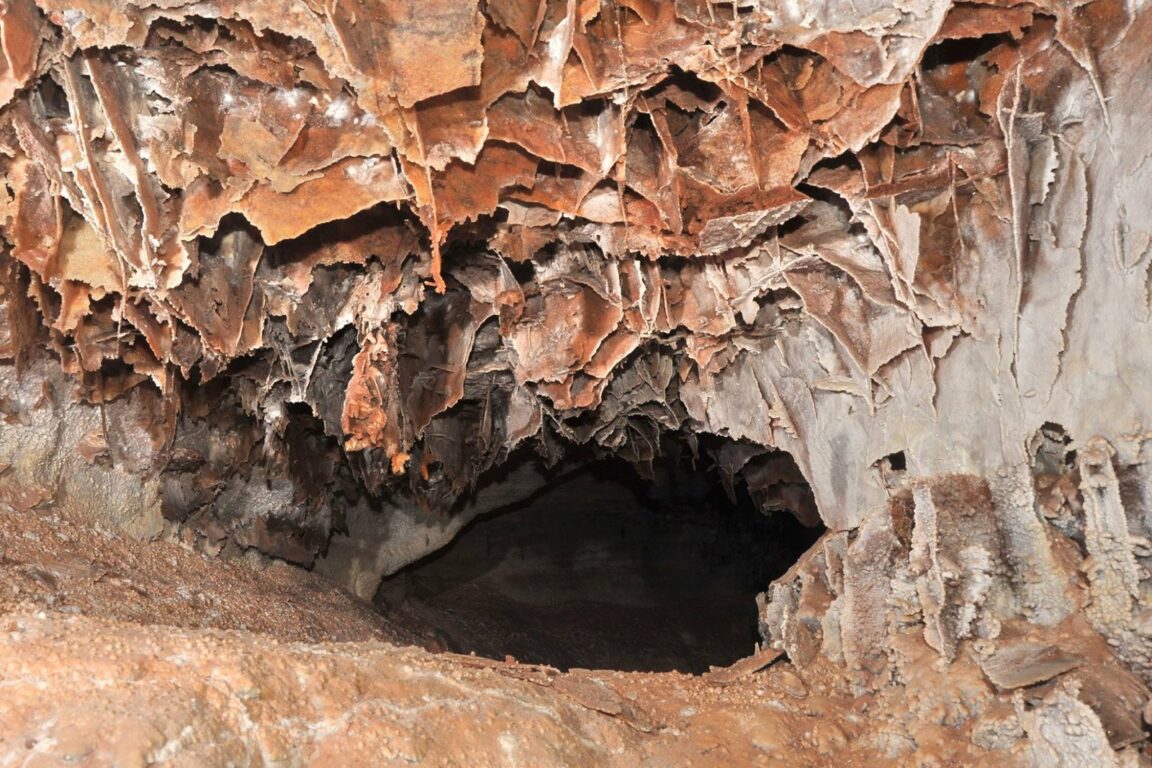
- The cave: More than 160 mapped miles of passages under about one square mile of prairie, holding the largest known display of boxwork in the world, seen only on ranger guided tours from the visitor center
Who should camp at Elk Mountain, and what is it actually like?
Campers, and travellers whose priority is the surface park rather than the cave alone. Elk Mountain straddles the edge of ponderosa pine forest and open prairie half a mile from the visitor center, so the day starts with the park’s real second act: bison, elk, pronghorn and prairie dogs on the grassland above the cave. The Wind Cave bison herd is one of the few free roaming, genetically pure herds on public land in North America, founded when 14 bison arrived from the New York Zoological Gardens, now the Bronx Zoo, in 1913, and a campground base puts you on the park roads at the early and late hours when wildlife is most visible and the tour crowds have gone.
Know the terms before choosing it. The campground is open year round, sites are reserved through Recreation.gov, payment is by card only, and the nightly fee halves when the water is turned off, which tells you the shape of the off season: flush toilets and running water in the main season, a simpler operation outside it, and no showers or hookups to plan around at any time of year. In the May to September peak, reservations are the safe course, and the same Recreation.gov account should be holding your cave tour tickets, because the two bookings together are the trip. Campers who need a shower every night or a door that locks should read that paragraph twice and then book Hot Springs instead, without regret.
Why is Hot Springs the default roofed base?
Distance and simplicity. Hot Springs sits about 11 miles south of the visitor center on US Highway 385, roughly a quarter of an hour of easy highway driving, which makes it the only base that works for an early cave tour without an early alarm argument. It is a small historic town built around its own warm springs, with motels, bed and breakfasts and diners at small town prices, and it keeps the evening simple after a day underground and on the prairie. For a one night Wind Cave stop on a Black Hills circuit, Hot Springs is the answer nine times out of ten: tour in the morning, Rankin Ridge and the wildlife loop in the afternoon, dinner and bed a short drive south.
Its limit is choice. The lodging stock is modest, fills on summer weekends, and offers little at the upscale end, so travellers who want a resort stay, a cabin with a kitchen or several restaurants to rotate through should look north instead. Book Hot Springs early for July and August regardless, and treat any same day arrival plan in peak season as a gamble the campground, if you carry camping gear, is better placed to absorb.
When does Custer beat Hot Springs?
When Wind Cave is one stop in a wider Black Hills trip. Custer, about 22 miles north of the visitor center, is the larger gateway, with the widest nearby spread of motels, lodges, cabins and eating places, and it pairs naturally with Custer State Park next door and the onward drive to the Badlands and Mount Rushmore country. The trade is the morning drive: twice the distance of Hot Springs, on a highway that wildlife also uses, so the first cave tour of the day needs a correspondingly earlier start. For a two or three night base covering several parks, that trade is usually worth it. For a single Wind Cave day, it usually is not.
Either town base benefits from the same booking order: cave tour first, room second. Tours are ranger guided only, there are no self guided cave visits, the standard Garden of Eden, Natural Entrance and Fairgrounds tours are sold through Recreation.gov, and the Candlelight, Wild Cave and Accessibility tours are arranged by phone with the park. Summer tours can sell out, and a room you cannot pair with a tour ticket is a room in the wrong week. Our explainer on US national park reservations in 2026 sets out how these booking windows differ park by park, and Wind Cave is one of the clearest cases for reserving the experience before the bed.
How should you sequence the cave, Rankin Ridge and the bison?
Underground first, while you are fresh and the tour you booked anchors the day. The Garden of Eden Tour is the least strenuous standard option, one hour and about 150 stairs, sampling boxwork, cave popcorn and flowstone by elevator access. The Natural Entrance Tour, about an hour and a quarter with 300 stairs, is the best first visit for most people, taking in the natural entrance the park is named for and abundant boxwork. The Fairgrounds Tour is the strenuous pick, an hour and a half and 450 stairs through larger rooms. All tours leave from the visitor center, run every day of the year except Thanksgiving Day, Christmas Day and New Year’s Day, and are paid by card or digital payment only.
Then go up. Rankin Ridge, the park’s high point, gives the fire tower view back over the prairie and pine edge that explains what the cave sits under, and the park roads through the grassland are the bison circuit, best in the cooler ends of the day. Give bison their distance, stay in or by the vehicle when herds are near the road, and never let a photograph shorten the gap: these are wild, genetically valuable animals, not a petting backdrop. Splitting the park this way, cave in the morning, surface in the afternoon, is also why the campground and Hot Springs bases outperform a distant Black Hills hotel: both let the second half happen without a commute eating the light. Travellers extending into desert park country afterwards will find the same base logic at work in our guide to Amangiri, Utah, where the room choice is also really a sequencing choice.
What does a Wind Cave stay cost, all in?
Less than almost any comparable national park trip, because the headline fee is zero. There is no entrance charge and no pass to buy for the surface park. A camping night runs 24 dollars in season or 12 dollars with the water off, a cave tour runs 14 to 16 dollars an adult for the standard tours, with half price for ages 6 to 15 and for visitors 62 and older, and children 5 and under free. A Hot Springs motel night and small town dinners keep the roofed version modest by national park standards, and Custer prices rise with its wider choice rather than with any park fee. The one cost not to economise on is time: budget two days if the trip allows it, one for the cave and ridge and one for the prairie and a second, different tour, because Wind Cave rewards the slower reading more than most parks of its size.
Frequently Asked Questions
Is there a lodge or hotel inside Wind Cave National Park?
No. There is no lodge, hotel or cabin operation inside the park. The only in park overnight option is Elk Mountain Campground, with 64 sites about half a mile from the visitor center. Roofed lodging is in Hot Springs, about 11 miles south, or Custer, about 22 miles north.
How much does it cost to enter Wind Cave National Park?
Nothing. Entry, driving, hiking and the visitor center are free and no entrance pass is required. You pay only for cave tours, at 14 to 16 dollars for an adult on the standard tours, and for camping, at 24 dollars a night in season and 12 dollars when water is off.
Which cave tour should a first time visitor book?
The Natural Entrance Tour for most people: about an hour and a quarter, 300 stairs, the natural entrance itself and abundant boxwork. Choose Garden of Eden for the fewest stairs, Fairgrounds for the most cave if you are fit, and the half hour Accessibility Tour for a step free, elevator based introduction.
How do you book Wind Cave cave tours and campsites?
Through Recreation.gov for the standard tours, Garden of Eden, Natural Entrance and Fairgrounds, and for Elk Mountain campsites. The Candlelight, Wild Cave and Accessibility tours are booked by phone with the park. Payment is by card or digital payment; interagency passes do not cover cave tour tickets.
Where will you see the bison?
On the surface prairie, from the park roads, most reliably in the cooler morning and evening hours. The herd descends from 14 bison reintroduced in 1913 and is valued as one of the few genetically pure, free roaming herds on public land. Watch from a distance and never approach on foot.
How many nights do you need at Wind Cave?
One night is the minimum that does the park justice, allowing a morning cave tour and an afternoon on Rankin Ridge and the wildlife roads. Two nights, ideally camping or in Hot Springs, allow a second tour and a slower prairie day, and pair well with Custer State Park and the Badlands.
Photo: Boxwork in Wind Cave, Wind Cave National Park. NPS photo, National Park Service, public domain, via NPS Gallery, the park’s official source. Facts checked 16 November 2026 against National Park Service tour, fees and campground pages; confirm tour times and campground season dates on nps.gov and Recreation.gov before booking.