 Hana Kim
The scenic way through Dhermi is the old road itself: come south from Vlore on the SH8, climb through Llogara National Park to the Llogara Pass at just over 1,000 metres, and drop in hairpins to Palase, Drymades and Dhermi in that order, with the Ionian Sea below you the whole way down. Since July 2024 a 5.9 kilometre tunnel has run under the pass, and it is faster, but it deletes the drive that makes this coast make sense. Take the pass at least once, in daylight and in clear weather, sequence the beaches from north to south as the road delivers them, walk up to the old stone village above Dhermi beach rather than only staying on the sand, and continue south to the Gjipe canyon mouth before turning back. That order, pass, Palase, Drymades, Dhermi, Gjipe, is the route, not a detour from it.
Quick Facts
- Road: The SH8 national highway, about 126 km from the Fier and Vlore side to Sarande, built in 1920 over the Llogara Pass
- Pass: Llogara Pass, quoted at 1,027 metres in most current guides and 1,043 metres as the SH8 high point, inside Llogara National Park, protected since 1966 and covering about 1,010 hectares
- Tunnel alternative: The Llogara Tunnel, about 5.9 km from Dukat to Palase, opened in July 2024 and bypasses the pass climb
- Village: Old Dhermi sits on the Ceraunian mountain slope at about 200 to 300 metres above the sea, with the beach resort below it
- Beach order, north to south: Palase, then Drymades, then Dhermi beach, then Gjipe, reached on foot at the mouth of its canyon
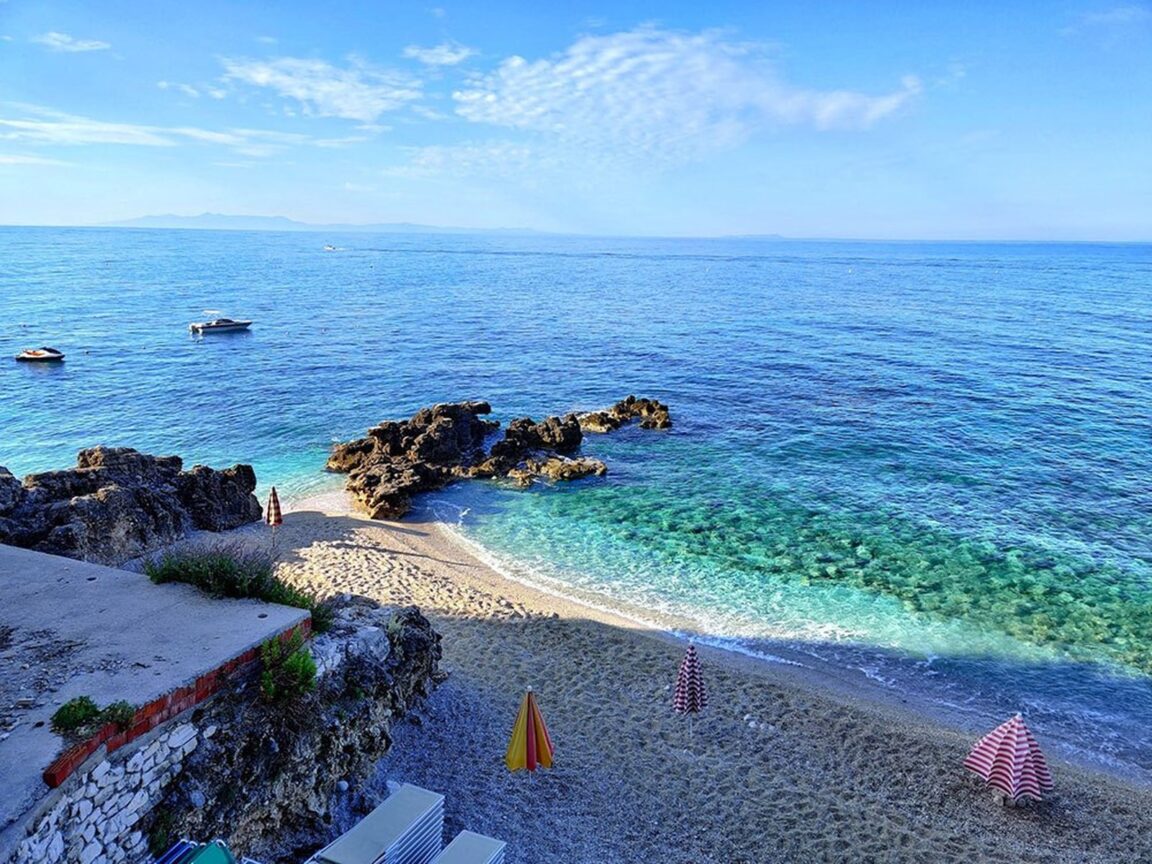
- Beaches: Predominantly white pebble, with very clear Ionian water that deepens quickly; water shoes earn their place in the bag
- High point behind: Maja e Cikes, at about 2,044 metres, the highest peak of the Ceraunian range above the coast
Why drive the pass when the tunnel exists?
Because the pass is the explanation for everything below it. The SH8 climbs south of Vlore through pine and fir forest, black pine and Bosnian pine among it, to a saddle between the Ceraunian summits. From the top the whole Riviera arranges itself in one view: Palase directly below, the long pebble arcs of Drymades and Dhermi running south, Gjipe and Himare beyond, and the Ionian stretching west, with Corfu visible on clear days. Drivers who tunnel under that view arrive at the same beaches with no sense of how the coast is stacked, and the stacking is the practical knowledge the rest of the trip runs on.
The tunnel still has its uses, and an honest route guide should name them. It opened in July 2024, runs from Dukat to Palase, and cuts the Vlore to Himare drive substantially, which matters for an arrival in bad weather, a late start, or the return leg after dark. It can also close for maintenance or weather, in which case traffic returns to the pass. The working rule is simple: pass on the way in, in daylight, tunnel on the way out if time or weather argues for it, and never plan a first descent of the hairpins at night.
What is the right order for Palase, Drymades and Dhermi?
North to south, exactly as the road gives them to you, because each beach answers a different need and doubling back wastes the day. Palase is the first settlement and beach below the pass, the place paragliders land after launching from Llogara, and a good short stop to stretch legs and read the coast rather than a full beach day. Drymades comes next, a long white pebble beach between Palase and Dhermi, separated from Dhermi beach by a rocky outcrop, with campsites, small guesthouses and bars with reed parasols, and a quieter, cheaper feel than its neighbour. Dhermi beach itself, more than two kilometres of pebble in most descriptions, is the developed stop: hotels, beach bars, restaurants and sunbeds, lively in season, with the water deepening quickly off the shore.
Splitting the day that way solves the argument most groups have at the first viewpoint. Swimmers and beach club people get Dhermi. Walkers and budget travellers get Drymades, which rewards a morning before the heat builds. Everyone gets the short Palase stop for the panorama. What does not work is basing on Dhermi beach and treating Drymades as an afterthought at sunset, when the light is lovely but the swimming and the guesthouse kitchens are winding down. Coast roads reward the traveller who works with their grain, a lesson our guide to Kotor, Montenegro makes for the bays further north on the same Adriatic and Ionian shore.
Why climb to the old village above the beach?
Because beach Dhermi is only half the place. The historic village clings to the slope at about 200 to 300 metres, a settlement of stone houses, narrow lanes and churches looking straight over the resort below, and the contrast is the most interesting half hour in the area. From the lanes you can see the whole system the drive has taught you: the pass behind, the beach order below, the canyon country to the south. The village is also the cooler, quieter place to eat and sleep for travellers who find the beachfront strip too loud in August, at the price of a real climb or a short drive between bed and sea, so choose the base with that trade off stated plainly rather than discovered on the first evening.
Check the exact location of any accommodation before booking it. Listings use the Dhermi name for properties in the old village, on the beach road and out towards Drymades, and those are three different holidays wearing one label. A village house suits the scenic route traveller, who is driving and walking anyway. A beachfront room suits the swim and stay put traveller. A Drymades guesthouse suits the traveller who wants the quieter beach and is happy to drive ten minutes for dinner choices.
How far south should the route run, Gjipe and beyond?
At least to Gjipe. South of Dhermi the road continues towards Vuno and Himare, and Gjipe beach sits at the mouth of an 800 metre canyon between Dhermi and Himare, with no paved road reaching the sand. Most visitors park near the clifftop monastery area and walk down, which makes Gjipe the natural full stop at the end of the scenic sequence: the effort filters the crowd, the cliffs close around the pebble beach, and the canyon behind invites a short exploration with proper footwear and water. Bring both, plus sun protection, because the walk back up in summer heat is the part of Gjipe that catches people out.
Continuing to Himare, about 30 kilometres south of Dhermi by the coast road, turns the route into a full Riviera day and is worth it for travellers moving bases rather than returning to Dhermi. As a day trip with a Dhermi return, Gjipe is the wiser limit: it leaves time for the old village in the evening light and a swim at Drymades on the way back, instead of turning a scenic drive into a mileage exercise. The Riviera continues all the way to Sarande, and our itinerary planning for 3 days in Athens covers the Greek side of the same Ionian world for travellers stringing the two coasts together by ferry and road.
When should you drive it, and what should you watch for?
Late May, June and September are the sweet months: warm sea, working beach businesses and a road that is busy without being saturated. July and August bring the fullest scene at Dhermi and Drymades and the slowest traffic over the pass, so start early, swim before midday and keep the pass crossing for the cooler ends of the day. The road itself is paved throughout, narrow in places with genuine hairpins on the descent, and shared with everything from tour coaches to livestock at the margins, so the scenic pace is also the safe pace. In winter the beaches largely close down and the pass can be cold and windy even when the coast is mild, which makes the tunnel the sensible default and the old village, rather than the sand, the reason to come.
Frequently Asked Questions
Should you take the Llogara Tunnel or the pass to Dhermi?
Take the pass at least once, southbound in daylight, for the panorama that explains the whole Riviera, and use the tunnel for a fast, poor weather or after dark return. The tunnel, opened in July 2024, runs about 5.9 km from Dukat to Palase and bypasses the climb entirely.
What order are the beaches in around Dhermi?
North to south: Palase first below the pass, then Drymades, then Dhermi beach, then Gjipe at its canyon mouth on the way to Himare. Drymades and Dhermi are separated by a rocky outcrop and have different characters, Drymades quieter and cheaper, Dhermi developed and lively.
How high is the Llogara Pass?
Just over 1,000 metres. Most current guides quote 1,027 metres, while the SH8 highway high point is also listed at 1,043 metres. Either way it is high enough to be noticeably cooler than the coast, so carry a layer even in summer.
Is Dhermi beach sand or pebble?
Pebble, predominantly white pebble, like most of this coast. The water is very clear and deepens quickly, which swimmers love, and water shoes make entry and exit much more comfortable, especially at Drymades and Gjipe.
How do you reach Gjipe beach?
On foot for the last stretch. There is no paved road to the sand, so visitors park near the clifftop access above the canyon and walk down. Carry water, sun protection and proper footwear, and allow for the climb back up, especially in summer heat.
Where is the best base, the old village, the beach or Drymades?
It depends on the trip. The old village, at about 200 to 300 metres, is cooler and quieter with the views. The beachfront is the swim and nightlife base. Drymades guesthouses are the quieter, better value beach base. Check the exact map location before booking, as all three are sold under the Dhermi name.
Photo: A pebble cove on Dhermi beach, Albania, with clear Ionian water. Photo by Jani Godari on Unsplash, Unsplash License. Facts checked 16 November 2026 against SH8, Llogara National Park and Riviera sources; check tunnel and pass conditions locally on the day, as closures change the route.