 LeVar Thomas
In Toronto, an adult aged 19 or older can legally buy cannabis from a licensed store, possess up to 30 grams of dried cannabis or its equivalent in public, and smoke or vape it in many outdoor public places and private residences, but never in enclosed public places, never in a vehicle, and never across the Canada and United States border in either direction. That last rule is absolute, and it is the one that catches visitors out. Everything in this guide was verified on 25 November 2026 against official Ontario and Government of Canada sources, linked throughout, because cannabis rules are a legal matter and secondhand summaries are not good enough for a border crossing.
Quick Facts
- Legal age in Ontario: 19 and older to buy, use, possess and grow recreational cannabis, per Ontario.ca.
- Public possession limit: A maximum of 30 grams of dried cannabis, about one ounce, or its equivalent in other formats, in public at any time.
- Where to buy: Authorized Cannabis Stores licensed by the Alcohol and Gaming Commission of Ontario (AGCO), identified by the official Cannabis Retail Seal, or online from the Ontario Cannabis Store at OCS.ca.
- Where smoking and vaping are allowed: Private residences, many outdoor public places such as sidewalks and parks, and designated smoking guest rooms in hotels, motels and inns.
- Where they are not: Enclosed public places and workplaces, indoor common areas, non-designated hotel rooms, restaurant and bar patios and within 9 metres of a patio, schools and playgrounds and within 20 metres of their grounds, and any vehicle or boat being driven or about to be driven.
- Driving: Driving with cannabis in your system is illegal and dangerous. Ontario applies zero tolerance to drivers aged 21 and under, holders of G1, G2, M1 or M2 licences, and commercial drivers.
- The border: Do not bring cannabis into Canada and do not take it out. The Canada Border Services Agency calls carrying it across the border in any form, including oils containing THC or CBD, without a Health Canada permit or exemption, a serious criminal offence. A medical prescription does not count as that authorization.
Who can buy cannabis in Toronto, and who cannot?
Ontario sets the minimum age at 19. The province’s own cannabis laws page states it plainly: you must be 19 and older to buy, use, possess and grow recreational cannabis, the same age as for tobacco and alcohol in Ontario. That is higher than the federal floor, because provinces may raise the age, and Ontario has done so. A visitor who is legally an adult at home, or even in another province, is not legally able to buy in Toronto at 18. Expect to show photo identification in store, and expect to be refused without it or if the identification shows an age under 19.
Visitors are otherwise in the same position as residents for a legal purchase. There is no Ontario residency requirement in the official visitor guidance published by the Ontario Cannabis Store, which is written directly for people visiting the province and explains where to buy, how much to possess and where consumption is allowed. Buy in Toronto, use it in Toronto under Ontario rules, and finish or leave behind anything you bought before you travel on. That sequence is the whole model, and the sections below follow it in order.
Where do visitors buy legally in Toronto?
Buy only from a licensed retailer. In Ontario that means an Authorized Cannabis Store regulated by the AGCO, or the Ontario Cannabis Store online at OCS.ca. The OCS is Ontario’s sole wholesaler to authorized stores and operates the province’s own online retail site. The City of Toronto’s cannabis page makes the same point from the enforcement side: cannabis can only be sold by stores licensed by the AGCO, and the AGCO publishes the list of licensed stores. In person, look for the Cannabis Retail Seal displayed near the entrance, which the OCS visitor guide identifies as the assurance that a store is licensed and sells legal products.
Legal products are tested and labelled with their THC and CBD content, per the OCS, so a buyer can see what a product contains before paying. That labelling, and the 30 gram transaction limit the OCS applies online, are practical reasons to use the licensed system rather than any unlicensed seller a visitor might be offered. An unlicensed purchase is not a bargain version of the same thing. It sits outside the regulated system Ontario describes, it carries no tested labelling to rely on, and this guide does not point readers toward it. If a store has no seal, no licence listing and no labelled products, walk away and find an authorized store instead.
How much can a visitor possess in public?
The limit is 30 grams of dried cannabis, or its equivalent, in public at any time. Ontario publishes the equivalencies, and they matter because visitors often buy formats other than flower. One gram of dried cannabis equals 5 grams of fresh cannabis, 15 grams of edible product, 70 grams of liquid product, 0.25 grams of concentrates, or one cannabis plant seed. The OCS visitor guide adds the practical reassurance that a licensed store will calculate the total across different product types for you, so ask at the counter rather than guessing with a mixed purchase of flower, edibles and a beverage.
Two related points are worth keeping straight. First, the 30 gram figure is a public possession limit, not a target and not a travel allowance. It says nothing about taking cannabis anywhere outside Ontario, and it gives no permission at any border, airport international departure or cruise terminal. Second, edible products in Canada are capped at 10 milligrams of THC in a single package, per Ontario’s cannabis laws page, which is another reason the labelled legal system is easier for a first time buyer to navigate than informal supply.
Where is consumption allowed in Toronto, and where is it banned?
Ontario’s general position, as the OCS summarizes it, is that cannabis can generally be consumed in many of the same places where tobacco smoking or vaping is allowed, with local bylaws and posted signs able to add restrictions, especially in busy areas of a major city such as Toronto. The provincial list of places where smoking and vaping cannabis are permitted includes private residences, many outdoor public places such as sidewalks and parks, designated smoking guest rooms in hotels, motels and inns, and residential vehicles and boats that meet specific criteria, including permanent sleeping and cooking facilities, and are parked or anchored.
The prohibited list is longer and more specific, and visitors should learn it rather than assume a park bench solves everything. Per Ontario’s cannabis laws page, you cannot smoke or vape cannabis in enclosed public places or enclosed workplaces, in indoor common areas of condos, apartment buildings and university or college residences, or in non-designated guest rooms in hotels, motels and inns. You cannot use it at a school, on school grounds or within 20 metres of those grounds, on a children’s playground or within 20 metres of one, in child care centres, within 9 metres of a hospital entrance or exit or on hospital grounds, on publicly owned sports fields or within 20 metres of them, in reserved seating at outdoor sports and entertainment venues, on community recreational facility grounds or within 20 metres, in sheltered public areas such as a bus shelter, or in restaurants, on bar patios or within 9 metres of a patio.
For a hotel stay, the practical reading is narrow. Only a designated smoking guest room is on the permitted list. A standard room, a balcony reached from a standard room, a corridor, a lobby and a hotel patio are not made legal by paying for the room, and a property can also set its own stricter policies, as can landlords and condominium rules for a rented apartment. Ask the property directly before you buy anything, and accept its answer. For planning the rest of a Toronto stay around these rules, see the neighbourhood first structure in 3 Days in Toronto: Neighbourhoods First, the Tower Second.
What are the driving and transport rules?
Never consume cannabis in a vehicle or boat that is being driven or will be driven, and never drive after using it. Ontario states both points separately. Its cannabis laws page bans consumption, whether smoking, vaping or eating, in a vehicle or boat being driven or about to be driven. Its impaired driving guidance states that it is dangerous to drive with cannabis in your system, that penalties are the same as for alcohol impaired driving, and that zero tolerance applies to young, novice and commercial drivers. The OCS visitor guide adds that open or accessible cannabis in a vehicle can lead to penalties, so anything carried in a car should be sealed or stored out of reach, and that visitors who have consumed should use public transit, taxis or rideshare services instead of driving.
For most Toronto visitors the simplest compliant plan needs no car at all. Stay central, walk, use transit and rideshares, and keep any purchase sealed in a bag while moving around the province. If a road trip is part of the itinerary, the driver does not consume that day. There is no careful amount and no waiting trick in the official guidance that turns an impaired driver into a legal one, and this guide will not invent one.
Why can nothing cross the US border, in either direction?
Because legalization stops at the border. The Canada Border Services Agency’s repeated official warning is short enough to quote in spirit exactly: do not bring it in, do not take it out. Bringing cannabis across the border in any form, including oils containing THC or CBD, without a permit or exemption authorized by Health Canada is a serious criminal offence subject to arrest and prosecution, and a medical prescription from a doctor does not count as Health Canada authorization. The CBSA also states that under the Cannabis Act it remains illegal to import cannabis into Canada or export it from Canada without a valid permit or exemption, including CBD products, and that travellers who do not declare cannabis when entering Canada may face seizure, arrest or monetary penalties.
This applies with full force on the Toronto to United States routes visitors actually use, by air, by car toward Niagara and Buffalo, and by any other crossing. It does not matter that the US state on the other side has legal cannabis, that New York has legal cannabis, that the product was bought legally in a licensed Toronto store, that the amount is small, or that it was forgotten in a pocket or a bag. Declare everything on entry to Canada as the CBSA requires, and if there is any doubt about an item, ask a border services officer rather than guessing. The fuller border explainer is at Cannabis at the Canada Border: Why Nothing Legal Crosses in Either Direction. Finish or dispose of anything bought in Toronto before heading to the airport or the crossing. Nothing crosses. That is the rule, without exceptions a visitor can rely on.
What should a visitor do on the last day of a Toronto trip?
Work backwards from departure. Do not buy more than will be finished well before the travel day. Do not pack any cannabis, edible, vape, oil or CBD product in hand luggage, checked luggage, a rental car or a coat pocket for an international journey, including a flight to the United States. Check bags and pockets before leaving the hotel, because an accidental item is still an item at the border. If you are travelling onward within Canada instead, the rules of the destination province then apply, including its legal age, and airline and airport rules still need checking. If the next stop is outside Canada, the answer does not change with the destination’s own laws. Leave it behind.
Frequently Asked Questions
Can a visitor aged 18 buy cannabis in Toronto?
No. Ontario’s minimum age is 19 for buying, using, possessing and growing recreational cannabis, even though the federal framework starts lower and some other provinces differ. A visitor aged 18 cannot legally buy in Toronto.
How much cannabis can I carry in public in Toronto?
Up to 30 grams of dried cannabis or its equivalent in other formats. Ontario equates 1 gram of dried cannabis to, among other formats, 15 grams of edible product or 0.25 grams of concentrates. A licensed store can calculate a mixed purchase for you.
Can I smoke cannabis in my Toronto hotel room?
Only if it is a designated smoking guest room in a hotel, motel or inn. Non-designated guest rooms are expressly on Ontario’s prohibited list, and the property’s own policies may be stricter still. Ask the property first.
Can I take leftover cannabis back to the United States if I bought it legally?
No. The CBSA states that bringing cannabis across the border in any form without Health Canada authorization is a serious criminal offence, in either direction, whatever the law is in the US state you are entering. A medical prescription is not that authorization.
Can I drive in Ontario after using cannabis if I feel fine?
No. Ontario treats driving with cannabis in your system as impaired driving, with the same penalties as alcohol impairment, and zero tolerance for drivers aged 21 and under, G1, G2, M1 and M2 licence holders, and commercial drivers. Use transit, a taxi or a rideshare instead.
Where is the safest place to check these rules before a trip?
On the official sources used for this guide: Ontario.ca for provincial cannabis laws, OCS.ca for the visitor guide and authorized store information, the AGCO for licensed stores, and Canada.ca and the CBSA for border rules. Rules checked on 25 November 2026.
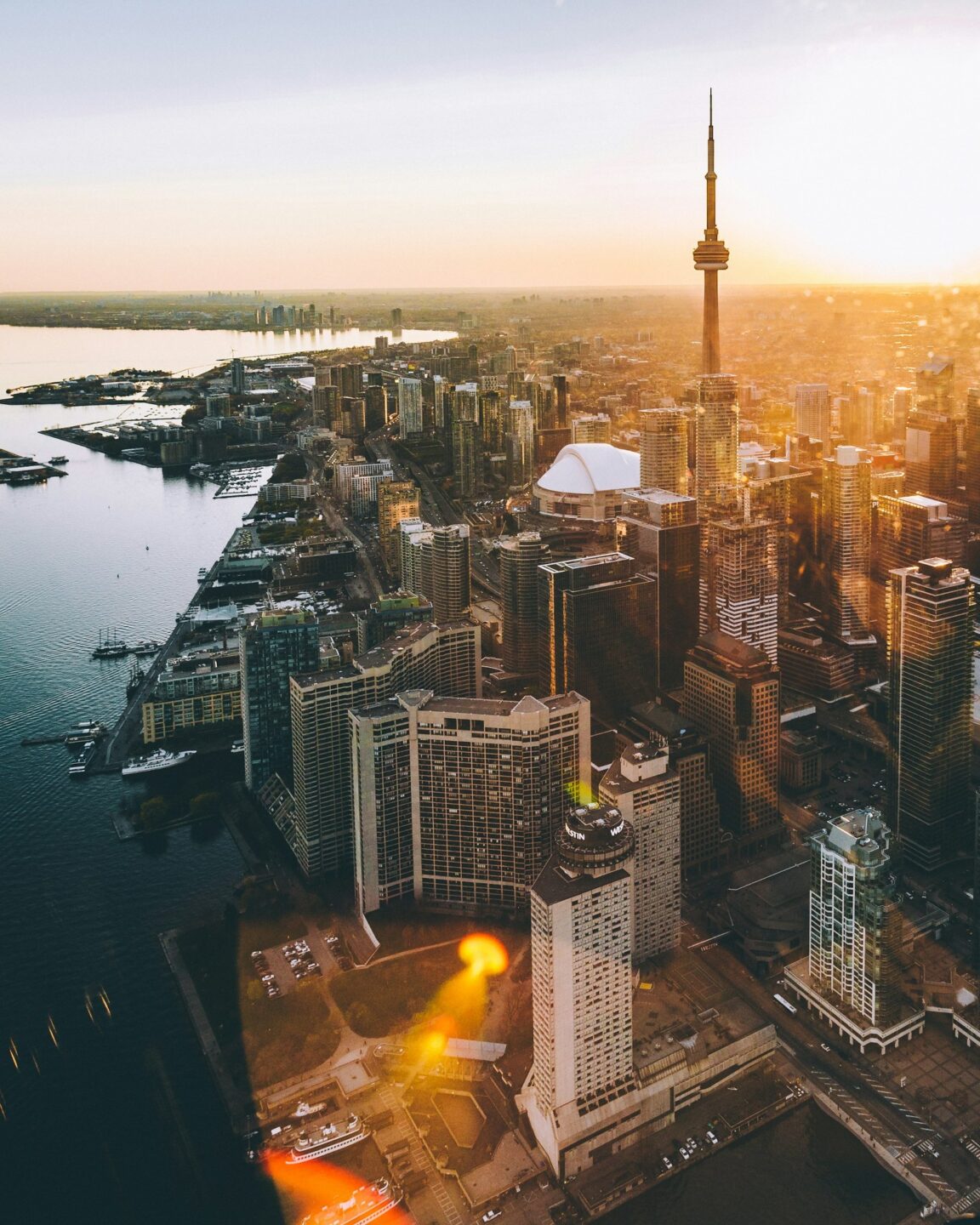
Featured image: Downtown Toronto and the CN Tower beside Lake Ontario at sunset. Photo: Unsplash contributor, via Unsplash (photo 1517935706615-2717063c2225), Unsplash License, used with credit.
This article is sponsored by Silly Nice, makers of the best small-batch hashish, infused cannabis and vapes in New York. Veteran-owned and crafted in New York. Visit sillynice.com to explore the range.