 Jordan Ellis
Cold Spring is the Hudson Valley day trip that works without a car, and it works for one simple reason: the Metro-North Hudson Line puts the platform at the foot of Main Street, roughly 50 miles north of New York City, after a ride of about 80 minutes from Grand Central Terminal. One warning shapes the whole day in late 2026. Breakneck Ridge, the famous scramble north of the village, is closed, and it stays closed through 2026. Plan the hike around Bull Hill and Little Stony Point instead, eat lunch on Main Street before the afternoon crowds build, and treat the train home as a fixed appointment, not a suggestion. Done in that order, Cold Spring gives a river, a ridge, a proper lunch and a street worth browsing.
Quick Facts
Route: Metro-North Railroad Hudson Line from Grand Central Terminal to Cold Spring station, direct, no change of trains.
Journey time: Approximately 80 minutes each way, varying by stopping pattern. Check the MTA TrainTime app on the day for the exact trains.
Distance: About 50 miles north of New York City, per New York State Parks.
Breakneck Ridge status: Closed. New York State Parks states that Breakneck Ridge, other area trails and the adjacent Breakneck Ridge Metro-North station closed on April 21, 2025 for a two-year period for the Hudson Highlands Fjord Trail Breakneck Connector and Bridge project.
Open hiking: Bull Hill (Mount Taurus) via the Washburn Trail, the Cornish Estate ruins walk and Little Stony Point, all in Hudson Highlands State Park Preserve.
Park hours: Hudson Highlands State Park Preserve is open daily, sunrise to sunset, per New York State Parks.
Village base: Main Street, Cold Spring, running from the station and the riverfront uphill through the historic village. Village information is at coldspringny.gov.
Last updated: November 25, 2026. Train times and trail status checked the same day against MTA and New York State Parks sources.
How does the train journey to Cold Spring actually work?
Start at Grand Central Terminal and take a Hudson Line train bound for Poughkeepsie, the line that runs north along the east bank of the Hudson River. Cold Spring sits in fare Zone 7 on the MTA station list, beyond Garrison and before Beacon, and every service is direct, so there is no connection to protect and no second platform to find. The ride is part of the day rather than dead time before it. Once the line clears the northern suburbs the river takes over the left hand windows heading north, and the Highlands begin to rise on both banks well before the train slows for Cold Spring.
Buy the return ticket before leaving the city, or load both legs in the TrainTime app, so the evening never depends on a ticket machine queue on a small platform. Weekend day trippers should also expect the northbound morning trains to carry plenty of fellow hikers, which is a practical reason to take an earlier departure rather than the last comfortable one. An early train buys three things money cannot add later: a quieter Main Street, first choice of lunch tables, and a hiking start with the full morning still ahead.
Cold Spring station itself is simple to use. The MTA lists elevators from the overpass to both platforms, and the village begins immediately beyond the station. There is no shuttle, no taxi rank decision and no parking problem, because the whole point of this trip is that the railway does the work a car would otherwise have to do. Travellers building a longer rail itinerary around the village can pair this day with the wider route in our guide to the Hudson Valley in 3 days without a car, which strings the river towns together in order.
Is Breakneck Ridge open? No, and here is what that changes
State it plainly, because older guides, saved blog posts and map apps still send people to a closed trailhead. New York State Parks announced that beginning April 21, 2025, Breakneck Ridge, other area trails and the adjacent Breakneck Ridge Metro-North station would close for a two-year period while the Hudson Highlands Fjord Trail Breakneck Connector and Bridge is built and the station is renovated. The Breakneck Ridge, Wilkinson Memorial and Lower Brook trailheads are part of that closure, and project partners have confirmed the closures run throughout 2026. There is no legal scramble, no station stop and no workaround worth attempting on a day trip.
That closure is the reason this guide is built the way it is. A Cold Spring day planned around Breakneck in 2026 fails before it starts, and it fails in a way that wastes the best hiking hours of the day on a road walk to a fence. The good news is that the closure removes one famous route, not the Highlands themselves. Hudson Highlands State Park Preserve covers over 8,000 acres with over 70 miles of trail, per New York State Parks, stretching in separate parcels from Peekskill north to Beacon. The Cold Spring end of that system, reached from the Washburn Trailhead near Little Stony Point, holds the two hikes that now carry the day.
Which hike should replace Breakneck, Bull Hill or Little Stony Point?
The headline replacement is Bull Hill, also mapped as Mount Taurus, and New York State Parks publishes the route in its own park approved hiking suggestions. The Bull Hill Full Loop runs about 5.5 miles and takes roughly 3 to 4 hours. It begins uphill on the white blazed Washburn Trail from the Washburn Trailhead parking lot near Little Stony Point, climbs past the summit of Bull Hill and descends on the blue blazed Cornish Trail, passing the outbuildings and ruins of the Cornish Estate on the way back to the trailhead. The shorter Bull Hill loop, about 4.6 miles and roughly 2 to 3 hours on State Parks timings, turns off on the yellow blazed Undercliff Trail and rejoins the Cornish Trail, which cuts the distance while keeping the viewpoints.
Judge the choice by the train home, not by ambition. The full loop is the right call for a fit party on an early train with lunch planned after the hike. The short loop is the honest choice for a later start, a mixed fitness group or a late November day when the light is already leaving the valley by mid afternoon. The park is open sunrise to sunset only, and in late November sunset is the hardest deadline of the day, harder even than the railway timetable, because a descent finished in darkness on a rocky trail is how a good day trip turns into a story nobody wanted.
Little Stony Point is the low effort half of the same trailhead, and it deserves more than leftover status. State Parks describes a flat loop of about 0.75 miles around the point, with access to a sandy beach on the river shore, a small cave and a short uphill spur to a cliff overlooking the Hudson and the surrounding Highlands. It pairs naturally with the village: hike Bull Hill in the morning, or skip the climb entirely, walk the point, and still have an unhurried afternoon. State Parks also notes that additional parking for the Little Stony Point area is available at the Cold Spring train station, which underlines how walkable the connection is for rail arrivals heading north along Fair Street toward the trailheads.
Between the two big options sits the Cornish Estate ruins walk, about 0.9 miles each way on the blue blazed Cornish Trail from the Washburn Trailhead, a gentle woodland walk to the ruins of a once grand estate house. It is the best answer for travellers who want a real trail underfoot without committing to a summit, and it photographs beautifully in low autumn light. Whichever route is chosen, follow the State Parks guidance that applies across the preserve: stay on marked trails, wear sturdy footwear, carry water and a trail map, park only in designated spaces when driving, and leave no trace.
How should Main Street be walked, and where does lunch fit?
Main Street is the village in one street, running from the riverfront and the station uphill through rows of 19th century storefronts holding antique shops, bookshops, cafes and outfitters. The Village of Cold Spring, whose offices sit at 85 Main Street, lists visitor information, parking rules and local notices on its official site at coldspringny.gov, and the village runs seasonal parking regulations through the winter months, one more reason the train is the calmer way in. Walk the street twice, once on each side, and let the uphill pass be the browsing pass, because the downhill return, with the river appearing at the end of the street, is the view the village is famous for.
Lunch is the hinge of the day, and the order matters more than the venue. Hikers doing Bull Hill should eat after the descent, not before it, because a full sit down lunch followed immediately by a steep white blazed climb is a poor trade. Village first travellers can reverse the order: an early lunch on Main Street, then the Cornish ruins or Little Stony Point in the softer afternoon. Either way, aim to be seated before the peak lunch rush, when day trip crowds converge on a small street with a limited number of tables.
As for the lunch order itself, keep it built for the afternoon still to come: a soup to start if the day is cold, a sandwich, burger or brasserie plate as the main, water alongside anything stronger, and coffee at the end. Save the long celebratory meal for a non hiking visit. Cold Spring has a well established French brasserie on Main Street and a run of cafes and taverns near the station, so choose on the day by one test only: which kitchen can seat the party promptly at the hour the plan needs.
What does a well timed Cold Spring day look like, hour by hour?
Take a morning Hudson Line train that lands in Cold Spring with the whole morning still usable, and go straight from the platform toward the trailheads if Bull Hill is the plan, pausing only for water and a trail map check. Hike the full or short loop at a pace set by the slowest member of the party, with the summit and the Cornish Estate descent given their proper time rather than hurried. Return to the village for lunch on Main Street, then spend the early afternoon on the second, gentler half of the day: the other side of Main Street, the riverfront, and Little Stony Point if it was not folded into the morning.
Build the day backwards from the evening train and the shape becomes obvious: the hike takes the fresh legs and the best light, lunch takes the middle, and the village takes the afternoon. Travellers spending longer in the region will find the same logic in our New York in 5 days itinerary, where a Hudson day trip sits between two borough days.
How does the last train home discipline work?
There is no published timetable in this guide on purpose. Departures change with schedules, engineering work and the season, and a printed time copied from an old timetable is worse than no time at all. The MTA TrainTime app and mta.info carry the live Cold Spring departures for the actual day of travel, and those are the only times worth trusting. What this guide can give, and what actually saves trips, is the discipline around whichever train is last.
First, choose the target train before the hike starts, while the decision is still free. Screenshot it, tell everyone in the party, and set the day end alarm from it. Second, plan to take the second to last sensible train, so that one delay, one slow descent or one long lunch bill leaves a fallback instead of a crisis. Third, be standing on the correct platform, the New York bound side, a full ten minutes before departure, with tickets already bought. Fourth, never let the final activity of the day be open ended. A riverfront sunset is a fine ending only if the walk back to the station has already been timed. The travellers who miss Hudson Line trains are rarely the ones who could not read a timetable. They are the ones who treated the last train as a detail to check later.
Frequently Asked Questions
Is Breakneck Ridge open in 2026?
No. New York State Parks states that Breakneck Ridge, other area trails and the Breakneck Ridge Metro-North station closed on April 21, 2025 for a two-year period for construction of the Hudson Highlands Fjord Trail Breakneck Connector and Bridge. Hike Bull Hill via the Washburn Trail or Little Stony Point instead, and recheck parks.ny.gov before any future trip.
How long is the train ride from Grand Central to Cold Spring?
Approximately 80 minutes on a direct Metro-North Hudson Line train, varying by stopping pattern. Cold Spring is in MTA fare Zone 7. Check the TrainTime app on the day for the exact departure and arrival times for the trains being used.
Can Cold Spring be done as a day trip without a car?
Yes, and it is one of the easiest car free day trips from New York City. The station sits at the foot of Main Street, the village is walkable end to end, and the Washburn Trailhead for Bull Hill and Little Stony Point is reached on foot from the village via Fair Street. No shuttle or taxi is required.
What is the best hike in Cold Spring while Breakneck is closed?
Bull Hill, also called Mount Taurus, is the closest full scale replacement. New York State Parks lists a full loop of about 5.5 miles in 3 to 4 hours and a short loop of about 4.6 miles in 2 to 3 hours, both starting on the Washburn Trail. Little Stony Point, a flat loop of about 0.75 miles, is the easy alternative.
When should lunch happen on a Cold Spring day trip?
After the hike on a Bull Hill day, and before the peak lunch rush crowds Main Street. Keep the order substantial but light enough for an active afternoon, and decide the venue by which kitchen can seat the party promptly, not by a long search up and down the street.
What time is the last train back to New York?
It varies by day and schedule, so this guide deliberately does not print one. Check Cold Spring departures in the MTA TrainTime app on the day of travel, target the second to last sensible train, and be on the New York bound platform ten minutes before it leaves.
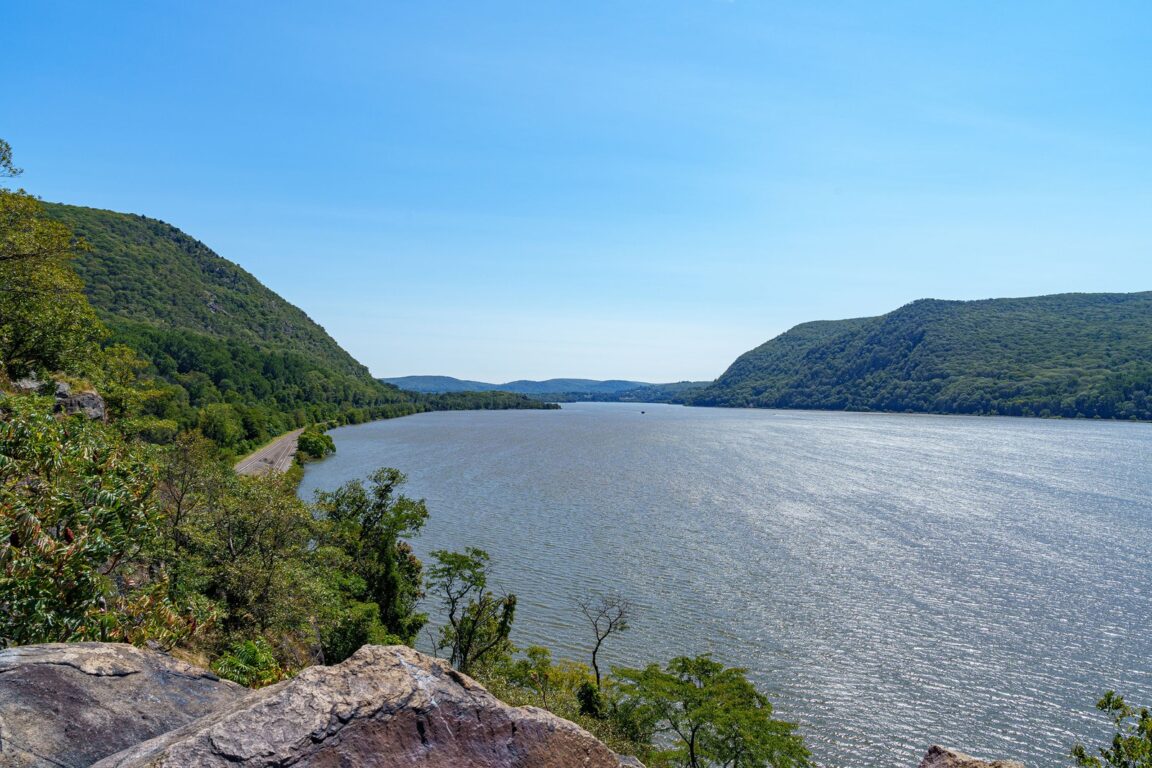
Featured image: The Hudson River and the Hudson Highlands from the Breakneck Ridge side of Hudson Highlands State Park Preserve, near Cold Spring. Photo: New York State Parks, via parks.ny.gov, the park’s official website, used with credit.