 Priya Nair
Jaipur works well for a woman travelling alone when three decisions are made early: base in a quiet, well lit residential district rather than inside the walled city, agree every rickshaw fare before the wheels move, and run the palace order in a fixed sequence, Amber Fort first at opening, then the City Palace and Jantar Mantar together, with Hawa Mahal as a short stop rather than a half day. Done that way, the Pink City’s crowds become a resource, because a solo traveller is rarely truly alone at the sights, and the city’s busy, family centred rhythm makes independent sightseeing feel ordinary rather than exposed.
Quick Facts
- Best bases for solo travellers: C-Scheme and Civil Lines for quiet, and Bani Park for value near the railway station
- First sight of the trip: Amber Fort, about 11 kilometres north of the city, opening at 8am
- Amber Fort basics: A UNESCO World Heritage hill fort begun in 1592, overlooking Maota Lake
- City centre pair: City Palace, opening at 9:30am, and Jantar Mantar beside it, best done in one morning
- Hawa Mahal: Built in 1799 with 953 small windows, a one hour stop, not a half day
- Money saver: The state composite ticket covers Amber Fort, Hawa Mahal, Jantar Mantar, Albert Hall and Nahargarh Fort among other monuments
- Transport rule: Fare agreed before departure, or a metered or app booked car instead, every time
- Best season: October to March, when mornings are cool enough for the fort climb
Where to Base: The Neighbourhood Judgement
The walled Pink City is where the sights are, and it is the wrong place for most solo travellers to sleep. Its lanes are thrilling at 10am and exhausting at 10pm, and a hotel inside the walls means every arrival and departure runs through the densest traffic in Jaipur. The better bases sit just outside. C-Scheme, the planned district southwest of the old city, is the calm first choice: wide, lit streets, cafes used by local families, and hotels that expect independent travellers. Civil Lines, further west near the government quarter, is quieter still and suits travellers who value a peaceful night over a short walk. Bani Park, between the railway station and the old city, is the value option, a leafy residential area with a deep bench of mid range hotels and an easy ride to every sight.
What matters more than the district name is the last two hundred metres. Choose a property on a main, lit street rather than down a lane, confirm that the desk is staffed at night, and walk the route from the nearest main road once in daylight before relying on it after dark. Solo travellers who plan their bases this carefully in other dense historic cities, the way the palace order works in a Topkapi Palace visit in Istanbul, will recognise the principle: the neighbourhood decision is made once, and it quietly governs every evening of the trip.
The Rickshaw Rules That Remove the Friction
Almost every bad solo travel story in Jaipur is a transport story, and almost all of them are preventable with three habits. First, no rickshaw ride begins until the fare for the whole journey, including waiting if any is wanted, has been said out loud and agreed. Fares are negotiated, and an agreed price cannot be renegotiated at the destination with any credibility. Second, prefer rides booked through a hotel desk, a ride hailing app or the prepaid arrangements at major points when they are available, because a recorded booking changes the whole conversation. Third, decline the detour. Drivers may propose a shop, a workshop or a family emporium where prices are better; the polite, complete answer is a no that does not open a discussion, and a traveller who wants to shop can do it later, on foot, in the bazaars, where walking away costs nothing.
Day structure helps as much as technique. Hire one driver for the Amber Fort morning rather than negotiating three separate rides on a hillside road, keep small notes ready so an agreed fare never needs change, and use the Metro’s Pink Line for the old city when it fits: Badi Chaupar station puts a solo traveller inside the walls near the City Palace without a negotiation at all. The bazaars themselves, Johari for jewellery, Tripolia and Bapu for textiles, are best done on foot in the busy middle of the day, when the crowds that make them famous also make them comfortable. Travellers who enjoy food led exploring in Asian cities will find a kindred approach in the Osaka street food guide, where the stalls are also best judged in full daylight bustle.
The Palace Order That Works Alone
Start at Amber Fort, and start at opening. The fort, described on the official Rajasthan Tourism site as a UNESCO World Heritage Site standing above Maota Lake about half an hour from the city centre, opens at 8am, and the first hour is the solo traveller’s hour: the climb is cool, the courtyards are still filling, and the Ganesh Pol gateway and the Sheesh Mahal mirror hall can be seen without being carried by a group. The fort was begun in 1592 under Raja Man Singh I, and its sequence runs uphill from the public audience hall to the private palaces, so a steady single direction works: in through the main courtyard, up through Ganesh Pol, the mirror hall and the pleasure palace, then out and down before the midday heat and the tour buses peak together. Allow two and a half to three hours, and hire an official guide at the entrance only if the history matters more than the quiet; the fort reads well alone.
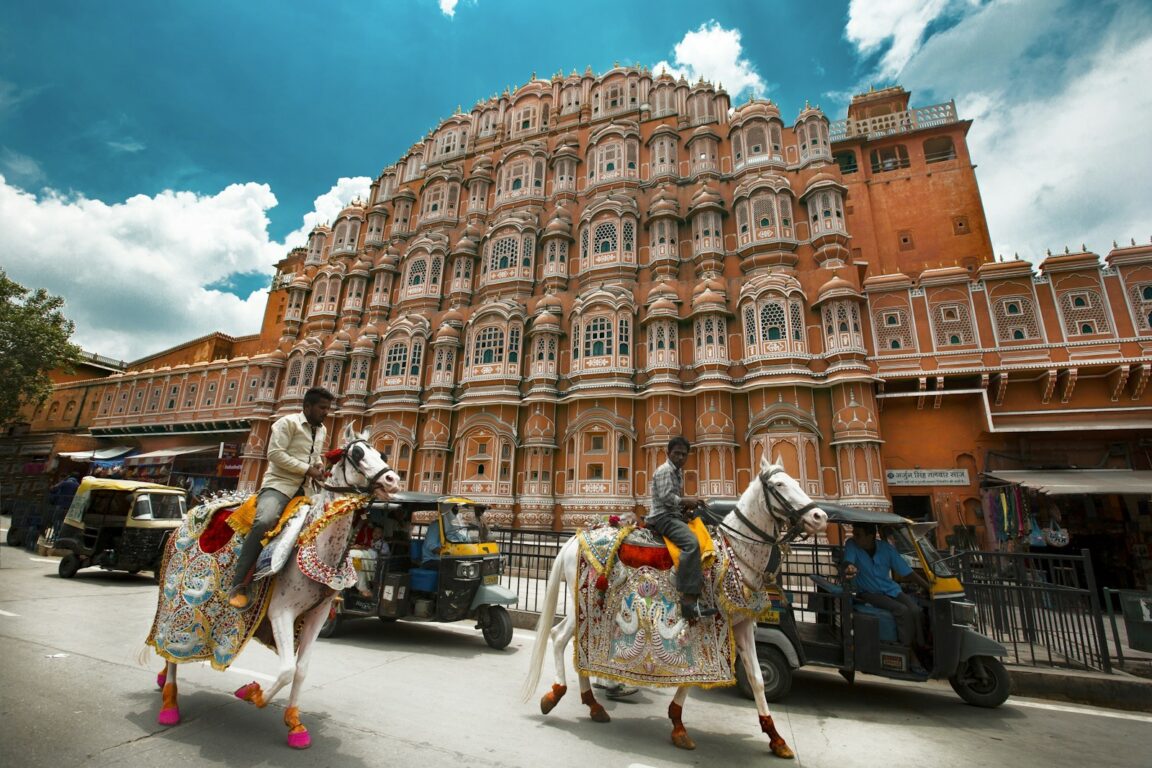
Day two belongs to the centre, in this order: City Palace first at its 9:30am opening, while its courtyards are calm, then Jantar Mantar next door, then Hawa Mahal last as a short, satisfying stop. The City Palace is still partly a royal residence, and its museum route through the Mubarak Mahal galleries and the four painted gates of Pritam Niwas Chowk takes about ninety minutes at a solo pace. Jantar Mantar, the observatory built by Sawai Jai Singh II and listed by the Archaeological Survey of India among the country’s protected monuments of world importance, holds nineteen stone instruments including the great Samrat Yantra sundial; it deserves an hour and, more than any Jaipur sight, rewards the audio guide or a shared official guide, because the instruments are meaningless shapes without the explanation. Hawa Mahal, the five storey palace of winds built in 1799 so the women of the court could watch the street unseen, is honestly a facade first and a museum second: see it from across the road in morning light, then climb inside for the view down Johari Bazaar, and be done in an hour. The state composite ticket, which the Rajasthan archaeology department runs across Amber Fort, Hawa Mahal, Jantar Mantar, Albert Hall and Nahargarh Fort, is the economical way to buy this order, and it is worth asking for at the first counter.
Solo Safety, Stated Plainly
Jaipur is a conservative city by dress and by nightlife, and the travellers who fare best work with that rather than testing it. Covering shoulders and legs at religious sites is required in places and useful everywhere; it lowers attention and eases entry. Evenings are for the hotel’s district, a booked car and an early dinner rather than for wandering the walls after dark, and alcohol centred nightlife is limited in any case, which most solo travellers find simplifies planning. Keep the standard architecture of independent travel intact: the hotel has the itinerary, location sharing stays on, documents are photographed, and one ride option is always a booked car rather than a street negotiation when tired or late. Before travelling, read the current official advice for India from your own government, such as the United States State Department’s India country information, and treat its regional guidance as the floor for planning, not as a verdict on a city that receives large numbers of independent women travellers every season. None of this needs to shrink the trip. The sights are busy, the distances are short, and a traveller who is organised about bases, fares and order will spend her attention on the palaces, which is where it belongs. The same calm sequencing serves solo travellers at remote sights too, as the Uluru base walk and Field of Light rules show in a very different landscape.
A Two Day Shape, and What to Add
Day one: Amber Fort at 8am, back to the base by early afternoon, a rest through the heat, and the bazaars on foot in the late afternoon with a booked ride home. Day two: City Palace at 9:30am, Jantar Mantar, Hawa Mahal, lunch inside the walls, and Albert Hall Museum in the late afternoon if energy holds, since it sits on the composite ticket. A third day adds Nahargarh Fort above the city for the panorama, best in the late afternoon, or a block printing excursion to Sanganer or Bagru arranged through the hotel. Ceremony lovers extending an Asia trip will enjoy comparing notes with the Gyeongbokgung guard ceremony visit in Seoul, another palace day where timing the official ritual makes the whole visit.
Frequently Asked Questions
Is Jaipur suitable for a first solo trip to India?
It is a reasonable choice, with structure. The sights are concentrated, the tourist infrastructure is deep, and the days can be organised around booked transport and busy, well visited monuments. Travellers who want a gentler first Indian city sometimes start further south, but Jaipur’s palace order rewards an organised solo traveller.
Which neighbourhood is best for a woman travelling alone?
C-Scheme is the balanced first choice, quiet, lit and full of cafes and hotels used to independent travellers. Civil Lines is calmer and more residential, and Bani Park offers the best value near the station. In each case, choose a main street property with a staffed night desk.
How should rickshaw fares be handled?
Agree the full fare before the ride starts, every time, and prefer app booked cars, hotel arranged drivers or prepaid options when available. Keep small notes ready, and decline shopping detours with a brief, friendly no.
In what order should the palaces be visited?
Amber Fort first, at its 8am opening, on its own morning. Then City Palace at 9:30am on a second morning, Jantar Mantar beside it, and Hawa Mahal last as a one hour stop. The state composite ticket covers this sequence economically.
What should be worn at the sights?
Cover shoulders and legs for religious sites and for general comfort in a conservative city, wear shoes that handle Amber Fort’s ramps and courtyards, and carry a light scarf, which solves temple entry, sun and air conditioning in one item.
Is it sensible to visit the bazaars alone?
Yes, in the busy middle of the day, on foot, with purchases carried discreetly and the ride home booked or easily arranged from a main road. The famous bazaars are crowded, commercial and well used to independent women shoppers.
Featured image: The Hawa Mahal in Jaipur, its pink sandstone facade of latticed windows above the old city street, with decorated horses and auto rickshaws passing in front. Photo by an Unsplash contributor (photo 1477587458883-47145ed94245) via Unsplash. Credit: Unsplash, Unsplash License.