 Priya Nair
Start at the Cultural Centre, walk the full 10.6 kilometre base walk early in the day, and never, under any circumstances, plan to climb: the climb closed permanently on 26 October 2019 at the request of Anangu, the traditional owners, and climbing is now an offence. That is the whole visit in one sentence, and everything else, the park pass, the photography rules, the Field of Light evening, is sequencing around it. Uluru is Aboriginal land, owned by Anangu and jointly managed with Parks Australia, and visiting respectfully is not an extra feature of the trip. It is the trip.
Quick Facts
- The land: Uluru Kata Tjuta National Park is owned by Anangu, the traditional owners, and jointly managed with Parks Australia. Anangu law and culture, Tjukurpa, guides how the park asks visitors to behave.
- The base walk: A 10.6 kilometre loop around the base of Uluru, graded and signed by Parks Australia, taking about 3.5 hours at a steady pace. Start early and carry water.
- The climb: Permanently closed since 26 October 2019, the 34th anniversary of the handback of the park to Anangu. There is no legal or respectful version of climbing.
- The park pass: Parks Australia lists an adult pass at 38 Australian dollars for three days, with an annual pass also available, and visitors under 18 free. Buy online before you arrive or at the entry station, and check the current price on parksaustralia.gov.au.
- Photography: Some sites around the base are sensitive and signed as no photography areas. Follow the signs and the visitor guide exactly, and put the camera away where asked.
- Field of Light: Bruce Munro installation of more than 50,000 solar powered stems of light covering more than seven football fields, open since 2016 near Uluru. Ayers Rock Resort lists general admission from 50 Australian dollars per adult at the time of checking.
- The order that works: Cultural Centre first, base walk in the cool of the morning, viewing areas for sunset, Field of Light after dark.
Why does the Cultural Centre come first?
Because it changes what you are looking at. The Cultural Centre introduces Anangu culture and Tjukurpa, the law and creation knowledge that shapes the park, before you walk anywhere. Visitors who skip it tend to treat the base walk as a scenic lap around a famous rock. Visitors who start there walk the same track differently: they understand why some places are not explained in detail to visitors, why some sections cannot be photographed, and why the climb closure was not a parks management decision imposed on Anangu but a decision Anangu themselves sought for decades. Allow real time for it, not a ten minute pass through on the way to the car park. It is also the practical start point for park information, water and the day current conditions.
How should you walk the base?
Walk the full loop if you have the fitness and the morning for it. The 10.6 kilometre base walk is largely flat and well formed, and Parks Australia allows about 3.5 hours for it, which assumes stops. Start from the Mala car park area, follow the signed track in one direction, and build in the shorter named sections as part of the whole rather than as separate drives: the Mala walk, where ranger guided walks have traditionally run in the morning, and the walk into Mutitjulu Waterhole are the two sections most visitors remember longest. The base is not a uniform wall. Up close it folds into caves, water stains, Honey Grevillea and waterholes, and the scale that looks simple from the viewing platforms becomes complicated and intimate. Carry more water than you think you need, wear a hat even in cooler months, and start at first light in summer rather than gambling on a late morning finish in desert heat. If a full loop is too much, walk one or two sections properly instead of driving between all of them for photographs.
What are the photography rules on the walk?
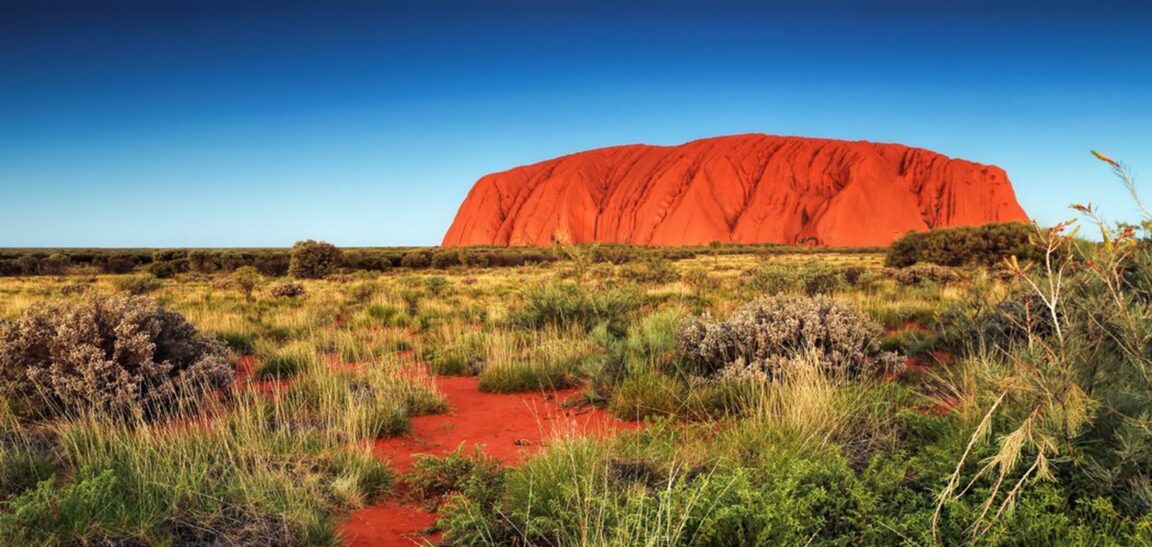
Simple to state and non negotiable in practice: where a sign or the park visitor guide says no photography, do not take photographs, including on a phone, and do not fly a drone, which is not permitted in the park in any case. Certain sites around the base are sensitive in Anangu culture, and Parks Australia marks them clearly. The restriction applies to the site, not to your intentions, so a quick snap for personal use is still a breach of the request. Elsewhere, from the designated sunrise and sunset viewing areas and along most of the track, photography is welcome. Our image for this guide, for example, is the classic distant view from a public viewpoint, published by the park own official site. When in doubt on the ground, ask a ranger rather than deciding for yourself.
What exactly are the climb closure rules?
The climb closed permanently on 26 October 2019. The date was chosen deliberately: it was 34 years to the day after title to the park was handed back to Anangu in 1985, after which Anangu leased it back to be jointly managed as a national park. The park board, with its Anangu majority, voted unanimously in November 2017 to close the climb once visitation conditions were met, and the closure took effect two years later. Anangu had asked visitors not to climb for far longer than that, explaining that the climb route crosses a sacred path and that they feel responsibility when visitors are injured or die on it. Now the request has legal force as well: climbing is an offence under the legislation that protects the park. Do not look for a loophole, a dawn attempt or a guided exception. None exists, and a respectful visit does not need one, because everything that makes Uluru worth the journey is at ground level. Travellers combining Uluru with a wider southern circuit can pair this planning with our Adelaide city guide, a common gateway city for the trip north.
How does Field of Light fit into the evening?
After sunset, not instead of it. Watch the colour change on Uluru itself from a designated viewing area first, because that is the daily event no installation replaces. Then, on one evening of your stay, go to Field of Light: Bruce Munro installation, first installed in 2016 and repeatedly extended, in which more than 50,000 slender stems topped with frosted glass spheres light up across an area larger than seven football fields, powered by solar energy and shifting through ochre, violet, blue and white. Ayers Rock Resort, which operates the experiences, offers a plain general admission pass as well as versions with drinks or dinner on a raised viewing platform; the general admission listed from 50 dollars per adult when checked on 13 November 2026 is the honest buy for most visitors, because the artwork itself, walked through at ground level in the dark, is the experience. Book it for your first or second night rather than your last, so weather or a sell out does not take it off the table entirely.
How many days do you actually need?
Two full days is the working minimum and three is better. The standard adult park pass covers three days, which tells you how the park expects to be visited. Day one: Cultural Centre and a first base section, then sunset. Day two: the full base walk early, a rest in the heat of the day, then Kata Tjuta or a second sunset and Field of Light. Rushing Uluru as a single afternoon stop between flights wastes the distance you travelled to get here and guarantees you will do the base walk in the worst heat or not at all. If you are routing onward to a city break afterwards, our 3 days in Melbourne itinerary is a practical soft landing after the Red Centre.
Frequently Asked Questions
Can you still climb Uluru if you sign a waiver or go with a guide?
No. The climb closed permanently on 26 October 2019 at the request of Anangu, and climbing is an offence. There are no waivers, guided climbs or exceptions for visitors.
How long is the Uluru base walk?
10.6 kilometres for the full loop, taking about 3.5 hours with stops, on a largely flat, signed track. Start early, carry plenty of water, and allow more time in hot weather.
How much is the park pass?
Parks Australia lists the adult pass at 38 Australian dollars for three consecutive days, with visitors under 18 free and an annual pass available. Prices can change, so confirm on parksaustralia.gov.au before you travel.
Can you take photographs at Uluru?
Yes, in most places, including the designated viewing areas, but not at signed sensitive sites around the base, where photography is prohibited. Follow the signs and the visitor guide, and never use a drone in the park.
What is Field of Light, and is it worth booking?
It is Bruce Munro solar powered installation of more than 50,000 lights spread over more than seven football fields near Uluru, operating since 2016. Book the general admission pass for one evening; it complements a sunset viewing rather than replacing it.
Distances, pass prices and closure facts checked against Parks Australia and uluru.gov.au, and Field of Light details against Ayers Rock Resort, on 13 November 2026. Follow all signs and ranger directions in the park, which override any guide.