 Jonas Lindqvist
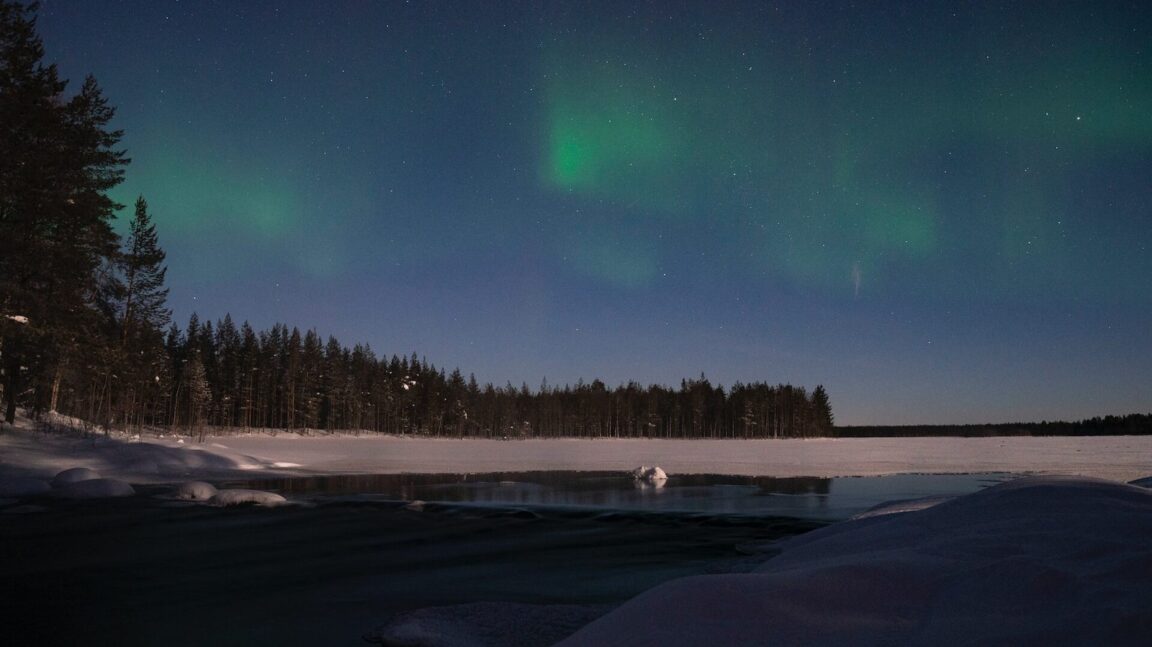
Rovaniemi can absolutely deliver the northern lights, and it can also take four cloudy nights and deliver nothing, and any guide that does not hold both of those facts at once is selling you something. What this Arctic Circle city genuinely offers is the easiest logistics in aurora country: a regional capital with an airport, a train station, Santa Claus Village on the Arctic Circle line itself, and dark forest a short drive in any direction, inside an aurora season that runs from late August to early April. Go for three nights minimum, four or more if the lights are the point of the trip, get out of the city glow every clear night, and treat the glass cabin as a wonderful way to wait rather than a guarantee with a roof.
Quick Facts for Northern Lights in Rovaniemi
- Position: Rovaniemi, capital of Finnish Lapland, sits on the Arctic Circle at about 66.5 degrees north, where the Kemijoki and Ounasjoki rivers meet.
- Aurora season: Late August to early April, when nights are dark enough. Visit Finland and Visit Rovaniemi both frame the season this way.
- Most active windows: September to October and February to March, around the equinoxes, when geomagnetic activity tends to peak and skies are often clearer than in deep midwinter.
- Typical viewing hours: Most often between about 21:00 and 02:00, and as early as 19:00 in deep winter darkness.
- The honest odds: In northern Finland the aurora appears on roughly every other clear night across the season. Cloud, not the calendar, is what defeats most trips.
- Winter temperatures: December and January commonly sit between minus 10 and minus 20 degrees Celsius, with colder snaps possible. Around the solstice, daylight shrinks to roughly two hours plus twilight, the period Finns call kaamos.
The Light Pollution Reality, Stated Plainly
Rovaniemi is a city, with streetlights, a ski hill lit at night and a famous village strung with festive lighting. On a strong display you can see the aurora from the city centre, and photographs of green sky over the Lumberjack’s Candle Bridge are real. But the average display, a moderate arc low in the north, washes out against urban glow. Every serious night of a Rovaniemi aurora trip therefore starts with a short move: to the Arktikum museum’s riverside shore on the edge of the centre, up Ounasvaara hill, or properly out of town to a frozen lake or forest clearing 15 to 30 minutes away, where the sky goes honestly dark. Guided aurora hunts exist precisely to make that move weather led, driving toward clear sky rather than hoping above one postcode. Our Tromso guide applies the same test in Norway: read seeing the northern lights in Tromso: season, dark sky tours and honest odds for the cross border comparison before you choose your base.
Choosing Your Month: Darkness Is Not the Same as Odds
September and October: the statistician’s pick
Autumn is the connoisseur’s aurora season in Lapland. The equinox effect lifts geomagnetic activity, temperatures are merely cold rather than Arctic, lakes are unfrozen so displays reflect in black water, and prices sit well below the Christmas peak. The trade is no snow activities: no sled dogs on snow, no snowmobiles, and the Santa season is warming up rather than in full voice.
December and January: maximum darkness, maximum everything
Kaamos brings the longest nights of the year and the full winter activity stack: husky and reindeer sledding, snowmobiling, ice fishing and Santa Claus Village at its most atmospheric. It also brings the year’s most cloud, the year’s highest prices, the year’s busiest weeks around Christmas and New Year, and cold that punishes the underdressed. Your aurora odds on any single night are not better than in the equinox windows. Your trip around the waiting is richer. Choose December for the whole winter package, not for superior lights.
February and March: the balanced window
For many repeat visitors this is the answer. Snow is deep, daylight returns fast enough to enjoy the days, skies clear more often than in midwinter, the equinox lifts activity again in March, and Christmas pricing has passed. If the aurora is your first priority and winter activities your second, book here.
Glass Cabins: What They Do and Do Not Do
The glass roofed cabin, pioneered in Finnish Lapland and now offered by resorts in and around Rovaniemi and up the road toward the deeper north, converts aurora watching from an endurance event into a waiting game you play warm, horizontal and awake at intervals. The better properties add an aurora alarm that wakes you when activity appears. All of that is real value on night three of a trip, when standing in a frozen field at 01:00 has lost its novelty. Now the limits. A cabin cannot move to clear sky: if cloud parks over your resort, the glass shows you cloud, beautifully framed. Cabins near the city or inside lit resorts fight the same light pollution as everyone else. And a north facing, unobstructed view matters more than thread count: ask about the actual outlook, the resort’s own lighting, and how far the dark starts from your door before you pay the glass premium.
A hybrid strategy suits most first trips: base in a Rovaniemi hotel for services and price, book one guided aurora hunt for your clearest forecast night, and save the glass cabin for one or two nights as the finale. If the budget forces a choice between an extra night in Lapland and a fancier roof, take the extra night. Nights are the currency aurora odds are paid in.
Sauna, Ice Baths and the Rest of the Arctic Day
Rovaniemi’s other signature ritual is the one Finns need no selling on: a hot sauna followed by a plunge through a hole in the ice, the avanto, into a frozen lake or river, repeated until the world feels correctly ordered. Riverside sauna experiences around Rovaniemi pair the two, often with the aurora hunt built into the same evening, so the ice bath becomes the warm up act for the sky. It is safe in the supervised, ladder in, ladder out format offered to visitors, and the cold management rule is the same as everywhere in Lapland: layers, no exposed skin in wind, and respect for minus 20 when it arrives. Our cold weather system in what to pack for Iceland in winter transfers directly to Lapland: the same base layers, insulated mid layer, windproof shell, hat, gloves and winter boots, with an extra margin for still, standing aurora nights.
Daylight hours fill easily. Santa Claus Village, 8 kilometres north of the centre directly on the Arctic Circle line, is unapologetically festive and genuinely fun with children, and works as a daytime excursion for anyone. The Arktikum museum and science centre is the grown up counterpart, the place to understand Arctic nature and the aurora itself before you chase it. Husky, reindeer and snowmobile outings run from the city all winter. None of these is padding. They are what make a cloudy aurora trip still a good trip, which is the correct standard for planning one.
A Practical Aurora Night Routine
Check two forecasts every evening, not one: the Finnish Meteorological Institute’s aurora and space weather outlook for activity, and a cloud forecast for the only variable that can veto it. Eat early, rest in the early evening, dress before you think you need to, and be outside in true dark from around 21:00 with patience budgeted to 02:00. Photographers should set up on a tripod before fingers go numb and expect phone cameras to flatter weak displays: a green smear on your screen that your eyes barely register is a minor display, not the show. Give each clear night a fair chance, move if cloud sits still for an hour, and remember that displays arrive in waves across a night. The trip that sees the aurora is usually not the luckiest one. It is the one still outside, warm enough to stay, on the third clear night.
Frequently Asked Questions
What are the real chances of seeing the northern lights in Rovaniemi?
Good by aurora standards, never guaranteed. Across northern Finland the lights appear on roughly every other clear night in season. With three to four nights, nightly effort and at least a couple of clear skies, most visitors in the September to October and February to March windows see a display. A single December night is a coin flip weighted by cloud.
When is the best month for the aurora in Rovaniemi?
September to October and February to March balance activity, clearer skies and manageable conditions. December and January maximise darkness and winter activities but bring more cloud and the highest prices. The season itself runs from late August to early April.
Can you see the northern lights from Rovaniemi city centre?
During strong displays, yes, including over the river and the Lumberjack’s Candle Bridge. For average displays, city light pollution washes the sky out. Walk to the Arktikum shore or Ounasvaara, or drive 15 to 30 minutes out of town, for an honest chance.
Are glass cabins worth the money for the aurora?
As comfort, yes: warmth, a bed and often an aurora alarm while you wait. As odds, no: a cabin cannot escape cloud or its own resort’s lighting. Ask about north facing outlook and surrounding light, and prefer an extra night in Lapland over a more luxurious roof if the budget forces the choice.
How cold does it get, and what should you wear?
December and January commonly run between minus 10 and minus 20 degrees Celsius, with colder snaps. Wear a thermal base layer, an insulated mid layer, a windproof outer layer, insulated boots, hat, gloves and a face cover for standing still at night. Aurora watching is a static activity: dress for colder than the forecast says.
How many nights should you stay for the northern lights?
Three nights is the minimum that gives weather a chance to rotate, and four to five is the comfortable recommendation if the aurora is the purpose of the trip. Every additional night is a direct purchase of probability that no upgrade can match.