 Aiko Tanaka
Pack for Japan in autumn as a layering problem with a luggage problem attached. The layering problem is a season that slides from warm September afternoons to near winter November mornings, sometimes inside one trip. The luggage problem is a rail network that rewards travelling light and punishes big cases on stairs, platforms and crowded trains. The system below solves both: a one bag wardrobe built on three stackable layers, in colours that mix freely, plus a deliberate station locker strategy so the bag you carry each day is a daypack, not your whole trip. Tokyo averages highs of 27.5 degrees Celsius in September, 22 in October and 16.7 in November on Japan Meteorological Agency normals, so the same suitcase has to handle a T shirt afternoon and a coat morning without doubling in size.
Quick Facts
- The season: Autumn runs September to November, and the packing target moves with the month
- Tokyo temperatures: Japan Meteorological Agency 1991 to 2020 normals give highs of 27.5 degrees Celsius in September, 22.0 in October and 16.7 in November, with November lows averaging 8.8 degrees
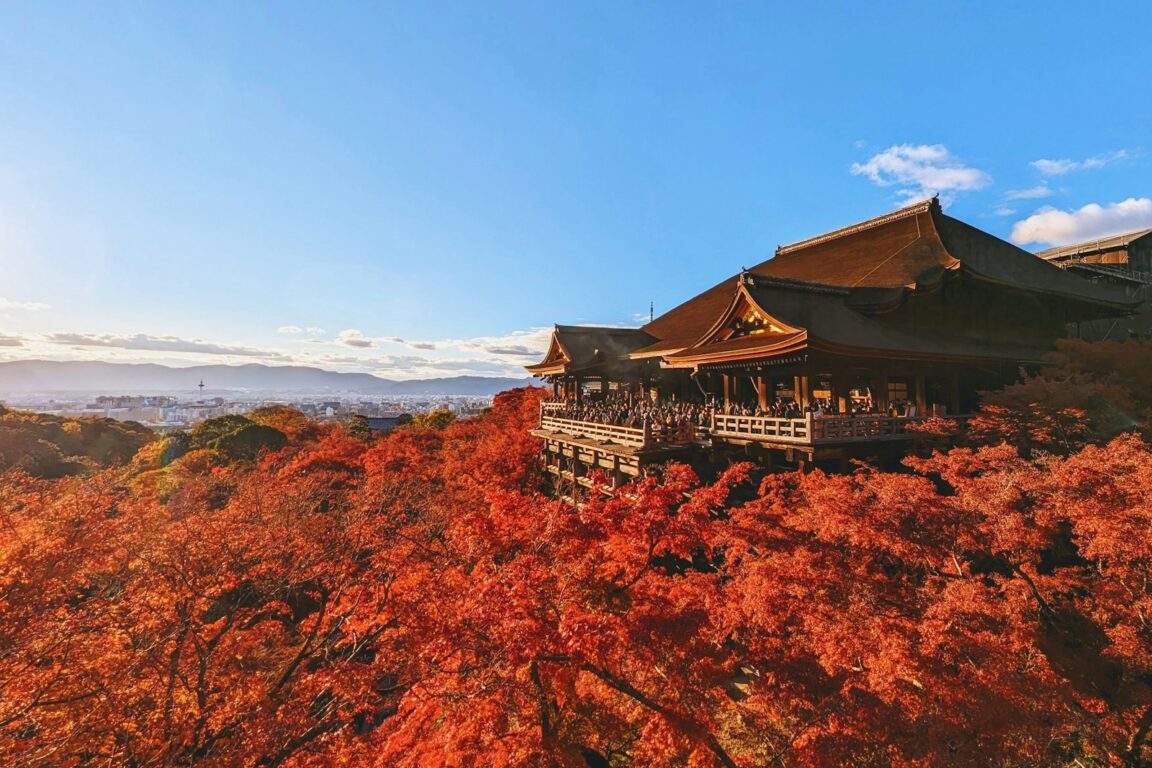
- Maple timing: Colour moves south and downhill through the season, with Tokyo and Kyoto city maples typically peaking in late November into early December
- Rain: October is one of Tokyo wettest months on the normals, so a real rain layer is not optional
- The locker system: Coin lockers at major stations take small to large cases for a few hundred yen, larger stations add staffed luggage counters and same day delivery services
- The bag: One carry on sized case or travel pack you can lift into an overhead rack, plus a packable daypack
How do three climates fit in one bag?
Think of the trip in three temperature bands and dress for the band you are in. Early autumn, and southern stops throughout, sit in the warm band: breathable tops, one light layer for evenings and air conditioned trains. Mid autumn is the swing band: mild afternoons, cold mornings, and the widest daily range, which is where most maple trips land. Late autumn in the north, in the mountains and in late November cities is the cold band: a proper coat, warm mid layer and accessories every day. A route that runs Tokyo to Kyoto to the Japanese Alps can cross all three bands in ten days, which is exactly why the wardrobe has to be a system of layers rather than a set of outfits. The colour logic from our Japan spring packing guide applies unchanged: one tight palette, everything mixing with everything, so three layers deep never looks like an accident.
What are the three layers, exactly?
Layer one is the base: four or five tops in merino or quick drying blends, a mix of short and long sleeves weighted by your month. September trips lean short sleeve, November trips lean long. Layer two is warmth: one fleece or light insulated jacket that packs small, plus one smart knit that works in restaurants and on evening illumination walks, when temple gardens light the maples after dark and the temperature drops fast once the sun goes. Layer three is weather: a waterproof shell with a hood for October rain and mountain weather, sized to fit over both other layers. Bottoms stay disciplined: two pairs of trousers and one skirt or alternate pair, all in the same palette, all comfortable for long walking days and train sitting. Shoes are one pair worn, one pair packed at most, both broken in, because autumn sightseeing in Japan is a walking holiday measured in tens of thousands of steps.
What changes for a mountain or Hokkaido leg?
Add the accessories cube: warm hat, gloves and a neck warmer, plus thicker socks. Altitude and latitude both pull the temperature down a full band, and ropeway stations and open temple approaches in the hills offer no shelter from wind. The shell and insulated layer you already own do the rest, which is the point of building the system in layers rather than packing a separate cold weather wardrobe.
How does the station locker system actually work?
Japanese stations run on the assumption that travellers need to park luggage for the day. Coin lockers cluster near ticket gates and concourses in three broad sizes: small lockers for daypacks and shopping, medium for carry on cases, and large for full suitcases, priced in the few hundred yen range and rising with size. Most modern lockers accept transport IC cards as well as coins, hold bags for the calendar day, and at major hubs there are also staffed baggage rooms and delivery counters that will forward a case to your next hotel or to the airport, typically arriving the next day. The strategy that makes autumn rail trips easy is this: forward or locker the main case on transfer days, sightsee with the daypack, and never drag a suitcase through a temple town at peak maple crowds. Send the big bag ahead from Tokyo to Kyoto, keep two days of layers with you, and the three climate problem shrinks to whatever fits in a daypack.
Sizing honesty matters. A carry on case fits medium lockers almost everywhere and large lockers everywhere else, while an oversized checked case fits only the scarce large lockers at big stations and will strand you at small ones. That, more than airline rules, is the real size limit for a Japanese rail trip, and it is why this guide insists on the one bag discipline. If your route is city only with a single base, a bigger case is survivable. The moment the itinerary becomes a circuit, the locker maths decides for you. Our first time Tokyo itinerary shows the station geography this system is built around.
What goes in the daypack on a maple day?
The layer you are not wearing, because autumn days routinely start in one band and end in another. The shell if rain is anywhere in the forecast. A compact umbrella as backup in cities, where it beats a shell for short hops between stations and shops. Water, snacks for train legs, and a small bag for rubbish, because public bins are rare and visitors are expected to carry waste until they find one. A portable battery for the phone that is doing your navigation, translation and photography at once. And space, deliberately left empty, for the seasonal shopping that autumn trips accumulate: maple sweets, regional Kit Kat flavours and temple market finds are part of the season, and the packable tote in your case is what stops them becoming a carrying problem.
Frequently Asked Questions
Do I need a heavy coat for Japan in November?
For Tokyo and Kyoto, a warm mid layer under a shell, plus hat and gloves for mornings and evenings, handles most November days, when highs average around 16.7 degrees Celsius and lows around 8.8. For late November, the north or the mountains, step up to a proper insulated coat. Pack for your coldest stop, not your average one.
When is the best colour, and does it change what I pack?
Colour reaches the northern mountains in October and the big Honshu cities in late November to early December. Later trips are colder trips, so a maple focused itinerary in Kyoto in late November should pack a full band warmer than an October Tohoku trip, even though both are sold as autumn colour journeys.
Can I rely on lockers being free at big stations?
Not at peak times. Large lockers at major stations fill by mid morning on busy maple weekends. Arrive early, use the staffed baggage counter or the delivery service as the fallback, and keep the daypack plan independent of finding a locker at all.
Is one carry on really enough for two weeks?
Yes, with laundry. Hotels and neighbourhood laundromats make a mid trip wash routine, the layer palette means nothing needs to match check, and the locker and forwarding system rewards the small bag every single transfer day. The discipline is in the palette and the layer count, not in going without.
What footwear works for temple days and wet leaves?
Broken in walking shoes with real tread. Wet maple leaves on stone paths and temple steps are genuinely slippery, gravel garden paths punish thin soles, and you will remove shoes often at temples and traditional restaurants, so slip on friendly styles with clean socks save time all day.
Climate figures checked 14 November 2026 against Japan Meteorological Agency 1991 to 2020 normals for Tokyo. Locker sizes, prices and delivery cut off times vary by station and operator, so confirm them on the day at your departure station.