 Maya Chen
Eat in Manila in this order and the city falls into place: a sizzling plate of sisig with a calamansi squeeze, a sour bowl of sinigang that resets your palate, a whole lechon skin crackle at a celebration table if you can get invited or order by the kilo, and then a slow graze through Binondo, the oldest Chinatown in the world, founded in 1594, finishing with a layered glass of halo-halo. Filipino cooking rewards sequencing. Rich, then sour, then crisp, then cold and sweet is not an accident. It is how Manila itself eats, and this guide follows that rhythm dish by dish, then walks the Binondo circuit stop by stop.
Quick Facts
- The order that works: Sisig first, sinigang to cut the richness, lechon when you find it by weight, Binondo for grazing, halo-halo last.
- Sisig home turf: The dish comes from Pampanga, north of Manila, and the capital serves both the classic chopped version and modern sizzling plates.
- Binondo anchor: Ongpin Street in Binondo, Manila, across the Pasig River from Intramuros, served by Carriedo and Doroteo Jose stations.
- Michelin thread: The first MICHELIN Guide Manila and Environs and Cebu 2026, unveiled on 30 October 2025, lists 108 establishments, with Helm at two stars and 25 Bib Gourmand picks across the selection.
- Lechon rule: Order by the kilo, eat the skin first, and ask for the liver based sarsa on the side rather than poured over.
- Halo-halo rule: Mix from the bottom up only when you are ready to eat it. The name literally means mix mix.
- Prices checked: 14 November 2026. Small eateries rarely publish menus, so this guide names dishes and places, not peso figures, except where a venue publishes its own.
What exactly is sisig, and how should it arrive?
Sisig starts with pig face and ears, boiled, grilled, then chopped fine and seasoned with calamansi, onion and chilli. The classic Pampanga version, associated with Lucia Cunanan of Angeles City, who is widely credited with popularising the modern dish, arrives chopped and dressed, not drowned. The sizzling plate version that Manila made famous adds theatre and a raw egg yolk stirred through at the table, plus mayonnaise in many modern kitchens, which purists debate endlessly. Either way, three things are non negotiable: the meat should carry char from the grill, the calamansi should be squeezed fresh at the table, and the chilli heat should build rather than blast.
Order sisig as a starter to share, never as a solo main on a first visit. It is pulutan, food built for drinking and talking, and its richness is the point. A small plate between two or three people, with garlic rice appearing later for the dishes that need it, sets up everything that follows. If a menu offers a tuna or chicken sisig, treat it as a variation, not the benchmark. Eat the pork original first so you know what the variations are varying from.
Why does sinigang matter so much?
Because sour is the Philippines’ favourite flavour, and sinigang is its clearest expression. The broth is soured, classically with tamarind, though green mango, guava, kamias and calamansi all have regional claims, and it carries pork, prawns, milkfish or salmon with labanos radish, kangkong water spinach, tomatoes, okra and long beans. A good sinigang is assertively sour and clean, not murky. It should make your mouth water before the spoon reaches it.
In the rhythm of a Manila meal, sinigang is the reset button. After sisig and before lechon, its acidity cuts fat and wakes the table up. The MICHELIN Guide’s first Philippine selection noticed the everyday end of this cooking too: its Bib Gourmand list includes Manam at the Triangle in Makati, the group behind a much loved modern take on Filipino comfort dishes, and Morning Sun Eatery in Quezon City, a humble karinderya whose pork dishes drew some of the longest lines of the announcement week. That spread, from tasting menus to a roadside eatery, is the honest shape of eating in this city. For a regional comparison across Southeast Asia, our Hanoi food guide shows how Vietnam builds a whole day around one sour and herbal register of its own.
How do you eat lechon like you mean it?
Lechon, whole pig roasted over charcoal until the skin turns to amber glass, is celebration food. Cebu claims the finest version, and Manila argues back with its own lechon houses, many serving with the sweet liver sauce called sarsa. The rules are simple. Eat the skin immediately, while it still crackles audibly. Eat the rib and belly sections before the lean leg meat, because they carry the fat and the seasoning. Dip lightly. A great lechon needs almost nothing, and drowning it in sauce before you have tasted it plain is the one real mistake.
Most visitors meet lechon by the kilo at a lechon house counter, weighed, chopped and wrapped with rice and sauce. That format is a gift: no whole pig commitment, no party required. Go at lunch, when turnover is fastest and the skin on display was roasted that morning. Ask which part is available rather than accepting the default chop, and if the belly roll, lechon belly stuffed with lemongrass and spices, is on offer, that is the order.
How does the Binondo circuit work?
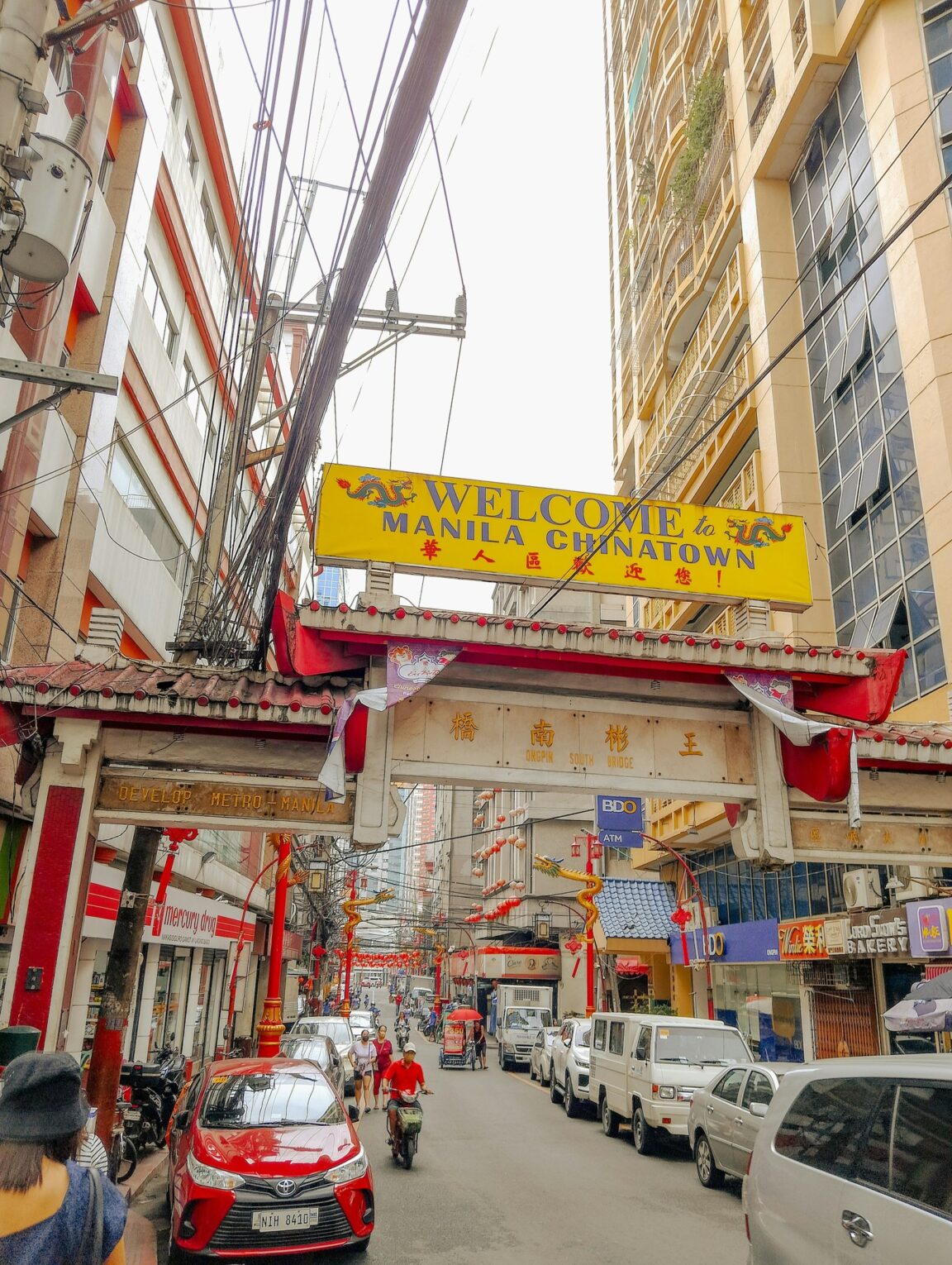
Binondo was established in 1594 as a settlement for Chinese immigrants across the river from the Spanish walled city, which makes it the oldest Chinatown in the world. Its food is Filipino Chinese, a cuisine of its own: dumplings beside lumpia, hand pulled noodles beside pancit, hopia pastries filled with mung bean or ube. The circuit below runs in walking order from Binondo Church on Plaza San Lorenzo Ruiz. Portions are small, prices are low and the correct strategy is grazing, one or two items per stop.
Stop one: dumplings at Dong Bei and Tasty Dumplings
Start with kutchay dumplings, chive filled and steamed, at Dong Bei Dumplings on Yuchengco Street, where the dumplings are made fresh through the day. A few streets away, Tasty Dumplings answers with fried dumplings and soy milk. The pair teaches the first Binondo lesson: neighbouring shops can share a dish and a street and still taste completely different, and locals hold strong opinions about both.
Stop two: fried chicken and fresh lumpia at Sincerity
Sincerity Cafe and Restaurant on Quintin Paredes Street has served its fried chicken since the 1950s, crisp, lightly battered and unmistakably Chinese Filipino in seasoning. Pair it with fresh lumpia, the soft crepe wrapped around vegetables, peanuts and a sweet garlic sauce, and an oyster cake if the table is hungry. This is the sit down anchor of the crawl, the stop where you rest, order tea and plan the sweet half.
Stop three: hopia at Eng Bee Tin and an egg tart finish
Eng Bee Tin, founded in 1912, is the name attached to ube hopia, the purple yam filled pastry it popularised in the 1980s. Buy a box warm if the timing lands, plus the classic mung bean version for comparison. Finish the circuit with a Macau style egg tart from Lord Stow’s Bakery and a coffee at 1919 Grand Cafe, set inside a grand old bank building, where the crawl slows down in marble and high ceilings. If you are structuring a first day in the capital around this eating, our first time in Bangkok itinerary is the regional model for pairing an old town morning with a Chinatown evening, and the same pacing works here in reverse.
What is halo-halo, and when does it count as a meal?
Halo-halo is shaved ice built over sweetened beans, jellies, jackfruit, banana and coconut, crowned with leche flan, ube halaya and often a scoop of ube ice cream, with evaporated milk poured over the top. It is dessert, merienda and heat strategy in one glass. On a Manila afternoon, when the temperature and the traffic both peak, a halo-halo absolutely counts as a meal event, the pause the rest of the day reorganises itself around.
The technique matters. Admire it for five seconds, then mix thoroughly from the bottom, because the sweetest and best ingredients settle low. Eat it before it fully melts into soup, but slowly enough that the ice stays ice. Chains serve reliable versions everywhere; carinderia and market stalls serve the idiosyncratic ones. Try both registers on a long stay and pick a side, because Manila will ask.
How should you pace two days of eating in Manila?
Day one belongs to the Filipino canon: sisig and sinigang at lunch, lechon by the kilo if you are near a good house, halo-halo in the late afternoon slump. Day two belongs to Binondo in the morning, when the dumpling shops are at full production and Ongpin Street is busy but navigable, with the afternoon free for a modern Filipino dinner in Makati or BGC, where the MICHELIN listed kitchens cluster. Carry small notes, because the best Binondo counters are cash first. Go hungry, go early and never schedule a heavy lunch after a Binondo morning. Everyone does once. Nobody does twice.
Frequently Asked Questions
Is Binondo really the oldest Chinatown in the world?
Yes, by the usual historical reckoning. Binondo was founded in 1594 as a permanent settlement for Chinese immigrants under Spanish rule, which predates every other surviving Chinatown district. Its churches, bakeries and eateries still serve the community that grew from that settlement.
What is the difference between sisig and other Filipino pork dishes?
Sisig is defined by its cut and its chop: pig face and ears, grilled, finely chopped and dressed with calamansi, onion and chilli. Adobo braises in vinegar and soy, lechon roasts whole, and crispy pata deep fries a whole leg. Sisig is the chopped, sizzling, sour seasoned one.
Do I need cash in Binondo?
Carry small peso notes. Larger restaurants and cafes take cards, but the dumpling counters, bakeries and street stalls that make the crawl are fastest with cash, and exact change keeps the queue moving.
What should a first timer order at a lechon house?
A quarter or half kilo of lechon with skin, belly or rib section if available, plain rice, and the liver sarsa on the side. Taste the skin plain first, then decide how much sauce it needs, which is usually less than you expect.
When is the best time for the Binondo crawl?
A weekday morning. Shops are producing at full pace, the heat is still survivable, and the weekend crowds on Ongpin Street have not built. Start around 9 or 10 in the morning and graze until early afternoon.
Is halo-halo available all year?
Yes. Manila is hot in every month, and halo-halo is a year round staple rather than a seasonal special. Expect longer queues in the hottest months, roughly March to May.