 Jordan Ellis
Admission to the National Museum of African American History and Culture is free, but every visitor, including infants, needs a free timed entry pass, and the visit that works is built backwards from the floors: go down first, into the three underground History Galleries, and climb chronologically from the 1400s to the present before rising into the Community and Culture Galleries above. Advance passes are released online on a rolling basis about 30 days ahead, a limited batch of same day passes appears online at 8:15 in the morning Eastern Time, and the museum opens at noon on Mondays and at 10:00 every other day, closing at 17:30, with last entry at 16:00.
Quick Facts
- Admission: Free. A timed entry pass is required for every visitor, including infants, and passes may not be sold or transferred.
- Advance passes: Released online through nmaahc.si.edu on a rolling basis, roughly 30 days ahead. Weekend and holiday slots go fastest.
- Same day passes: A limited number released online at 8:15 ET each morning the museum is open.
- Hours: Monday 12:00 to 17:30, Tuesday to Sunday 10:00 to 17:30. Visitors may enter until 16:00. Federal holiday Mondays follow the 10:00 opening.
- Walk up exception: Veterans, active duty military and first responders may enter by showing valid identification at the door, without an advance pass.
- Groups: Groups of 10 or more book through the separate group pass system, released on a rolling schedule. Dine and Shop passes, for the cafe and store only, are released 7 days ahead for entry between 11:00 and 14:30, up to 4 per person per day.
- Time needed: Half a day minimum. The History Galleries alone repay two to three unhurried hours.
- Address: 1400 Constitution Avenue NW, Washington, DC, on the National Mall by the Washington Monument. Entry from 14th Street and Constitution Avenue NW or 15th Street and Madison Drive NW.
How do the timed passes actually work?
The pass system exists because demand for this museum, the Smithsonian’s 19th and its first on the Mall devoted to African American life, history and culture, has exceeded its comfortable capacity since it opened in 2016. The mechanics are simple but strict. Each pass names a date and an entry time, every person in the party needs one, and the pass is valid only for that stated visitor, date and time. Arriving a little late is survivable: the museum advises that entry more than two hours past the pass time is not guaranteed and depends on capacity. Leaving and coming back the same day is not part of the deal, so treat the entry as one continuous visit and plan food and rest inside it.
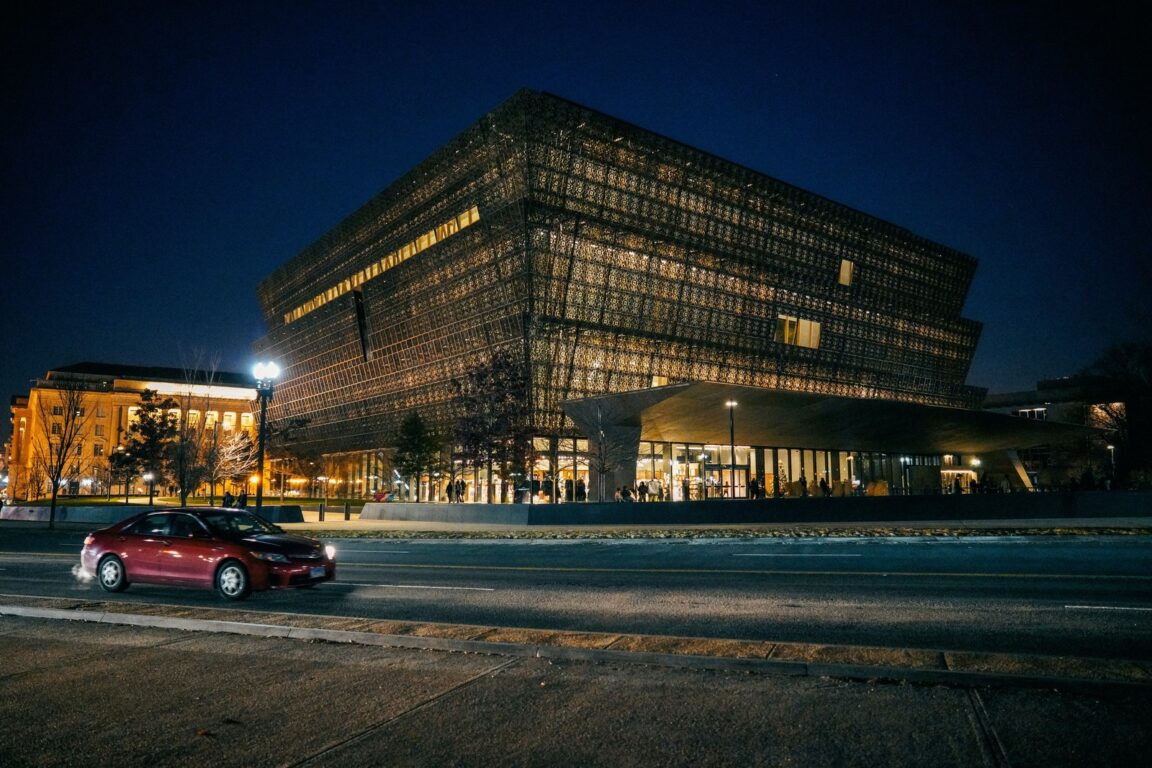
The strategy is to work the two release waves. The advance wave, opening roughly 30 days out on a rolling basis, is where weekend visits are won; set the date and book the morning the window opens. The same day wave at 8:15 ET is the genuine second chance, not a formality, and it rewards anyone willing to be online with the booking page open before the release minute. A weekday afternoon is the softest target of all. What does not work is arriving at the bronze corona building on a Saturday with no pass and hoping; outside the veterans, military and first responder exception, the door staff have no discretion to invent capacity. Travellers weighing this museum against the rest of the Mall should read our guide to Smithsonian museums on a first visit, which sets out which of the neighbouring museums need no pass at all.
What is the floor plan, and why does the order matter?
The building is designed as a journey in two directions. Below ground, the Concourse levels hold the History Galleries in chronological order: C3, the deepest level, begins with slavery and freedom, the global slave trade from the 1400s and the making of America; C2 continues through the era of segregation and the long freedom struggle to 1968; C1 rises from 1968 to the present. A ramp and gallery sequence carries visitors upward through time, past the Greensboro lunch counter, a segregated railway car, the casket of Emmett Till in a dedicated reflective space, and into the era of the civil rights movement and beyond. The Contemplative Court, with its waterfall wall and oculus of light, sits within this lower sequence as a deliberate place to pause, and most visitors need it.
Above ground the emotional register changes. Level 2 holds the Explore More interactive spaces and the Earl W. and Amanda Stafford Center for African American Media Arts. Level 3 is the Community Galleries: neighbourhood, migration, sport, military service and the African American military experience. Level 4 is the Culture Galleries: music, theatre, film, visual art and cultural expressions, with objects that range across Chuck Berry’s red Cadillac, Parliament Funkadelic’s Mothership and the costume and design collections. The Sweet Home Cafe, on the lower level, serves regional African American dishes in four stations and functions as part of the exhibition in its own right; the Oprah Winfrey Theater and the museum store complete a building that rewards those who treat it as two museums, history below and culture above, with a genuine break between them.
What should a half day plan look like?
Book the earliest pass of the day that the party can reliably make, enter, and go straight down to C3 before the History Galleries fill. Walk C3 and C2 at full attention; these are the densest and most demanding galleries in the building. Pause in the Contemplative Court. Eat early or late rather than at the noon peak in the Sweet Home Cafe, because its queue is the museum’s worst bottleneck on busy days. Use the remaining time on C1 to finish the history sequence, then decide honestly how much energy is left: Level 4 culture alone is a satisfying final hour, and Levels 3 and 4 together close the visit properly for anyone with a full afternoon. Visitors with children often invert part of this, taking the music, sport and interactive spaces of the upper floors first and the history galleries in a selected pass; the building supports either order, but no visitor should attempt to give every floor equal weight in under three hours.
What are the common mistakes?
Booking passes for a party and assuming infants are exempt, when the museum states plainly that every visitor needs one. Treating the pass time as a casual suggestion on a sold out day. Arriving after 16:00, when entry has closed even though the museum runs to 17:30. Underestimating the History Galleries’ emotional weight and scheduling a demanding second attraction immediately afterwards; the respectful comparison is our guide to visiting Hiroshima’s Peace Memorial, where the same advice holds: one profound museum, given time, beats two rushed. Finally, groups of ten or more who book individual passes instead of the group system risk exactly the entry friction the group route exists to prevent.
What about Dine and Shop passes, and groups?
Two side doors exist for narrower visits. Dine and Shop passes admit visitors between 11:00 and 14:30 for the Sweet Home Cafe and the museum store only, are released seven days ahead at 8:00 ET on a rolling basis, are capped at four per person per day, and stop being redeemable after 14:30; they are not a back door into the galleries. Group passes, for parties of ten or more, run on their own rolling release, announced on the museum’s group visits page, with a daily group maximum of 200 and one chaperone required for each ten students. School and tour operators should plan on that calendar rather than the individual one. All passes, in every category, are for personal use only and may not be sold or transferred; reservations that violate the conditions may be cancelled, which is the museum’s answer to the resale market that free passes attract.
Frequently Asked Questions
Do you really need a pass if admission is free?
Yes. Entry is free of charge but controlled by timed passes, and every visitor including infants needs one for the stated date and time. The exceptions are veterans, active duty military and first responders, who may enter with valid identification.
When do passes become available?
Advance passes are released online on a rolling basis about 30 days ahead, and a limited same day batch is released online at 8:15 ET. Group passes follow their own rolling release on the museum’s group visits page.
How long does the museum take?
Half a day is the honest minimum. The three History Galleries alone take two to three hours at a reflective pace, and the Community and Culture Galleries above add at least another hour.
What happens if you arrive late for your pass?
Short delays are usually absorbed, but the museum states that arrival more than two hours past the entry time is not guaranteed and depends on capacity. On sold out days, treat the pass time as firm.
Can you leave and re enter on the same pass?
Generally no. Plan one continuous visit, with the cafe, the Contemplative Court and the upper galleries as the built in breaks, rather than expecting to exit and return.
Is there a way in just for lunch?
Yes. Dine and Shop passes cover the Sweet Home Cafe and the store, with entry between 11:00 and 14:30, released seven days ahead and capped at four per person per day. They do not include gallery access.
Pass rules, hours and release arrangements checked against nmaahc.si.edu on 14 November 2026. Release calendars change, so confirm the current schedule on the official site when booking.