 Rafael Santos
UXUA Casa Hotel and Spa is not a hotel building at all. It is a small collection of one to three bedroom casas in and around the Quadrado, the grassy, UNESCO protected historic square of Trancoso in southern Bahia, Brazil, some restored fishermen houses facing the square itself, the oldest dating back hundreds of years to the village founding, and others hidden in a lush tropical garden behind it. Created by Wilbert Das, the former creative director of Diesel, with local artisans using traditional techniques and reclaimed materials, UXUA adds a lake like swimming pool lined with 40,000 green aventurine quartz stones, the Vida Spa and its Vida Lab, a Quadrado restaurant and a rustic beach lounge in the mangroves a short walk downhill. It suits design travelers who want to live in a village rather than overlook it. It does not suit travelers who want a conventional resort corridor, a beachfront tower or anonymity from village life.
Quick Facts
- Location: Praca Sao Joao Batista, the Quadrado Historico, Trancoso, Bahia, Brazil, about an hour from Porto Seguro airport by road
- Rooms: Individual one to three bedroom casas, restored historic houses on the Quadrado and garden casas including a treehouse
- Creator: Wilbert Das, former Diesel creative director, working with Trancoso artisans in traditional techniques and reclaimed materials
- Pool: A lake shaped pool lined with 40,000 green aventurine quartz stones, a native Bahian stone
- Dining: UXUA Quadrado restaurant for Bahian cooking and al fresco square dining, plus the UXUA Praia beach lounge
- Wellness: Vida Spa and Vida Lab, making spa products and food ingredients from native plants including almescar oil and cocoa
- Facts checked: 14 November 2026, against uxua.com
A hotel that hides inside a village
Trancoso began as a Jesuit village in the 16th century, spent centuries as a fishing community, was rediscovered by Brazilian hippies in the 1970s and is now Bahia most stylish small destination, yet its centre has barely changed shape: the Quadrado, a long grass rectangle of coloured houses under mango trees, closed at one end by the whitewashed church of Sao Joao Batista and open at the other to cliffs, river, mangroves and the Atlantic. UXUA decision, and its whole design credential, was to preserve that square rather than build beside it. Half its casas date back hundreds of years to the village founding, restored by Das in collaboration with local artisans, and the hotel has no sign and no facade. Guests sleep in the village fabric itself.
That approach has been recognised well beyond Bahia. UXUA is a fixture of the Mr and Mrs Smith collection and of international design press, and its sister line, UXUA Casa, sells the furniture and objects made in the same artisan workshops. Travelers pairing Trancoso with the falls should compare it with our guide to Hotel das Cataratas at Iguazu Falls, Brazil other great place specific luxury stay, where the location argument is a national park rather than a village square. For the paperwork of a Brazil trip, our guide to Brazil eVisa for US, Canadian and Australian travelers covers who now needs a visa and how the application works.
The casas, from fishermen houses to a treehouse
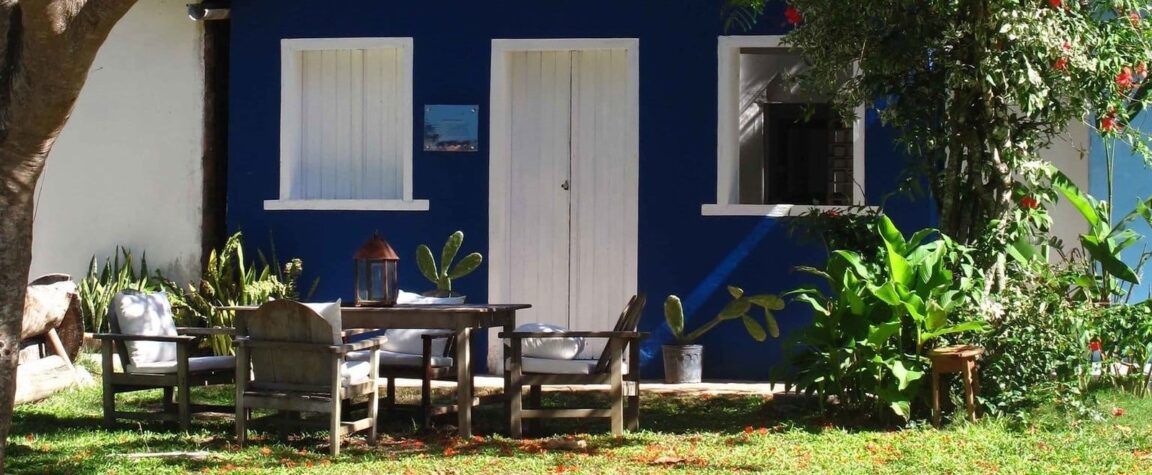
Each casa is a one off, named, storied and furnished differently, so booking UXUA means choosing a house, not a room type. The Quadrado facing originals include Gulab Mahal, a two bedroom former owners house with a tiered garden, a meditation mezzanine and Quadrado views, and Seu Pedrinho, a large pink toned house of about 135 square metres. Seu Irenio, the bright blue house photographed across the square, pairs a calm white interior with a plunge pool beyond its outdoor bathroom. In the garden, Casa das Artes keeps a playful artist house register, Casinha hides a teardrop pool in jungle planting, Terraco do Ceu stacks a rooftop terrace and plunge pool above the foliage, and Casa da Arvore is the treehouse, built from reclaimed wood for guests happy to skip self catering.
Most casas have kitchens or kitchenettes, which creates the UXUA hybrid: self cater, be catered, or mix the two, with a Bahian breakfast, daily housekeeping and concierge included in the hotel service pattern and a reserved sofa waiting at the beach lounge. Sizes run from one bedroom hideaways to three bedroom houses for families and groups, and because every house differs, travelers with mobility needs, pool priorities or a strong view on Quadrado facing versus garden quiet should choose by named casa, not by category. That is the charm and the homework of the place in equal measure.
The aventurine pool, Vida Spa and the lab
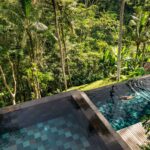
The garden centrepiece is the pool, shaped like a small lake, wooden decked and lined with 40,000 specimens of green aventurine quartz, a native Bahian stone long held locally to have healing qualities. Whether or not a guest credits the stone, the effect is singular: the water glows green gold at certain hours and the pool reads as part of the garden rather than an imported resort rectangle. Beside the wellness offer sits a gym and sauna, and the spa menu leans on Brazil only details, including a Vichy shower among its treatment rooms.
Vida Spa is powered by Vida Lab, a nutritional research laboratory in a restored bungalow from Trancoso hippie era at the heart of the rainforest garden. Over ten years the lab has developed the hotel handmade, all natural product range from native ingredients: almescar oil, virgin coconut oil, Brazil nuts, pitanga and other fruits, pink pepper seeds, wild palm oil and dark cocoa grown in the hotel own gardens. The same ingredients feed the restaurant kitchens, and the lab teaches experiences such as organic chocolate making from cacao seed to bar. Fitness is cultural here too: capoeira lessons with local masters, the Afro Brazilian martial art born in Bahia, plus yoga, pilates, Brazilian jiu jitsu, forro and samba classes, and guided treks, horse rides, kayaking and surf introductions.
The beach lounge and the Quadrado evenings
The honest distance in this slot is the beach. UXUA is a square hotel, and the sea is a walk: around seven to ten minutes downhill from the Quadrado to UXUA Praia, the rustic beach lounge set in mangroves between the Nativos and Coqueiros beaches, built around old fishing boats and reserving sofas for casa guests. A shuttle softens the return uphill. Days therefore split into two geographies, mornings on the sand and in the surf at the lounge, afternoons at the quartz pool, evenings on the Quadrado, where the grass fills with football, candles come out in the restaurants and the village performs its nightly transformation from sleepy to festive.
Eating follows the same split. UXUA Quadrado restaurant serves Bahian cooking, fresh fish, moquecas and tapioca at breakfast, in al fresco settings facing the pool or the square depending on the hour, and the beach lounge handles grilled skewers, caipirinhas and coconut water in the sand. Trancoso own restaurant row lines the Quadrado around the hotel, so a stay can alternate house cooking and village tables nightly without a car. Travelers should simply know that New Year and Carnival weeks turn this village idyll into one of Brazil most demanded and expensive small destinations, while the green season months trade occasional rain for space and softer rates.
Who UXUA Casa suits best
It suits design collectors, couples and groups of friends who want a house with hotel service, travelers interested in artisan culture and slow village days, and anyone for whom the words restored, reclaimed and handmade signal luxury. Families do well in the multi bedroom casas with kitchens and the garden pool. It suits less well travelers who want to step from a lobby onto the sand, guests who need standardised rooms and 24 hour resort infrastructure, or anyone bothered by a short walk to the beach and a hotel with no sign. UXUA is Bahia Quadrado made bookable, and its value rises the more a traveler cares about place over polish.
Frequently Asked Questions
Is UXUA Casa Hotel on the beach?
No. UXUA casas sit on and around the Quadrado, Trancoso historic square. The hotel beach lounge, UXUA Praia, is a seven to ten minute walk downhill in the mangroves between Nativos and Coqueiros beaches, with a reserved sofa for casa guests and a shuttle for the return.
Who designed UXUA Casa Hotel?
Dutch designer Wilbert Das, creative director of Diesel from 1993 to 2009, created UXUA with Trancoso local artisans, using traditional building techniques, reclaimed materials and Brazilian antiques and art. Half the casas date back hundreds of years to the village founding.
What is the UXUA pool made of?
The lake shaped garden pool is lined with 40,000 green aventurine quartz stones, a native Bahian stone locally believed to have healing properties. It is the centrepiece of the Vida wellness offer.
What is Vida Lab at UXUA?
Vida Lab is the hotel nutritional research laboratory, housed in a restored bungalow in the gardens. It develops the Vida Spa handmade natural products and restaurant ingredients from native plants including almescar oil, coconut oil, Brazil nuts and cocoa grown on site.
How do you reach UXUA in Trancoso?
Fly to Porto Seguro, the nearest airport, and continue by road to Trancoso, roughly an hour depending on the ferry and traffic pattern on the day. The hotel concierge can arrange transfers.
Prices checked 14 November 2026. UXUA rates vary by named casa and season and are quoted live by the hotel, with breakfast, beach lounge sofa, gym and concierge typically included. Confirm the current rate and inclusions for your casa on uxua.com before booking.