 Omar Haddad
A Bai Dinh to Cuc Phuong trip works as one active arc: a morning among the vast halls and arhat corridors of Bai Dinh Pagoda, then a van transfer south west into Vietnam oldest national park for an afternoon of primate conservation and jungle trekking. Bai Dinh, in Gia Sinh commune about 95 kilometres south of Hanoi, is one of the largest Buddhist complexes in Vietnam, spread across some 700 hectares in the Trang An landscape. Cuc Phuong, established on July 7, 1962 as the country first national park, protects 22,408 hectares of limestone rainforest across Ninh Binh, Hoa Binh and Thanh Hoa provinces. Linking them in a two day Ninh Binh base, or a long single day with an early start, gives an active traveller both the cultural scale and the forest depth of the province. This guide covers the primate centre visits, the forest trails, the van transfers and the pacing that keeps the trekking, not the driving, at the centre of the trip.
Quick Facts
- Route: Bai Dinh Pagoda, Gia Vien, to Cuc Phuong National Park gate, Nho Quan, both in Ninh Binh Province, Vietnam, about 120 kilometres south west of Hanoi for the park.
- Bai Dinh: Buddhist complex of about 700 hectares in the Trang An Scenic Landscape Complex, with an ancient hillside pagoda area and a new complex begun in 2003. Entry to the grounds is free; the electric cart and the stupa lift are paid extras, priced at the counter.
- Cuc Phuong: Vietnam first national park, established July 7, 1962, covering 22,408 hectares across three provinces, with tropical rainforest over limestone karst, caves and rich biodiversity.
- Primate centre: The Endangered Primate Rescue Center, EPRC, founded in 1993 with the Frankfurt Zoological Society and now run with Zoo Leipzig and the park, cares for around 180 primates of about 14 species per the Wild Animal Rescue Network, including Delacour langurs, gibbons and lorises. Visits are guided only.
- Signature trek: From the Bong centre inside the park, a forest loop of about 4 kilometres reaches the Thousand Year Old Tree, a Cho tree, Terminalia myriocarpa, roughly 45 metres tall. The Cave of Early Man, excavated in 1966 with remains dated to about 7,500 years ago, is the other standard stop.
- Park entry: Current guides most often list adult entry at 60,000 VND, with the primate centre ticketed separately. Fees change, so confirm on the park official tourism site and at the gate before you travel.
- Best season: The dry, cooler months, roughly November to April, for trekking. April and May are noted for butterflies. The wet summer months bring leeches, slippery trails and heavy rain.
- Transfers: There is no useful public transport chain between Bai Dinh and Cuc Phuong for a timed itinerary. Travellers use a hired car or van, a tour transfer, or a motorbike. Allow the transfer as its own block, not as dead time between sights.
How does Bai Dinh fit an active morning?
Bai Dinh rewards walkers, which is not obvious from its reputation as a pilgrimage site. The complex is laid out as an ascent: electric carts run from the parking area to the gate, and from there the route climbs through long corridors lined with 500 stone arhat statues, each about 2.4 metres tall and each with a different face, past the bell tower and the great halls holding giant bronze Buddhas, including the 100 tonne Sakyamuni figure, up toward the stupa. The Vietnam National Administration of Tourism describes the site as 12 kilometres from Ninh Binh City and 5 kilometres from the Hoa Lu ancient capital, covering 700 hectares in total, with the ancient pagoda area on Bai Dinh Mountain at nearly 200 metres above sea level.
Walk it, do not just ride it. Take the cart for the flat approach if time is short, then climb the corridors on foot, detour to the ancient pagoda and its cave shrines, including the Bright and Dark caves, and treat the stair count as the morning warm up for the forest. Arrive early: the complex opens in the early morning, tour groups build by mid morning, and the spring festival season, roughly January to March in the lunar calendar, is the busiest period of the year. Grounds entry is free, but budget cash for the cart, the stupa and parking, and confirm each price at the counter rather than from any guidebook, this one included.
What happens at the primate centre?
The Endangered Primate Rescue Center sits near the Cuc Phuong park gate, and it is the conservation heart of the trip. The EPRC was established in 1993, the first rescue centre of its kind in Indochina, through a collaboration between the Frankfurt Zoological Society and Cuc Phuong National Park, and it is now managed under the Vietnam Primate Conservation Program jointly operated by Zoo Leipzig and the park. Its work is rescue, rehabilitation, breeding, research and conservation for primates confiscated from the illegal wildlife trade.
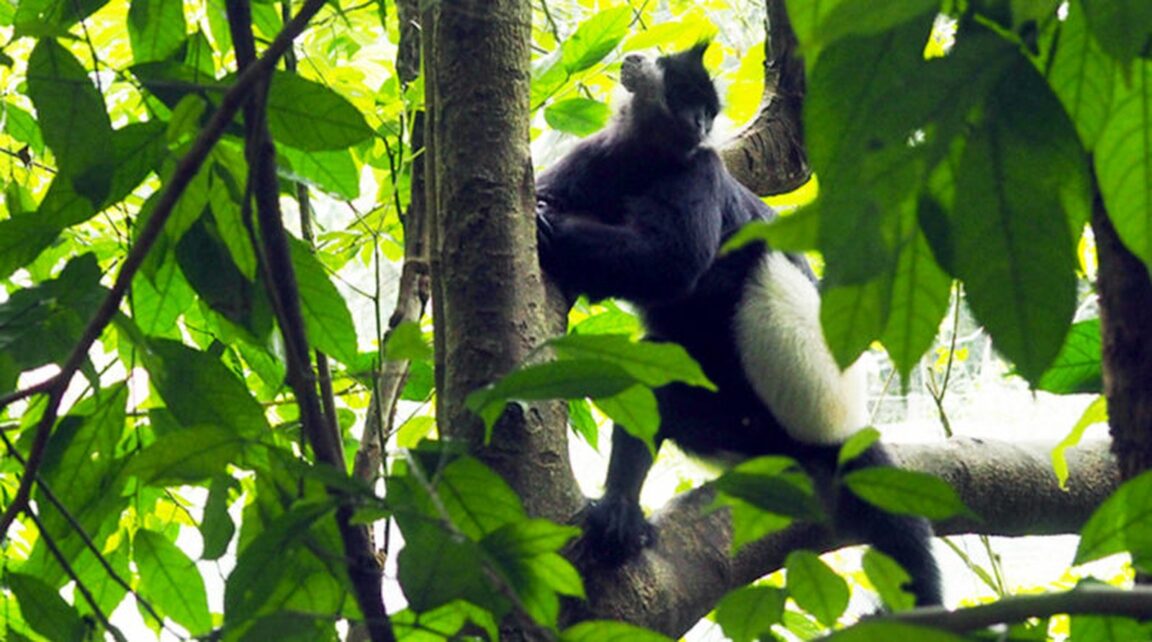
Numbers vary slightly by source and by season, which is the nature of a working rescue centre: tour operators commonly describe more than 150 primates from 15 endangered species, while the Wild Animal Rescue Network profile puts the centre at around 180 primates representing 14 species. The residents that define the visit are the Delacour langur, the centre flagship, with a wild population estimated at fewer than 250 individuals, grey and red shanked douc langurs, Hatinh and golden headed langurs, several gibbon species, and the slow and pygmy lorises. The famous orange infants, langur babies are born orange and darken with age, are a breeding programme success story, not a photo prop.
Visits run as short guided tours, typically an hour to an hour and a half in operator itineraries, in set visiting windows, and there is no wandering the enclosures alone. Go in the centre spirit: this is a hospital and a breeding centre with a visitor programme, not a zoo, some animals are being prepared for release into semi wild enclosures and protected forest, and distance is part of their care. Pair it with the neighbouring Turtle Conservation Center if your schedule allows, and read the centre own updates at eprc.asia before you go. Travellers continuing north or south in the country should also sort entry paperwork early, as set out in the Vietnam 90 day eVisa guide, and refuel properly in the capital using the Hanoi food guide to pho, bun cha and the Old Quarter.
Which forest trails carry the trekking day?
From the gate, the park road runs about 20 kilometres through forest to the Bong centre, the trailhead hub in the park core. The standard trek from Bong is the loop to the Thousand Year Old Tree: about 4 kilometres of shaded rainforest trail in most guided itineraries, past buttress rooted giants, including Tetrameles nudiflora trees the park calls living fossils, to the great Cho tree itself, about 45 metres tall with a trunk some 5 metres across. It is a half day walk with stops, humid even in the dry season, and it is the right main effort for a Bai Dinh combination day.
The Cave of Early Man, Dong Nguoi Xua, sits near the park road closer to the gate and takes a shorter, steeper detour: excavated in 1966, it holds evidence of prehistoric habitation dated to roughly 7,500 years ago, and the climb to its mouth gives the day its second pulse raiser. Longer ambitions exist for a dedicated Cuc Phuong day: the climb to Silver Cloud Peak, May Bac, at 656 metres the park highest point, and multi hour routes toward Muong villages at the park edge. Do not stack those onto a Bai Dinh morning. Choose: Bai Dinh plus primate centre plus the ancient tree loop is a full, satisfying active day; Silver Cloud is a separate day with an early park entry.
Field craft is simple and non negotiable. Closed shoes with grip, because limestone and wet leaf litter are slick; long socks and trousers in the wet months against leeches; insect repellent year round; at least a litre and a half of water per person for the loop, more for longer routes; and a guide for anything beyond the signed core trails. The park is big, genuinely wild forest, home to hundreds of bird and mammal species in the scientific counts, and phone signal fades quickly inside it.
How do the van transfers and pacing fit together?
The transfer is the hinge of the whole plan. Bai Dinh and Cuc Phuong sit on opposite sides of the Ninh Binh karst country, and every combined itinerary moves between them by road: a hired van or car, a seat on an organised Bai Dinh and Cuc Phuong day tour, or your own motorbike. Day tours from Hanoi typically run about 9.5 hours door to door, with roughly 2.5 hours of driving each way between Hanoi and the park, which is why basing in Ninh Binh or Tam Coc for two nights is the better active choice: Bai Dinh at opening on day one morning, the transfer at midday, the primate centre in its afternoon visiting window, and the Bong trek the following morning while the forest is cool, or the full combination in one long day if you must.
Pacing, honestly stated: the stair climbing at Bai Dinh plus 4 kilometres of humid jungle trail plus the cave detour is a moderate to solid day, suitable for regular walkers, and tiring for anyone treating it as a sightseeing stroll. Build recovery the Ninh Binh way: a slow evening in Tam Coc, an early night, and a gentle second morning, perhaps a Van Long Nature Reserve boat row, before any onward travel. In the wet season, roughly May to October, add slack: rain can close in fast, trails run with water, and the correct decision some days is the primate centre and the cave only, with the long loop left for a drier return.
Frequently Asked Questions
Can Bai Dinh and Cuc Phuong be done in one day?
Yes, and organised day tours do exactly that, typically with a morning at Bai Dinh, a van transfer, an afternoon primate centre visit and a jungle hike. It is a long day, about 9.5 hours from Hanoi. Basing in Ninh Binh for a night or two makes the same combination noticeably more relaxed and more active.
What will we actually see at the Endangered Primate Rescue Center?
Rescued and bred endangered primates in enclosures and semi wild areas, on a guided visit: Delacour, Hatinh and douc langurs, gibbons and lorises among around 150 to 180 residents, per operator and rescue network descriptions. It is a working conservation centre founded in 1993, not a zoo, and visits follow its set windows and rules.
How hard is the Thousand Year Old Tree trek?
Moderate. Guided itineraries describe about 4 kilometres of forest trail from the Bong centre to the ancient Cho tree, on shaded but humid and sometimes slippery ground. Allow around 2.5 hours with stops, carry water, and wear closed shoes with real grip.
How much does Cuc Phuong cost to enter?
Current travel guides most often list adult park entry at 60,000 VND, with separate tickets for the primate centre and other services, but published figures vary between sources. Treat any figure as indicative, check the park official tourism website before you travel, and carry small cash notes for the gate.
When is the best time to trek in Cuc Phuong?
The dry season, roughly November to April, with cooler air and firmer trails. April and May are famous for butterflies. The wet months bring leeches, mud and heavy rain, which shorten sensible routes and make the primate centre and cave the better focus.
How do we travel between Bai Dinh and Cuc Phuong?
By road, in a hired car or van, on an organised tour transfer, or by motorbike. There is no practical public transport link that respects a timed itinerary. Build the transfer into the plan as a rest block between the Bai Dinh stairs and the forest trek.