 Wei Chen
Go to Bansko in summer because Bulgaria’s best known ski town doubles as the finest hiking base for Pirin National Park, a UNESCO World Heritage landscape of marble peaks, glacial lakes and ancient pine forest, while its cobbled old town of stone Revival houses and mehana taverns gives evenings a weight that purpose built resorts never manage. Ride the gondola toward Banderishka Polyana, hike to the Banderitsa lakes or up Vihren at 2,914 metres, then return to old town lanes, church bells and clay pot stews, all at prices well below Alpine equivalents.
Quick Facts
- Where: Bansko, southwestern Bulgaria, at the northern foot of the Pirin Mountains, about 150 km south of Sofia.
- Altitude: Town at roughly 900 to 950 metres, with the park entrance near Bansko at about 950 metres.
- Highest peak: Vihren, 2,914 metres, the highest point in Pirin and the second highest peak in Bulgaria after Musala.
- Heritage status: Pirin National Park, UNESCO World Heritage Site inscribed in 1983, with lakes, waterfalls, caves and pine forests.
- Summer season: Main hiking season runs from mid June to mid September, with the gondola and hut shuttles operating in season.
- Best known for: Pirin hiking, the old town and Holy Trinity Church, mehana taverns, and winter skiing beneath Todorka peak.
Why does Bansko work so well in summer?
Most ski towns empty out and close down when the snow melts. Bansko does the opposite. The same gondola that serves the pistes beneath Todorka lifts hikers toward Banderishka Polyana and the trail network of Pirin National Park, the mountain road climbs to Vihren Hut, and the old town fills with hikers, mountain bikers, festival visitors and long stay remote workers drawn by low costs and fast connections. Summer days are warm in town and cool on the high trails, which is exactly the split a mountain base should offer.
The park itself is the argument. Pirin National Park protects the central and highest part of the Pirin range, a landscape of more than 70 glacial lakes, dozens of peaks above 2,000 metres, waterfalls, caves and some of the oldest pine forests in Europe, including ancient Bosnian and Macedonian pines. UNESCO inscribed it in 1983 and later extended the property, while keeping the Bansko ski zones in the buffer arrangements, a reminder that the wilderness above town is the real headline and the resort is its gateway.
What are the best Pirin hikes from Bansko?
The classic objective is Vihren. At 2,914 metres it is the highest summit in Pirin and the second highest in Bulgaria, a steep limestone pyramid climbed from Vihren Hut on marked trails. Allow a full day, start early, carry water and layers, and treat the summit as a serious mountain walk rather than a gondola side trip. On a clear day the panorama takes in jagged ridges, deep cirques and emerald lakes far below.
For a lakes day without a summit, the Banderishki Lakes circuit from the Vihren Hut and Banderitsa area strings together glacial tarns beneath the granite walls, and the Demyanitsa valley offers a gentler river and forest walk toward its hut and waterfalls. In high summer the road past the ski area toward Vihren Hut is restricted for private vehicles during the day, and seasonal shuttle buses run from Bansko bus station to Vihren Hut, with services in the morning, early afternoon and evening in season. Gondola timings also change by season, with limited summer services, so confirm the day’s lift and shuttle times at the visitor information centre in Bansko before fixing a route.
Less committed walkers are still well served. The gondola ride alone delivers high meadow views beneath Todorka, short trails loop from the top station area, and the park’s visitor centre in Bansko provides trail information, maps and guidance on park rules. Entry arrangements and seasonal services change, so the visitor centre, not an old blog post, should be your final source on the day.
What is there to do in the old town itself?
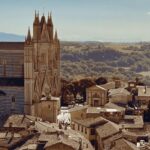
Plenty, and it is the half of Bansko that winter visitors rushing to the gondola often miss. The old town is a tangle of narrow cobbled lanes lined with fortified stone houses from the Bulgarian Revival period, heavy wooden gates, high walls and red tiled roofs, built when Bansko was a prosperous craftsmen’s town. The Holy Trinity Church, with its tall bell tower, anchors the old quarter, and the house museums of the Revival poet Nikola Vaptsarov and the icon painter school founder Neofit Rilski add cultural depth to an afternoon of wandering.
Evenings belong to the mehanas. These stone taverns serve hearty mountain cooking under low wooden beams: kavarma, a slow cooked stew of pork or chicken with onions and peppers served in a clay pot, kapama layered and baked for hours, grilled meats, shopska salad crowned with grated sirene cheese, warm banitsa pastry, and glasses of rakia to open the meal. Expect live folk music in the busiest houses and crackling fires once the mountain air cools. Eat in the old town rather than the gondola district and the town’s character doubles.
For a restorative add on, the nearby village of Banya, a few kilometres away, bubbles with hot mineral springs and open air thermal pools, often with Pirin views. It is the natural finish after a Vihren day. Travellers building a wider mountain and spa circuit can compare notes in the guide to Banff in Winter and the comparison of Budapest’s Thermal Baths.
How should you plan a summer stay in Bansko?
Base yourself in or beside the old town, not only for atmosphere but for practicality: restaurants, bakeries and the visitor centre are there, and shuttle and bus departures are easy to reach. Give the Pirin at least two hiking days, one for a lakes circuit and one for Vihren or a high valley, with a weather buffer day that becomes an old town and Banya day if the peaks cloud over. From Sofia the drive takes roughly two and a half to three hours, buses take longer, and the narrow gauge railway from Septemvri is the slow, scenic option for travellers with time.
The honest caveats are simple. High Pirin weather changes fast even in August, gondola and shuttle services are seasonal and limited outside peak weeks, and the newest apartment districts near the gondola lack the old town’s charm. None of that undermines the core case: no other Bulgarian base puts a UNESCO listed alpine wilderness, a genuine Revival old town and mehana evenings in the same walkable package.
Frequently Asked Questions
Is Bansko worth visiting in summer?
Yes. Summer is arguably the better season for travellers who do not ski: the gondola and hut shuttles open up Pirin National Park hiking, the old town is lively, prices stay low, and the nearby Banya hot springs round out hiking days.
How high is Vihren and how long does the climb take?
Vihren is 2,914 metres, the highest peak in Pirin and the second highest in Bulgaria. From Vihren Hut the round trip on marked trails is a full mountain day, commonly around six hours depending on pace and conditions. Start early and check the forecast.
How do you reach the Pirin trailheads from Bansko?
In season, shuttle buses run from Bansko bus station to Vihren Hut several times a day, and the gondola lifts visitors toward Banderishka Polyana for trails beneath Todorka. The mountain road has daytime vehicle restrictions in high summer, so confirm current shuttle and gondola times at the visitor centre.
What should you eat in Bansko?
Order mehana classics: kavarma and kapama in clay pots, grilled meats, shopska salad with sirene cheese, and banitsa pastry for breakfast, with rakia or local red wine. The old town taverns are the best places to try them.
How long should you stay in Bansko?
Three nights is the sweet spot for a summer visit: two hiking days in Pirin plus an old town and hot springs day, with a buffer for mountain weather. Add a night if you plan both Vihren and a lakes circuit at a relaxed pace.