 Priya Nair
On Cambodia’s south coast, eat the crab first and ask questions later. The dish that organises everything between Kep and Kampot is blue swimmer crab fried with fresh green Kampot pepper, and the place to eat it is the Kep Crab Market, where the crab baskets sit in the sea in front of the stalls and the pepper comes from farms about 25 kilometres inland in Kampot province. Build two days around that axis: a crab market lunch in Kep, a pepper farm visit and tasting in the Kampot countryside, and riverside grills in Kampot town at night. Everything else, squid, prawns, salt fields and sunset drinks, is supporting cast.
Quick Facts
- Where: Kep and Kampot, neighbouring coastal towns in southern Cambodia, about 25 kilometres apart
- The dish: Blue swimmer crab with fresh green Kampot pepper, sold by the kilo at the Kep Crab Market and cooked to order at the market shacks
- Kep Crab Market: Psar Kdam, on the shore north of Kep’s crab monument. Live crab is kept in cane baskets submerged in the sea and hauled up when ordered
- Kampot pepper: Protected Geographical Indication since 2010. Green pepper is used fresh on the stalk; black, red and white are dried or processed stages of the same fruit
- La Plantation: The best known Kampot pepper farm to visit. Per its own site: open daily 9 am to 6 pm, last visit at 4 pm, entrance 2.50 US dollars per adult and 1.25 per child, book a visiting slot in advance from November to March, and book cooking classes at least a day ahead
- Order of play: Crab market for lunch, pepper farm the next morning, Kampot riverside for the evening
How does the Kep Crab Market actually work?
The market sits on the water, and that is the whole point. Fishing families work small boats and traps in the Gulf of Thailand off Kep, and the live blue swimmer crabs are held in cane baskets tied in the shallows in front of the market. When you order, the baskets come up, the crab is weighed by the kilo, and it goes to a charcoal stove a few metres away. The wet market section serves local families and restaurant buyers; the row of shack restaurants along the shore cooks for visitors, with plastic tables facing the sea and the islands beyond.
Walk the full length before you sit down. Prices move with the catch, the season and the size of the crab, and they are quoted by the kilo, so confirm the price for your crab, cooked, before it goes on the fire. The famous preparation is with green Kampot pepper: whole stalks of fresh, unripe peppercorns fried with the crab, pungent and citrusy rather than simply hot. Garlic and spring onion versions exist for the pepper shy, but on a first visit the pepper crab is the order. Kimly, the long running family shack at the market, is the name most often recommended; the honest advice is to pick the busy shack with crab you have seen alive.
Why is Kampot pepper worth a farm trip?
Because this coastline’s pepper is one of the world’s protected food names. Kampot pepper gained Protected Geographical Indication status in 2010, tying the name to a defined growing area between the Elephant Mountains and the sea, and chefs prize it for a slow, floral heat that black pepper from elsewhere does not match. The green corns you eat on the crab are the same fruit, picked unripe and used fresh. A farm visit turns a good lunch into an understood one.
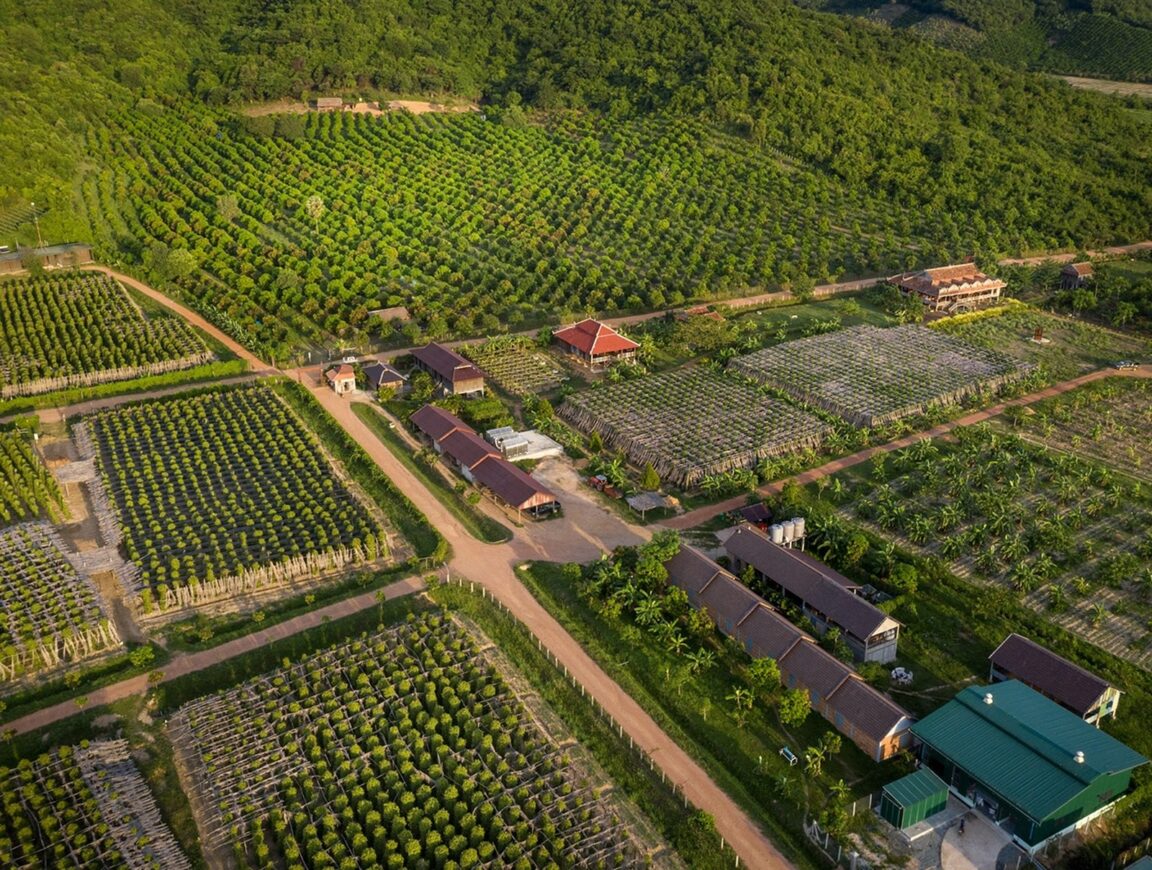
La Plantation, the large organic farm inland from Kampot, is the easiest visit to organise. Its own visitor page sets out the current terms: open every day of the year from 9 am to 6 pm, last visit at 4 pm, a small entrance fee charged as a voucher, guided farm tours with tastings, and cooking classes that must be booked at least the day before. From November to March, the high season, the farm asks visitors to book a slot in advance; from April to October you can simply turn up. The tour walks the pepper poles and spice gardens, explains the hand sorting of every corn, and finishes with a tasting that recalibrates what pepper can taste like. Lunch at the farm restaurant, built around its own spices, is the natural second pepper meal of the trip.
What happens in Kampot town at night?
Kampot is the base town: a grid of shophouses on a wide river, the Preaek Tuek Chhu, with a promenade of bars and grills facing the sunset. Evenings here are the second act to Kep’s lunch. Riverside kitchens grill river fish, squid and prawns, the night market and old market stalls serve noodles and snacks, and the town’s bakeries and cafes, a legacy of its French colonial years, cover breakfast. The durian roundabout, a giant statue of the fruit in the centre of town, is the landmark everyone navigates by, and a fair summary of local priorities.
Between the two towns, stop at the salt fields, where seawater is flooded into flat pans and raked into white pyramids in the dry season, and at the small fish sauce and seafood stalls along the coast road. The geography is the menu: crab and fish from the gulf, pepper from the foothills, salt from the flats, rice from the paddies behind. For the paperwork side of a Cambodia trip, see our explainer on Cambodia’s e-Arrival app before you fly.
A note on the crab, honestly
Kep’s crab fishery is under pressure, and thoughtful travellers should know it. Local reporting and long running guide coverage have raised concerns about overfishing and shrinking crab sizes in the gulf. The market is a working livelihood for the families who fish and cook there, not a theme park, and the balanced approach is simple: eat crab once, well, at a fair price by the kilo, rather than at every meal; take the smaller dishes, squid, prawns, fish and the pepper farm kitchen, for the rest of the trip; and never haggle a fishing family down over a few riel. The crab statue on Kep’s waterfront is the town’s symbol for a reason, and keeping it that way is partly on the people who order lunch.
Two days, sequenced
Day one: arrive in Kampot by lunch, eat lightly by the river, then ride out to Kep in the afternoon for the crab market at its liveliest, with pepper crab as a late lunch or early dinner facing the sea. Sunset works both ways, over the water in Kep or back on Kampot’s promenade. Day two: pepper farm in the morning cool, tour and tasting at La Plantation, lunch at the farm, then a slow Kampot afternoon of cafes and the old market, and a riverside grill for dinner. Compare the pepper first food logic with another market led city in our Hanoi food guide.
Practicalities: Kep and Kampot are a half hour apart by tuk tuk or moto, and drivers will happily quote a full day rate covering both towns and a farm. Crab is priced by the kilo and the number moves, so treat any price printed anywhere, including here, as history and confirm on the day. November to March is dry, busy and the farm booking season; the green season brings quieter markets and dramatic skies.
Frequently Asked Questions
What should I order at the Kep Crab Market?
Blue swimmer crab fried with fresh green Kampot pepper, by the kilo, cooked at one of the market shacks. Confirm the all in price for your crab before cooking, and add squid or prawns from the same stall if the group is hungry.
Do I need to book La Plantation in advance?
From November to March, yes: the farm’s own site asks visitors to book a slot ahead. From April to October you can turn up between 9 am and 6 pm, with the last visit at 4 pm. Cooking classes always need booking at least a day before.
Should I base in Kep or Kampot?
Kampot, for choice: more restaurants, cafes and places to stay, with Kep an easy half hour ride away for the crab market and the beach. Base in Kep only if you want the quietest possible evenings.
What is the difference between green and black Kampot pepper?
Stage, not species. Green corns are picked unripe and eaten fresh, as on the crab. Black pepper is the same fruit dried, red is fully ripe, and white is soaked and hulled. A farm tasting lines all four up side by side.
Is the crab sustainable?
The fishery is under documented pressure. Eat crab once as the centrepiece meal, pay a fair by the kilo price, and let squid, prawns, fish and the pepper farm kitchen carry the rest of the trip.
Photo: Aerial view of the pepper fields and farm buildings at La Plantation, Kampot. Photo from La Plantation, official website.