 Aiko Tanaka
Staunton eats far above its size, and the order matters. Start with The Shack, the 26 seat room on South Coalter Street where chef Ian Boden built a national reputation from 2014, then plan a second night at Maude and the Bear, the tasting menu house Boden and his wife Leslie opened in 2024 a few blocks away. Put the farmers market on Saturday morning, a long downtown lunch in between, and a Shenandoah Valley wine run on the afternoon you are not eating a tasting menu. Sequenced that way, two days of meals cover the full Staunton story: Appalachian ingredients, Jewish and Eastern European roots in Boden’s cooking, farm produce from within the valley, and small rooms that book out because there are simply very few seats.
Quick Facts
- Where: Staunton, Virginia, a small city in the Shenandoah Valley between the Blue Ridge and Allegheny mountains
- The Shack: 105 South Coalter Street. Opened in 2014 by Ian and Leslie Boden in a former doughnut shop of about 400 square feet with 26 seats. Boden still owns it; chef Mike Skipper, his former sous chef, has run the kitchen since the 2024 relaunch
- Maude and the Bear: 1106 North Augusta Street, a 1926 Montgomery Ward kit house turned restaurant and inn. Per its own site, the restaurant serves a tasting menu Thursday to Saturday, by reservation
- Staunton Farmers Market: A producer only market in season, Saturday mornings from April into November, with a Wednesday market in the warmer months. Location and hours are seasonal, so check stauntonfarmersmarket.org before you go
- Booking rule: Both tasting rooms are tiny. Reserve dinner first, then build the rest of the trip around the confirmations
- Wine country: Augusta County vineyards surround the city, and Staunton itself has winery tasting rooms downtown, so a wine run needs no designated long drive
Why does The Shack come first?
Because it is the original. The Shack opened in 2014 in a building that had already been a doughnut shop, a barbecue joint and a bar, and Boden cooked there for almost a decade, earning two James Beard semifinalist nominations for Best Chef: Mid-Atlantic along the way. The room holds 26 people, the menu has always changed with what Shenandoah Valley farms deliver, and the cooking mixes Boden’s Ashkenazi roots with his wife Leslie’s Appalachian upbringing. That combination, fine dining technique applied to valley ingredients in a room the size of a food truck, is what put Staunton on the national food map.
The Shack today is a second act rather than a museum piece. When the Bodens opened Maude and the Bear in early 2024, longtime sous chef Mike Skipper took over The Shack kitchen, and the format loosened: a fleet of dishes that changes weekly, served a la carte or assembled into three or four course tasting sequences, with handmade pasta at the centre of the menu. The practical advice is unchanged. There are 26 seats, dinner only, and the week’s menu appears on the restaurant’s social channels rather than a fixed website menu, so read it the week you travel and book as soon as your dates are firm.
What changed at Maude and the Bear?
Maude and the Bear is the Bodens’ bigger canvas, and it is still small. The setting is a storybook 1926 Montgomery Ward kit house at 1106 North Augusta Street, reworked as a restaurant with a handful of inn suites above and around it. The restaurant’s own site states the deal plainly: a tasting menu served Thursday to Saturday, by reservation, plus a multi-course breakfast for inn guests only. The house has collected the kind of notices most small city restaurants never see, including a James Beard nomination for Best New Restaurant in 2025 and places on national best restaurant lists, all quoted on its homepage.
For a food traveller the two Boden rooms pair perfectly across two nights. Night one at The Shack is loose, pasta led and comparatively casual. Night two at Maude and the Bear is the formal tasting, a longer, quieter sequence in a dining room inside a house. Booking both also solves a Staunton problem: the city has more appetite than seats at this level, and travellers who arrive hoping to walk in on a Friday usually end up eating pizza instead. If only one reservation comes through, take whichever it is and do not sulk; the cooking lineage is the same kitchen culture.
Where do market mornings fit?
On Saturday, before anything else. The Staunton Farmers Market has run since the 1990s as a producer only market, which means the person selling the tomatoes grew them, and its rules have long required produce to come from the surrounding valley region rather than a wholesale terminal. In season it runs on Saturday mornings, roughly April to the Saturday before Thanksgiving, with Wednesday mornings added in the warmer months. The market has moved within the city in recent seasons, so confirm the current site and hours on the market’s own website in the week you travel.
Market morning is also the smartest breakfast in Staunton. Go early, eat a pastry standing up, buy fruit for the car, and talk to the bakers and farmers whose names reappear on the menus at The Shack and across downtown that night. Then walk it off through the Beverley Street historic district, where the lunch rooms fill the Victorian storefronts. For trip pacing ideas beyond the table, see our guide to Shenandoah and Skyline Drive day hikes, which pairs well with a market morning before a mountain afternoon.
What fills the middle of the day?
Downtown Staunton is compact enough that lunch needs no plan beyond a street. Mill Street Grill, the long running dining room on Mill Street in the Wharf district, is the institution locals name for a sit down lunch or an unhurried dinner when the tasting rooms are full, and the streets around Beverley and Augusta carry coffee shops, bakeries, delis and a brewpub within a few walkable blocks. The pattern to copy is the local one: a proper lunch, a slow afternoon in the shops and the Woodrow Wilson Presidential Library or the Blackfriars Playhouse, then dinner at whichever small room you booked.
Save one afternoon for wine. The Shenandoah Valley is one of Virginia’s established wine regions, with vineyard tasting rooms scattered through Augusta County and at least one winery pouring inside Staunton itself, so a two stop run takes an afternoon rather than a day. Go after lunch, taste lightly, buy a bottle for home, and be back downtown for dinner. Valley wine lists lean on the grapes that suit the climate, and the restaurants above pour local bottles, so the run doubles as research for the evening’s list. Travellers building a longer American food trip can compare Staunton’s farm led model with the market culture in our Mexico City food guide.
A two day eating sequence that works
Day one: arrive by lunch, eat downtown on Mill Street or Beverley Street, walk the historic districts, then dinner at The Shack. Day two: farmers market at opening time in season, coffee and a pastry downtown, a winery run in the early afternoon, a rest, then the tasting menu at Maude and the Bear. Day three, if you have it: a slow breakfast, a second market or bakery stop for road food, and the drive out through the valley. The sequence front loads the casual room, saves the formal tasting for when you are settled, and keeps every meal within a short walk or drive of the centre.
Two warnings. First, November to March is the quiet season: the market is out of season or on winter hours, some rooms trim their days, and the tasting rooms’ Thursday to Saturday pattern matters more, so anchor the trip on a weekend. Second, Staunton’s dining scene punches up precisely because it is small. The same weekend can sell out both Boden rooms, the playhouse and the better inns at once during fall foliage and college weekends. Book dinners before hotels if you must choose.
Frequently Asked Questions
What is the one restaurant to book in Staunton?
The Shack, for history and value, or Maude and the Bear for the full tasting experience. Both are chef Ian Boden’s rooms; The Shack opened in 2014 and is now cooked by his former sous chef Mike Skipper, while Boden cooks the tasting menu at Maude and the Bear, Thursday to Saturday by reservation.
How far ahead should I reserve?
As soon as your dates are set. The Shack has 26 seats and Maude and the Bear serves a single tasting format three nights a week, so prime Friday and Saturday seatings go first, especially in fall.
When is the Staunton Farmers Market?
In season, Saturday mornings from April into November, with Wednesday mornings in the warmer months. It is a producer only market. Location and exact hours shift by season, so check stauntonfarmersmarket.org in the week of your trip.
Can I visit Shenandoah wineries from Staunton without a car tour?
Yes for the in town tasting rooms, which are walkable downtown. Vineyard visits in Augusta County need a car and a designated driver; keep it to two stops and go after lunch.
What else pairs with a Staunton food trip?
The Blackfriars Playhouse, home of the American Shakespeare Center, sits downtown, and Skyline Drive and the Blue Ridge Parkway are the classic drives east of the city. A play night and a tasting menu on consecutive evenings is the classic Staunton weekend.
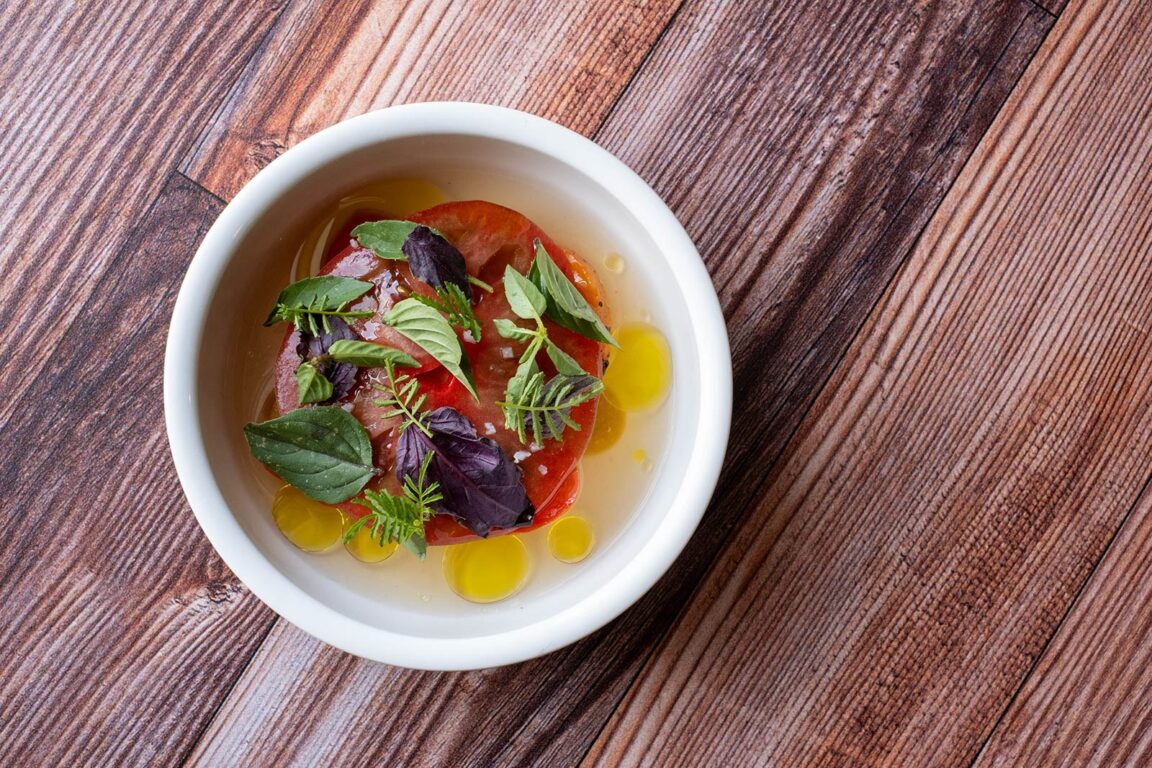
Photo: A tomato course at Maude and the Bear, Staunton. Photo from Maude and the Bear, official website.