 Rafael Santos
In winter, do the Gaisberg as a half day built around a single bus: ride city bus 151 from Mirabellplatz straight to the summit stop, Gaisbergspitze, walk the short summit circuit while the light is clear, and keep the Kapuzinerberg, the wooded hill inside the city, as your bad weather and short daylight alternative. That order matters. The Gaisberg gives you the big view over Salzburg and the Berchtesgaden Alps, but it is exposed, wind dependent and pointless in low cloud, while the Kapuzinerberg is sheltered, free and ten minutes from the Old Town. Sequence the mountain first on the clearest morning of your stay, book any tandem paragliding flight with a free reschedule built in, and let the city hill fill the gaps. Done this way, a winter Gaisberg circuit costs little more than a bus ride and a summit lunch, and it never depends on the crowds that fill the mountain in summer.
Quick Facts
- Mountain: The Gaisberg, 1,287 metres above sea level, a few kilometres east of Salzburg Old Town, per the official Salzburg tourism portal, salzburg.info.
- The bus: City bus 151 runs from Mirabellplatz, through Gnigl, straight up to the summit stop, Gaisbergspitze.
- Summit landmark: The Gaisberg transmitter, a 100 metre mast erected in 1956 and 1957, operated by ORF Landesstudio Salzburg.
- Summit circuit: The Gaisberg Peak Circular Trail, about 1 kilometre and roughly 15 minutes, from the Gaisbergspitze bus stop.
- Longer circuit: The Gaisberg Circular Trail, about 5.9 kilometres and 1 to 1.5 hours, starting lower down at the Zistelalm stop.
- Paragliding: Tandem flights launch from the summit at about 1,288 metres and land at Guggenthal, about 600 metres; typical flights run 10 to 20 minutes and operators decide flyability the day before.
- City alternative: The Kapuzinerberg, 640 metres, inside the city on the eastern bank of the Salzach, reached from Linzergasse and the Imbergstiege steps.
- Guest travel: Salzburg accommodation hosts issue the Guest Mobility Ticket, which operator guidance says covers the 151 journey for guests.
How does the bus 151 circuit actually work?
The whole plan rests on one simple fact from the city tourism portal: public bus 151 runs from Mirabellplatz, through the Gnigl district, and straight up the Gaisberg. There is no cable car and no need for a car. You board in the New Town, ride the switchbacks up the Gaisberg road, and step out at the top, a short walk from the transmitter mast and the summit plateau. Coming down is the same bus in reverse, which is what makes this a circuit you can time rather than a hike you have to escape from.
Two stops give you two different days. Stay on to Gaisbergspitze, the summit stop, if you want the peak circuit, the viewpoints and, in the right conditions, the paragliders. Get off earlier at Zistelalm if you want the longer circular trail, about 5.9 kilometres, which loops the upper mountain and climbs to the summit as part of the walk rather than starting there. In winter, with short days and the chance of ice on the upper paths, the summit stop is the safer default: you are at the top within minutes of leaving the bus, and the return bus is steps away if the weather turns.
Allow margin at Mirabellplatz. Paragliding operators who meet passengers off this bus warn that the Mirabellplatz stop is easy to miss on a first visit and advise arriving well before the departure time. Treat the bus as an appointment, not a casual hop: check the current timetable the day before, be at the stop early, and keep the summit part of the day flexible enough to absorb one missed departure. If you are staying in Salzburg accommodation, ask your host about the Guest Mobility Ticket before you buy any ticket, because operator guidance for the Gaisberg flights states that the ticket covers the 151 journey for guests.
What should you do on the summit in winter?
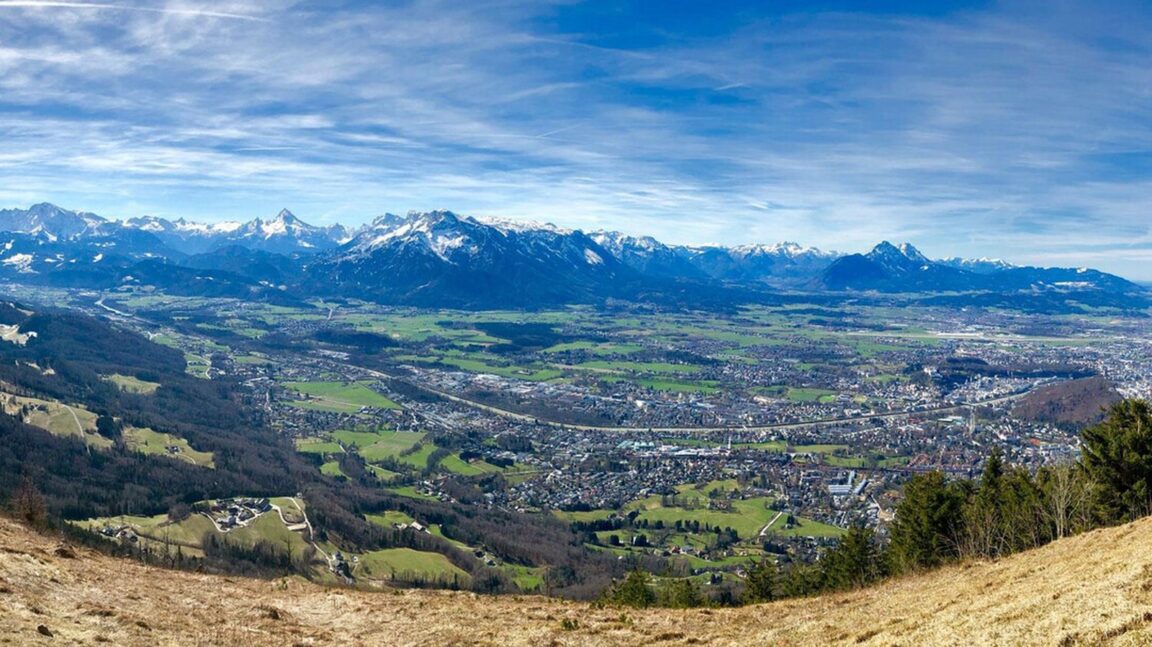
Walk the peak circuit first, while you are warm from the bus and the light is at its best. The summit loop is short, about a kilometre, and it strings together the viewpoints that justify the trip: Salzburg spread out below, the Salzach valley, and the snow covered Berchtesgaden Alps to the west. The transmitter mast, 100 metres tall and on the plateau since the 1950s, is your orientation point and your shelter landmark; if cloud rolls in, it tells you exactly where the bus stop side of the plateau is.
Winter changes the mountain in ways the summer photographs hide. The summit plateau is exposed, the wind is the real temperature, and paths that are a stroll in July can hold ice in January. Wear footwear with grip, carry gloves even if the city felt mild, and treat the longer Zistelalm circuit as a fair weather upgrade rather than the plan itself. The reward for going anyway is the winter clarity: on a cold, clear morning the view runs in layers, city, foothills and white alpine ridges, with none of the summer haze and very few people sharing it.
Build in a warm stop. The summit area has restaurants and cafes by the top, the Kohlmayr houses among them, and paragliding operators themselves suggest arriving early enough to spend an hour on the mountain before a flight, with coffee and apfelstrudel as the natural filler. In winter that hour is also your weather window: if the cloud is sitting on the plateau when you arrive, a slow lunch gives it time to lift before you commit to the walk or the flight.
Is winter paragliding from the Gaisberg realistic?
Yes, with the right expectations, because the Gaisberg tandem operation is genuinely year round. Operators describe flights in every season, from a snow covered winter landscape to green summer valleys, launching from the summit fields and landing down at Guggenthal. A standard flight is short, usually around 10 to 20 minutes depending on wind and thermals, and the whole experience, meeting to landing, takes roughly 1.5 to 2 hours. Winter flights run colder and often shorter, and gloves are specifically recommended for autumn and winter.
The booking rule is flexibility. Alpine weather decides, and operators make the fly or no fly call the day before, with free rescheduling or a refund when conditions cancel the flight. So book the flight for the first full day of your stay, not the last, and keep the following morning uncommitted as your backup slot. Note the seasonal meeting detail from operator guidance: from March to September pilots meet passengers at the FlyTandem trailer at Gaisberg 32, while in the winter months the meeting point is in front of Gasthaus Kohlmayr. You also need to be able to run a short distance, about 20 metres, for takeoff, which in winter boots on a snowy launch field is worth thinking about honestly before you pay.
If the flight is cancelled, the day is not wasted, and this is the real strength of the Gaisberg circuit. You are already on the city mountain with the summit walk, the viewpoints and lunch in front of you, and the bus down drops you back at Mirabellplatz in time to use the Kapuzinerberg alternative the same afternoon. Travellers who want a sense of how Salzburg handles its grand hotel end of winter can also read our full assessment of Hotel Sacher and its cafe culture for the Vienna comparison before a combined Austria trip.
When is the Kapuzinerberg the better choice?
Whenever the Gaisberg is in cloud, the wind is up, or you only have two hours. The Kapuzinerberg is Salzburg other hill, a forested ridge rising to 640 metres on the eastern bank of the Salzach, inside the UNESCO listed historic centre rather than outside the city. You reach it from Linzergasse through the Franziskuspforte gate, or up the Imbergstiege steps, and the paths climb through woods to viewpoints over the Old Town and the fortress, passing the Capuchin monastery near the top, founded in the 16th century.
The Kapuzinerberg works in winter precisely because it is small and sheltered. The trees cut the wind, the paths are a city walk rather than a mountain route, and you can be back down in Linzergasse for coffee within the hour if the weather closes in. It is also the right pairing on a flying day: Kapuzinerberg in the morning while the paragliding team makes its weather call, Gaisberg in the afternoon if the call is good. What it does not give you is the alpine panorama, so do not let it substitute for the Gaisberg on the one clear day of a short stay. The circuit logic is the reverse: Gaisberg first when the sky allows, Kapuzinerberg for everything else.
For packing, winter Salzburg is a two layer problem, mild valley city and cold exposed summit on the same day, and our South Bohemia winter kit list covers the same Central European cold, pond country wind and layering choices that apply on the Gaisberg plateau.
How should you sequence a winter weekend around the Gaisberg?
Day one, settle the city. Walk the Old Town, climb the Kapuzinerberg in the afternoon for the fortress views, and check the mountain forecast and the bus timetable in the evening. If you have booked paragliding, this is when the operator confirms or moves your flight. Day two, take the earliest sensible 151 to Gaisbergspitze, walk the summit circuit, fly if the conditions allow, lunch at the top, and ride down in the early afternoon, leaving the rest of the day for the city. Day three is your buffer: the Gaisberg again if day two was clouded out, the longer Zistelalm circuit if the paths are clear and you want the walk, or a slow city day if the mountain never opened.
The mistake to avoid is treating the Gaisberg as a summer style certainty, booked tight against trains and flights. In winter it is a weather dependent half day that rewards slack in the itinerary. Give it a first chance and a second chance, keep the Kapuzinerberg and the city as the filler, and the circuit delivers exactly what it promises in the quiet season: the biggest view in Salzburg, reached by a city bus, shared with almost nobody.
Frequently Asked Questions
How do you get to the Gaisberg without a car?
Take city bus 151 from Mirabellplatz, through Gnigl, directly up the mountain. The summit stop is Gaisbergspitze, and the Zistelalm stop serves the longer circular trail. Salzburg accommodation guests should ask about the Guest Mobility Ticket, which operator guidance says covers the 151 journey.
Can you paraglide from the Gaisberg in winter?
Yes. Tandem flights operate year round from the summit, landing at Guggenthal, and typically last about 10 to 20 minutes. Flights are weather dependent, the operator decides the day before, and reputable operators offer free rescheduling or a refund if conditions cancel your flight. Gloves are recommended in winter.
How high is the Gaisberg?
The Gaisberg rises to 1,287 metres above sea level, per the official Salzburg tourism portal. The summit plateau carries the 100 metre Gaisberg transmitter mast, erected in 1956 and 1957.
What is the difference between the Gaisberg and the Kapuzinerberg?
The Gaisberg is the big mountain east of the city, reached by bus, with alpine views and paragliding. The Kapuzinerberg is a 640 metre wooded hill inside the historic centre, reached on foot from Linzergasse, with sheltered paths and views over the Old Town. Use the Gaisberg on clear days and the Kapuzinerberg in poor weather or short gaps.
How long do you need for the Gaisberg circuit?
Half a day is comfortable: the bus up, about 15 minutes for the 1 kilometre summit circuit or longer if you linger at viewpoints, time for lunch or a tandem flight, and the bus down. The longer circular trail from Zistelalm, about 5.9 kilometres, takes roughly 1 to 1.5 hours of walking on its own.
What should you wear for the Gaisberg in winter?
Dress for an exposed summit, not for the city: warm layers, a windproof outer layer, gloves and footwear with grip for icy paths. Paragliding passengers are specifically advised to dress warmly and wear gloves in autumn and winter, and to be able to run about 20 metres at takeoff.