 LeVar Thomas
The Whale Museum in Friday Harbor should be your first stop on San Juan Island, not an afterthought, because one hour in its Gallery of Whales teaches you how to read everything that follows: which orcas belong to the endangered Southern Resident community, how the pods are related, what the hydrophones are hearing, and how to behave around whales for the rest of your trip. The museum, at 62 First Street North, a short walk from the ferry landing, opened in 1979 as the first museum in the United States devoted to a species living in the wild. On its current winter schedule it opens Thursday to Sunday, 10 am to 4 pm, and general admission is 13 dollars. Do the museum first, then take what you have learned out to Lime Kiln Point State Park on the island’s west side, where the museum runs the whale listening station inside the 1919 lighthouse and where watching from shore is the least intrusive way to see orcas at all. That sequence, museum then lighthouse, is the visit done properly, and it suits the slow island rhythm of the Perry’s Victory Memorial island visit guide school of ferry served sightseeing.
Quick Facts
- What: The Whale Museum, Friday Harbor, San Juan Island, Washington: a natural history museum devoted to the whales of the Salish Sea, above all the Southern Resident killer whales, founded in 1979
- Address: 62 First Street North, Friday Harbor, WA 98250, two blocks from the Washington State Ferries landing. Phone (360) 378-4710
- Winter hours: Thursday to Sunday, 10 am to 4 pm; closed Monday to Wednesday on the winter schedule published by the museum. Summer hours run longer; check whalemuseum.org for your dates
- Admission: General 13 dollars, seniors 65 and over 9 dollars, youth 6 to 18 and students with ID 6 dollars, children 5 and under free, per the museum’s official visit page
- Highlights: The Gallery of Whales, the skeleton of the young orca Sooke, the Southern Resident genealogy board, hydrophone listening, and the new Critical Distance augmented reality exhibit on Southern Resident lives
- Pair it with: Lime Kiln Point State Park on the west side, where the museum operates the SeaSound listening station in the lighthouse; a Washington Discover Pass is required to park
- Time needed: One to two hours for the museum; half a day for museum plus Lime Kiln
What do the exhibits actually teach you?
The Gallery of Whales is the core: life size models, skeletons, video and sound that build a working knowledge of the marine mammals of the Salish Sea, with the orcas at the centre. The skeleton of Sooke, a young orca, gives the anatomy a scale that photographs never do. The genealogy board is the exhibit visitors photograph most, because it maps the Southern Resident community pod by pod and family by family: J, K and L pods, their matriarchs and their calves, the family tree of an endangered population that numbered in the mid 70s in recent counts. Once you have read that board, a dorsal fin seen from shore stops being a generic whale and becomes an individual with relatives, a birth year and a story, which is precisely the museum’s founding idea.
Sound is the second teacher. The museum’s work with hydrophones, underwater microphones, runs through the exhibits, and its SeaSound remote sensing network listens from the Lime Kiln lighthouse, so visitors can hear the calls, clicks and whistles that organise orca life. The newest layer is Critical Distance, an augmented reality exhibit that places you inside the Southern Residents’ world of communication and threat: salmon scarcity, vessel noise and pollution, the three pressures the museum’s research and education programmes, including the Soundwatch boater education programme and the Orca Adoption programme, exist to answer.
How do tickets and timing work?
Admission is bought at the door at the prices in the Quick Facts, and every dollar supports the museum’s stewardship and research work. The timing trap is the winter schedule: from autumn into spring the museum closes Monday to Wednesday, opening Thursday to Sunday only, so a midweek winter ferry trip planned around the museum will find it shut. Groups of ten or more book guided or unguided tours in advance, and school and adult groups can sometimes be hosted outside regular hours by appointment arranged at least a week ahead with the education director. The gift shop is dog friendly, but dogs are not allowed in the gallery spaces. In summer the museum opens daily with longer hours, and its evening lecture series and events run through the season; the official site’s calendar is the authority for both.
Why does the ferry decide your day?
Friday Harbor is reached by Washington State Ferry from Anacortes, and vehicle reservations are strongly recommended in season. Walk on passengers have the easiest version of this trip: the museum is two blocks from the landing, Lime Kiln is a bus, taxi, bike or car ride across the island, and the ferry timetable, not the museum, sets your first and last hours. Give yourself the museum in the first hour after landing, while the island is still a list of names, and it will organise the rest of the day.
How does Lime Kiln complete the visit, and what is the orca etiquette?
Lime Kiln Point State Park, often called Whale Watch Park, is the island’s west side headland facing Haro Strait, the deep channel the Southern Residents travel as they follow Chinook salmon. Its 1919 lighthouse holds the Whale Museum’s listening station, researchers and volunteers log sightings there in season, and the rocky shoreline platforms are among the finest land based whale watching places in the world: on a good pass the whales come close enough to hear breathing. Sightings are never guaranteed, are most regular from May through September, and the whales keep their own schedule. Parking needs a Discover Pass, 10 dollars for a day or 45 dollars for a year at current Washington State Parks pricing.
The etiquette the museum teaches is now backed by hard law. Since 1 January 2025, every vessel in Washington waters, boats, kayaks and paddleboards alike, must stay 1,000 yards from Southern Resident orcas, slow to 7 knots or less within that zone, and come out of gear if whales approach within 400 yards; if you cannot tell which kind of orca you are looking at, the law treats it as a Southern Resident. On shore the rule is simpler: stay back from hauled out seals and sea lions by at least 100 yards, keep to the trails, and let the whales pass at their distance, not yours. Watching from land at Lime Kiln, hydrophone in earshot and genealogy in mind, is the model the museum has promoted since 1979: the least intrusive seat is also, very often, the best one. Museum first days like this one sit well beside the Smithsonian museums first visit guide in any trip built around learning a place before photographing it.
Frequently asked questions
How much is admission to The Whale Museum?
General admission is 13 dollars, seniors 65 and over pay 9 dollars, youth aged 6 to 18 and students with ID pay 6 dollars, and children 5 and under are free, per the museum’s official visit page checked in November 2026. Admission supports the museum’s research and stewardship programmes.
When is the museum open in winter?
On the winter schedule the museum opens Thursday to Sunday, 10 am to 4 pm, and closes Monday to Wednesday. Summer brings daily opening and longer hours. Always confirm your dates on whalemuseum.org, because the schedule changes with the season.
How long does a visit take?
One to two hours covers the Gallery of Whales, the Sooke skeleton, the genealogy board and the listening exhibits properly. Add half a day to continue to Lime Kiln Point State Park, and do not promise yourself a whale sighting on any timetable.
What is the best time of year to see orcas?
Southern Residents are seen most regularly in the San Juans from May through September, following the salmon. Bigg’s, or transient, orcas and other whales can appear in any month. The museum is worth its hour in every season, because it teaches you what you are seeing.
How close can boats get to the orcas?
Under the Washington law in force since 1 January 2025, all vessels including kayaks must keep 1,000 yards from Southern Resident killer whales, travel at 7 knots or less inside that distance, and disengage if whales come within 400 yards. Watching from shore at Lime Kiln avoids the problem entirely.
Can you bring a dog?
Dogs are welcome in the museum gift shop but are not permitted in the gallery spaces. At Lime Kiln Point State Park dogs must stay on a leash of eight feet or less and out of the buildings.
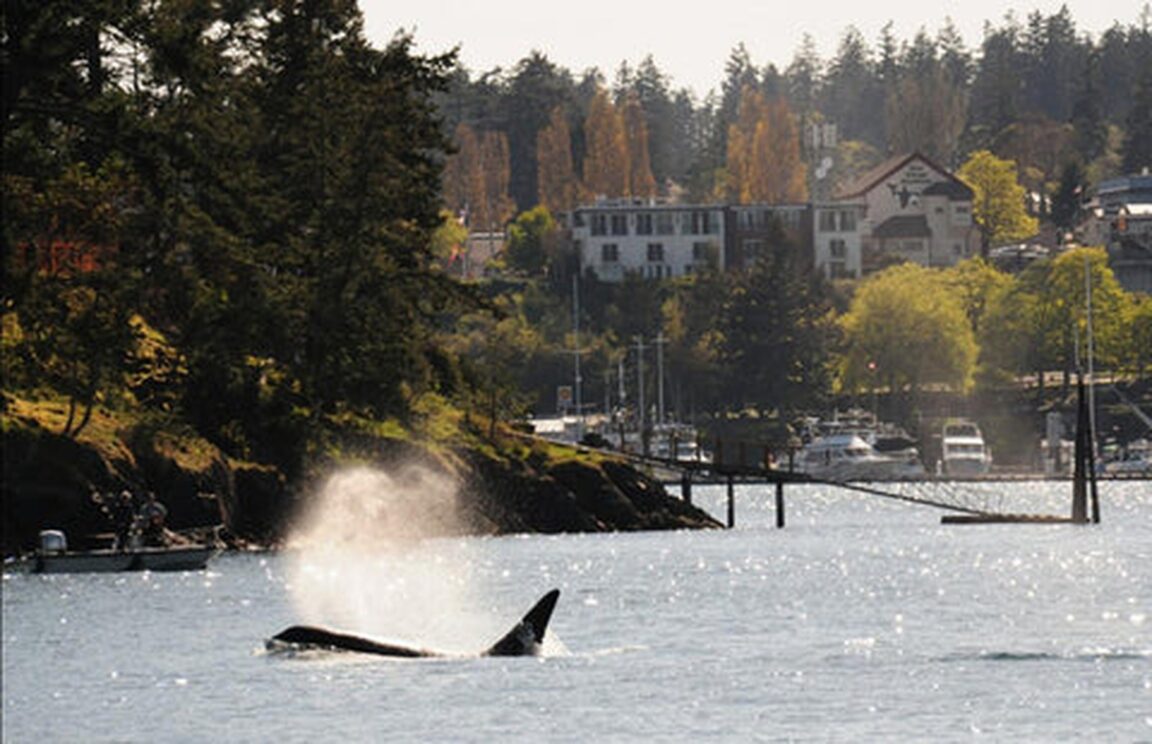
Facts checked 16 November 2026 against The Whale Museum’s official site, whalemuseum.org, including its hours and admission page and its whale watching guidance, and Washington State Parks information for Lime Kiln Point. Hours and admission change with the season, so confirm them on the official site before you travel. Photo: a transient killer whale breathing at the surface off Friday Harbor. Photo by Jeff Friedman, Maya’s Legacy, via The Whale Museum official site, whalemuseum.org.