 Maya Chen
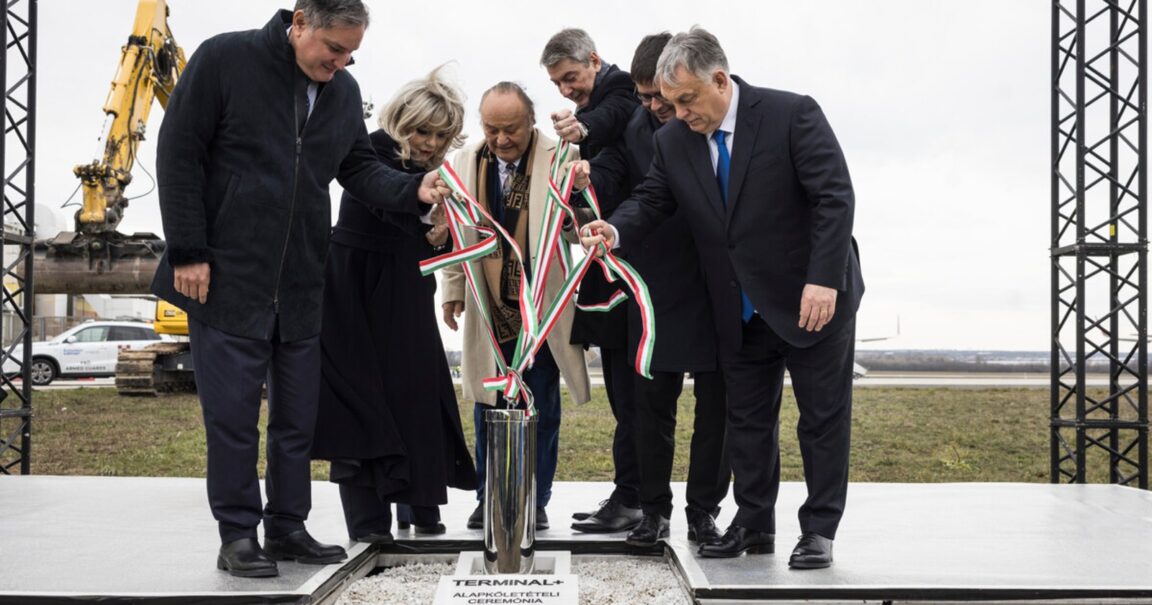
Budapest Airport’s third terminal is no longer just a plan: the foundation stone of the new terminal complex at Ferenc Liszt International Airport was laid on 20 February 2026, launching a 1 billion euro development programme that will add a new 35,000 square metre main terminal, a new pier and a much larger apron over the next ten years. For a first time visitor, though, the sequence that matters is simpler. You will still arrive at Terminal 2, the airport’s only working terminal, for years yet; the new building is a construction programme beside a live airport, not a facility you can book around. This explainer sets out what is being built, what the separate road and rail debate means, and what is already changing inside Terminal 2 while you wait.
Quick Facts
- Milestone: Foundation stone of the new terminal complex laid on 20 February 2026 (VINCI Airports, the airport’s co-owner and operator partner).
- Programme cost: 1 billion euros over the next 10 years, among the largest airport investments in Central Europe in the coming decade.
- Main elements: A new main terminal of 35,000 square metres with centralised check in; a new passenger pier of 19,000 square metres; apron expansion over 132,000 square metres with 13 new aircraft stands and a dedicated de-icing area; car park, road and curbside works.
- Why now: The airport handled nearly 20 million passengers in 2025, and the programme is designed for an increase of about 10 million more.
- Ownership: The Hungarian state holds 80 percent through Corvinus and VINCI Airports 20 percent, since the 2024 buyback.
- Terminal 2 meanwhile: Check in hall reconfiguration, upgraded security lanes, reoriented automatic gates, a dedicated lane for passengers with reduced mobility, families and Fast Track users, and an expansion of Pier B for non-Schengen arrivals have already begun.
- Access today: No rail link exists yet. The 100E airport bus runs to Deák Ferenc tér in the centre, and the 200E bus runs to Kőbánya-Kispest for metro line M3.
- Access plans: A separate government package, about 2.5 billion euros in total, promises a widened six lane airport expressway by the end of 2028 and a direct rail link by 2035.
What exactly is being built?
The programme VINCI Airports launched in February 2026, sometimes discussed in Hungary under the name Terminal Plus, has three physical parts. The first is the new main terminal itself, 35,000 square metres with centralised check in facilities, redesigned security screening areas and integrated commercial space, intended to replace the split 2A and 2B arrangement as the airport’s front door. The second is airside: a new 19,000 square metre passenger pier and an apron expansion covering 132,000 square metres, adding 13 aircraft stands and a dedicated de-icing area. The third is landside: refurbished car parks, improved internal and external roads and curbside upgrades matched to the new building.
The groundwork predates the ceremony. Budapest Airport announced in December 2024 that preparations for Terminal 3 had started, beginning with earth backfill for the apron extension, whose first phase lets 12 aircraft be handled simultaneously; through 2025, contractors were moving about 86,000 cubic metres of earth on the airside site and building a 360 metre retaining wall while the airport operated normally around them. The airport’s stated design goal is a terminal built around its target of cutting airport emissions to zero by 2030. What officials have not published is a single opening date for the new terminal: the airport speaks of a ten year programme, and earlier statements expected all elements of the terminal development to be completed within eight years of the 2024 start of preparations, so read any precise year you see elsewhere as an estimate layered on top of a phased programme.
Why is a third terminal needed at all?
Because Terminal 2 is carrying traffic it was never sized for. Budapest handled nearly 20 million passengers in 2025, a record, and VINCI Airports puts traffic growth at 35 percent since it took over operations alongside the Hungarian state. The state’s own forecasts have moved the same way: in December 2024 the airport expected 20 million passengers by 2030, a figure effectively reached five years early, and at the February 2026 ceremony the prime minister spoke of 25 million a year by the end of the decade if growth holds. Terminal 1 has been closed since 2012, so every one of those passengers passes through the 2A and 2B buildings. The new terminal is designed to add room for about 10 million additional passengers a year.
What is happening inside Terminal 2 in the meantime?
This is the part of the programme a traveller can actually see in 2026 and 2027. VINCI Airports says targeted improvements to Terminal 2 have already begun so the existing buildings hold up until the new facilities arrive. The check in hall is being reconfigured to expand space and add counters. Security lanes are being upgraded for faster screening with advanced screening systems, automatic gates have been reoriented, and a dedicated lane is being created for passengers with reduced mobility, families and Fast Track users. Pier B, which handles non-Schengen arrivals, will be expanded to add capacity there as well. In practice: expect hoardings, moved counters and changing walking routes inside Terminal 2 across the programme, and build a little more time into departures than the airport’s size might suggest. The experience mirrors what other fast growing airports have done while building, as our coverage of Male Velana International Airport’s new terminal and of Ho Chi Minh City Tan Son Nhat Terminal 3 shows from the passenger side.
What about the road and rail access debate?
Keep two budgets separate, because Hungarian announcements often blend them. The airport’s own 1 billion euro programme covers the terminal, pier, apron and landside works described above. The access links belong to a separate government package of about 2.5 billion euros in total for the airport area, set out by construction and transport minister János Lázár in autumn 2025. Its road element widens the airport expressway to three lanes each way over about 12 kilometres, costed at about 200 billion forints and scheduled for completion by the end of 2028. Its rail element is a new line of about 27 kilometres from Kőbánya towards Monor, designed for speeds up to 160 kilometres per hour, valued at about 1 billion euros as a concession investment and planned for 2035; after requests from Budapest’s city government, the plan includes a stop at Rákosrendező as well as the airport station.
For visitors, the honest summary is that the rail link is a 2035 story, not a trip planning tool. Budapest remains an airport with no trains: the working options today are the 100E airport express bus to Deák Ferenc tér, the 200E bus to Kőbánya-Kispest where metro M3 begins, licensed taxis from the terminal rank, and pre-booked transfers. Roadworks on the expressway corridor are the access change most likely to affect a trip before 2030, so allow margin for airport drives once that widening is under way.
Frequently Asked Questions
When will Budapest Airport Terminal 3 open?
No single opening date has been officially confirmed. The foundation stone was laid on 20 February 2026 and VINCI Airports describes a 1 billion euro programme over the next 10 years, delivered in phases; the Hungarian government’s wider airport package frames its elements, including the terminal, against a 2035 horizon. Plan on using Terminal 2 for any trip you are booking now.
Which terminal do flights use today?
Terminal 2, split into 2A, mainly Schengen flights, and 2B, mainly non-Schengen flights, in one connected complex. Terminal 1 has been closed since 2012 and handles no passengers.
Is there a train from Budapest Airport to the city?
Not yet. A direct rail link is part of the government’s access package and is planned for 2035. Today, use the 100E bus to Deák Ferenc tér, the 200E bus to Kőbánya-Kispest for the M3 metro, or a taxi.
Will the Terminal 2 works affect my trip?
Possibly, at the margins. Check in hall reconfiguration, security lane upgrades and the Pier B expansion are under way inside a working terminal, so counters, queues and walking routes can change between visits. Arrive with extra time and follow the airport’s current signage and flight information.
Who owns and runs Budapest Airport now?
The Hungarian state bought the airport back in 2024, holding 80 percent through Corvinus, with VINCI Airports holding 20 percent and acting as the operator partner. The terminal programme is being delivered under that ownership.
How busy is Budapest Airport?
It handled nearly 20 million passengers in 2025, a record year, and the new terminal is designed to add capacity for about 10 million more passengers a year as growth continues.
Sources checked 17 November 2026: VINCI Airports newsroom, foundation stone and programme announcement, 20 February 2026; Budapest Airport (bud.hu), Preparations for the construction of Terminal 3 under way, December 2024, including the apron works and eight year completion expectation; Hungarian government announcements reported October 2025 on the 2.5 billion euro access package, the expressway widening by end 2028 and the rail link by 2035; Budapest Times reporting of the 20 February 2026 ceremony. Programme dates are the owners’ published plans and can move.