 Jordan Ellis
Castel del Monte is done properly in one order: book the ticket before you arrange the transport, arrive for the first entry of the day, and treat the shuttle, not the castle, as the timing risk. The castle itself is simple on paper. It opens every day, from 9:00 to 17:45 in the winter season that runs from 1 October to 31 March, with last admission 45 minutes before closing, and a full price ticket costs 10 euros, with a reduced ticket at 2 euros and a combined ticket covering the Swabian Castle in Trani at 15 euros. What catches visitors out is everything around those numbers: the castle stands alone on a hill about 18 kilometres from Andria, private cars stop at the car park below it, a small shuttle covers the last stretch for 2 euros return, and the public route from Andria depends on a local bus, line 6, whose timetable changes through the year. Do the castle first, in the morning light and the morning quiet, then give Andria itself the afternoon, because the town that most visitors use as a bus stop is worth the second half of the day on its own.
Quick Facts
- Site: Castel del Monte, Via Castel del Monte, Andria, Apulia; the octagonal castle of the Emperor Frederick II, first documented in 1240 and a UNESCO World Heritage Site since 1996, per the Direzione regionale Musei Puglia
- Opening hours: Every day, 10:00 to 18:45 from 1 April to 30 September, and 9:00 to 17:45 from 1 October to 31 March; last admission 45 minutes before closing
- Tickets: Full price 10 euros, reduced 2 euros; combined Castel del Monte plus Castello Svevo di Trani ticket 15 euros full and 4 euros reduced; tickets online through the official museum channels or at the site ticket office
- Regional pass: The Puglia Musei Card costs 20 euros and covers the sites of the Direzione regionale Musei nazionali Puglia for 6 months, with two named exclusions elsewhere in the region
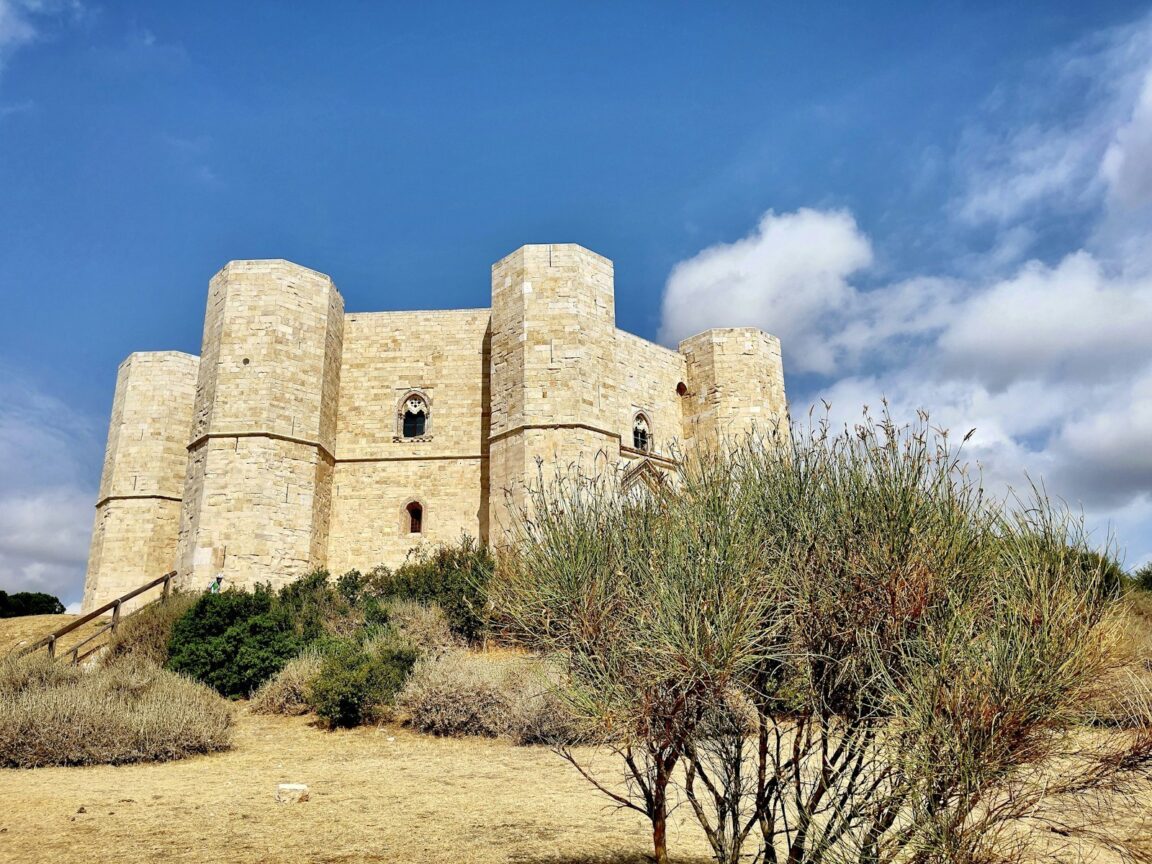
- The building: A perfect octagon with eight octagonal towers, an octagonal courtyard and sixteen trapezoidal rooms, eight on each floor, built in local limestone with coral breccia and marble detailing
- Car access: Cars do not reach the castle door; park in the car park below the hill and take the shuttle up, about 2 euros return, or walk the final stretch
- Public transport: ASA bus line 6 from Andria, from the terminal at Piazza Marinai d Italia, takes about 45 minutes to the car park; a suburban single costs 1.50 euros and tickets are not sold on board
- Time needed: About 2 hours at the castle itself; half a day door to door from Andria by bus, a full and better day paired with Andria old town
- November timing: Winter hours apply, so last admission is 17:00; plan the castle for the morning and Andria for the afternoon, not the other way round
How do tickets and entry timing actually work?
The official listing from the Direzione regionale Musei Puglia is the source that governs, and it is reassuringly plain: open every day, seasonal hours, last admission 45 minutes before closing, full price 10 euros and reduced 2 euros. There is no separate timed entry regime to decode beyond choosing your visit slot when you book online, and the honest timing pressure is at the end of the day, not the start: in winter the doors close at 17:45 and the last visitor is admitted at 17:00, which makes a late afternoon arrival from Bari a gamble rather than a plan.
Book online ahead of time at weekends, on public holidays and in high summer, when the hill and its single shuttle fill up; on a quiet November weekday the site ticket office is a perfectly good option. Two money details are worth knowing before you choose. The combined ticket with the Swabian Castle of Trani, 15 euros full price against 10 euros for the castle alone, pays for itself if Trani is anywhere in your Apulia itinerary, and Trani, with its cathedral on the harbour, pairs naturally with this trip. And the Puglia Musei Card, at 20 euros for six months of the regional museum network, overtakes the single tickets quickly for anyone touring several state sites in the region. Entry is free for under 18s under the state museum rules, and Italian state museums run free admission on the first Sunday of the month, which is glorious value and the busiest morning of the month in equal measure.
How does the shuttle system work, and where do cars stop?
Nobody drives to the castle door. The approach road ends at the visitor car park below the hill, on the SS 170 dir. A, and the final stretch is covered by a small shuttle that runs between the car park and the monument, roughly every 10 minutes in the visiting day, for 2 euros return per person. That shuttle fare is separate from admission, separate from parking, and separate from the Andria bus, so the full public transport stack from Andria is 1.50 euros each way on bus line 6 plus 2 euros for the shuttle, on top of the 10 euro ticket. Drivers pay for the car park itself as well, listed at 5 euros for a car in current visitor information. Walking up from the car park is the free alternative and gives the best sustained view of the octagon as you approach, which on a clear winter morning is worth the climb.
The trap in the system is seasonality. Bus line 6 timetables change through the year, and the published version consulted for current visitor guidance ran only into early November, so the winter pattern for your exact date has to be checked on the ASA site before you build the day around it. Buy the bus ticket before you board, through the DropTicket app or an authorised seller, because tickets are not sold on the bus, and sellers keep shop hours, which matters on Sundays. If the bus pattern fails you, a taxi from Andria is the fallback, priced on the day; agree it before you set off, and arrange the return pickup at the car park, not at the castle.
What are you actually looking at inside the octagon?
A building organised around a single number. The official museum description lays out the geometry: an octagonal plan, eight octagonal towers set into the eight corners, an octagonal courtyard at the centre, and sixteen trapezoidal rooms, eight on each of the two floors, their vault keystones carved with human, animal and plant motifs. The materials do the decorating: pale local limestone against coral breccia and marble, most famously around the main portal. The castle is built directly on a bank of rock on its hill at about 540 metres, in what is now the Alta Murgia country inland from Andria.
The first document the museum can date is from 1240, and the patron was Frederick II of Swabia, Holy Roman Emperor, whose court moved between the cultures of northern Europe, the Muslim world and classical antiquity, the mixture UNESCO cited when it inscribed the castle in 1996 as a unique masterpiece of medieval architecture. What the building was for is still argued, fortress, residence or something more symbolic, and the museum itself notes that the defensive term castrum sits alongside evidence of a residential and ceremonial reality. For the visitor the argument is the exhibit: the rooms are largely empty, so the proportions, the light and the repeated eight are what you have come to see, and a slow circuit of both floors, reading each room against the courtyard geometry, is the right pace. Allow about two hours and resist photographing only the exterior, striking as it is; the courtyard is where the design explains itself.
For the same slow, order first approach applied to a Roman site, see our guide to Hadrian Villa done properly, and for another Puglia to Sicily pairing in the same trip, Valley of the Temples done properly.
How should you pair the castle with Andria?
Andria is 18 kilometres away and is the castle gateway town, but treat it as the second act, not a waiting room. The sequence that works: an early bus or drive out, the castle at opening, back down by shuttle and bus around midday, then Andria old town for lunch and the afternoon. Andria rewards the hours. Its historic centre holds the cathedral and a dense, lived in street pattern built on the olive oil wealth of the surrounding plain, and the town gives its name to Burrata di Andria, the protected cheese made across this countryside, which is the correct thing to order at lunch in the town that named it. If you are driving, the pairing extends easily: Trani and its harbour cathedral are the natural third point of the day, and the combined castle and Trani ticket described above exists precisely for that triangle.
Base choice follows the same logic. Sleep in Andria for the earliest castle start and the calmest logistics, in Trani for the sea and the evening scene, or in Bari for the widest transport net, accepting the longest morning transfer. In November, with the castle closing at 17:45 and last admission at 17:00, the morning first order matters more than the base: whichever town you sleep in, be at the car park shuttle with the day still young, and let the towns take the short winter afternoon, when their cafes and churches are lit and the castle hill is dark.
Frequently Asked Questions
How much does Castel del Monte cost in total by public transport?
From Andria, the stack is 10 euros admission, plus 1.50 euros each way on ASA bus line 6, plus 2 euros return for the car park shuttle, a total of 15 euros per adult at full price. Drivers add parking, listed at 5 euros for a car, and the same 2 euro shuttle per person.
What are the opening hours in November?
Winter hours: every day from 9:00 to 17:45, from 1 October to 31 March, with last admission at 17:00, 45 minutes before closing. Summer hours, 1 April to 30 September, are 10:00 to 18:45. The hours and prices above are from the Direzione regionale Musei Puglia official listing, checked on 17 November 2026.
Can I drive up to the castle entrance?
No. Access to the final stretch is regulated. You leave the car in the car park below the hill and continue by the shuttle, about every 10 minutes for 2 euros return, or on foot. The walk up gives the best approach views of the octagon.
Is the combined Trani ticket worth it?
If Trani is in your trip, yes. The combined Castel del Monte and Castello Svevo di Trani ticket costs 15 euros full price, against 10 euros for the castle alone and a separate full price at Trani. Trani also pairs naturally with Andria as a day triangle. The Puglia Musei Card at 20 euros for six months is better still for a multi site regional tour.
Do I need to book tickets in advance?
Booking online through the official museum channels is recommended for weekends, holidays and high summer, and it lets you fix your slot before arranging transport. On quiet winter weekdays, buying at the site ticket office is fine. Either way, build the day around the last admission time, 45 minutes before closing.
How long should I allow for the visit?
About 2 hours at the castle covers both floors, the courtyard and the approach at a proper pace. From Andria by bus, allow half a day door to door, including the roughly 45 minute bus ride each way and the shuttle. Paired with Andria old town, it becomes a full and well balanced day.