 Jordan Ellis
A weekend in Eureka Springs works best on foot, uphill and downhill, through a Victorian town with no ordinary grid to lean on. Base yourself near Spring Street, ride the trolley instead of fighting for parking, give the 1886 Crescent Hotel its hilltop hour, and save the quietest part of the trip for Thorncrown Chapel, the glass church in the woods west of town. That is the whole formula. Everything else is gravy, galleries and ghost stories.
Quick Facts
- Setting: A Victorian resort town in the Ozark Mountains of northwest Arkansas, founded in 1879 around its natural springs.
- Thorncrown Chapel: 48 feet tall, 425 windows and over 6,000 square feet of glass, per the official Eureka Springs visitor site. No admission charge; donations accepted.
- Crescent Hotel: Opened in 1886 at 75 Prospect Avenue, per the 1886 Crescent Hotel and Spa, which calls it Arkansas’ symbol of hospitality.
- Chapel hours pattern: April to November, 9am to 5pm, with earlier Saturday closings for weddings; check thorncrown.com before a late visit.
- Getting around: Eureka Springs Transit trolleys serve the historic loop; an adult all day pass has been listed at $6, so confirm the current fare at the Transit and Welcome Center.
- Historic core: The entire downtown is listed on the National Register of Historic Places, with hundreds of Victorian buildings.
Why the Town Itself Is the Attraction
Most small town weekends are built around one sight, with the streets as filler. Eureka Springs inverts that. The streets are the sight: winding, stacked lanes with no level ground to spare, limestone retaining walls, hidden staircases, and Victorian storefronts and cottages fitted into the hillsides at improbable angles. Spring Street and Main Street carry the densest run of shops, galleries and cafes, but the pleasure is in the detours, up a side lane to a spring grotto, down a staircase that deposits you a full storey below where you started, past porches that face each other across hollows. Plan a weekend here as a walking trip first and a checklist second, and the town rewards the order.
The springs explain the town. Nineteenth century visitors came for the water, and the resort that grew around the springs kept its Victorian fabric because later booms passed it by. Basin Spring Park, at the heart of downtown, still anchors the story, and the Basin Park Hotel, the Crescent’s downtown sister, stands a few steps away. Everything in the modern visitor economy, the trolleys, the ghost tours, the weddings at Thorncrown, hangs off that original promise of restorative water and mountain air.
The Crescent Hotel: The Hilltop Hour
The 1886 Crescent Hotel and Spa sits above the town at 75 Prospect Avenue, a limestone palace opened in 1886 and still operating as a full service resort with a spa, dining and wide lawns looking over the Ozarks. Even for visitors sleeping elsewhere, it earns a dedicated visit. Walk or ride the trolley up in the late afternoon, take in the grounds and the view, and stay for the hotel’s famous second life after dark: the Crescent markets itself as America’s Most Haunted Hotel and runs nightly ghost tours through its corridors and down to the old morgue, a legacy of the building’s 1930s chapter as a fraudulent cancer hospital. Book ghost tour tickets ahead on a weekend; they are the town’s most reliably sold out evening activity.
Daytime at the Crescent is gentler. The hotel is a member of Historic Hotels of America, and its public spaces, verandas and gardens are built for lingering rather than processing. Pair it with the walk back down through the Upper Historic Loop, where Prospect Avenue and its side streets hold some of the finest Victorian houses in town, their turrets and gingerbread trim doing the quiet work that no single museum could.
Thorncrown Chapel: The Quiet Hour
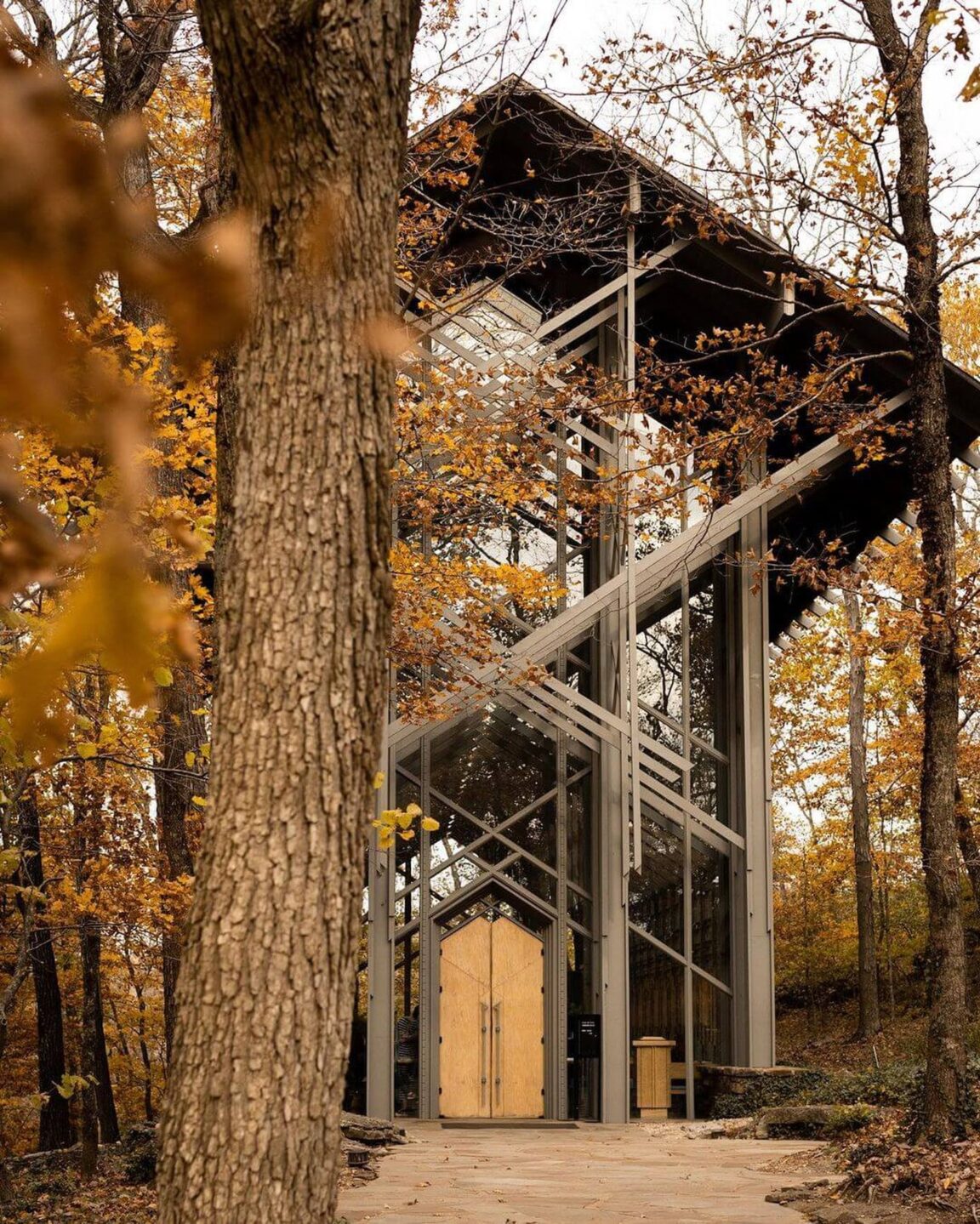
West of town on Highway 62, Thorncrown Chapel is the counterweight to the Crescent’s theatre. Designed by E. Fay Jones, an apprentice of Frank Lloyd Wright, and opened in 1980, the chapel stands 48 feet tall with 425 windows and more than 6,000 square feet of glass, carried on wooden trusses whose only steel forms a diamond pattern, over a foundation of more than 100 tons of native stone. It won the American Institute of Architects’ national Honor Award in 1981 and its Twenty five Year Award in 2006, and the visitor site estimates some 8 million people have visited across 45 years.
There is no admission charge, though donations are gratefully accepted, and the etiquette is simple: this is an active place of worship and reflection, not a photo set. Go in the morning if you can, when the woodland light the design was built to filter is at its best and tour groups are thinnest. Note the practical trap in the chapel’s calendar: it closes to the public at 2pm on Saturdays for weddings, and more than 250 wedding ceremonies a year take place here, so a late Saturday arrival is the one scheduling mistake this trip punishes reliably. Sunday services run at 9am and 11am in season and visitors are welcome, but sightseeing and services are different visits; choose which one you are making.
A Weekend, Sequenced
Arrive Friday and walk the lower town as the lights come on, Spring Street galleries, dinner in the historic district, and an early night. Saturday belongs to the loop: trolley up to the Crescent in the morning, the Upper Historic Loop on foot, downtown museums and shops in the afternoon, and a ghost tour after dark, at the Crescent or back at the Basin Park Hotel. Sunday is for Thorncrown, early, before the drive home, with a stop at one of the springs on the way back through town. That order puts the town’s loudest pleasure, its ghost lore, in the middle, and its quietest, the chapel, at the reflective end, which is how both work best.
Drivers should surrender the car early. Downtown parking is scarce, metered and stacked on hills, while the trolley system exists precisely because the historic streets predate the automobile. Eureka Springs Transit runs colour coded routes around the historic loop and out Highway 62, and an all day pass turns the whole town into a hop on, hop off circuit. The Transit and Welcome Center on West Van Buren is the place to confirm current fares, hours and route changes, all of which shift with the season.
Side Trips and Sister Towns
Eureka Springs sits comfortably in a wider Arkansas and Victorian town itinerary. Travellers who like its spa town DNA should read our guide to Bathhouse Row in Hot Springs, Arkansas, the state’s other great water cure town, and our winter packing companion for Arkansas spa country. Those collecting preserved nineteenth century main streets will also enjoy our first timer’s guide to Galena, Illinois and our slow walk through the painted ladies of Cape May, New Jersey, two towns that kept their Victorian fabric the way Eureka Springs did, by being bypassed at exactly the right moment.
Frequently Asked Questions
How much does Thorncrown Chapel cost to visit?
Nothing. There is no admission charge, per the official visitor site and the chapel, though donations are gratefully accepted. The chapel can close early, at 2pm on Saturdays, for weddings, so time a visit for the morning.
Who designed Thorncrown Chapel?
Arkansas architect E. Fay Jones, a former apprentice of Frank Lloyd Wright. The chapel opened in 1980, stands 48 feet tall with 425 windows, and received the AIA Twenty five Year Award in 2006.
Do I need to stay at the Crescent Hotel to visit it?
No. The 1886 Crescent Hotel and Spa at 75 Prospect Avenue welcomes day visitors to its grounds, restaurants and spa, and its nightly ghost tours are ticketed separately and open to non guests. Book tours ahead on weekends.
How do I get around Eureka Springs without driving?
Use Eureka Springs Transit trolleys, which loop the historic district and run out Highway 62. Buy passes at the Transit and Welcome Center and confirm current fares and seasonal hours there, as schedules change through the year.
When is the best season for a Eureka Springs weekend?
Spring and autumn suit the town best, with mild walking weather, the springs and gardens at their greenest in spring and Ozark colour in autumn. Summer is lively but hot and crowded; winter is quiet, with reduced trolley and chapel hours.
How long do I need in Eureka Springs?
Two nights cover the essentials comfortably: one full day for the town and the Crescent, and a morning for Thorncrown Chapel. Add a third night for Beaver Lake, Turpentine Creek Wildlife Refuge or a slower pass through the galleries.
Featured image: Thorncrown Chapel, Eureka Springs, Arkansas. Photo via the official Eureka Springs visitor site (visiteurekasprings.com), the destination’s own official visitor website, used with credit.