 Thandiwe Nkosi
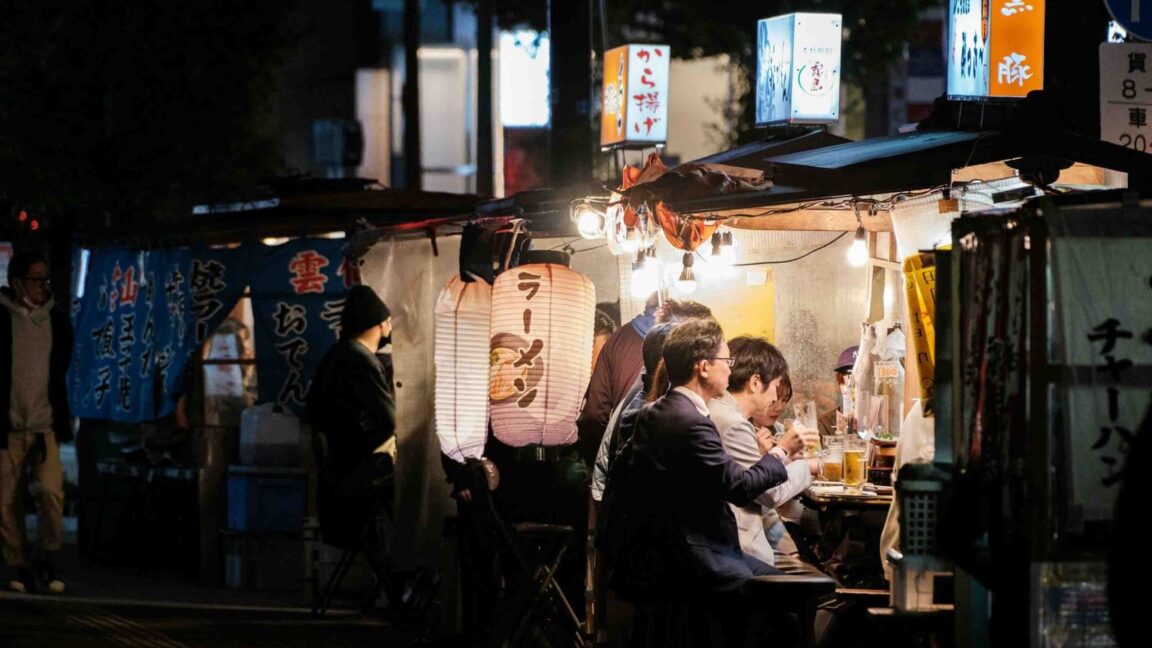
A night at a Fukuoka yatai works like this: you walk a riverbank or a business district pavement after 6pm, find a lantern lit cart with a free stool, sit down shoulder to shoulder with strangers, order a drink and a dish each, eat Hakata ramen, grilled skewers or oden at a counter of around ten seats, pay in cash, thank the owner and move on to the next stall or the night train home. Around 100 licensed yatai trade in Fukuoka, clustered in Nakasu, Tenjin and Nagahama, under a city ordinance in place since 2013 that requires prices to be displayed and keeps the stalls regulated rather than improvised. That is the whole system, and once you know the order to do things in, a first yatai night is one of the easiest and best value food evenings in Japan.
Quick Facts
- What a yatai is: A small mobile food stall, wheeled into place each evening and removed before dawn, with a counter and roughly seven to ten seats
- How many: Around 100 licensed stalls across Fukuoka, protected and regulated under the city yatai ordinance introduced in 2013
- Main clusters: Nakasu, along the Naka River, Tenjin, in the business district, and Nagahama, near the fish market
- Hours: Stalls begin setting up and opening from about 6pm, most are open by 7pm, and many trade until around 1am or later, each stall setting its own days off
- The core order: Hakata tonkotsu ramen, yaki ramen, hitokuchi gyoza, yakitori, oden and mentaiko dishes
- The house rule: Order at least one drink and one dish per person, because your stool is the stall scarcest resource
- Payment: Carry cash, most stalls are cash based and only a minority take cards or QR payment
- Toilets: There are none at the stalls themselves, so go before you sit down and ask the owner for the nearest arranged facility if needed
- Prices: Menus and prices must be displayed under the city rules, so check the board before you sit
- Facts checked: 18 November 2026, against Fukuoka City official tourism guidance and the city yatai rules
Nakasu, Tenjin or Nagahama: which cluster should a first timer choose?
Nakasu is the postcard. A row of stalls lines the southern tip of Nakasu island along the Naka River, lanterns reflect on the water, and this is where most visitors take their first yatai photograph and their first bowl. Expect the longest queues, the most visitors and prices at the upper end of the yatai range. Go here for atmosphere on a first night, arrive close to opening, and accept that you are paying a small premium for the river.
Tenjin is the practical choice. The stalls scattered through the business district serve a salaryman and local crowd alongside visitors, queues tend to be shorter, variety is wide, and this is the cluster to choose if you want a second stall in the same night without a long walk. Nagahama is the connoisseur shortcut: a smaller cluster near the fish market, famous for classic ramen stalls, fewer photographs and a more workaday feel. A good three night pattern is Nakasu first for the scene, Tenjin second for range, and Nagahama last for a late, quiet bowl. If your Japan trip also takes you to the art islands, our guide to Naoshima, its ferries and museum days pairs well with a Kyushu to Setouchi route, and our explainer on Japans eVisa single entry rules is worth reading before you book flights.
What should you order, and in what order?
Start with the drink, because the drink order is how you claim your stool politely. Beer or a local shochu based drink is standard, and a soft drink counts for anyone not drinking alcohol. Then order in waves rather than all at once, because the grill and the pot work in front of you and the owner paces the counter.
The essential first dish is the one the city is famous for. Hakata ramen is a rich tonkotsu pork bone broth with thin, straight noodles, and the local custom is kaedama, a second helping of noodles ordered into the same broth when the first lot runs out, rather than a whole second bowl. Its grilled sibling, yaki ramen, fries those noodles and broth down on a hot plate and is a yatai born dish. Follow with hitokuchi gyoza, the bite sized dumplings Fukuoka prefers, a round of yakitori skewers from the charcoal grill, and oden, the simmered daikon, egg and fish cakes that sit in broth at almost every counter. Mentaiko, spicy cured pollock roe, is the flavour to chase across menus: on rice, in tamagoyaki omelette, on grilled chicken wings and folded into small plates that rarely exist outside this city. Save motsunabe, the offal hotpot, and mizutaki, the chicken hotpot, for a sit down restaurant on another night, because those are Fukuoka specialities built for a table, a burner and more time than a yatai stool should hold.
What is the etiquette that actually matters at a ten seat counter?
Five rules cover almost everything. Go in a small group, because a party of six can take most of a stall and large groups will be split or turned away at busy times. Order at least one drink and one dish per person, and do not share a single bowl between two stools. Do not keep a seat with a bag while others wait, and do not linger over an empty glass when a queue has formed, because seat turnover is how the stall earns its living. Check the displayed prices before ordering anything that is not on the board, and ask the price of off menu suggestions before accepting them. And finish cleanly: ask for the bill, pay in cash with smaller notes where you can, thank the owner, and free the stool. None of this is ceremony. It is the operating system of a very small restaurant, and following it is what makes visitors welcome at the next stall too.
How do you know which stalls are open tonight?
Not all of the roughly 100 licensed stalls trade every night. Each stall sets its own days off, bad weather closes stalls without notice, and a stall that was famous last year may have retired, because licences are personal to the operator. The city official tourism service runs a yatai search and a FUKUOKA GUIDE LINE account that shows which stalls are trading and where, so check it on the day rather than building a night around a blog list. Build a plan B into the evening: pick a cluster, not a single stall. In Nakasu and Tenjin the next good counter is usually a two minute walk, and treating the cluster as the destination removes the disappointment from any one closure. Arriving between 6pm and 7pm gives the shortest wait at popular stalls, while the crowd peaks later in the evening, so an early first stall followed by a later second stall is the pattern that works best.
What should you book ahead, and what should you leave loose?
Almost nothing at the yatai themselves. Stalls do not take reservations, and the queue is the booking system. Book ahead the things around the night instead: a hotel within walking distance of Nakasu or Tenjin so the late finish needs no transport planning, any sit down restaurant you want for a hotpot night, and popular daytime tours on the same trip. Carry the cash before you go out, in a mix that includes 1,000 yen notes, because finding change for large notes at a small counter helps nobody. Dress for the season rather than the restaurant you wish it were: yatai are outdoors, riverside Nakasu is cold in winter even with the plastic sheeting stalls drop around their counters, and summer nights are humid. None of this needs an app, a guide or a package. It needs an early start, cash, and a willingness to point at the menu board and smile.
Frequently Asked Questions
How much cash should you bring for a yatai night?
Bring at least 3,000 to 5,000 yen per person in cash, including smaller notes. Most stalls are cash based, only a minority accept cards, and some newer stalls take QR payment, but none of that should be relied on.
Do you have to order alcohol at a yatai?
No. The expectation is at least one drink and one dish per person, and soft drinks count as the drink. What matters is that every seat orders, because the stall has only around ten of them.
Can you take food away from a yatai?
No. Under the city operating rules a yatai serves food to eat at the stall, not to take away or have delivered. Sit down, eat there, and treat it as a tiny restaurant rather than a food truck.
Are yatai open every night?
No. Each stall sets its own days off and bad weather can close stalls. Check the city official yatai information or its FUKUOKA GUIDE LINE account on the day to see which stalls are trading that night.
Which area is best for a first yatai night?
Nakasu for the riverside scene and the classic first bowl, Tenjin for shorter queues and variety, and Nagahama for classic ramen with a local feel. Arrive close to 6pm at any of them for the easiest seat.
Is raw fish served at yatai?
No. City rules mean yatai serve cooked food, so dishes such as goma saba, the sesame mackerel speciality, belong to an izakaya or restaurant meal rather than a stall counter.