 Sofia Rossi
Lord Howe Island runs the simplest visitor rule in Australia: there are only 400 licensed tourist beds on the island, so there can never be more than 400 visitors at one time, and once the beds are booked, the island is full no matter what the flight schedule says. The Lord Howe Island Board, the island’s governing authority, layers an environment levy on top, collected inside your airfare if you fly with the scheduled airlines, and strict biosecurity checks on arrival. Book the bed first, then the flight, and the whole system becomes easy. This explainer follows the Board’s own published rules, checked on the day of writing.
Quick Facts
- The cap: 400 licensed visitor beds, in place since 1982, the year the island group joined the UNESCO World Heritage List
- The authority: The Lord Howe Island Board, a NSW statutory authority that manages the island under the Lord Howe Island Act 1953
- The levy: Every visitor pays an environment levy; on scheduled Skytrans Australia and Eastern Air Services flights it is included in the ticket price
- Arriving by boat: The levy is collected with mooring fees; the Board’s 2026/27 schedule lists the environmental levy at $53 per person per visit for vessel arrivals
- Residents: Fewer than 400 permanent residents share the island with those 400 visitors
- On the ground: A 25 km/h island speed limit, bicycles as the default transport, and no mobile phone coverage to plan around
How does the 400 bed cap actually work?
The cap is not a daily arrival quota, a ballot or a permit lottery, although it is often described as all three. It is a bed licence system. The Board licenses a fixed total of 400 tourist beds across the island’s guesthouses, self contained apartments, beach houses and lodges, and accommodation providers cannot legally sell a 401st bed. Because every visitor must sleep somewhere, the bed count is the visitor count, enforced by infrastructure rather than by inspectors at the airport. The limit has held since 1982, the same year the Lord Howe Island Group was inscribed on the World Heritage List, and it is the single decision most responsible for how the island still looks: roughly 70 percent of Lord Howe is Permanent Park Preserve, where development is prohibited.
The practical consequence is that scarcity arrives early and politely. Peak periods, the warmer months and school holidays, can book out far ahead, and a waitlist for a lodge is a waitlist for the island itself. Travellers used to levy systems elsewhere, such as the one explained in our guide to New Zealand’s visitor levy and NZeTA, will find Lord Howe’s version older and blunter: New Zealand charges you to come; Lord Howe simply runs out of beds.
What is the environment levy, and how do you pay it?
The Board states the rule plainly: all visitors to the island are required to pay an environment levy to the Board. How you pay depends on how you arrive. If you fly in with Skytrans Australia or Eastern Air Services, the island’s scheduled airlines, the levy is included in your ticket price and there is nothing separate to pay. If you arrive by private aircraft or charter, the levy is collected when you pay your landing fees. If you arrive by water, it is collected when you pay your mooring fees; the Board’s published fees schedule for 2026/27 lists the environmental levy for vessel arrivals at $53 per person per visit, not payable for a one night transit stop.
The money is not general revenue. The Board says levy funds support its environmental programmes, including weed control, protection of endemic threatened species and habitat rehabilitation, the unglamorous work that keeps a World Heritage island intact. It works the way the fee in our Bali tourist levy explainer is supposed to work, with one difference: on Lord Howe the levy is bundled into the fare, so compliance is automatic and there is no separate payment portal to forget.
So what is the correct booking sequence?
Bed, then flight, then everything else. Step one: choose your dates with flexibility if you can, because your first choice of week may simply be full. Step two: book the accommodation itself, directly with a licensed property, and treat the confirmation as your entry ticket to the island, because functionally it is. Step three: book flights to match the confirmed bed nights, on the scheduled services from Sydney, a flight of about two hours on a small aircraft. Step four: pack for the island’s baggage discipline and biosecurity rules, which are covered below. Step five: arrange the small things, bicycle hire, tours and restaurant nights, after the big two are locked.
Reversing steps two and three is the classic first timer error. A cheap or convenient flight is worthless if no licensed bed exists for those nights, and beds, not seats, are the binding constraint for most of the year. If your preferred property is full, ask about other licensed properties for the same dates before you move your flights; the island’s stock ranges from simple guesthouses to some of Australia’s most celebrated small lodges, and a different bed on the right dates beats the perfect bed on the wrong ones.
Is there really only one flight a day?
Not as a rule, and this is where the island’s mythology needs correcting. Services vary by airline, day and season, and the schedule is the airlines’ to set. What is true is that the route is thin: small aircraft, a short runway, weather that can interrupt operations, and a passenger pool capped by those 400 beds. On many days the practical effect feels like a single flight day, one arrival wave that the whole island organises itself around, with lodge transfers, bicycle deliveries and lunch hours all keyed to it. Plan as if your flight matters, because it does: if a service is cancelled, there may not be a later one to catch, and your bed night still counts. Build a buffer day into tight onward connections at Sydney, and keep the first afternoon of the trip unplanned.
What happens on arrival?
Expect biosecurity, taken seriously. Lord Howe’s isolation is its ecology, and the Board and NSW agencies screen arrivals, baggage and freight to keep pests and diseases out; the island’s rodent eradication programme, completed after the 2019 operation, is the standing example of what is being protected. Clean your boots and gear before you pack, declare food honestly, and follow the instructions given on the day. After that, the island slows you down by design. The speed limit is 25 km/h. There is no mobile coverage to scroll. Most visitors collect a bicycle and discover that the island is about 11 km long, small enough that the bike is never the slow option. Travellers pairing Lord Howe with the mainland can build the city end with our first time in Sydney itinerary, which makes a good decompression chamber in both directions.
When should you go, and how long do you need?
The island is subtropical and visitable all year. The warmer months bring swimming weather in the lagoon and the strongest demand for beds; the cooler months bring quieter paths, lower occupancy and easier booking, with the water still swimmable for the hardy. Because the cap fixes supply, price and availability move with demand in a way mainland destinations can soften with extra rooms; Lord Howe cannot soften anything. A stay of five to seven nights suits the island’s pace: long enough to walk the main tracks, take a boat to the Admiralty Islands, snorkel the lagoon and still have days with nothing in them, which is the luxury the cap is really selling.
Frequently asked questions
Can you visit Lord Howe Island without booking accommodation?
No, not in any practical sense. The 400 bed licence system means every overnight visitor occupies a licensed bed, and day trips are not a realistic pattern given the flight schedule. Book a licensed property first; that booking is your entry.
How much is the environment levy?
For scheduled airline passengers the levy is included in the ticket price, so there is no separate amount to hand over. For visitors arriving by vessel, the Board’s 2026/27 fees schedule lists the environmental levy at $53 per person per visit, collected with mooring fees and not payable for a one night transit.
Do you need a visa for Lord Howe Island?
Lord Howe is part of New South Wales, Australia, so your Australian entry rules apply exactly as they do for Sydney. International visitors need whatever Australian visa or authority their nationality requires; there is no separate island visa.
What if the island is fully booked?
Then it is fully booked. Try other licensed properties, shift dates, or join a property’s waitlist. There is no overflow accommodation, no camping workaround and no way to buy past the cap, which is precisely how the system is designed to work.
Is there phone coverage and internet on Lord Howe Island?
There is no mobile phone coverage on the island, and internet access is limited and property based. Download maps, confirmations and reading material before you fly, and tell anyone who needs you that you will be properly out of reach.
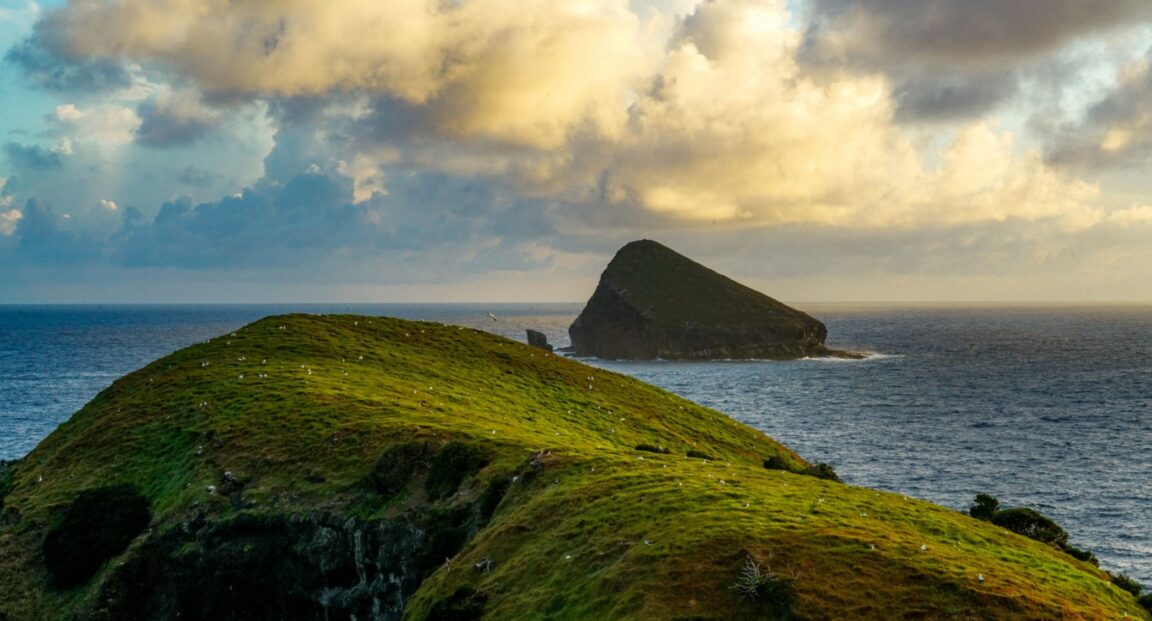
Photo: The coast at Muttonbird Point, Lord Howe Island. Photo from lordhoweisland.info, the island’s official visitor website.