 Thandiwe Nkosi
Pack for Scotland in September by building your bag around one rule: the waterproof shell comes first, everything else layers underneath it, and nothing in the bag only works in one kind of weather. September in Scotland can deliver a mild Edinburgh afternoon, a cold Highland wind and a wet evening within the same day, so the winning system is a proper waterproof outer layer, one warm mid layer you can add or remove in minutes, a set of quick drying base layers, waterproof footwear, and one smarter outfit for Edinburgh evenings that is built from pieces you already wear during the day. Pack that system and the famous four seasons in one day stop being a problem and become a routine you dress for in layers.
Quick Facts
- Edinburgh in September: Met Office 1991 to 2020 averages for Edinburgh Gogarbank show a mean daily maximum of 16.9 degrees C and a mean daily minimum of 9.4 degrees C.
- Edinburgh rain: September averages 55.2 mm of rain, falling on about 10.5 days with 1 mm or more, with about 125.5 hours of sunshine across the month.
- Scotland as a whole: The Met Office Scotland regional average for September is cooler and wetter, at 14.8 degrees C by day, 7.9 degrees C at night and 123.3 mm of rain over about 14.9 days.
- The priority item: A waterproof shell with a hood, worn over a warm mid layer, matters more than any single thick coat.
- Footwear: Waterproof shoes or boots with grip, because wet cobbles in Edinburgh and wet paths in the Highlands are both part of a normal September day.
- Bag strategy: Layers that mix and match, merino or synthetic base layers you can rewear, and one smart layer for evenings instead of a separate evening wardrobe.
What Is the Weather in Scotland in September, Really?
The honest answer is two climates in one trip. Edinburgh, on the drier east coast, averages highs near 17 degrees C in September according to the Met Office station at Gogarbank, with nights dropping to around 9 degrees C and rain on roughly one day in three. That is a city where a light jacket can feel fine at midday and completely inadequate by 8 pm. The Scotland wide average tells the wetter story: across the country, September averages about 123 mm of rain, more than double the Edinburgh figure, which reflects how much wetter the west and the Highlands are than the capital.
Wind is the third variable, and it is the one averages hide. Edinburgh Gogarbank records a mean September wind speed of about 7.5 knots, and exposed Highland ground feels considerably stronger gusts than a sheltered city station suggests. Wind strips warmth from a thin jacket faster than falling temperature alone, which is why the mid layer maths in this guide matters: in still air at 14 degrees C a fleece feels generous, while in wind on an exposed ridge the same day can feel closer to single figures. Pack for the wind chill you will meet on a viewpoint or a station platform, not for the temperature on a forecast app.
Daylight is still generous in early September and shrinks noticeably through the month, so evenings arrive earlier and cooler as a trip progresses. A traveller arriving in the first week and leaving in the third can feel the season turning inside one holiday. That is another argument for layers over bulk: the bag has to cover the warmest plausible afternoon and the coldest plausible evening of the whole trip, not just the first day.
Why Does the Waterproof Shell Come First?
Because rain in Scotland is not an event, it is a background condition. With rain falling on about 10 to 15 days in September depending on where you are in the country, a shell that keeps you dry protects every plan underneath it: the city walk, the train platform wait, the Highland viewpoint and the walk back from dinner. A water resistant jacket that wets out after twenty minutes is the most common packing failure on this trip. Choose a shell that is genuinely waterproof, with a hood that stays up in wind, cuffs and a hem you can cinch, and enough room underneath for a fleece or insulated layer without feeling stuffed.
The shell also doubles as your wind layer. On a dry but blustery day in the Highlands, the same jacket that kept off the morning rain blocks the wind that would otherwise cut through a jumper. That double duty is what earns it the largest share of your packing attention and, if you are choosing where to spend, your money. Everything else in the bag can be ordinary. The shell cannot.
Length matters more than most travellers expect. A shell that covers the top of your thighs keeps rain off the part of your trousers that soaks first and dries slowest. If your shell ends at the waist, add lightweight waterproof overtrousers for Highland walking days. In Edinburgh they will mostly stay in the bag. On a wet path above a glen, they are the difference between finishing the walk warm and finishing it soaked.
How Does the Mid Layer Maths Work for Highland Wind?
Think in three numbers: the temperature, the wind and your activity level. A simple system that covers September is one warm mid layer for still conditions, plus the shell over it for wind, plus a second lighter mid layer or a thicker insulated piece for static moments such as viewpoints, boat trips and waiting for trains. In practice that means packing two mid layers of different weights rather than one heavy coat: a light fleece or merino mid layer for active days, and a warmer insulated jacket that compresses small for cold and still moments.
The maths is about combinations, not items. Base layer alone suits a mild Edinburgh afternoon at 16 or 17 degrees C. Base plus light mid layer suits a breezy city day. Base plus warm mid layer plus shell suits a Highland day where the regional average high is under 15 degrees C and the wind is doing its worst. Three combinations from the same four pieces cover the full September range, and each piece earns its place on at least two kinds of day. Any item that only works in one combination is a candidate to leave behind.
Materials matter for a simple reason: Scotland will get your layers damp, whether from rain that finds a gap or from your own effort on a climb. Wool and synthetic fabrics keep insulating when damp and dry overnight in a hotel room. Cotton does the opposite, staying cold and wet for hours. Build the layer system from merino or synthetic pieces, keep cotton for a single smart shirt or top if you want one, and never rely on denim as your only trouser, because wet denim in Highland wind is one of the fastest routes to a miserable afternoon.
What Should You Pack, Item by Item?
Start with three to four base layer tops in merino or synthetic fabric, mixing short and long sleeves so the same tops work under different combinations. Add one light fleece or merino mid layer and one warmer insulated jacket that packs into its own pocket or a small stuff sack. Pack two pairs of trousers: one sturdy pair for walking days and one smarter pair that works for dinner, both in fabrics that dry faster than denim. If you prefer a dress or skirt for evenings, choose one that layers over the same base layer tops and pairs with the insulated jacket removed and the smart layer added.
For feet, bring waterproof walking shoes or boots as the main pair, already worn in, with soles that grip wet stone. Edinburgh’s Old Town cobbles and the Royal Mile are slippery when wet, and Highland paths mix mud, wet rock and grass in the same mile. Add one smarter pair of shoes for evenings only if they are comfortable enough for a twenty minute walk, because Edinburgh evenings involve hills and cobbles wherever you are staying. Pack merino or synthetic socks in enough pairs to rotate, plus one warmer pair for the coldest day.
Accessories punch far above their weight in September. A warm hat and gloves feel excessive on a mild Edinburgh morning and essential on a windy Highland afternoon, and together they take up less room than a spare jumper. A scarf or neck gaiter seals the gap at the collar where wind enters the layer system. A compact umbrella is useful in the city and nearly useless in Highland wind, so treat it as an Edinburgh extra, never as a substitute for the shell and hood. A small dry bag or a couple of zip bags keep a phone, map and spare socks dry inside a daypack.
For wider context on building a cold weather layer system that transfers to other trips, our guide to packing for Iceland in winter uses the same shell first logic in a colder setting. And if your Scotland trip starts with entry formalities, check the current rules in our explainer on the UK ETA for US travellers before you fly.
How Do You Handle Edinburgh Evenings Without a Second Wardrobe?
September evenings in Edinburgh drop toward that 9 degree C average low, and the city after the festival crowds have thinned is a place of dinners, pubs, theatre and walks home through lit streets. The smart layer strategy is simple: one outfit assembled from trip pieces, upgraded by a single smarter item. Dark trousers you already own in the bag, a clean base layer top in a solid colour, and a smart overshirt, blazer style jacket or fine knit that you also wear as an extra layer on cold days. Nothing in the evening outfit is evening only except, at most, that one smart piece.
Footwear follows the same rule. A clean pair of shoes that can handle wet cobbles beats a delicate pair that confines you to taxis. Restaurants and pubs in Edinburgh are used to walkers and weather; smart in September Scotland means clean, dry and put together, not formal. If you are planning your days as well as your evenings, our guide to Edinburgh in August and festival season explains the city’s rhythm, and September travellers get the same streets with more room to move.
One evening specific addition is worth its tiny space: a fresh top reserved for evenings, kept folded separately so it stays clean and unworn by day. Arriving at dinner in a top that has not climbed Arthur’s Seat that morning changes how the evening feels, and it costs one garment of space. Everything else, including the warm layer for the walk home, is already in the system.
How Do You Fit It All in One Bag?
The layer system is naturally compact because it replaces bulk with combinations. Wear the heaviest items on travel days: boots, the warmer insulated jacket and the heaviest trousers. Pack the shell where you can reach it without unpacking, because the first rain of the trip may arrive between the airport and your first bed. Roll soft layers, use the inside of shoes for socks and small items, and keep the hat and gloves in a shell pocket so the wind kit travels with the wind layer.
Laundry is the other half of the maths. Merino base layers can be reworn and hand washed and will dry overnight in most rooms, which is what makes three to four tops enough for a week or more. Plan one proper laundry stop on a longer trip rather than packing a fresh outfit for every day. A bag built on rewearing and rinsing stays light enough for train travel and station stairs, which matters in a country where the best September itineraries mix city bases with rail journeys into the Highlands.
Finally, leave a little space. Scotland in September is a good place to buy one excellent woollen item that then joins the layer system for the rest of the trip. That is a souvenir that earns its room. What should not expand is the just in case pile: a second heavy coat, extra cotton layers and shoes for hypothetical occasions are the items that make a bag heavy without making a single day warmer or drier.
Frequently Asked Questions
Is a waterproof jacket really necessary for Scotland in September?
Yes. Edinburgh averages rain on about 10.5 days in September and Scotland as a whole on about 14.9 days, based on Met Office 1991 to 2020 averages. A genuinely waterproof shell with a hood is the single most important item in the bag.
How cold does Scotland get in September?
Edinburgh averages a high of 16.9 degrees C and a low of 9.4 degrees C. The Scotland wide average is cooler, at 14.8 degrees C by day and 7.9 degrees C at night, and wind in the Highlands makes exposed places feel colder than those figures suggest.
Do I need proper walking boots, or will trainers do?
Waterproof footwear with grip is the safer choice. Edinburgh’s wet cobbles are slippery and Highland paths are muddy in September. Trainers without waterproofing will soak through on a wet day and dry slowly overnight.
Can I pack for Scotland in September in a carry on?
Yes, if the bag is built on layers rather than bulk. Wear boots and the warmest jacket when travelling, choose merino or synthetic base layers you can rewear and rinse, and keep the evening outfit to one smart layer over daytime pieces.
Should I bring an umbrella to Scotland?
Only as a city extra. An umbrella helps in Edinburgh showers but is hard to use in Highland wind. The hooded waterproof shell is the primary rain protection, and the umbrella never replaces it.
What is the biggest packing mistake for September in Scotland?
Bringing one thick coat instead of a layer system, and relying on cotton and denim. A single coat cannot adapt between a mild afternoon and a cold wet evening, and cotton layers stay cold when damp. Layers of wool or synthetic fabric over a waterproof shell handle the full range.
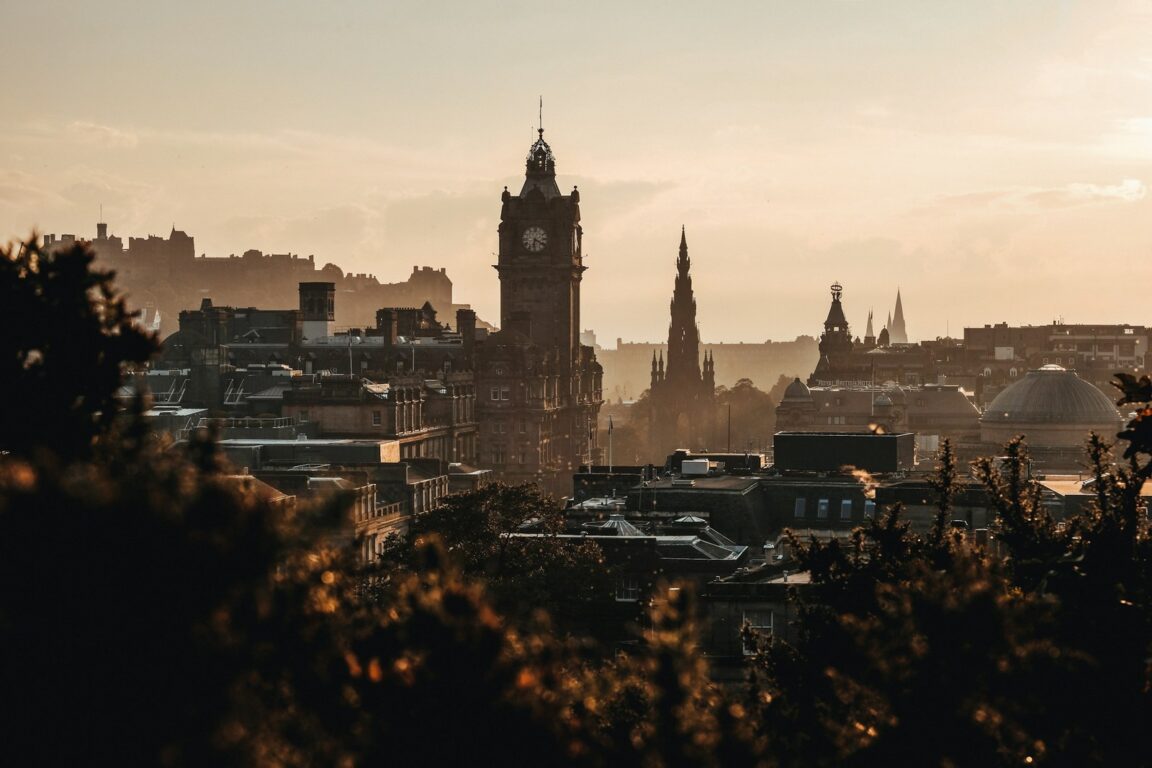
Featured image: Edinburgh at golden hour, showing the Balmoral clock tower, the Scott Monument and Edinburgh Castle, Scotland. Photo via Unsplash, Unsplash License. Weather figures: Met Office 1991 to 2020 climate averages for Edinburgh Gogarbank and the Scotland region, checked 18 November 2026.