 Sofia Rossi
Hacienda AltaGracia is a 50 casita Auberge resort spread across 180 acres of coffee farm, stables and rainforest in the Talamanca foothills above the San Isidro Valley, and its real question is not whether it is beautiful but whether its particular blend of wellness ritual, farm life and horses justifies a rate that sits at the top of the Costa Rican market. On the evidence of the property’s own fact sheet and programme, checked today, the answer is yes for travellers who will actually use the days: the River Bath, the coffee farm, the stables and a 20,000 square foot wellness house are the resort, and the casitas are simply where you sleep between them.
Quick Facts
- Where: Perez Zeledon, southern Costa Rica, in the foothills of the Talamanca Mountains, above the cloud line with views over the San Isidro Valley
- Setting: 180 acres of coffee farm, equine stables, vegetable gardens and untamed rainforest
- Rooms: 50 casitas in total, one and two bedroom layouts, a number with private plunge pools
- Wellness: Casa de Agua, a 20,000 square foot facility, plus the natural River Bath on the Calientillo River
- Signature programmes: Los Jilgueros coffee plantation tour and tasting, horseback riding from the on site stables, the El Cultivo chef’s garden
- Rates: Quoted per stay on the official Auberge site; this guide never prints a rate it has not verified, so check the live calendar before budgeting
How are the casitas laid out, and which one should you choose?
The property’s fact sheet counts 50 casitas floating across the 180 acres, and the spread is the point: rooms are strung through coffee rows, gardens and forest rather than stacked in a block, so a stay feels like borrowing a small farm with a hotel’s staff attached. The one bedroom stock is the bulk of the resort. There are 10 Casita King and 10 Casita Double units, 3 larger Casa units, 11 Casa con Piscina and 8 Casona con Piscina, the piscina layouts adding the private plunge pool that matters most in the warm middle of the day. The Casita King is listed at 1,200 square feet and the Casa con Piscina at 1,500 square feet, sizes that include the terraces these rooms are designed around; indoor outdoor living is the architecture here, with glass walls opening to valley views.
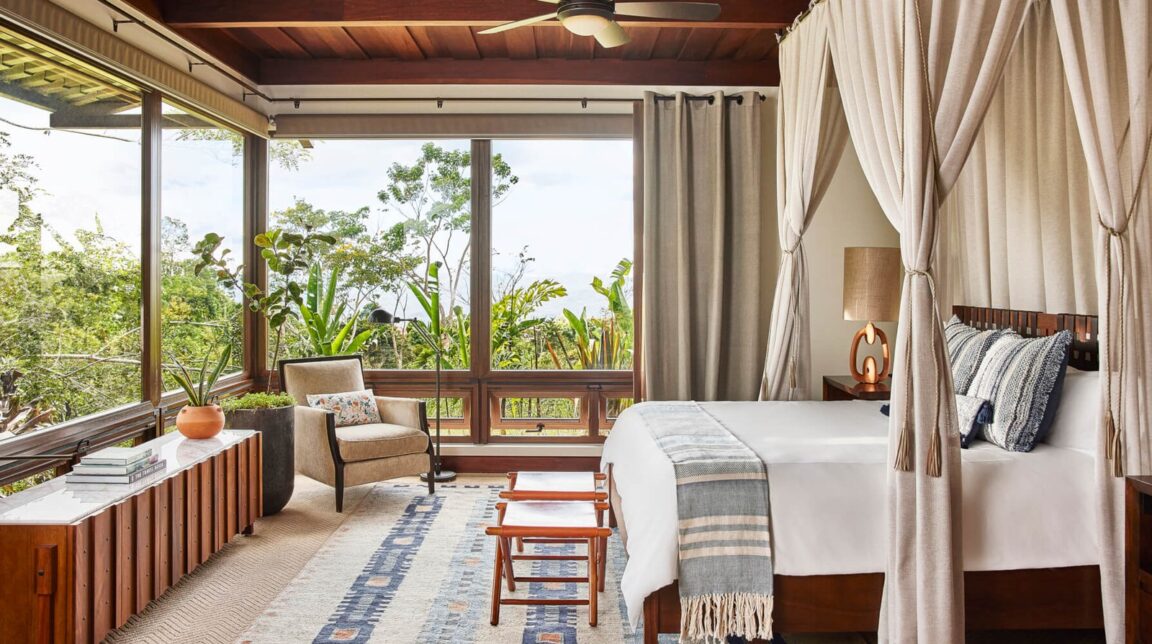
Families and groups move up to the two bedroom stock: 5 Casa Grande, 3 Casa Grande con Piscina and the Casita Grande. The choosing logic is simple. Take a plunge pool casita if your trip is a rest trip, because the pool privatises the hottest hours. Take a standard casita and spend the difference on programmes if your trip is an activity trip, because at AltaGracia the days are spent at the river, the stables and the farm anyway. Either way, expect the canopy bed, wood ceilings and woven textiles of the property’s photography, not generic resort furniture; the rooms are the most deliberately Costa Rican part of the design.
What actually happens at Casa de Agua?
Casa de Agua is the wellness heart of the resort, a 20,000 square foot facility built around water, heat and steam. The property describes a purification journey through thermal experiences using hand harvested Costa Rican clays, loofahs and oils: clay masks, heated stone beds, a jet pool for a pre treatment dip, and treatment rooms for the massage and body programme run under THE WELL partnership. This is structured wellness, closer to a thermal circuit than a hotel spa with a menu, and it rewards guests who give it whole mornings rather than single hours.
The signature, though, leaves the building. The River Bath is set on the Calientillo River, reached by a hike through the forest or a short buggy ride. The property’s own description runs: riverside meditation, a local coffee scrub, then immersion, with a 60 minute herbal bath to warm muscles and purify the body, moving between the fire heated bath and the cold river. It is the single experience most likely to justify the trip on its own, and it should be booked like it. Travellers comparing wellness estates will find the same land first logic as at Babylonstoren in Franschhoek, where the working farm is also the amenity.
Is the coffee farm a real farm or a backdrop?
A real one, and the resort is built on it. The 180 acres are described by Auberge as coffee farm first in the list, ahead of stables and rainforest, and the programme treats coffee as a daily ritual rather than a photo opportunity. The Los Jilgueros coffee plantation tour and tasting is run with the local coffee cooperative that helps harvest and roast the resort’s beans. The Mercado, the resort’s cafe heart, pours the property’s own coffee alongside pastries and takeaway food. Cacao is harvested on property too, with a class that follows the fruit from pod to chocolate. For a coffee traveller, this is the rare luxury resort where the farm tour is not an excursion bolted on for checkout day; it is the ground the buildings stand on.
What is the horse programme like?
The stables, Los Establos, are a working part of the estate, and riding is one of the three pillars of a stay alongside wellness and the farm. Guided rides run through the property’s pastoral farmland and wilderness on well kept horses, with longer excursions of around two and a half hours on offer, including rides out to a neighbouring farm to learn tortilla making and sugarcane distillation. That last detail matters: AltaGracia’s best experiences keep walking you off the resort and into the surrounding Perez Zeledon countryside, which keeps a luxury stay from sealing itself shut. Riders, and travellers who simply like being around horses, will rate this property a clear notch above a beach resort with a spa.
Where will you eat?
Grano is the signature restaurant, rustic by design and telling, in the property’s words, a story of place, with ingredients sourced exclusively within Costa Rica. El Cultivo is the chef’s garden with an open air kitchen, the farm to table idea made literal, steps from the beds the vegetables grew in. The Mercado handles the day: coffee, pastries, all day grab and go food, local beer and biodynamic wines. Picoteo and its terrace cover the social hours, and Las Brisas adds a further dining room. For a remote mountain resort, five places to eat is generous, and the sourcing rule at Grano means the menus track the farm and the season rather than a flown in luxury template. The farm dining comparison that fits best is Borgo Santo Pietro in Tuscany, another estate where the garden writes the menu.
How should you split the days, season by season?
In the drier months, build days outward: a morning ride, the coffee tour before the heat peaks, the pool and Casa de Agua in the afternoon, and one full River Bath morning kept sacred. Add the active list from the property’s programme, the Ficus tree climb, the trails through El Rio, the hike toward the Mina Escondida waterfall, and, new on the property’s experience list, an ultralight flight for the valley view. In the greener, wetter months, invert the day: experiences early, when rain is least likely, and the thermal circuit at Casa de Agua in the wet afternoons, when a glass walled wellness house above a cloud filled valley is exactly where you want to be. Three nights is the minimum that makes sense after the journey south from San Jose; four or five lets the farm, the horses and the wellness programme each get a day without competing. Guests who have done the rainforest lodge circuit before, at somewhere like The Datai Langkawi, will recognise the rhythm: nature sets the timetable, and the hotel’s job is to be ready at each hour.
So is Hacienda AltaGracia worth it?
Worth it, with one condition: go to use it. The rate buys a working coffee farm, a serious thermal wellness house, a signature river ritual, real horses and 180 acres of Talamanca foothill, all inside the tariff of programmes the property runs daily. A traveller who wants only a beautiful room and a pool can find both for less elsewhere in Costa Rica. A traveller who will ride in the morning, scrub with coffee by the river at noon and dine from the garden at night is buying something with no real substitute in the country. Book the plunge pool casita if rest leads, the standard casita if the programme leads, and reserve the River Bath before you reserve anything else.
Frequently asked questions
How many rooms does Hacienda AltaGracia have?
Fifty casitas, per the property’s official fact sheet: one bedroom layouts including Casita King, Casita Double, Casa, Casa con Piscina and Casona con Piscina, plus two bedroom Casa Grande and Casita Grande options for families and groups.
What is the River Bath?
The resort’s signature wellness ritual on the Calientillo River: riverside meditation, a local coffee scrub and immersion, built around a 60 minute herbal bath, moving between heated water and the cold river. Book it early in the stay, and early in the day.
Is the coffee farm open to guests?
Yes. The Los Jilgueros coffee plantation tour and tasting runs with the local cooperative that helps harvest and roast the resort’s beans, and the Mercado cafe serves the property’s own coffee daily. Cacao harvested on site has its own class.
Can beginners ride at the stables?
The stables run guided rides through the estate for guests, from property rides to longer excursions of about two and a half hours to a neighbouring farm. Tell the team your level when booking and they will match horse and route; the programme is a core part of the resort, not an outside concession.
When is the best season to go?
The drier months suit the full outdoor programme of riding, farm tours and the river. The greener months suit Casa de Agua, misty valley views and lower demand. The resort operates year round; choose by which half of the programme you care about more.
Photo: A one bedroom casita at Hacienda AltaGracia. Photo from Hacienda AltaGracia, Auberge Resorts Collection, the property’s own official website (auberge.com).