 Elena Vasquez
On the 14th day of every lunar month, Hoi An Ancient Town turns its electric lights down, keeps motor vehicles out of the central streets, and runs for one evening on lantern light alone: that is the Full Moon Lantern Night, and planning it is mostly a matter of the lunar calendar. The next lantern nights fall on 22 November and 22 December 2026. Be inside the Old Town before the early evening, buy the heritage ticket during the day, watch the streets go dark from Tran Phu or Nguyen Thai Hoc, and do the river last, when the Bach Dang boat landing is at full glow and the floating lanterns are thickest on the Hoai River. Book Old Town accommodation a few weeks ahead for a lantern night weekend, and expect to pay for boats and floating lanterns in small cash on the night.
Quick Facts
- Where: Hoi An Ancient Town, on the Hoai River, a branch of the Thu Bon River, about 30 kilometres south of Da Nang, Vietnam.
- When: The 14th day of each lunar month, the evening before the full moon. Next dates: 22 November and 22 December 2026.
- Hours: The lantern night programme runs through the early evening, roughly from 18:00 to 22:00, with the lights down period at its heart.
- Heritage status: Hoi An Ancient Town was inscribed on the UNESCO World Heritage List in 1999 as an exceptionally well preserved South East Asian trading port.
- Old Town ticket: International visitors buy the Ancient Town heritage ticket, listed at 120,000 VND and valid during a stay of up to three days, for entry to the heritage sites. Street viewing of the lantern night itself is free.
- Book ahead: Old Town hotels for lantern night weekends, several weeks out. Boats and floating lanterns are paid on the night, in cash.
- Facts checked: 19 November 2026, against Da Nang tourism sources linked below. Lunar dates drift against the Gregorian calendar, so reconfirm your exact night close to travel.
What actually happens when the lights go down?
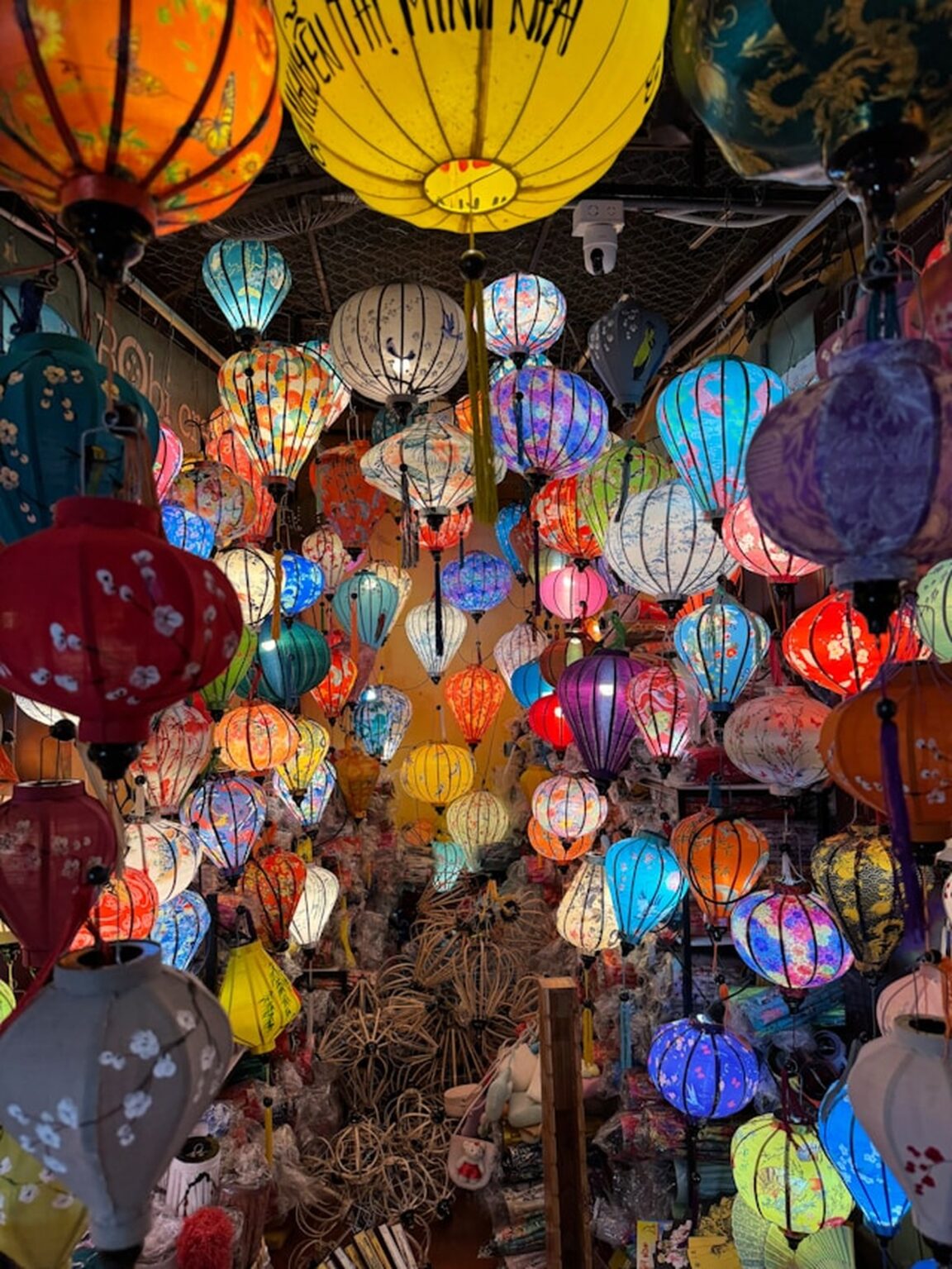
The Ancient Town is a preserved trading port of the 15th to the 19th centuries, inscribed by UNESCO in 1999, whose yellow shophouses, assembly halls and covered bridge survive in daily use, as the Da Nang tourism guide to Hoi An Ancient Town sets out. On the 14th night of each lunar month the town cuts its electric light and runs on lanterns alone, with paper lamps floated on the Hoai River. In practice the dimming rolls across the core streets in the early evening: shopfront neon goes off, street lighting is reduced or switched off in the central zone, motorbikes are kept out, and the silk lanterns that hang over every lane become the light source. Folk performances, including bai choi singing, street music and traditional games, run in the squares and along the riverfront through the evening.
Understand what the night is not. It is not a sky lantern release: nothing burning is sent up into the air over a wooden old town. The lanterns of the festival are the fixed silk lanterns on the streets, the lanterns carried and sold in the lanes, and the small floating flower lanterns set on the river from boats and the banks. It is also not a one off annual spectacle. It repeats every lunar month, which makes it both easier to catch than most festivals and easier to miss by a single day, because a Gregorian calendar will not tell you where the 14th lunar day falls. Travellers building a Vietnam route around it should pair this guide with our 2 days in Hoi An itinerary and fix the lantern night first, then the hotels and trains around it.
How does the date rule work, and which night should you choose?
The rule is lunar, not monthly in the Gregorian sense. Count to the 14th day of the Vietnamese lunar month and that evening is lantern night, the eve of the full moon. Because lunar months are shorter than Gregorian ones, the date slides: in late 2026 the nights fall on 22 November and 22 December, and in a leap lunar year there can be thirteen lantern nights rather than twelve. Published date lists are reliable for the year they cover, but the safe habit is the one local hotels practise: confirm the exact Gregorian date of the 14th lunar day for your month when you book, and again the week you arrive.
Choice of month matters as much as choice of night. The first full moon of the lunar new year, at the end of the Tet season, is the largest and most ceremonial lantern night of the year, and the Mid Autumn Festival period is the most animated for families. The central Vietnam rainy season, roughly October to December, brings the real risk: heavy rain and occasional Old Town flooding can dampen or disrupt a lantern night, and November travellers should hold a spare evening in Hoi An if they can, so one wet night does not end the plan. Dry season nights, February to August, are the straightforward ones, warmer in the lanes and calmer on the river. Da Nang’s tourism promotion centre also runs special lantern events in the town, including the Hoi An International Lantern Festival in December 2026, which is a separate, multi day programme and should not be confused with the monthly full moon night this article covers.
Where should you stand, and how does the Bach Dang boat scrum work?
Position yourself in layers. Start the evening on foot in the core streets, Tran Phu and Nguyen Thai Hoc, while the light is still fading, because the best ten minutes of the night are the transition, when the electric lights drop and thousands of silk lanterns take over street by street. Move to the Japanese Covered Bridge end of town for the heritage silhouettes, then work east toward the river as full dark arrives. The Bach Dang waterfront, along the Hoai River on the Old Town side, and the An Hoi Bridge looking back at it, give the postcard view: lantern lit facades, boats below, and floating lanterns moving with the current. Standing on the bridge puts you above the crowd and in the middle of the reflection, but it is also the most contested spot in town, so claim it early or accept the banks.
The boats work like this. Small wooden boats queue along the Bach Dang landing, each taking a handful of passengers for a short circuit of the lantern stretch of river, typically sold by the boat with the price agreed or ticketed at the landing counters before you board. On lantern night the landing is a scrum: touts, queues and boats all compress into the same hour of darkness, and the travellers who fare best are the ones who agree the full price, the duration and whether floating lanterns are included before stepping off the quay. Buy your floating lanterns from the boat or the bank side sellers, one per person is plenty, and keep small notes ready, because nobody on the water is making change for large bills. If the scrum is too much, the same river glow is visible, free, from the An Hoi side of the bridge and the Nguyen Hoang night market streets opposite, with a fraction of the pressure.
What is the etiquette for releasing a floating lantern?
The floating lantern is a small paper or flower arrangement holding a candle, set on the water as a wish and a prayer, a practice tied to the full moon’s place in Vietnamese Buddhist observance, when families honour ancestors and make offerings. Release yours from a boat or from the water’s edge, low and gently, in the direction your boat handler indicates, and never from the bridge, where a dropped candle lantern is a hazard and a nuisance. Never attempt a sky lantern: a naked flame rising over tiled roofs and wooden shophouses is prohibited for obvious fire reasons, and anyone selling one should be refused.
The rest of the etiquette is the etiquette of a living town on its most crowded night. Ask before photographing residents and worshippers at the small altars and pagoda entrances, keep out of the doorways of houses that sit dark behind their lanterns, and carry your litter out, because the river receives enough offerings without adding plastic to them. Dress for a warm, dense evening crowd, keep bags in front of you at the landing, and let older residents and families with children have the front of the bank when the lanterns go on the water. The night rewards patience: stay past the first rush, and the lanes after about 21:00 are quieter, softer and still lit.
Where should you base, and what does the night cost?
Base inside or immediately beside the Ancient Town if the lantern night is the point of your trip. From an Old Town hotel you walk in before the vehicle restrictions bite, watch the dimming from your own street, and walk home through lantern lit lanes when the crowds leave. The beach at An Bang and the resort strip between Da Nang and Hoi An are pleasant bases for a longer stay, but they turn lantern night into a taxi negotiation at both ends of the evening, at exactly the hours every other visitor is doing the same. Book Old Town rooms several weeks ahead when a lantern night falls on a weekend, and longer ahead for the Tet season night.
The night itself is cheap, and its costs are itemised rather than bundled. The heritage ticket, 120,000 VND for international visitors on current Da Nang listings, covers the Old Town’s heritage sites during a stay of up to three days and is bought during the day, not at the lantern night barricades. Walking the lantern streets costs nothing. A river boat is a separate, per boat purchase agreed at the landing, floating lanterns are a few small notes each, and food, from the night market stalls to a sit down dinner on the An Hoi side, is ordinary Hoi An pricing. The honest budget line is therefore not a total but a habit: carry small denomination cash, agree every boat price before boarding, and expect the evening to cost less than the hotel night that positions you to enjoy it. Travellers continuing north afterwards will find the same lantern culture in a different key in our Hanoi food guide, a useful next chapter rather than a comparison.
Frequently Asked Questions
When is the next Hoi An lantern night?
The festival falls on the 14th day of each lunar month. The next nights are 22 November and 22 December 2026. Because the lunar calendar drifts, confirm the Gregorian date for your travel month with your hotel when you book.
Is the lantern festival a sky lantern release?
No. Hoi An’s lantern night uses fixed silk lanterns on the streets and small floating lanterns set on the Hoai River from boats and the banks. Sky lanterns with a naked flame are prohibited over the wooden Old Town.
Do you need a ticket for lantern night?
Watching the streets is free. International visitors buy the Ancient Town heritage ticket, listed at 120,000 VND and valid during a stay of up to three days, to enter the heritage houses, assembly halls and museums. Boats and floating lanterns are paid separately, in cash.
What time should you arrive, and when does it end?
Be inside the Old Town by late afternoon, buy the heritage ticket during the day, and be in the core streets before the early evening dimming, roughly 18:00. The programme runs to about 22:00, and the lanes stay lantern lit and calmer after the main crowds thin.
Where is the best place to watch from?
Watch the lights go down from Tran Phu or Nguyen Thai Hoc, then move to the Bach Dang waterfront and the An Hoi Bridge for the river view. The bridge is the classic vantage and the most crowded, so arrive early or watch from the An Hoi bank opposite.
What happens if it rains on lantern night?
Light rain dims but rarely cancels the night. Heavy rain and flooding, most likely in the October to December season, can disrupt boats and street activity. If you travel in those months, keep a second evening in Hoi An in reserve.
Featured image: Silk lanterns in a Hoi An lantern shop, the craft at the heart of the town’s full moon lantern night. Photo by Pierce Levy on Unsplash, Unsplash License, via a captioned hosted copy on Places Unveiled.