 Elena Vasquez
For Semana Santa in Antigua Guatemala, book the hotel first and plan everything else around the processions: Holy Week 2027 runs from Palm Sunday, 21 March, to Easter Sunday, 28 March, the biggest processions move from Good Friday through the weekend, and the sawdust alfombras that make Antigua famous are built in the streets in the hours before each procession passes and destroyed in the seconds it takes the float to cross them. Rooms in the historic core for that week are typically committed many months ahead, and a year out is not excessive. Base inside the old town grid, walk everywhere, and treat the week as a sequence of vigils, carpet building and processions rather than a sightseeing checklist.
Quick Facts
- Where: Antigua Guatemala, the former colonial capital in the Guatemalan highlands, a UNESCO World Heritage Site since 1979.
- When: Holy Week, Semana Santa. In 2027 it runs from 21 to 28 March, with smaller processions on the Sundays of Lent before it.
- Recognition: Holy Week in Guatemala was inscribed by UNESCO in 2022 on the Representative List of the Intangible Cultural Heritage of Humanity.
- The signature sight: Alfombras, street carpets of dyed sawdust, flowers, fruit and pine needles, made by families, schools and brotherhoods along the procession routes.
- Key churches: La Merced and San Francisco are among the principal procession churches, with the Cathedral and other parishes anchoring further routes.
- Book ahead: Historic core hotels, a year out for choice, many months out at minimum. Airport transfers and any guided access should be fixed well before Lent.
- Facts checked: 19 November 2026, against UNESCO and the Antigua guides linked below. Prices change yearly and are described in bands, not figures.
What is Semana Santa in Antigua, and why is it different?
Semana Santa, Holy Week, commemorates the passion, death and resurrection of Christ, and in Guatemala it is, in the words of UNESCO’s inscription for Holy Week in Guatemala, one of the country’s most notable events, entailing processions, vigils, funeral marches, seasonal gastronomy and the creation of altars and carpets of flowers and fruits. UNESCO inscribed the tradition in 2022, recognising a celebration carried by brotherhoods, parishes, artisans and whole neighbourhoods, with a syncretism of Catholic and Maya heritage that runs through its imagery and its food.
Antigua is its most concentrated stage. The city was the capital of the Spanish Kingdom of Guatemala for more than two centuries until the earthquakes of 1773 forced the move to what is now Guatemala City, and its grid of cobbled streets, low colonial houses and ruined churches, protected as a World Heritage Site since 1979, gives the processions a setting of extraordinary density. Floats carried by dozens of bearers move at walking pace for hours, bands play funeral marches, incense hangs over the cobbles, and the carpets wait in the streets. Our 3 days in Antigua itinerary covers the city in an ordinary week. Holy Week is not an ordinary week, and it should not be planned like one.
How are the alfombras made, and how do you watch them well?
An alfombra begins as a design, often drawn and planned by a family or group weeks ahead, and becomes a street sized artwork in the hours before its procession. Makers lay a base on the cobbles, then build the image in dyed sawdust, flower petals, pine needles, leaves, fruit and vegetables, working through wooden stencils and by hand, sometimes through the night. Religious scenes, geometric borders and Maya motifs sit side by side in the same carpet. The finished work may run for a full block or more, and it is made to be walked over: the procession crosses it, the float’s bearers tread the image into the stones, and within minutes the carpet exists only in photographs and in the dyed dust on everyone’s shoes.
Watching well is a matter of timing and position. Arrive at a carpet street while the work is still being made, in the early morning for a morning procession or through the afternoon for an evening one, because the making is half the event and the makers are usually glad to explain their design. Then step back behind the crowd line before the procession arrives, keep the route itself clear, and never walk on a finished carpet for a photograph. The bearers, cucuruchos in their purple robes during Lent and black at the Good Friday burial processions, carry floats that can weigh several tons across a full day of shifts. Give them the street, give the bands their silence at the solemn passages, and treat the whole event as a religious observance you are privileged to stand inside, not a parade staged for visitors. The comparison travellers reach for is the festival as living devotion, closer in spirit to the respectful visiting our Day of the Dead in Oaxaca guide describes than to any carnival.
What is the procession order, from Lent to Easter Sunday?
The season builds. Through the Sundays of Lent, smaller velaciones, vigils, and processions run from Antigua’s parishes, each with its own image, route and carpet streets, and each progressively larger as Holy Week approaches. Palm Sunday opens Holy Week itself with processions marking the entry into Jerusalem. Through the week the tempo rises: processions on the Monday, Tuesday and Wednesday, a major procession on Maundy Thursday, and the climax on Good Friday, when the day begins with a morning procession and the acted sentencing and crucifixion observances, and ends after dark with the Santo Entierro, the Holy Burial processions, in black, in near silence, by candlelight.
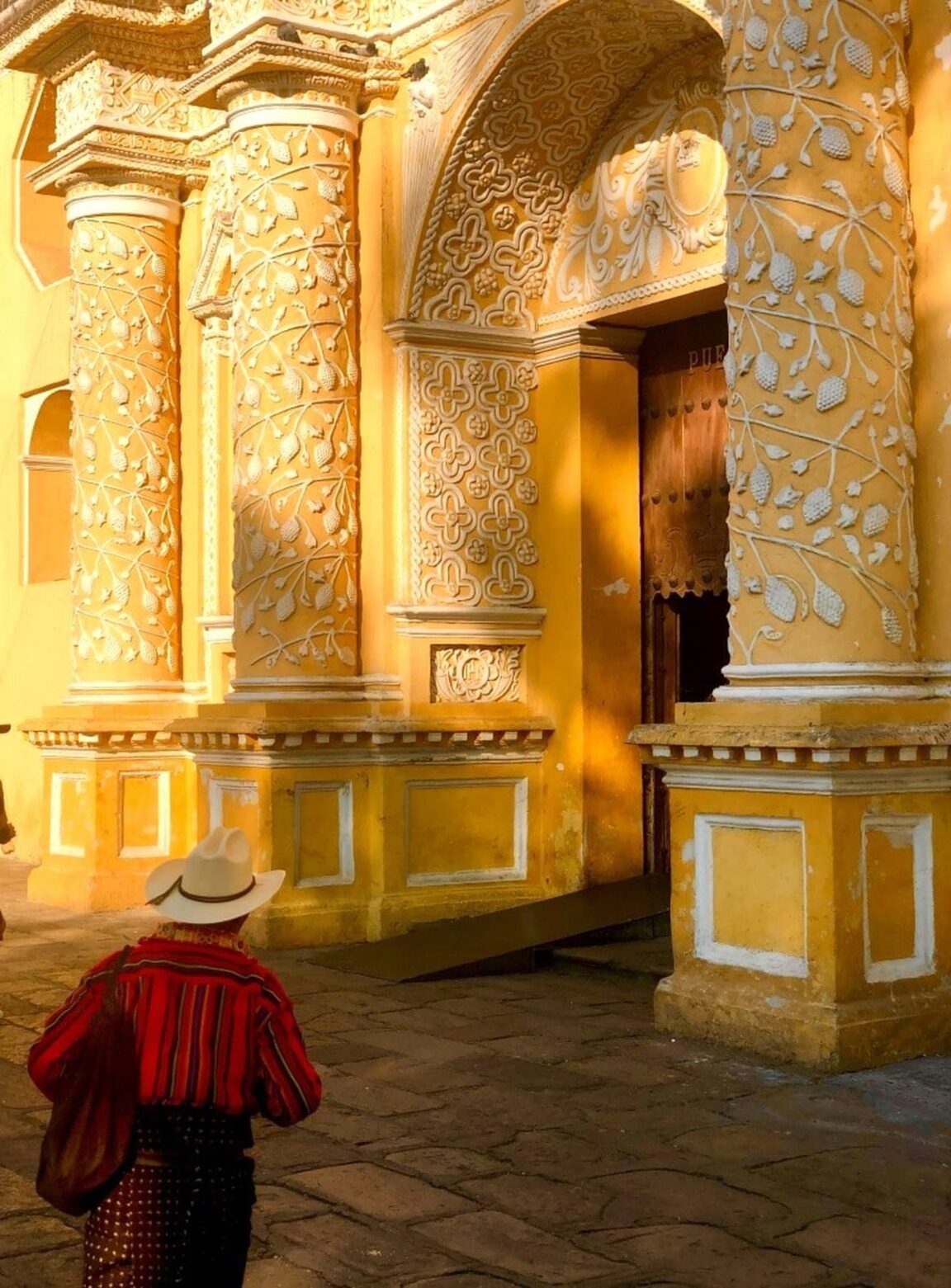
Two churches anchor most visitor plans. La Merced, the yellow church with the most ornate stucco facade in the city, in the north of the grid a short walk from the Santa Catalina Arch, is one of the principal procession churches, famous for its Palm Sunday and Good Friday processions. San Francisco el Grande, at the eastern edge of the centre, home to the tomb of Saint Hermano Pedro, Guatemala’s first saint, anchors major processions of its own, including one of the most followed of the week. The Cathedral on the Parque Central and the other parish churches, El Calvario and San Jose among them, fill the remaining days. Exact routes and departure times are published by the brotherhoods and the municipality in the weeks before Lent each year and can shift, so the correct method is to fix your days around Good Friday and the weekend, then build your street by street plan from the official programme once you arrive. Holy Saturday is quiet, a day of vigils, and Easter Sunday is smaller, brighter and mostly local: a good day to see the city exhale.
Where should you base, and what does the week cost?
Base inside the historic grid, within a few blocks of the Parque Central, and accept that you are paying for position. From a core hotel you can walk to every procession, return between events, watch carpet building on your own street, and avoid the single worst idea of the week, which is trying to drive or taxi across procession routes. The streets around La Merced suit travellers who want the northern processions at their door. The streets south and east of the park suit San Francisco and the Good Friday routes. Staying in Guatemala City and day tripping in is technically possible and practically miserable during Holy Week, when the road in is slow and the city you came to see is closed to traffic in any case.
Costs follow one rule: everything with a fixed supply surges. Antigua’s hotel stock in the core is small, demand for Holy Week is international, and rates for that week sit at the top of the year, with the best located rooms committed first. Lent weekends before Holy Week carry a smaller version of the same surge, which is why a Lent Sunday trip is the connoisseur’s alternative: real processions and real carpets, at something closer to normal prices. Food, by contrast, stays human. Seasonal Holy Week cooking, including the traditional sweets and the fish and vegetable dishes of a meatless Lent, is sold at markets, bakeries and modest restaurants across town at everyday prices, and the street food around La Merced park in the evenings is part of the festival. Budget your money for the bed, your time for the streets, and your patience for both.
Frequently Asked Questions
When is Semana Santa in Antigua in 2027?
Holy Week 2027 runs from Palm Sunday, 21 March, to Easter Sunday, 28 March 2027. Good Friday falls on 26 March. Smaller processions run on the Sundays of Lent in the weeks before, beginning after Ash Wednesday on 17 February 2027.
How far ahead should you book a hotel for Holy Week?
A year out for the best located historic core hotels, and many months out as a minimum for the week itself. Lent weekend stays are easier but still book early. If the core is full, look at the streets just outside the grid before you look at Guatemala City.
Can you watch the alfombras being made?
Yes, and you should. Carpet building happens in the open street in the hours, sometimes the whole night, before a procession. Watch from the edge of the work, ask before photographing makers at close range, and never step on a finished carpet.
What should you wear and carry during the processions?
Comfortable shoes for cobbles and long standing, a layer for cool highland evenings, water, and as little else as possible. Keep bags in front of you in the densest crowds, dress respectfully for a religious event, and carry small cash for food and donations.
Is Antigua safe and manageable during Holy Week crowds?
The centre is pedestrian in practice, patrolled and extremely busy rather than chaotic. The real risks are the ordinary ones of any dense crowd: pickpocketing, losing your group, and dehydration across a long day. Agree a meeting point, keep phones put away at the tightest corners, and step out of the crowd lines whenever you need air.
Which single day should a short visit choose?
Good Friday, for the full arc from the morning procession to the candlelit burial processions at night. Arrive the day before, because the carpets for Friday are built from Thursday night onward and the city is already full.
Featured image: The stucco facade of a colonial church in Antigua Guatemala, in the city whose churches anchor the Semana Santa processions. Photo by Alain Bonnardeaux on Unsplash, Unsplash License, via a captioned hosted copy on Recommend.