 Elena Vasquez
Eat in Iquitos in the order the city itself eats: a juane unwrapped at a market stall in the morning, tacacho con cecina as the big breakfast plate, and the river fish of Belen Market as the lesson that ties the two together. Iquitos has no road to the rest of Peru, so everything on the plate arrived by river or grew within reach of it, and the three dishes below are the clearest way to taste that fact. Book almost nothing in advance except a guide for Belen, go to the market early, and let the leaf parcels, mashed plantain and grilled fish arrive in that sequence.
Quick Facts
- Where: Iquitos, capital of the Loreto region in the Peruvian Amazon, reached only by air or river.
- The three plates: Juane, seasoned rice with chicken, egg and olive wrapped in a bijao leaf; tacacho con cecina, mashed roasted green plantain with smoked, salted pork; and river fish sold and cooked around Belen Market.
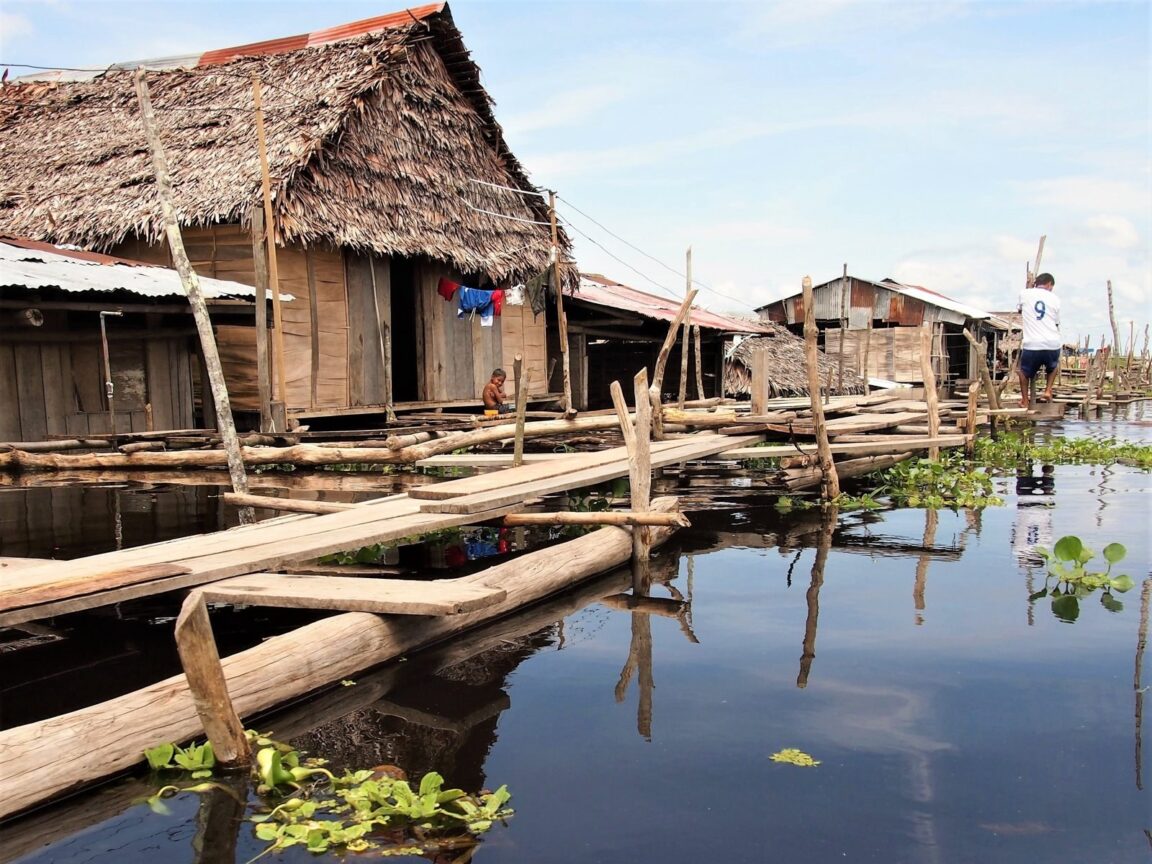
- The market: Belen Market, in the Belen district beside the Itaya River, with the stilt and floating neighbourhood of lower Belen below it.
- Best order: Belen in the morning with a local guide, juane and tacacho at busy cooked food stalls, river fish at lunch.
- Book ahead: A reputable local guide for Belen, arranged through your hotel or a known operator the day before. The food itself is walk up.
- Facts checked: 19 November 2026, against the Belen Market guide and the Guinness World Records report on the Iquitos juane linked below.
Why does Iquitos food taste like nowhere else in Peru?
Because the supply line is a river. Iquitos is the largest city in the Peruvian Amazon and, as our Iquitos city guide explains, it cannot be reached by road at all: people and produce arrive by plane or by boat. Andean potatoes, coastal limes and imported staples are the expensive exceptions here. The staples are what the Amazon provides: plantain, cassava, bijao leaves for wrapping, palm fruits such as aguaje and camu camu, and fish pulled from the Amazon, Nanay and Itaya rivers. Jungle cooking, selva cooking, is therefore built on leaves, smoke, plantain and river fish rather than on the potatoes and chillies of the highlands or the soy and citrus accents of Lima. First time visitors who arrive expecting ceviche and pisco sours, the Lima circuit covered in our Lima food guide, should reset their expectations at the first market stall. Iquitos is a different Peruvian kitchen entirely.
First plate: what is a juane, and how do you eat one?
A juane is a parcel. Seasoned rice, coloured and perfumed with turmeric style spices, is packed around a piece of chicken, a hard boiled egg and an olive, then wrapped in a wide bijao leaf, tied, and boiled until the leaf gives its green, herbal aroma to everything inside. Unwrap it at the table, discard the leaf, which is packaging and not part of the dish, and eat the compact mound of rice and chicken with a spoon or your hands. The rice holds together almost like a cake, the egg and olive sit inside like a savoury surprise, and the leaf scent is what separates a juane from any other rice parcel in Peru.
The juane belongs to the Fiesta de San Juan, the feast of Saint John the Baptist on 24 June, the biggest festival date in the Peruvian Amazon, when families make the parcels at home and carry them out to river beaches and gatherings. The scale of the attachment is hard to overstate: in June 2026, cooks, authorities and volunteers in Iquitos assembled the largest juane ever recorded, built from hundreds of kilos of rice, a thousand pieces of chicken and more than two thousand eggs, and shared it with the public, as Guinness World Records reported. Outside June, juane is everyday food, sold at market stalls and modest restaurants all year, and Sunday is a classic day to find it fresh. Variants swap the chicken for fish or use cassava in the mix, and a stallholder will tell you which parcel is which if you ask before pointing.
Eat your first juane at a busy stall, where parcels turn over fast and the leaf is still warm and fragrant when it opens. A fresh camu camu juice beside it, sharp and pink and very high in vitamin C by reputation and flavour alike, is the local pairing, with aguaje juice as the richer, creamier alternative.
Second plate: what makes tacacho con cecina the real Amazon breakfast?
If juane is the parcel, tacacho con cecina is the plate. Green plantains are roasted or fried, then pounded in a large wooden mortar with salt and pork fat into dense, golden balls. That is the tacacho. It is served with cecina, pork that has been salted, smoked and dried in the jungle style, then fried or grilled until its edges crisp. The combination is hearty in a way that makes immediate sense at eight in the morning in equatorial heat before a day on the river: starch, smoke, salt and fat, with a fresh juice or coffee to cut through it.
Order it where you can see the mortar work, because tacacho is best eaten freshly pounded, while the plantain is still warm and pliable rather than set and heavy. A good plate balances the two halves: the tacacho should taste of plantain first and smoke second, and the cecina should be chewy and deeply savoury rather than burnt. Some kitchens add chicharron pieces through the plantain or serve a small salad of onion and cocona, the tangy Amazon fruit, alongside. Both are worth accepting. This is the breakfast that river crews and market porters actually run on, and it will carry a visitor comfortably through a morning of market lanes and boat docks without a midday crash.
Third stop: what does Belen Market teach you about the river fish?
Go to Belen in the morning, and go with a local guide. The Belen Market guide describes the district plainly: a large riverside market on the low ground beside the Itaya River, and below it a neighbourhood of houses on stilts and rafts that rises and falls with the water. The market is where Iquitos eats from. Stalls carry river fish landed from the surrounding rivers, plantains and cassava by the stack, aguaje and camu camu and cocona in season, bundles of bijao leaves waiting to become juanes, and cooked food counters selling the very dishes described above, which is why Belen works best as the first stop of the day even though it is listed third here: you see the ingredients, then you eat them.
The fish tables are the education. Look for paiche, the great Amazon river fish with large scales and firm white flesh, served grilled or in fillets across the city, alongside smaller river species sold whole for soups and grills. Patarashca is the preparation to ask for at lunch afterwards: fish seasoned, wrapped in a bijao leaf and grilled, the same leaf logic as the juane applied to the catch itself. Inchicapi, a rich chicken soup thickened with peanut and corn, is the other name to know when the midday heat breaks into rain and a market counter lunch turns into a sit down meal.
Two rules govern a Belen visit, and both come straight from responsible market guidance. First, treat lower Belen as a neighbourhood, not an attraction: people live in the stilt and floating houses, so follow your guide, keep to the walkways and boats you are invited onto, and ask before photographing anyone. Second, do not buy wildlife. Belen has a long standing problem trade in wild animals and their parts, which Peruvian law prohibits without legal origin and permits. Do not purchase live animals, wild meat, eggs, skins, teeth or feathers, however casually they are offered, and do not let a stallholder talk you into a taste of something protected. Eat the farmed, fished and grown Amazon: plantain, cassava, palm fruit, river fish from legal fisheries, chicken, pork and leaves. That table is generous enough.
Practical habits help: go early while the fish and produce are freshest and the lanes are at their most workable, carry small notes, keep valuables out of sight in the crowds, and eat cooked food from stalls with a visible queue and a hot grill. Market food eaten hot and fresh is the pleasure of the place; raw preparations and reheated parcels are the gamble to skip on a first morning.
What should you book ahead, and in what order should the day run?
Book one thing: the guide. A reputable local guide for Belen, arranged through your hotel or a known operator the day before, turns a confusing, crowded market into a legible one, handles the boat segment in lower Belen when water levels allow it, and steers you to the cooked food stalls that locals actually use. River levels shape what lower Belen looks like: in high water the floating houses float and boats run between them, while in low water the same streets stand on stilts above the mud, and your guide will read the season for you.
The day then runs itself. Belen at seven or eight, walking the produce and fish lanes first. Juane from a busy stall as the market warms up, tacacho con cecina as the sit down breakfast that follows, and a slow late morning back in the centre around the Plaza de Armas and the riverfront malecon. Lunch on grilled river fish, patarashca if you find it, with an aguaje juice. That is the Amazon table in eating order: leaf, plantain, river. Everything else Iquitos offers, the lodges, the reserves and the long river days, starts from this plate level understanding of how the roadless city feeds itself.
Featured image: Stilt and floating houses with plank walkways over the water in Belen, the floating district of Iquitos, Peru, beside the market of the same name. Photo by Deb Dowd on Unsplash, Unsplash License, via a verbatim hosted copy served by the Danish Refugee Council. The same photograph illustrates our Iquitos city guide.