 Camille Baptiste
Kurokawa Onsen works because the whole village acts as one inn. About 30 ryokan in a mountain valley in Minamioguni, Kumamoto Prefecture, share their outdoor baths through a single wooden pass, the nyuto tegata, which costs 1,500 yen and opens any three open-air baths from about 24 participating ryokan. Buy the pass first, walk the riverside lanes between soaks, and pace the day around three baths in two to three hours rather than trying to see everything. Staying overnight turns a pleasant day trip into the slower, restorative visit this village does best.
Quick Facts
- Where: Minamioguni, Kumamoto Prefecture, Kyushu, at about 700 metres above sea level
- Village: About 30 ryokan run under the shared philosophy of Kurokawa Onsen as One Ryokan
- Bath pass: Nyuto tegata, 1,500 yen for adults, covering three open-air baths, valid for six months from purchase
- Where to buy it: Kazenoya, the visitor information centre, open 9:00 to 17:00, or at individual ryokan
- Day bathing without a pass: About 500 to 800 yen per bath, paid at the ryokan
- Typical day bathing hours: 8:30 to 21:00, with last entry at 20:30, varying by ryokan and checked daily
- Time to allow: Two to three hours for three baths, or a comfortable half day with a village stroll
- Access: No railway station. Buses run about three times a day from Kumamoto, Yufuin and Hakata, booked by the day before
- Nearest stations: JR Aso Station from the Kumamoto side and JR Hita Station from the Fukuoka side, each about one hour away by car
- Best seasons: Autumn foliage from late October to mid November, cherry blossom in early April, and the Yuakari bamboo lantern illumination from late December to the end of March
What makes Kurokawa different from other onsen towns?
Many onsen towns are a collection of competing hotels that happen to share a spring. Kurokawa was deliberately built the other way. The ryokan here work together under the idea that the village itself is a single inn, with the lanes as its corridors, the river and trees as its garden, and the baths as rooms that any guest can use. The buildings stay low and wooden, the signs stay quiet, and the Tanoharu river runs through the middle of everything, so moving between baths on foot in a yukata is part of the stay rather than a transfer between attractions.
That structure changes how a visit feels. Instead of choosing one property and staying inside it, you choose a base and then sample the village. One inn may have a bath set into rock beside the river, another a bath looking into forest, another a cave style bath or a standing depth bath. The water at almost every ryokan flows freely from the source, and the association suggests about an hour at each ryokan, which is long enough to soak, cool down and walk to the next stop without rushing.
Kurokawa also sits high enough to feel different from the Kyushu lowlands. At about 700 metres, the association says temperatures run about 3 to 5 degrees cooler than lower areas, which makes summer evenings mild and winter mornings properly cold. In mid November the village is at the tail of its autumn colour season, which the association puts from late October to mid November, so late colour in the valley and cold air over hot water is a realistic expectation for a visit at this time of year.
How does the nyuto tegata bath pass actually work?
The tegata is a round wooden pass hand cut from timber grown in Minamioguni itself. One pass per person costs 1,500 yen and carries three uses. Each use admits you to one participating open-air bath, and each ryokan marks the pass as you go, so the wood becomes a record of where you have bathed. After the third use the pass is spent as a ticket but remains a keepsake, and because it stays valid for six months, there is no pressure to use all three entries on a single day.
One of the three uses does not have to be a bath. At participating shops and ryokan, a use can be exchanged for an item instead, with the association listing examples such as original ryokan towels, soft serve ice cream and pottery. That swap is the pacing valve in the system. If the second bath leaves you warm, full and done with soaking, the third use can become a snack and a souvenir on the walk back rather than a forced third immersion.
Buy the pass at Kazenoya first if you can. The information centre sits by the Fureai Hiroba parking area, sells the pass, and can tell you which baths are open to day visitors that day. Individual ryokan also sell passes, but the association warns that a ryokan may occasionally be out of stock. Kazenoya opens from 9:00 to 17:00, so an early arrival who wants a first bath close to 8:30 should either buy the pass the evening before or check stock at a ryokan on arrival.
Two honest cautions belong here. First, sources differ slightly on the size of the circuit: the association English FAQ says about 24 participating ryokan, while some other association material and guides say 25. The list changes as baths close for cleaning or maintenance, so treat the pass as entry to about two dozen baths and confirm the current list at Kazenoya. Second, a pass does not guarantee entry to a specific bath at a specific hour. Entry can be restricted at busy periods, which is why the daily bathing status check below matters more than any list printed in advance.
How should you pace three baths in one day?
The association puts three baths at around two to three hours of bathing and walking, and a half day as a comfortable allowance once a stroll is included. A calm pattern looks like this. Start at Kazenoya for the pass and the day status board, then take a first bath mid morning while the lanes are quiet. Walk the main street from Igo-zaka down to Shimokawabata-dori afterwards, with the river beside you and the ryokan, restaurants and souvenir shops along the path. Take the second bath before lunch or in the early afternoon, eat, rest, and keep the third use in reserve.
That reserve is where the restoration happens. Day bathing generally runs to 21:00 with last entry at 20:30, so overnight guests can use the third entry in the evening, when the village empties of day visitors and the lanes go quiet. Day visitors working to a bus departure should do the opposite and finish bathing well before the last bus, because buses here run only about three times a day and a missed departure is not a minor inconvenience in a village with very few taxis.
Resist the packed version of this day. Three baths with long hot soaks back to back will leave most people light headed and sleepy rather than restored. Alternate heat with walking, drink water between baths, and use the free rest space the association lists below Kazenoya, Becchin-kan, open from 10:00 to 16:00, if you need a pause indoors. If a bath is busy when you arrive, choose another one nearby instead of queuing. With about two dozen baths on the pass, flexibility is the whole point of the system.
For a slower alternative, the association describes a walking course of about three hours through forest and along mountain streams, with some steep sections and a course map at Kazenoya, plus a walk through Oku-Kurokawa to the Hiranodai Observation Deck for mountain views. Pairing one or two baths with that walk is a legitimate way to use the pass across an overnight stay, since unused entries remain valid for six months.
What should you check on the morning of your visit?
Check the association Bathing Status page on the day itself. Day bathing hours and availability are updated daily, and the association advises checking at around 9:00 in the morning of a visit. Baths drop off the circuit for cleaning, maintenance and crowd control, and hours differ between ryokan even though the general window is 8:30 to 21:00. The famous baths in any onsen village attract the longest waits, so the status page also helps you pick a quieter bath with the same source water.
Check your departure bus at the same time. Reservations for the Kyushu Odan Bus from the Kumamoto and Yufuin side and for the Hakata services run by Kyushu Sanko Bus and Hita Bus must be made in advance, by the day before, by phone or online. The association lists the Kyushu Highway Bus Reservation Center on +81-92-734-2727 with multilingual support. Build the day backwards from the bus you have actually booked, not from the bath you most want to try.
Drivers should check winter conditions between December and March, when the association says snow and icy roads are common at this elevation and snow tyres or chains are essential. Most ryokan car parks are reserved for overnight guests, so day visitors should use the public car parks in the village, several of which are free.
How do you choose where to sleep in the village?
The ryokan split along the river is the main decision. Inns in the centre, around Igo-zaka and Shimokawabata-dori, put you steps from the shops, the information centre and the densest cluster of pass baths, which suits a one night stay built around bath hopping. Inns further out in Oku-Kurokawa and the quieter stretches of the valley can be more than 30 minutes on foot from the centre, and the association recommends their shuttle services for overnight guests or a taxi for day visits. Those outer inns trade convenience for space, forest and a quieter riverside setting.
Staying overnight also changes your bath options. Some ryokan offer private or family baths that day visitors can rent, although reservations are generally not accepted for them and, after 15:00, priority goes to overnight guests. If a private bath matters to you, because of tattoos, privacy or travelling as a couple or family, ask the ryokan directly before booking rather than assuming the pass covers one. Tattoo policies are set by each ryokan and are not published as a single village rule, so a direct question in advance is the reliable route, with a private bath as the usual fallback.
Book the room and the bus together. A village with about 30 small inns, no station and a handful of daily buses fills from the transport side as much as from the lodging side, especially in the autumn colour and Yuakari seasons. Readers planning a wider Kyushu onsen trip can compare this village model with a big onsen city in our guide to Beppu hells and sand baths, and with a ryokan circuit closer to Tokyo in our Hakone onsen guide.
How does Kurokawa pair with Aso and the rest of Kyushu?
Kurokawa sits about one hour by car from Aso, Yufuin and Hita alike, according to the association, which makes it a natural hinge rather than a dead end. A workable pairing is one day around Aso, using JR Aso Station as the railhead, and one or two nights in Kurokawa for the baths, travelling between them by bus or car. The same Kyushu Odan Bus line continues towards Yufuin and Beppu, so a Fukuoka arrival, a Kurokawa stay and an onward move to Yufuin can be done without backtracking.
Keep the pairing loose. Aso is an active volcanic area and access arrangements there can change, mountain roads are slow, and Kurokawa rewards an unhurried morning more than an extra sight the night before. The restorative version of this trip is baths first, one Aso outing fitted around them, and a departure bus booked before you arrive. Travellers building a longer Japan trip in the cold months may also want our notes on packing for Japan in winter, since a 700 metre village in Kyushu still calls for real layers in November and beyond.
What is Yuakari, and is it on now?
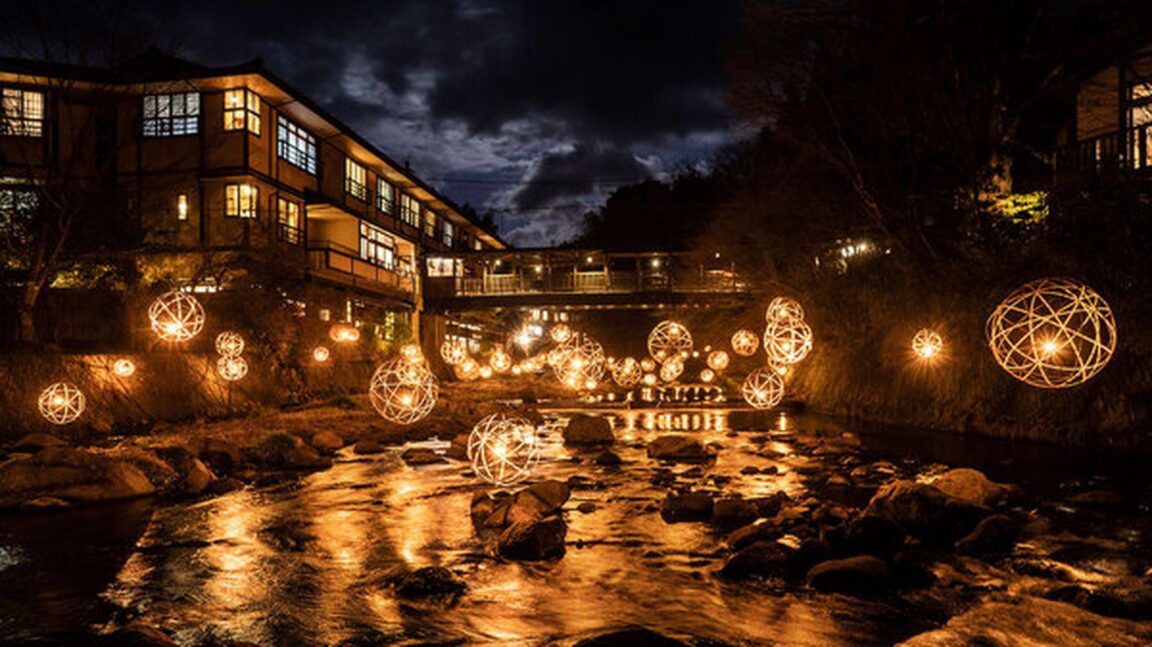
Yuakari is the village winter illumination, when bamboo lanterns light the onsen streets from late December through the end of March. The association is clear that specific dates are announced on its official website as they are confirmed, and the most recent completed season ran from 20 December 2025 to 31 March 2026. Dates for the coming season should therefore be treated as unconfirmed until the association publishes them, however predictable the pattern looks. An evening bath followed by a lantern lit walk along the river is the signature winter night here, and it is a strong reason to stay overnight rather than day trip in that season.
Frequently Asked Questions
How much does the Kurokawa Onsen bath pass cost?
The nyuto tegata costs 1,500 yen for an adult and covers three open-air baths at about 24 participating ryokan. It is valid for six months from purchase and can be bought at the Kazenoya information centre or at individual ryokan.
Can you bathe in Kurokawa without the pass?
Yes. Each ryokan offers day bathing for about 500 to 800 yen per person, paid directly at the ryokan. The pass works out better if you plan to try three baths, and it adds the option of swapping one use for food or a souvenir item.
How long do three baths take?
The ryokan association says visiting three baths typically takes around two to three hours, and that a half day is comfortable once a leisurely stroll through the village is included. Allow about an hour at each ryokan.
How do you get to Kurokawa Onsen without a car?
By bus. Services run about three times a day from Kumamoto, Yufuin and Hakata, and advance booking by the day before is required. The nearest railway stations are JR Aso and JR Hita, each about one hour away by car, so there is no walkable station option.
Are tattoos accepted in Kurokawa baths?
There is no single village rule published by the association, and each ryokan sets its own policy. Ask Kazenoya or your ryokan in advance. Some ryokan offer private baths for day visitors, which are the usual alternative, although after 15:00 priority for those baths goes to overnight guests.
When is the best time to visit Kurokawa Onsen?
Autumn foliage peaks from late October to mid November and cherry blossom in early April, according to the association. From late December to the end of March, the Yuakari bamboo lanterns light the village in the evening, with exact dates for each season announced on the official website.
Featured image: The Tanoharu river in Kurokawa Onsen during the Yuakari bamboo lantern illumination, from the Kurokawa Onsen Ryokan Association official website (kurokawaonsen.or.jp), used with credit.