 Thandiwe Nkosi
Manila rewards the traveller who eats in the right order, and the order is this: graze Binondo first, in the morning, walking the wok route along Ongpin Street in small stops rather than sitting down to one big meal; settle the sisig question properly, either at a good Manila sizzling plate or, better, as a day trip to Angeles City in Pampanga, where the modern dish was made; and keep Saturday morning free for the Salcedo Market in Makati, which runs for seven hours only, once a week. Do Binondo on a weekday morning, Angeles on its own day, and Salcedo on the Saturday, and the three pieces of the city’s table fit together without a single wasted meal. Book almost nothing in Binondo, book a guided walk if you want the history with the food, and book nothing at all for Salcedo except your own alarm clock.
Quick Facts: Manila’s Table at a Glance
- The order: Binondo grazing walk first, sisig as the rich centrepiece, Salcedo Market on Saturday morning for the modern counterpoint
- Binondo: Founded in 1594 and recognised as the oldest Chinatown in the world, across the Pasig River from Intramuros; the food spine is Ongpin Street, reached via Carriedo or Doroteo Jose LRT stations
- The Binondo method: Small orders, shared, standing or perched, moving every 20 to 30 minutes; dim sum and noodles at Wai Ying on Benavides Street, hopia to take away at Eng Bee Tin
- Sisig: A Kapampangan dish recorded as a sour salad in 1732; the modern sizzling version is credited to Lucia Cunanan, known as Aling Lucing, in Angeles City in the 1970s
- The Angeles claim: Angeles City Ordinance No. 405, Series of 2017, declares sizzling sisig an intangible cultural heritage of the city; Angeles is about two hours by bus north of Manila, traffic allowing
- Salcedo Market: Every Saturday, 7:00 am to 2:00 pm, at Jaime C. Velasquez Park, Tordesillas Street, Salcedo Village, Makati; free entry, no booking
- What to book ahead: A Binondo guided food walk if you want one, and a table at any sit down restaurant on a weekend; the markets and most Binondo counters are walk in only
- Prices: Small Binondo and market eateries rarely publish menus, so this guide names dishes and places rather than peso figures; carry small bills and coins
- Checked: November 19, 2026, against the Salcedo Market listing, Angeles City’s sisig ordinance reporting and Binondo histories
Why Should Binondo Come First, and How Does the Wok Route Work?
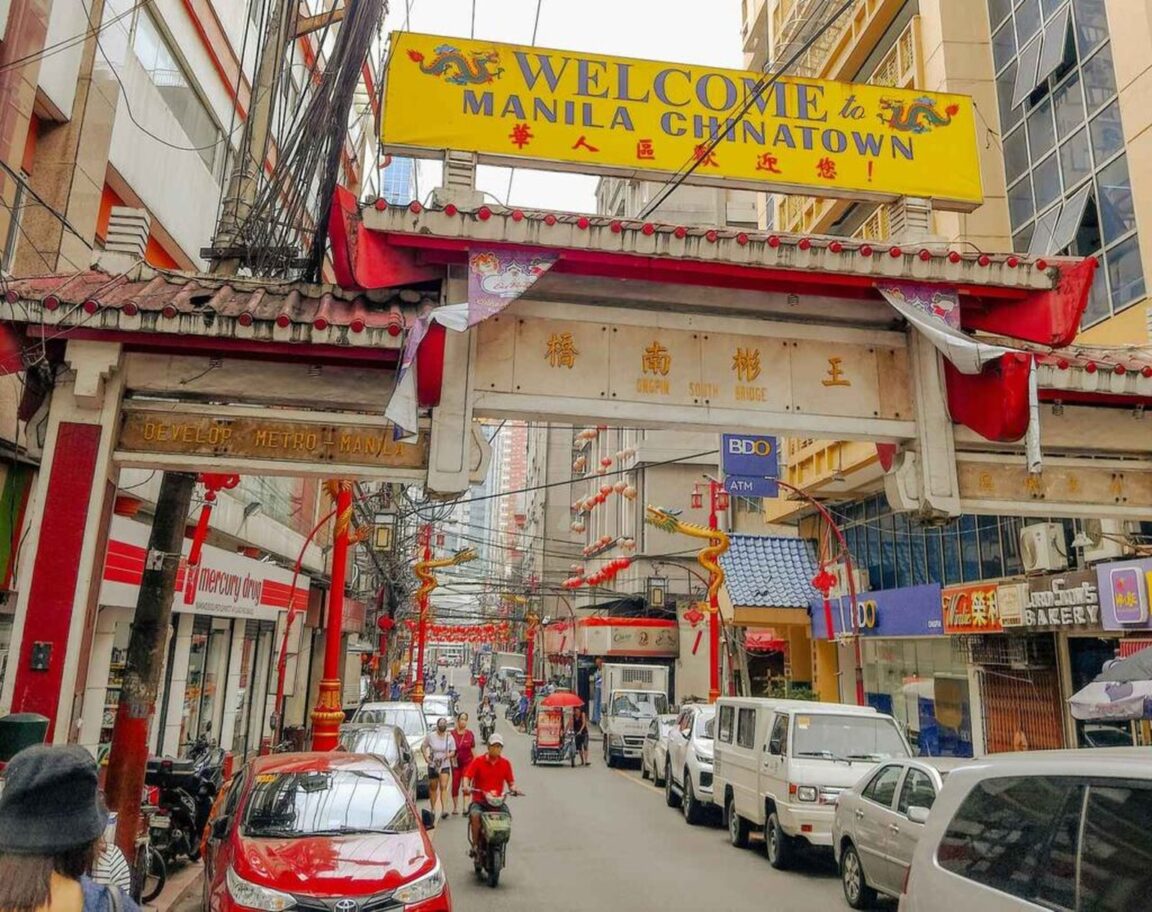
Binondo was created in 1594, when the Spanish colonial government gave land across the Pasig River from the walled city of Intramuros to Chinese settlers who had converted to Catholicism and to Chinese men married to local women. It grew into the commercial heart of Chinese Filipino life, and it is recognised as the oldest Chinatown in the world. For the food traveller, the useful fact is simpler: the district is compact, dense and built for grazing. Ongpin Street is the spine, Binondo Church and Plaza San Lorenzo Ruiz anchor one end, and the side streets, Benavides, Carvajal and the lanes around the church, hold the bakeries, tea houses and noodle shops.
The wok route is not a formal trail. It is a discipline: never order a full meal anywhere. Start with something steamed, move to something fried, then something roasted, then something sweet, and keep each stop to one or two dishes shared between whoever is walking. The cooking is wok fast and the portions at the classic counters are sized for exactly this kind of hopping, because local office workers do it at lunch every day. Arrive by 9:00 or 10:00 in the morning, before the lunch queues, and work the route hungry but not starving, because the first stop sets the pace.
For the wider dish by dish picture of the capital, including sinigang, lechon and halo halo, read our companion guide to what to eat in Manila, which covers the Binondo crawl from the dish side. This guide covers the same ground from the planning side: the order, the timing and what needs booking.
What Should You Actually Order on Ongpin Street?
Begin at Wai Ying Fastfood on Benavides Street, just off Ongpin, the Binondo institution for Hong Kong style dim sum and roast meats at canteen speed. The order that works is hakaw, the translucent shrimp dumplings, a serve of siomai, and one noodle dish to share, ideally the beef or wanton noodles, with a roast duck or roast pork rice plate only if there are at least three of you. Wai Ying runs two floors and a permanent queue at lunch; before 11:00 the wait is short, and the food comes out in the order it is ready, not the order you asked for it, which is part of the rhythm.
Next, something fried. The fried siopao stalls on and around Ongpin, buns griddled on their base until crisp and eaten hot from the paper, are the classic street stop, and the dumpling shops along Carvajal Street add kuchay, chive dumplings, and other small fried and steamed bites. Keep it to one bun or one small serve per person. The mistake visitors make in Binondo is treating the third stop as lunch; by the third stop you should still only be snacking.
Finish the savoury run with noodles or a soup at one of the old tea houses, then turn sweet. Eng Bee Tin, the Chinese deli founded on Ongpin, is the take home stop: hopia, the flaky filled pastry, in the ube version the shop made famous, plus tikoy and other Chinese Filipino sweets. Buy hopia last, not first, because a bag of pastries in the Manila heat is a burden by the second street, and because the deli works perfectly as the route’s full stop before coffee or the ride back.
Where Does Sisig Really Come From, and What Is the Angeles Claim?
Here is the honest version, because the sisig story is usually told backwards. The word sisig appears in a Kapampangan dictionary compiled by the Augustinian friar Diego Bergano in 1732, and it described a sour salad, a method of dressing unripe fruit or vegetables with vinegar, salt and pepper. For most of its history, sisig was that: a sour preparation, not a sizzling plate of pork. The pork version grew in Pampanga, the province north of Manila that the Philippines treats as its culinary capital, where cooks used pig head parts that were cheap and plentiful, not least because of the American commissaries at Clark Air Base.
The modern dish is credited to Lucia Cunanan of Angeles City, known to everyone as Aling Lucing. In the 1970s, at her eatery by the railroad crossing in Angeles, she grilled pig ears and cheeks, chopped them fine, and dressed them with vinegar, calamansi juice, chopped onion, chilli and chicken liver. Serving the mix on a sizzling plate completed the transformation, though Angeles accounts also credit Benedict Pamintuan with popularising the sizzling plate itself, a reminder that even the origin story has more than one claimant. What is not in dispute is the result: the chopped, grilled, sour dressed plate spread from Angeles to the whole country, picked up a raw egg yolk and, in many Manila kitchens, mayonnaise along the way, and became the default pulutan, food built for drinking and talking, across the Philippines.
Angeles has made the claim official. City Ordinance No. 405, Series of 2017, declares sizzling sisig an intangible cultural heritage of Angeles City and sets out to safeguard the original recipe, and the city marks the dish with its Sisig Fiesta. So when a menu anywhere in the Philippines says sisig, it is quoting Angeles. Eating it in Manila is fine, and the capital’s best versions respect the Angeles template of grill, chop and sour dressing. But the food traveller with a spare day should go to the source.
How Do You Turn Angeles Into a Day Trip?
Angeles City sits in Pampanga, roughly two hours by bus north of Metro Manila depending on traffic, with buses leaving from the big northern terminals in Cubao and Pasay for Angeles and the Dau terminal area. Go in the morning, eat sisig at lunch, and be back in Manila by evening, or pair it with a wider Pampanga food day, since the province’s kitchens are a destination in themselves.
At Aling Lucing’s, the original crossing eatery that still trades on Valdes Street, order the sisig as it comes, with rice, and resist the loaded modern versions for this one meal. The point of the trip is the reference plate: the fine chop, the char from the grill, the calamansi and vinegar doing the seasoning work, the liver giving it depth. Once you have eaten the reference version, every sisig afterwards, in Manila or anywhere else, reads clearly. You will know when a kitchen has drowned it in mayonnaise, and when it has done the work properly.
If Angeles does not fit the trip, eat sisig in Manila with the same standard in mind: grilled and chopped, dressed sour, served sizzling, shared as a starter rather than carried as a solo main. It is rich by design. One plate between two or three people, with rice and something sour or grilled beside it, is the correct portion of an Angeles idea in a Manila meal.
Why Is Saturday Morning Reserved for Salcedo?
Because Salcedo only exists on Saturday morning. The Salcedo Community Market, which began in 2005, sets up every Saturday from 7:00 am to 2:00 pm under the trees of Jaime C. Velasquez Park on Tordesillas Street in Salcedo Village, Makati, surrounded by the towers of the business district. Entry is free and there is nothing to book. Dozens of stalls sell regional Filipino specialities, cooked food to eat on the spot, baked goods, fresh produce, plants and pantry goods, and a communal eating area fills the middle of the park.
Salcedo is the modern answer to Binondo: contemporary Manila cooking in one park, with provincial dishes brought to the capital, small producers selling carabao milk products, regional vinegars, coffee and preserves beside international stalls. Use the Binondo discipline again: walk a full lap first without buying, note the stalls you actually want, then eat in small rounds, and secure a seat in the shared dining area early, because tables are the market’s scarcest resource by 10:00.
Timing matters more here than anywhere else in this guide. Arrive between 7:30 and 9:00 for the full range, the coolest part of the morning and the shortest queues. By late morning the popular stalls sell out of signature items, and by 1:00 in the afternoon vendors are packing down ahead of the 2:00 close. If your Manila stay has no Saturday, the Legazpi Sunday Market, a short walk away in Legazpi Village, runs the same idea on Sundays; if it has a Saturday, Salcedo is the one to protect.
What Needs Booking Ahead, and What Does Not?
Almost nothing in this guide needs booking. Binondo’s counters and tea houses are walk in, queue and order operations; at Wai Ying you simply go early. Eng Bee Tin is a shop. Salcedo Market is a park on a Saturday morning. The Angeles day trip needs no reservation at the original eateries, only a bus, and northern buses run frequently through the day.
Two things are worth arranging ahead. First, a guided Binondo food walk, if you want the history layered over the grazing: established operators such as Old Manila Walks run scheduled Binondo food tours that sell out on weekends, and booking one also solves the navigation problem for a first visit. Second, any sit down dinner you care about on a Friday or Saturday night in Makati or Bonifacio Global City, where the popular dining rooms fill; book the table, then let the days stay unbooked. Everything else in this guide rewards turning up early over reserving ahead.
One piece of paperwork does need doing before any of this, on arrival rather than at a restaurant: the Philippines eTravel registration, which every arriving traveller files. Our guide to the Philippines eTravel system walks through who files it and when. File it, land, and the eating can start the same day.
How Does Manila Compare With the Region’s Other Food Capitals?
Hanoi organises its eating around single dish masters, one bowl perfected per shop, as our Hanoi food guide sets out. Manila organises its eating around districts and occasions instead: a neighbourhood to graze, a dish with a hometown to visit, a market that exists for seven hours a week. Plan Manila by place and day, not by dish list, and the city makes sense on the plate.
Frequently Asked Questions
How many days do you need to eat Manila properly?
Three eating days cover this guide: a weekday morning for Binondo, a full day for the Angeles sisig trip, and a Saturday morning for Salcedo Market, with evenings free for sit down dinners. A shorter trip should keep Binondo and Salcedo and eat its sisig in Manila.
Is Binondo safe to walk, and when is it quietest?
Binondo is a busy working commercial district and the food route is walked by locals and tour groups daily. Weekday mornings before 11:00 are the calmest time, with the shortest queues at Wai Ying and the other counters. As anywhere in a dense city centre, keep valuables zipped and stay on the main streets.
Did Aling Lucing invent sisig?
She is credited with the modern version: grilled and finely chopped pig ears and cheeks dressed with vinegar, calamansi, onion, chilli and chicken liver, served sizzling, in Angeles City in the 1970s. The word and the sour salad method behind it are far older, recorded in Kapampangan in 1732, and Angeles City Ordinance No. 405 of 2017 protects the sizzling version as the city’s intangible cultural heritage.
What should you buy to take home?
From Binondo, hopia and tikoy from Eng Bee Tin and other Ongpin delis travel well and are the classic gifts. From Salcedo Market, regional coffee, preserves, vinegars and baked goods are the portable buys. Check your airline and destination rules for meat and fresh produce before packing food in checked luggage.
What time does Salcedo Market actually run?
Saturdays only, 7:00 am to 2:00 pm, at Jaime C. Velasquez Park in Salcedo Village, Makati. Arrive before 9:00 for the widest choice; stalls begin packing down from about 1:00. Schedules can shift on holiday weekends, so check the market’s own page on the Friday before.
Can you do Binondo and Salcedo on the same day?
Only on a Saturday, and it is a lot of eating: Salcedo from 8:00, then Binondo in the afternoon when its counters are past the lunch rush. The better split is Binondo on a weekday morning and Salcedo on Saturday, which is the order this guide is built on.
Featured image: The Ongpin Street arch in Binondo, Manila. Photo by Jaime Babiera via Unsplash, Unsplash License.