 Elena Vasquez
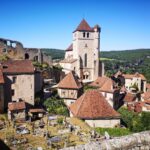
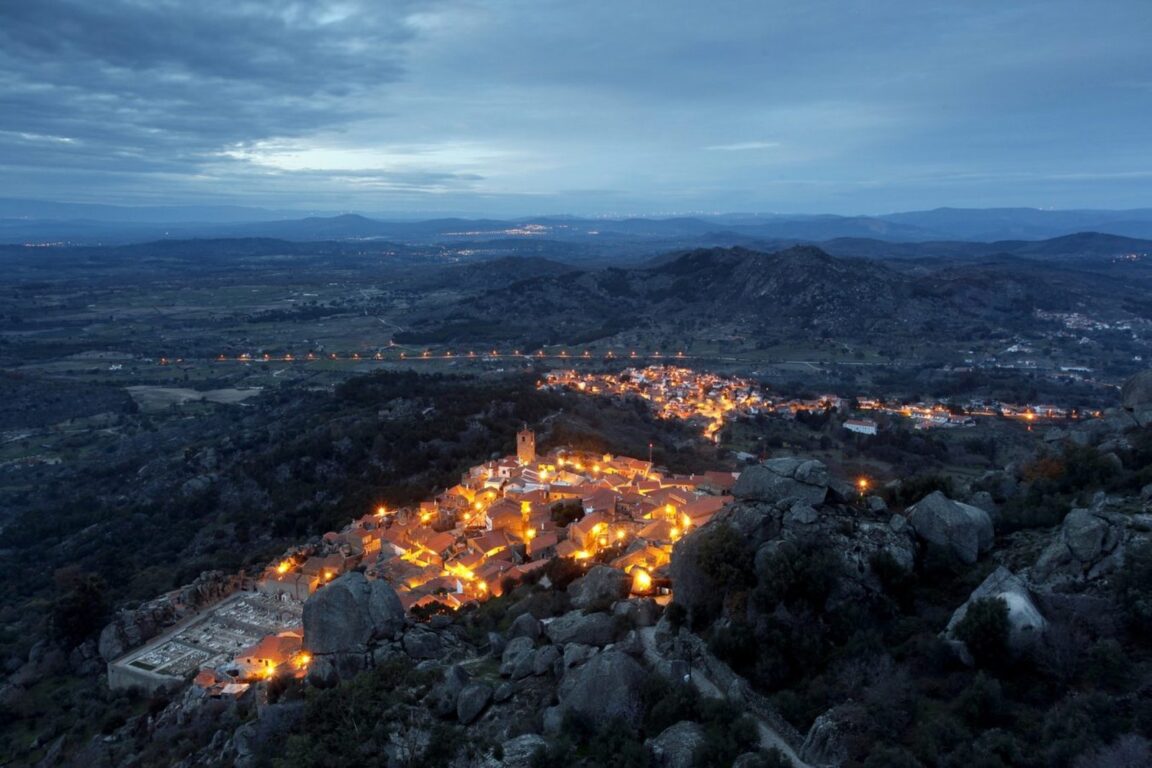
Monsanto is the Portuguese village where the houses did not clear the boulders away. They built between them, under them and against them, wedging granite cottages into a hillside of house sized rocks below a ruined Templar castle, on a 758 metre hill in Beira Baixa near the Spanish border. Named the most Portuguese village in Portugal in 1938 and a Historic Village in 1995, Monsanto rewards a slow half day: the climb through boulder lanes to the castle, the house roofed by a single slab of granite, and, twenty minutes away, the Roman ruins of Idanha-a-Velha as the same day pairing.
Quick Facts
- Where: Monsanto, in the municipality of Idanha-a-Nova, Castelo Branco district, in Portugal’s Beira Baixa region near the Spanish border.
- The hill: The village climbs the steep Mons Sanctus hill, which rises abruptly from the plain to 758 metres at its highest point.
- The titles: Most Portuguese Village in Portugal in 1938, and Historical Village in 1995, per the Historic Villages of Portugal network.
- The castle: Granted to the Knights Templar in 1165 by King Afonso Henriques, who had taken Monsanto in the twelfth century. The castle was partly destroyed in the nineteenth century by an accidental explosion in its powder store.
- The signature house: The Casa de Uma So Telha, the house of a single tile, is roofed by one enormous granite slab.
- Getting there: Monsanto is roughly 42 kilometres northeast of Castelo Branco, the nearest rail hub, and about three hours by road from Lisbon. A car makes the visit far simpler.
- The pairing: Idanha-a-Velha, one of Portugal’s oldest settlements with Roman and Visigothic remains, sits in the same municipality a short drive away.
Why do the houses grow out of the rock?
The official history published by the Historic Villages of Portugal network describes a very old place, with human presence recorded from the Palaeolithic, a Lusitanian hillfort and Roman occupation at the foot of the hill. The building pattern came from the hill itself. The granite boulders strewn across the slope were too large to move with pre industrial tools, so builders treated them as free architecture: a boulder becomes a back wall, two boulders become the sides of a room, an overhang becomes a roof that will never leak or rot.
Walking the lanes, the variety is the pleasure. Some houses are squeezed into gaps so tight that the rock forms both walls and the street passes under a stone. Others carry a single boulder as a lintel or lean a tiled roof against a rounded face of granite. The Casa de Uma So Telha is the famous extreme, a small house whose entire roof is one slab, but the whole village is a catalogue of the same negotiation between people and geology, repeated cottage by cottage over centuries.
What is the story behind the most Portuguese village title?
In 1938 a national contest run under the Estado Novo regime named Monsanto the most Portuguese village in Portugal. The prize symbol, a silver rooster, the Galo de Prata, is remembered in the replica that crowns the village’s Lucano clock tower. The Historic Villages network notes the second title that matters more today: Monsanto was classified a Historical Village in 1995, joining the protected network of twelve aldeias historicas that anchors tourism in Portugal’s interior.
Travellers should read the 1938 title as history rather than as a ranking to argue with. It was a piece of state image making that happened to fix on a genuinely extraordinary place, and it preserved Monsanto’s profile through decades when Beira Baixa villages were losing people to the cities and to emigration. The village that won was small then and remains small now, which is the point: the lanes, chapels and boulder houses survived because the place was celebrated early and altered late.
How should you climb to the Templar castle?
Save the castle for the top of your walk and, in warm months, for late afternoon. The route is the village itself: follow the lanes upward from the main square, past the parish church and the clock tower, as houses give way to open rock and the path becomes a stairway between boulders. There is no ticket office and no shortcut, and the gradient is the admission price.
The history under your feet is layered. Afonso Henriques took Monsanto from the Moors and in 1165 gave it to the Knights Templar, whose master Gualdim Pais ordered the castle built. Sancho I later rebuilt and resettled the fortress after wars with Leon, the Templars repaired it again a century later, and Manuel I granted a new charter in 1510. The castle resisted sieges in the seventeenth and eighteenth centuries, then met its odd fate in the nineteenth, when the accidental explosion of its powder magazine partly destroyed the medieval keep. What remains, the alcacova, the circuit of walls and watchtowers, and the beautiful ruins of the twelfth century Chapel of Sao Miguel with its necropolis, is enough to read the whole story from the stones.
From the walls the view explains the site: the plain of Idanha below, the Spanish border hills to the east, and the village roofs and boulders directly beneath you. Allow at least an hour for the climb, the ruins and the descent, and carry water, because the hill offers little shade and no services at the top.
What else should you see in the village?
Work back down slowly. The Chapel of Santa Maria do Castelo stands within the castle enclosure. In the village, the parish church, the Misericordia church and a scatter of small chapels mark the lanes, and the Lucano tower gives the village its silhouette and its rooster. At the foot of the hill, the Romanesque Chapel of Sao Pedro de Vir-a-Corca, built in granite probably in the thirteenth century and classified a Property of Public Interest, hosted the fair authorised by King Dinis in 1308.
Time a visit for early May and you may meet the Festa da Divina Santa Cruz, the festival of the Holy Cross, which commemorates Monsanto’s legendary resistance to a siege. Women in traditional dress climb to the castle playing adufes, square frame drums, carrying marafonas, rag dolls with embroidered hearts, and flower filled pitchers are thrown from the walls in memory of the siege story. It is the village’s great annual moment and the best window into Monsanto as a living place rather than a monument.
Fans of screen tourism may recognise the castle hill: Monsanto served as a filming location for the first season of House of the Dragon. The production used exactly what the Templars used, a granite summit that dominates every approach.
How does Idanha-a-Velha pair with Monsanto?
Idanha-a-Velha, a short drive southwest, is the essential second stop and the reason to give this corner of Beira Baixa a full day. One of the oldest places in Portugal, it was a significant Roman settlement, Egitania, and preserves a density of remains out of all proportion to its present size: Roman walls and a temple podium, a Visigothic cathedral among the oldest in the country, an olive oil press complex and a paleo Christian baptistery tradition that draws specialists from across Europe.
The contrast is the pleasure. Monsanto is vertical, granite and medieval, a village that climbed a rock. Idanha-a-Velha is horizontal, riverine and ancient, a city that shrank into a village. Together they compress two thousand years into one municipality, and the Roman archaeological site of Sao Lourenco, at the foot of Monsanto’s own hill, ties the two stories together before you even leave the first village.
How do you get to Monsanto and when should you go?
A car is the honest answer. Monsanto lies northeast of Castelo Branco, roughly three hours from Lisbon by road, and public transport thins to local buses from Castelo Branco that require planning around sparse timetables. Drivers should park at the edge of the village as directed and walk in, because the lanes were built for feet and donkeys, not cars, and the boulders leave no room to improvise.
Spring and autumn are the kind seasons, with clear views and climbable temperatures. Summer on a granite hill in the Portuguese interior is fierce at midday, which is another argument for the late afternoon castle climb and a long lunch in the shade. Winter brings atmosphere, empty lanes and early darkness over the plain. Whenever you come, wear shoes with grip: polished granite lanes and worn stone steps are slippery in dew and rain.
Monsanto pairs naturally with the wider white village country across the borderlands. Travellers building a slow Iberian village route can continue to Setenil de las Bodegas in Andalusia, where houses burrow under a gorge wall instead of between boulders, and our coverage of flamenco in Seville and the pintxos bars of San Sebastian completes a very different pair of Spanish chapters.
Frequently Asked Questions
Why is Monsanto called the most Portuguese village?
It won that title in a national contest in 1938, and the silver rooster prize is commemorated on the Lucano clock tower. It was named a Historical Village in 1995 and belongs to the Historic Villages of Portugal network.
What is the Casa de Uma So Telha?
It is Monsanto’s most famous boulder house, a small cottage roofed by a single enormous slab of granite. Its name means the house of a single tile.
Is the castle at Monsanto free to visit?
The castle ruins are open to walk up to and explore, reached on foot through the village lanes. Allow an hour for the climb and the ruins, carry water, and expect no facilities at the top.
How long do you need in Monsanto?
Half a day covers the village and the castle properly. Add Idanha-a-Velha, twenty minutes away, and the two make a full and very satisfying day in Beira Baixa.
Can you reach Monsanto without a car?
It is possible by train to Castelo Branco and then a local bus, but services are sparse and timetables need checking in advance. A hire car from Castelo Branco or Lisbon makes the visit far simpler.
Last checked 21 November 2026 against the Historic Villages of Portugal network and Idanha-a-Nova municipality information. Opening arrangements and local bus times can change, so confirm them before you travel.